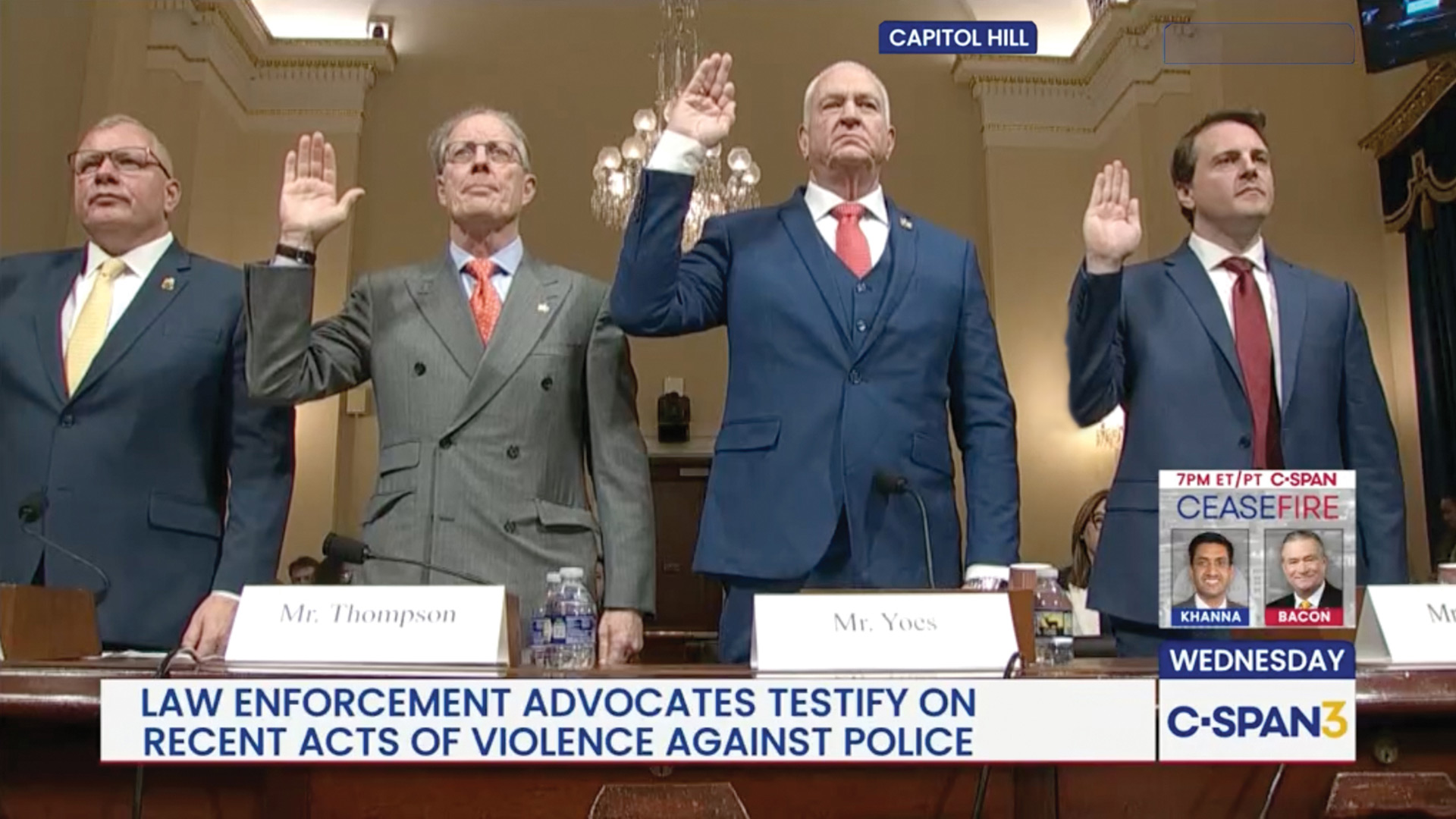
On December 3, the House Committee on Homeland Security heard testimony from law enforcement officials on rising violence against police officers across the country. The hearing, titled “When Badges Become Targets: How Anti-Law Enforcement Rhetoric Fuels Violence Against Officers,” included testimony from police leaders, union representatives and law enforcement critics.
The session came just one week after a suspect shot two National Guardsmen near the White House, killing one and critically injuring the other, on November 26. The Guardsmen had been assigned to patrol Washington, D.C., as part of the administration’s crime crackdown initiative in the capital.
In his remarks, National Fraternal Order of Police (FOP) President Patrick Yoes attributed part of the rise in violence to inflammatory political rhetoric. “The erosion of respect for law enforcement, coupled with public figures spewing anti-police rhetoric — rhetoric that is amplified by social media platforms — has fueled greater aggression toward police officers than what has been seen in previous years — undoubtedly emboldening people to turn verbal assaults into brazen acts of violence against law enforcement,” he said.
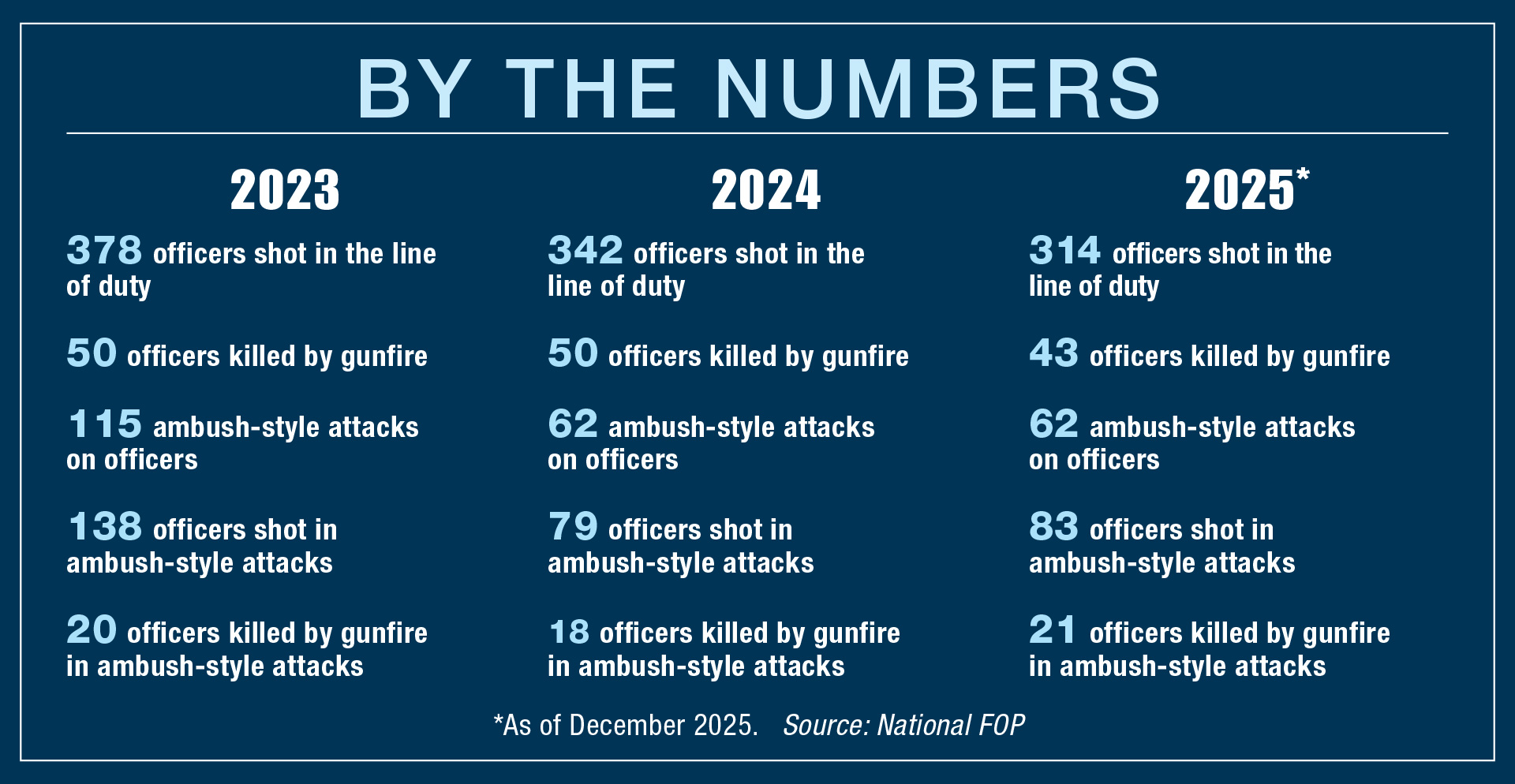
Yoes’ testimony was accompanied by National FOP data on officers shot or killed in the line of duty. As of November 30, 314 officers had been shot, including 43 who were killed. He also reported that, as of December 3, there had been 62 ambush-style attacks on officers in 2025. By comparison, in 2023, 378 officers were shot and 50 killed, including 138 officers shot and 20 killed in 115 ambush-style attacks. In 2024, 342 officers were shot in the line of duty, 50 fatally, with 62 ambush-style attacks resulting in 79 officers shot and 18 killed.
Federal Law Enforcement Officers Association (FLEOA) Executive Director Michael Hughes focused on the evolving threat landscape, how anti-police rhetoric contributes to increased threats against officers and their families, and offered recommendations for congressional action, among other points. “Throughout my career, one thing has remained constant: federal officers remain unwavering in their oath to the Constitution and their duty to enforce the laws Congress enacts, regardless of the political environment,” he said. “What has changed is the environment in which they serve. It has grown increasingly hostile, with rising violence, threats and online harassment directed at officers and, increasingly, at their families.”
National Sheriffs’ Association Executive Director and CEO Jonathan Thompson further echoed concerns about political rhetoric, criticizing what he described as dehumanizing language from some elected officials. “Some members of this Congress use inflammatory terms loosely and seek to minimize them. Regardless of party, such language serves one purpose: to incite violence,” he said.
Not all of the speakers focused on anti-police rhetoric, however. Officer Daniel Hodges of the Washington, D.C., Metropolitan Police Department used the opportunity to criticize federal immigration enforcement practices. “If the inhabitants of our country can no longer believe in the rule of law, then they can no longer believe in law enforcement,” he said. “If they believe they will be denied their basic rights, what motivation do they have to cooperate with investigations, to support law enforcement as an institution? The fact of the matter is that right now, in the United States of America, there is a secret police force abducting people based on the color of their skin and sending many of them via state-sponsored human trafficking to extraterritorial concentration camps.”
Several Democratic members of the committee also linked violence against police to immigration enforcement. Among them was Representative Delia Ramirez of Illinois, who called the Department of Homeland Security the “biggest threat to public safety.”
As seen in the January 2026 issue of American Police Beat magazine.
Don’t miss out on another issue today! Click below: