
I realize that my statement may not sit well with some people and may arguably be unfair, but it is made based on extensive experience and a fair degree of scar tissue. I hope that my candor and experiences will be helpful to executives as they navigate the often-treacherous territory (sometimes!) of new equipment acquisitions. I have every confidence that my comments and concerns will trigger some memories.
Please do not think that I am denigrating or criticizing those who are experts in their respective fields. To the contrary, they are invaluable in so many ways and certainly strong and knowledgeable resources in evaluating and considering which products to acquire. This is especially true in today’s world, where there are multiple product options for just about everything one can imagine. Going one step further, many people (including myself) feel that we have a great deal of expertise in some critical areas. For me, the key has been (hopefully) recognizing a bias in favor of, or with reservations about, certain products and being able to set those biases aside in fair and objective (again, hopefully!) product evaluation and selection.
First, let me provide my definition of an expert. Typically, an expert is someone who has somewhat of a passion for a particular item of equipment, such as communications equipment, computers, software programs, firearms, uniforms, vehicles and specialized equipment. I invite each reader to consider these topics and visualize a person (or persons) who is passionate about these and other often-essential items.
Perhaps the best way for me to illustrate my concerns associated with experts being decision-makers is to share some of my own experiences and the reason why my psyche is covered with scar tissue.
Vehicle selection
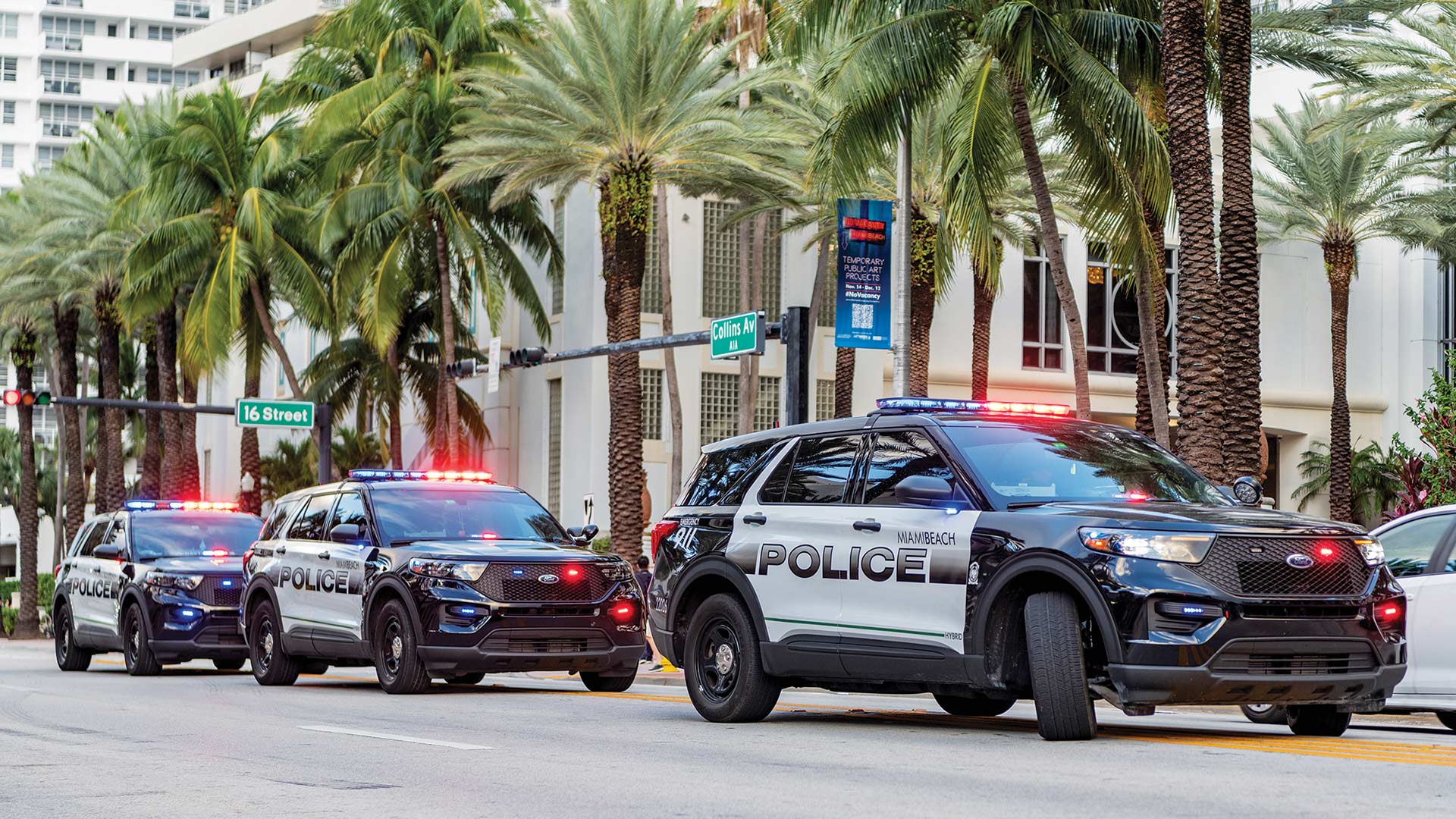
Vehicle enthusiasts typically have favorite makes and models and often gravitate toward positions where they understandably seek to influence selections and acquisitions. There are so many products, options and influencing factors that need to be considered in the critical process of selecting the most appropriate vehicles for the agency. The selection process frequently involves multiple individuals, each of whom brings valid opinions and concerns. There is rarely the “perfect” vehicle; rather, the choice is often a compromise — a “best judgment” based on a variety of factors. This is a process that might not have been reasonably considered had “the hardcore” vehicle enthusiast been the sole decision-maker.
Emergency vehicle hardware
We all (myself included) have our favorite emergency vehicle configuration package. Examples include conspicuous or suppressed lightbars on the roof, emergency lights in the grills, the type and degree of caution lights (flashing, direction arrows, etc.) to the rear, side lights, degrees of density, etc. In my experience, I have typically deferred to the judgment of those who most often operate emergency vehicles.
Radio equipment and dispatch systems
This topic accounts for a big portion of my scar tissue, and maybe even a tad of PTSD! There are multiple credible companies with great products, often backed by aggressive lobbyists who insist their products are the most appropriate for each application. Most agencies have employees who are radio enthusiasts and absolutely have favorite products and models. The magnitude of communication product selection is enormous, not only because of the initial cost, but also due to massive maintenance, replacements, expandability and inter-agency compatibility.
Some of the experiences I personally encountered as the project manager of LAPD’s then-new communications system included non-stop, insistent input from people considered to be experts. These experts were lobbying on behalf of various elected and appointed public officials who, in turn, were being lobbied (including campaign contributions) by various major equipment manufacturers. Lobbying strategies included attempted gratuities to me from potential vendors, being shown misleading performance evaluations and receiving items that did not perform as promised. Somehow, I managed to survive the process, and the city ended up with a system that has proven to be pretty darn good. Equally important, it has proven to be expandable as challenges have grown and improved technologies have become available. This experience has caused me to never again be involved in operating at the leading edge of technology. While we got about 85% of things right, the other 15% was very problematic; I would rather another agency be at the leading edge and benefit from their problematic 15%!
Software selection
Different people and organizations use and prefer different types and versions of software. When upgrading decisions need to be made, most agencies understandably want to migrate to what they feel most comfortable with and where they have had the most success. The key is to assemble the key users from all aspects of the organization and select the products and versions that best meet the needs of the entire organization. The final decision-maker needs to be resolute and prepared for extensive arm-twisting!
Firearm selection
This has been another challenging area for me personally and has become even more challenging over time. In my early years in law enforcement, there were realistically only two competitive firearms manufacturers, and the advocates for each were often very passionate about their preferences. Today, there are multiple manufacturers of fine firearms, each again with passionate advocates. Again, the final selection needs to be influenced primarily not by a single advocate, but through a process that considers multiple factors, such as grip abilities, training factors, maintenance, recoil recovery and manufacturers’ support and likelihood of business success. As with other types of selection processes, strong opinions can be expected.
Ammunition selection
While not all are always in agreement, this is typically an issue that is usually resolved without as much drama as some of the other contentious issues. Much of it has to do with the typical terrain of rural versus urban areas, the penetration characteristics of various types of munitions and the characteristics of inflicted wounds. This discussion now often involves multiple types of weapons carried in various law enforcement vehicles. Additionally, with certain weapons such as rifles and shotguns, it is not unusual for officers to be equipped with a variety of ammunition types, depending on the potential needs of the incidents they might encounter.
Uniform selection
Put on your adult britches (pun intended!) for these discussions. A quick glance at any uniform or insignia catalog is all that is necessary to see every preference imaginable! I doubt that Solomon and Mother Teresa, acting in unison, could please everyone with a uniform recommendation. Factors include historical considerations, body armor configurations, climate considerations, wearability and the biggest of all — individual preferences. Another factor is the size of the agency and the costs involved; a four-person department has a much different financial investment than a 10,000-person agency.
In terms of my personal advice, the best course of action is to have much reflection and much employee input. This is not a decision that should be made by a new chief based on personal preferences. We have all seen instances where a new chief wants a new uniform, patch or badge (or all the above) that are similar or identical to those from a previous agency. On a humorous note, I will never forget some of the agencies I have visited where the chief or sheriff looked like a third-world leader, with more stars, bars, medals and accoutrements than I thought existed. While in the eyes of the individual beholder, these costumes disguised as uniforms did not impress me!
Summary
I hope my thoughts, opinions and personal experiences will be of value to those following me in the leadership trenches. Many equipment acquisitions may seem like simple issues that lend themselves to easy and simple resolution. Most often, however, such acquisition processes are neither simple nor easy. They are and can become very troublesome, expensive and divisive. Further, an equipment acquisition based on the opinion of a single “expert” can have horrible and expensive implications on future needs, compatibility and budgets. In summary, go into your closets and storage areas and look at the things that are no longer in use because they were not selected or acquired through a logical process. Finally, remember that it is always good to learn from your mistakes — but even better if you can learn from the experiences and scar tissue of others, including mine!

Keith Bushey
As seen in the January 2026 issue of American Police Beat magazine.
Don’t miss out on another issue today! Click below: