April is Autism Awareness Month. Though law enforcement probably isn’t the first thing that comes to mind when someone brings up neurodivergence, the profession interacts with people with autism spectrum conditions and other developmental disabilities fairly frequently. Data shows that those on the spectrum are stopped by police at higher rates, and some of those encounters have ended in tragedy. To avoid such misunderstandings and enhance communication with the community members they serve, some agencies are instituting training to help officers understand the behavior and needs of people with autism.
A recent Los Angeles Times article took readers inside one such training session for Los Angeles County Sheriff’s Department deputies. The training explains that autism symptoms frequently involve difficulties in communication and sensory processing, which means autistic people might display seemingly suspicious behavior in an encounter with law enforcement — such as intense eye contact or no eye contact, inability to speak or obey orders, or fleeing. The deputies were encouraged not to automatically interpret these actions as guilt, defiance or intoxication but to consider whether the person could be developmentally disabled. They were also taught how to slow interactions down as much as possible to reduce overwhelm and give autistic people more time to process input and respond, allowing officers to get the necessary information, de-escalate the situation and offer help if needed.
After Layla Luna experienced a tense traffic stop where her autistic son, Rio, was panicked by the officer’s lights and siren and bit her hard enough to leave a scar, she was inspired to come up with a solution that could ease such fraught situations for everyone involved. Her autism awareness organization Just Bee is lobbying all 50 states to create a special license plate that would indicate if at least one occupant of a vehicle is autistic or neurodivergent — giving law enforcement a heads-up before the stop even starts. The first “Rio’s Law” passed in South Carolina last year, creating a voluntary program where autistic people or their parents or guardians can apply for the special plate with medical diagnosis documentation from their doctor. Another state law is in the works to implement neurodiversity training for first responders. Meanwhile, a similar Rio’s Law was passed unanimously by the Georgia Senate in February.
Florida has one of the highest populations of adults with autism in the country. A group of autism community advocates recently visited the State Capitol to push for House Bill 365, which would mandate that law enforcement officers receive specialized training about interacting with people on the spectrum, including recognizing autism, de-escalation techniques and appropriate responses. Rather than having a special license plate, the bill proposes a “blue envelope” program that allows drivers with autism to present their license, registration, proof of insurance and optional emergency contact information to law enforcement inside an envelope identifying them as having autism and suggesting the best ways to communicate.
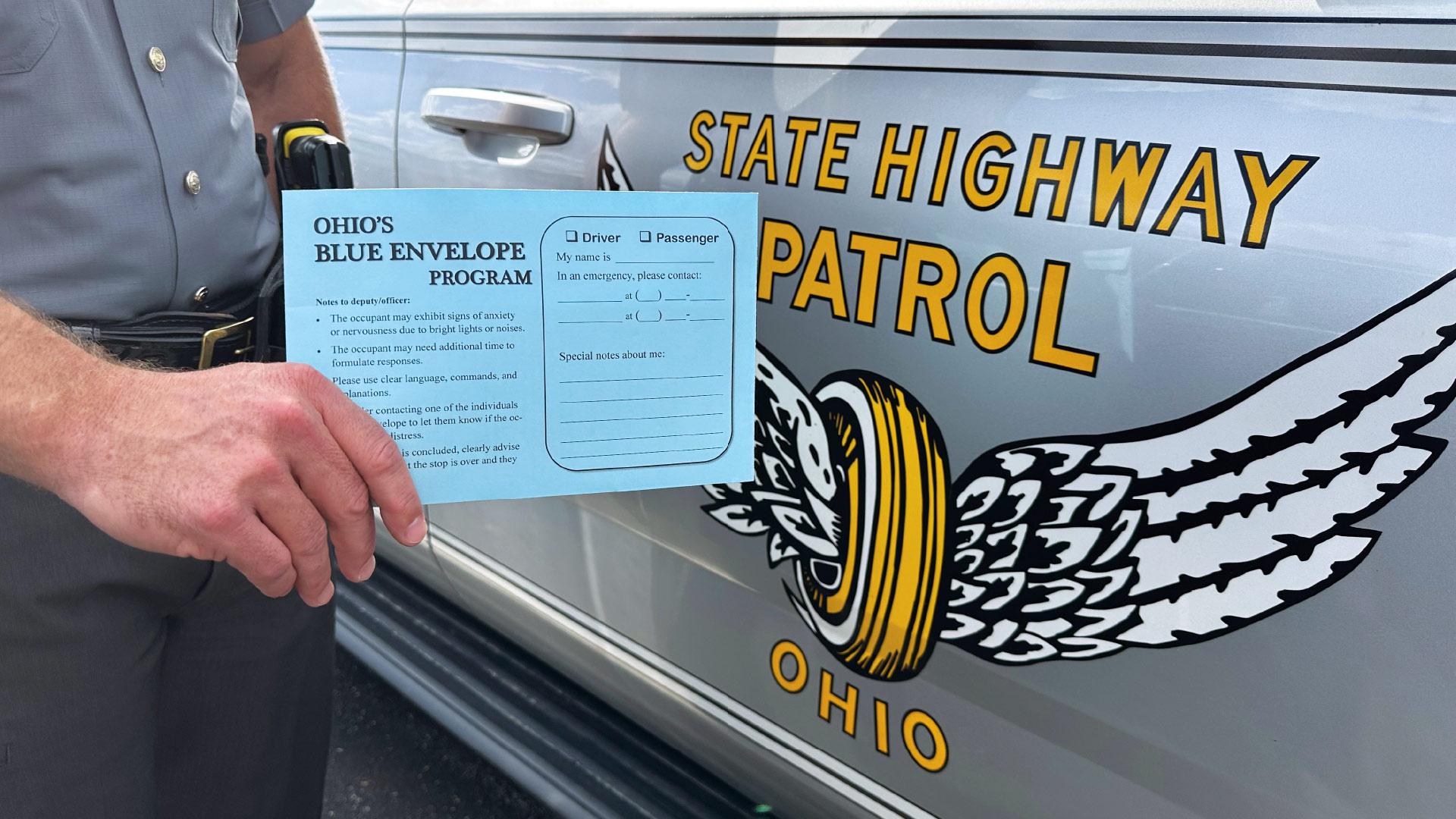
Blue envelope initiatives are spreading through Illinois as well, including in the capital of Springfield, which introduced its program in March in partnership with the nonprofit Autism Hero Project. Lawmakers there have introduced legislation to take the initiatives statewide. An increasing number of law enforcement agencies in Ohio are also adopting similar programs, including the State Highway Patrol. In some cases, the outside of the envelope includes space for the driver to put information about their disabilities or those of their passengers — which, in addition to autism, might include seizure disorders, hearing impairment or other relevant conditions — in order to help officers better understand the needs of those in the car. Some agencies provide a corresponding sticker users can place on the outside of their cars to alert officers earlier in the process, as well as a pamphlet with tips for the driver on how to conduct themselves during a stop, such as where to place their hands and a reminder to stay calm.
Beachwood Police Chief Daniel Grispino is already seeing a positive impact, as he recently told Spectrum News 1. “One resident came up to me and said, ‘Listen, my son is just getting ready to drive. He has autism. I can’t tell you how much it means to me that you guys have this program. It puts me at so much more ease knowing that if he gets stopped by a Beachwood Police officer, he’s going to be treated with empathy and respect.’”