• Skip to primary navigation
  • Skip to main content
  • Skip to primary sidebar
  • Skip to footer
  • Home
  • About
  • The Magazine
  • Events
  • Partners
  • Products
  • Contact
  • Jobs and Careers
  • Advertise
  • Facebook
  • Instagram
  • Twitter
  • Subscribe
American Police Beat

American Police Beat Magazine

Law Enforcement Publication

  • Home
  • Leadership
    • The hidden costs of micromanagement
      Police leadership development
      Can they do it? Will they do it?
      A unique approach to salvaging a troubled employee
      The relentless pursuit of excellence
  • Topics
    • Leadership
      • The hidden costs of micromanagement
        Police leadership development
        Can they do it? Will they do it?
        A unique approach to salvaging a troubled employee
        The relentless pursuit of excellence
    • Editor’s Picks
      • No two days are ever the same
        Training dipshittery, Part 2
        Tactical medicine for cops
        Why good cops quit
        Smile and let them swing
    • On the Job
      • Frankpledge to forensics: A brief history of law enforcement
        The sixth sense in policing
        From warrior to peacekeeper
        Hats off to a new uniform look
        Overcoming climate and conditions to rescue child
    • Labor
      • The shift happens long before the resignation letter
        Facing the oral board
        Why good cops quit
        Succession planning
        Why more staff won’t fix your operational slowdowns
    • Tech
      • Accentuating safety for first responders
        Take Me Home program offers effective tool for police and families
        Get the most out of simulation training
        The virtual beat
        Training with an AI partner?
    • Training
      • More than just a red shirt and a Sharpie
        Train them to ask why
        Nobody is coming to do it for you
        Precision, adaptability and response: The need for LPVOs in equipping...
        Training dipshittery, Part 2
    • Policy
      • Out of chaos comes opportunity
        Massachusetts law establishes fund to care for retired K-9s
        Portlanders will not vote on diverting climate funds for police...
        Surviving internal affairs investigations
        Fighting human trafficking at the local level
    • Health/Wellness
      • Trauma exposure and preventing officer suicide
        Understanding why police officers think alcohol works
        Has the job quietly stolen your humanity?
        No two days are ever the same
        Changing the narrative
    • Community
      • National Night Out 2026
        Pittsburgh mounted patrol officer helps inner-city kids saddle up
        Wyoming girl on a mission to collect “hero patches”
        Texas sheriff’s office nominates 7-year-old for commendation
        Cops try to net DEA agents
    • Offbeat
      • A surprise sting operation
        Could cadaver otters help close cold cases?
        Police chief catches cat in the act
        “Teenage Mutant Ninja Deer” rescued
        An unexpected burglar
    • We Remember
      • Honoring the Fallen Heroes of 9-11
        Steel Across America
        The first officers on scene on September 11
        Protecting America with the USA PATRIOT Act
        Distant cousins connect to honor fallen family member 110 years after...
    • HOT Mail
      • The War on Cops Continues Unabated
  • On the Job
    • Frankpledge to forensics: A brief history of law enforcement
      The sixth sense in policing
      From warrior to peacekeeper
      Hats off to a new uniform look
      Overcoming climate and conditions to rescue child
  • Labor
    • The shift happens long before the resignation letter
      Facing the oral board
      Why good cops quit
      Succession planning
      Why more staff won’t fix your operational slowdowns
  • Tech
    • Accentuating safety for first responders
      Take Me Home program offers effective tool for police and families
      Get the most out of simulation training
      The virtual beat
      Training with an AI partner?
  • Training
    • More than just a red shirt and a Sharpie
      Train them to ask why
      Nobody is coming to do it for you
      Precision, adaptability and response: The need for LPVOs in equipping...
      Training dipshittery, Part 2
  • Policy
    • Out of chaos comes opportunity
      Massachusetts law establishes fund to care for retired K-9s
      Portlanders will not vote on diverting climate funds for police...
      Surviving internal affairs investigations
      Fighting human trafficking at the local level
  • Health/Wellness
    • Trauma exposure and preventing officer suicide
      Understanding why police officers think alcohol works
      Has the job quietly stolen your humanity?
      No two days are ever the same
      Changing the narrative
  • Community
    • National Night Out 2026
      Pittsburgh mounted patrol officer helps inner-city kids saddle up
      Wyoming girl on a mission to collect “hero patches”
      Texas sheriff’s office nominates 7-year-old for commendation
      Cops try to net DEA agents
  • Offbeat
    • A surprise sting operation
      Could cadaver otters help close cold cases?
      Police chief catches cat in the act
      “Teenage Mutant Ninja Deer” rescued
      An unexpected burglar
  • We Remember
    • Honoring the Fallen Heroes of 9-11
      Steel Across America
      The first officers on scene on September 11
      Protecting America with the USA PATRIOT Act
      Distant cousins connect to honor fallen family member 110 years after...
  • HOT Mail
    • The War on Cops Continues Unabated
  • About
  • The Magazine
  • Events
  • Partners
  • Products
  • Contact
  • Jobs and Careers
  • Advertise
  • Subscribe
Search

Labor

America’s police: From public servants to public enemies in eight minutes, 46 seconds

Opinion/Editorial

Patrick Yoes Published August 18, 2020 @ 2:55 am PDT

I admit, the title of this article is misleading, given the many challenges the law enforcement profession is facing, but it does capture the present state of mind in America today.

I was shocked and horrified by the tragic death of George Floyd in Minneapolis, and I believe every honorable officer who ever walked a beat feels the same. The pain and anger unleashed as a result of this incident has underscored the importance of the police labor movement, as we will no doubt be pushed to the limits for the foreseeable future.

We cannot allow this incident to define our profession because it is not what policing is about. But this incident does mean that changes to our profession are coming, and organizations like the FOP are working to make these changes in our local agencies, states and in the halls of Congress.

If we believe, as we should, that officers have a duty to intervene when they see one of their own dishonoring their profession with misconduct, who has a duty to intervene for the cops who keep their streets safe? Who will intervene to help the officers who keep them safe in their schools, neighborhoods and homes? I can tell you who is not going to intervene — mayors and, in some cases, local prosecutors.

Police officers are being scapegoated by mayors, who presided over the decay of social services for homelessness, addiction and substance abuse, and then decided that the best way to deal with these issues is to let cops handle it.

We all want to forcefully reject arguments advanced by some who blame our nation’s problems in policing on the law enforcement labor movement or the local police union. Blaming us is so much easier than accepting their own failures. But, I find myself constrained from doing so by the importance of this moment and the critical need for all parties to set aside their preconceived notions, egos and unrelated agendas to do what the American public — a public we are sworn to serve — wants us to do. Right now, we need to roll up our sleeves and get to work. That being said, we should never miss an opportunity to provide factual information to keep the discussions focused.

Some legislation and the president’s executive order propose a federally managed database of terminated or decertified officers to ensure that a police chief or sheriff does not hire a bad officer from another jurisdiction. Police hiring managers and law enforcement executives need to make sure that they conduct a full background investigation and a vigorous screening process, whether this database is created or not. Hiring practices should also be made more transparent and recruitment more targeted to ensure that new officers are drawn from the communities they will ultimately serve.

We also need to address the dangerous calls to defund the police. Law enforcement would very much welcome the expansion of social services in our communities, especially in the areas of mental health, substance abuse and homelessness, but this does not mean we should reduce funding and resources for law enforcement. Indeed, it is the failure of municipal leaders to properly fund basic social services that have led us to this moment.

For many years now, law enforcement — from the beat cop to the chief law enforcement officer — has been struggling with the very basic fact that when something goes wrong in our society, you or the public call the cops to deal with it. When there is an individual in need of mental health services exhibiting extremely erratic behavior, what do you do? Call the cops. If there is an individual at a bus stop under the influence of drugs or alcohol, what happens? Someone calls the cops. Do you have an unruly student in your classroom? Don’t worry, call the cops. Is there a homeless person sleeping in a park where you walk your dog? Just call the cops. In too many communities, the police are the only option.

But we need to bear in mind that when you call law enforcement, you should expect a law enforcement response. People who need mental health services or treatment for issues related to addiction, instead find themselves in the backs of squad cars. Our prisons and jails are the nation’s largest providers of mental health services and this should not be the case.

We also all need to stand together to protect the doctrine of qualified immunity, which is under serious attack at the federal level. Police officers need protection in order to perform discretionary functions fundamental to law enforcement. Every single actual scenario an officer encounters is different and unknown. It is extremely difficult for an officer to determine how a legal doctrine will apply to a split-second actual scenario that the officer confronts. Thus, unless there is existing precedent that squarely governs the facts before the officer, the reasonable officer needs to be afforded a certain degree of discretion to make split-second decisions in situations that could put lives, including their own, at risk.

The courts have been balanced in denying or granting qualified immunity. In a recent study of more than 200 lower court decisions where qualified immunity was raised as a defense, the court denied qualified immunity for the officers 43% of the time. Only five cases have made it to the Supreme Court since 2015. In all five cases, officers were granted qualified immunity, including 9-0 and 8-1 decisions. This suggests there is very little dispute that the current doctrine is working.

During this pandemic crisis, the men and women of law enforcement were in the field putting themselves, and by extension, the members of their family, at risk of exposure to the virus. At this writing, there have been 121 line-of-duty deaths due to COVID-19. My members could not “work from home.” In the wake of the terrible tragedy in Minneapolis, members of the public from across the nation demonstrated about police violence. These voices calling for reform were sadly overshadowed in many cases by rioters and looters who took advantage of the situation to enrich themselves and commit criminal acts.

Once again, our nation’s cops could not “stay home” because they have a duty to protect the community, even when it means placing themselves in harm’s way. Protesters at lawful demonstrations do not injure cops or set fires; rioters do. Thousands of officers were injured during the riots, and more than 20 officers have been shot and one of them is permanently paralyzed. Officers have been struck with bricks, Molotov cocktails and other projectiles, while others have been run over by cars and injured by physical assaults.

Despite the increased violence aimed at us, we in law enforcement are working to improve our profession. The FOP is deeply invested in the current Presidential Commission on Law Enforcement and the Administration of Justice. The commission is doing good work in examining how we recruit and train officers, and how to earn and maintain the trust and respect of the communities we serve.

The FOP is committed to engaging with anyone at any time if they have a sincere desire to improve policing in our nation. Not only does the safety of our officers and their ability to protect the citizens of their community depend on this — working together to improve policing in our nation is critical to preserving our country and the American way of life.
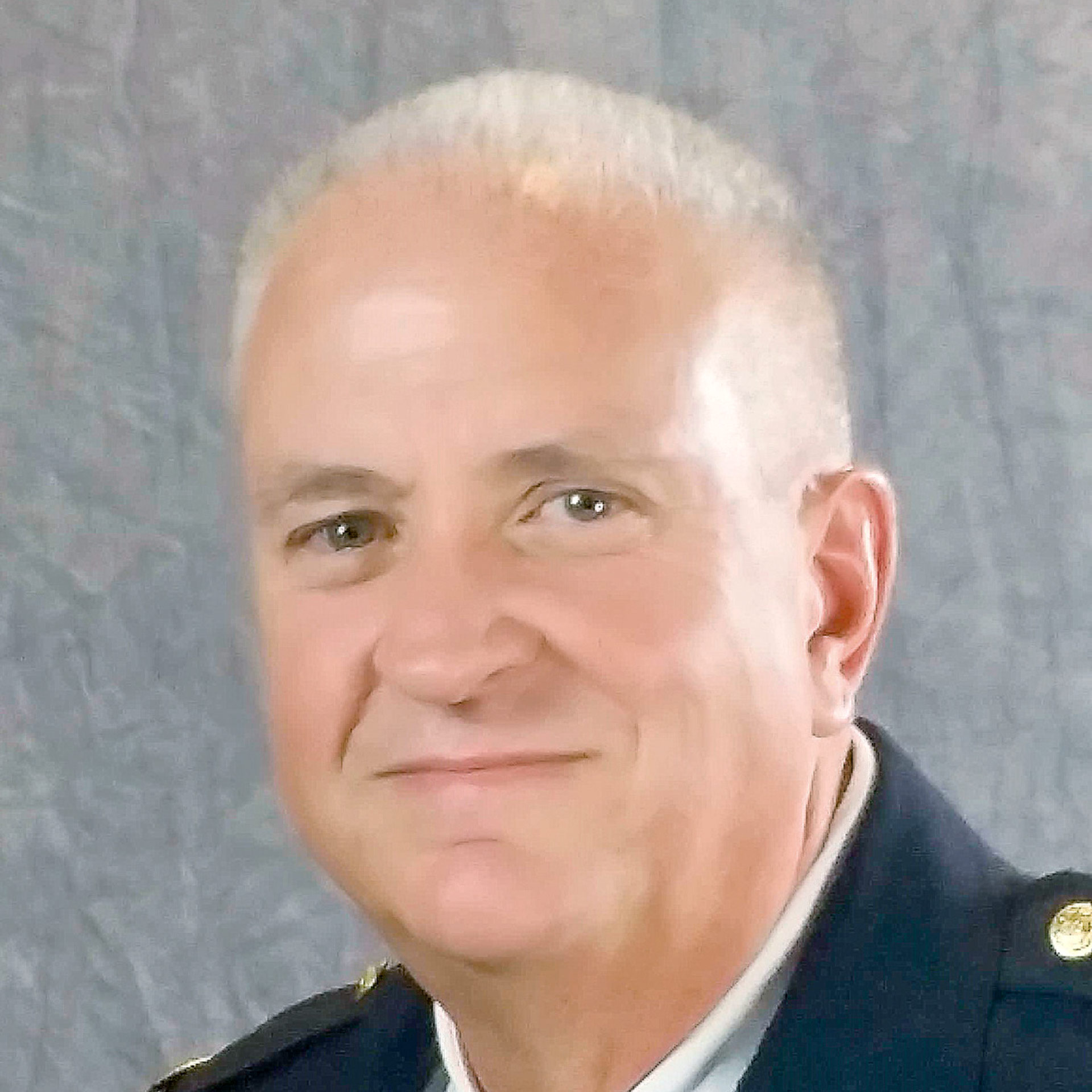
Patrick Yoes

Patrick Yoes

Patrick Yoes is a captain with the St. Charles Parish, Louisiana, Sheriff’s Office and national president of the Fraternal Order of Police.

View articles by Patrick Yoes

As seen in the August 2020 issue of American Police Beat magazine.
Don’t miss out on another issue today! Click below:


SUBSCRIBE TODAY!

Categories: Labor

Primary Sidebar

Recent Articles

  • Trauma exposure and preventing officer suicide
  • The hidden costs of micromanagement
  • Honoring the Fallen Heroes of 9-11
  • Serving every survivor, every sacrifice
  • Steel Across America
  • The first officers on scene on September 11
  • National Night Out 2026
  • Accentuating safety for first responders
  • A surprise sting operation
  • Frankpledge to forensics: A brief history of law enforcement

Footer

Our Mission
To serve as a trusted voice of the nation’s law enforcement community, providing informative, entertaining and inspiring content on interesting and engaging topics affecting peace officers today.

Contact us: info@apbweb.com | (800) 234-0056.

  • Facebook
  • Instagram
  • Twitter

Categories

  • Editor’s Picks
  • On the Job
  • Labor
  • Tech
  • Training
  • Policy
  • Health/Wellness
  • Community
  • Offbeat
  • We Remember
  • Jobs and Careers
  • Events

Editor’s Picks

No two days are ever the same

No two days are ever the same

July 24, 2026

Training dipshittery, Part 2

Training dipshittery, Part 2

July 23, 2026

Tactical medicine for cops

Tactical medicine for cops

July 18, 2026

Why good cops quit

Why good cops quit

July 14, 2026

Policies | Consent Preferences | Copyright © 2026 APB Media, LLC | Website design, development and maintenance by 911MEDIA

Open

Subscribe

Close

Receive the latest news and updates from American Police Beat directly to your inbox!

  • This field is for validation purposes and should be left unchanged.