• Skip to primary navigation
  • Skip to main content
  • Skip to primary sidebar
  • Skip to footer
  • Home
  • About
  • The Magazine
  • Events
  • Partners
  • Products
  • Contact
  • Jobs and Careers
  • Advertise
  • Facebook
  • Instagram
  • Twitter
  • Subscribe
American Police Beat

American Police Beat Magazine

Law Enforcement Publication

  • Home
  • Leadership
    • Understanding the boundaries of professional relationships with the...
      Why you should lead from 30,000 feet
      Public perception and trust
      When performance reviews are a waste of time
      Taking a page from Toyota’s playbook
  • Topics
    • Leadership
      • Understanding the boundaries of professional relationships with the...
        Why you should lead from 30,000 feet
        Public perception and trust
        When performance reviews are a waste of time
        Taking a page from Toyota’s playbook
    • Editor’s Picks
      • Let’s get moving!
        Heroes of the World Trade Center
        The Promise Gap
        Corruption, collusion and impunity
        Liability challenges in contemporary policing
    • On the Job
      • Frankpledge to forensics: A brief history of law enforcement
        Villains and heroes in the Big Apple
        Right place, right time — again
        Some good news on crime
        Mom-to-be named Cop of the Year
    • Labor
      • The Promise Gap
        Cut the cops, save a dollar?
        Labor release under fire
        Who’s watching the watchmen?
        Crime and punishment (or lack thereof) in Seattle
    • Tech
      • New Mexico license plate readers save lives, lead to “precise...
        A modern field guide to understanding research in policing
        Gear that moves with you
        A new breed of cop car
        The future of patrol is here
    • Training
      • Pushback as a training signal
        Let’s get moving!
        The five minutes before the ambulance
        Navigating danger
        Critical thinking in police training
    • Policy
      • Corruption, collusion and impunity
        E-bikes spark public safety concerns
        Try racing without wheels
        Law enforcement accreditation: Why it matters
        Liability challenges in contemporary policing
    • Health/Wellness
      • Addressing stress, vicarious trauma and burnout
        Nervous system regulation
        The nature of the job
        Promoting organizational wellness
        Telling cops to get more sleep isn’t working
    • Community
      • Improving autism awareness
        Shop with a Cop
        Community engagement: What is it moving forward?
        Contradictory crossroads
        Back-to-school season brings out police support nationwide
    • Offbeat
      • An unexpected burglar
        Police humor only a cop would understand
        Not eggzactly a perfect heist
        Pizza … with a side of alligator?
        Wisconsin man charged with impersonating Border Patrol agent twice in...
    • We Remember
      • Heroes of the World Trade Center
        Forty heroes: United Airlines Flight 93
        The Pentagon
        A nation propelled to war, lives changed forever
        A Christmas loss
    • HOT Mail
      • The War on Cops Continues Unabated
  • On the Job
    • Frankpledge to forensics: A brief history of law enforcement
      Villains and heroes in the Big Apple
      Right place, right time — again
      Some good news on crime
      Mom-to-be named Cop of the Year
  • Labor
    • The Promise Gap
      Cut the cops, save a dollar?
      Labor release under fire
      Who’s watching the watchmen?
      Crime and punishment (or lack thereof) in Seattle
  • Tech
    • New Mexico license plate readers save lives, lead to “precise...
      A modern field guide to understanding research in policing
      Gear that moves with you
      A new breed of cop car
      The future of patrol is here
  • Training
    • Pushback as a training signal
      Let’s get moving!
      The five minutes before the ambulance
      Navigating danger
      Critical thinking in police training
  • Policy
    • Corruption, collusion and impunity
      E-bikes spark public safety concerns
      Try racing without wheels
      Law enforcement accreditation: Why it matters
      Liability challenges in contemporary policing
  • Health/Wellness
    • Addressing stress, vicarious trauma and burnout
      Nervous system regulation
      The nature of the job
      Promoting organizational wellness
      Telling cops to get more sleep isn’t working
  • Community
    • Improving autism awareness
      Shop with a Cop
      Community engagement: What is it moving forward?
      Contradictory crossroads
      Back-to-school season brings out police support nationwide
  • Offbeat
    • An unexpected burglar
      Police humor only a cop would understand
      Not eggzactly a perfect heist
      Pizza … with a side of alligator?
      Wisconsin man charged with impersonating Border Patrol agent twice in...
  • We Remember
    • Heroes of the World Trade Center
      Forty heroes: United Airlines Flight 93
      The Pentagon
      A nation propelled to war, lives changed forever
      A Christmas loss
  • HOT Mail
    • The War on Cops Continues Unabated
  • About
  • The Magazine
  • Events
  • Partners
  • Products
  • Contact
  • Jobs and Careers
  • Advertise
  • Subscribe
Search

Community

Law enforcement experts shine spotlight on alarming juvenile crime trend

APB Team Published November 9, 2022 @ 3:00 pm PST

iStock.com/Daxus

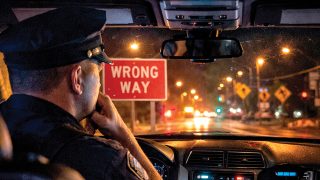
Law enforcement experts are warning that crimes involving juveniles are on the rise, pointing to failures in the criminal justice system, broken families, police staffing shortages and social media as key drivers of the trend.

Some experts also blame the defunding movement, progressive criminal justice policies and light consequences for teen violence.

“Unfortunately, the penalties aren’t scary for these kids,” Joseph Giacalone, an adjunct professor and the former commanding officer of the NYPD’s Bronx Cold Case Squad, told Fox News.

Giacalone adds that lax parenting styles and lack of discipline in schools are also major factors. “The parents aren’t taking care of things,” he said. “The schools aren’t taking care of things, and then the police have to deal with them … and meanwhile they had no [child] rearing at home, no discipline at home and at school, and they want to know why kids are acting out.”

In major cities, such as Philadelphia, Los Angeles and New York, juvenile crime is a near-daily occurrence.

Experts noted that the majority of teens committing crimes in Philadelphia had prior arrests for carjacking and gun crimes, but were released back onto the streets without consequences.

In Philadelphia, youths recently opened fire near a high school. In Los Angeles, a teenager shot and killed a rapper during a robbery with his father. In New York, a 17-year-old gunman fatally shot a teenage girl while aiming at a man across the street.

Jody Kent Lavy, director of the Campaign for the Fair Sentencing of Youth, was herself a victim of an armed robbery in Washington, D.C. However, she believes that being tougher on crimes isn’t the solution.

“Harmed people harm people. We know that,” she said. “When we recognize that they’re still developing, still maturing, and we intervene with approaches that will take that into account as far as where they came from, what they’ve endured, what circumstances might have led to their behavior and to their crimes, and we address those things, that’s when we see a toughness on crime.”

David Kennedy, a criminal justice professor at New York City’s John Jay College of Criminal Justice, said that it’s hard to determine whether there is a juvenile crime epidemic, given how little experts say is known about juvenile crime.

“You have to know what’s happening in order to be rational about this,” he said. “For the most part we don’t, but there’s absolutely no reason to believe that the violence increases of the last few years are being driven by juveniles.”

The Justice Department’s Office of Juvenile Justice and Delinquency Prevention (OJJDP) recently analyzed arrest data for juveniles in 2020 — the most recent year that data is available — and found that total juvenile arrests were down 78% from their peak in 1994.

Law enforcement agencies tallied 424,300 child arrests that year, 8% of which were for violent crimes. There were 1,780 minors who were murder victims in 2020, marking a 30% increase from the year before.

The OJJDP said that before the COVID-19 pandemic, youth violent crime arrests involving underage offenders decreased by 56%.

However, post 2020, juvenile crime appears to be on the rise, boosted by policies that ban kids from being tried in an adult court and that refuse to punish minors.

For instance, in California, more than 19,300 juveniles have been arrested for crimes. Of those 15 to 17 years of age, felonies were more frequent than misdemeanors. In total, 9,132 underage offenders were arrested for felonies.

Officials like L.A. County District Attorney George Gascón have been widely criticized for their “soft on crime” policies.

Experts say such policies enable juveniles to openly commit crimes, such as carjackings, which are on the uptick nationwide.

National Insurance Crime Bureau President and CEO David Glawe told a Senate Judiciary Committee in Washington, D.C., that most of the carjacking offenses committed last year were by teens, stating, “Of the 149 individuals arrested in 2021 for carjackings, 100 were juveniles.”

Chicago Police Superintendent David Brown said the Chicago P.D. is doing its part to crack down on juvenile violent crime.

“Juveniles are either victims and are offenders of gun violence, and we take it very seriously. And we are continuing to make progress in this area,” he said.

According to data from the FBI, there were 656 underage offenders arrested in connection with murder and non-negligent manslaughter in 2021, down from 683 in 2020.


Categories: Community Tags: LA, criminal justice system, Law Enforcement, youth, shooting, staffing shortage, violent crime, felony, carjacking, juvenile crime

Primary Sidebar

Recent Articles

  • Frankpledge to forensics: A brief history of law enforcement
  • Pushback as a training signal
  • Let’s get moving!
  • Heroes of the World Trade Center
  • The Promise Gap
  • Corruption, collusion and impunity
  • The five minutes before the ambulance
  • New Mexico license plate readers save lives, lead to “precise policing”
  • Addressing stress, vicarious trauma and burnout
  • Understanding the boundaries of professional relationships with the boss

Footer

Our Mission
To serve as a trusted voice of the nation’s law enforcement community, providing informative, entertaining and inspiring content on interesting and engaging topics affecting peace officers today.

Contact us: info@apbweb.com | (800) 234-0056.

  • Facebook
  • Instagram
  • Twitter

Categories

  • Editor’s Picks
  • On the Job
  • Labor
  • Tech
  • Training
  • Policy
  • Health/Wellness
  • Community
  • Offbeat
  • We Remember
  • Jobs and Careers
  • Events

Editor’s Picks

Let’s get moving!

Let’s get moving!

April 27, 2026

Heroes of the World Trade Center

Heroes of the World Trade Center

April 24, 2026

The Promise Gap

The Promise Gap

April 22, 2026

Corruption, collusion and impunity

Corruption, collusion and impunity

April 21, 2026

Policies | Consent Preferences | Copyright © 2026 APB Media, LLC | Website design, development and maintenance by 911MEDIA

Open

Subscribe

Close

Receive the latest news and updates from American Police Beat directly to your inbox!

  • This field is for validation purposes and should be left unchanged.