• Skip to primary navigation
  • Skip to main content
  • Skip to primary sidebar
  • Skip to footer
  • Home
  • About
  • The Magazine
  • Events
  • Partners
  • Products
  • Contact
  • Jobs and Careers
  • Advertise
  • Facebook
  • Instagram
  • Twitter
  • Subscribe
American Police Beat

American Police Beat Magazine

Law Enforcement Publication

  • Home
  • Leadership
    • Police leadership development
      Can they do it? Will they do it?
      A unique approach to salvaging a troubled employee
      The relentless pursuit of excellence
      An effective strategy for difficult discussions
  • Topics
    • Leadership
      • Police leadership development
        Can they do it? Will they do it?
        A unique approach to salvaging a troubled employee
        The relentless pursuit of excellence
        An effective strategy for difficult discussions
    • Editor’s Picks
      • No two days are ever the same
        Training dipshittery, Part 2
        Tactical medicine for cops
        Why good cops quit
        Smile and let them swing
    • On the Job
      • Frankpledge to forensics: A brief history of law enforcement
        The sixth sense in policing
        From warrior to peacekeeper
        Hats off to a new uniform look
        Overcoming climate and conditions to rescue child
    • Labor
      • The shift happens long before the resignation letter
        Facing the oral board
        Why good cops quit
        Succession planning
        Why more staff won’t fix your operational slowdowns
    • Tech
      • Accentuating safety for first responders
        Take Me Home program offers effective tool for police and families
        Get the most out of simulation training
        The virtual beat
        Training with an AI partner?
    • Training
      • More than just a red shirt and a Sharpie
        Train them to ask why
        Nobody is coming to do it for you
        Precision, adaptability and response: The need for LPVOs in equipping...
        Training dipshittery, Part 2
    • Policy
      • Out of chaos comes opportunity
        Massachusetts law establishes fund to care for retired K-9s
        Portlanders will not vote on diverting climate funds for police...
        Surviving internal affairs investigations
        Fighting human trafficking at the local level
    • Health/Wellness
      • Understanding why police officers think alcohol works
        Has the job quietly stolen your humanity?
        No two days are ever the same
        Changing the narrative
        Supporting your peer support team
    • Community
      • Pittsburgh mounted patrol officer helps inner-city kids saddle up
        Wyoming girl on a mission to collect “hero patches”
        Texas sheriff’s office nominates 7-year-old for commendation
        Cops try to net DEA agents
        A different type of teen takeover
    • Offbeat
      • A surprise sting operation
        Could cadaver otters help close cold cases?
        Police chief catches cat in the act
        “Teenage Mutant Ninja Deer” rescued
        An unexpected burglar
    • We Remember
      • The first officers on scene on September 11
        Protecting America with the USA PATRIOT Act
        Distant cousins connect to honor fallen family member 110 years after...
        9/11 Victim Compensation Fund: A journey to coverage
        Driver charged with murder after striking LAPD sergeant at 112 mph
    • HOT Mail
      • The War on Cops Continues Unabated
  • On the Job
    • Frankpledge to forensics: A brief history of law enforcement
      The sixth sense in policing
      From warrior to peacekeeper
      Hats off to a new uniform look
      Overcoming climate and conditions to rescue child
  • Labor
    • The shift happens long before the resignation letter
      Facing the oral board
      Why good cops quit
      Succession planning
      Why more staff won’t fix your operational slowdowns
  • Tech
    • Accentuating safety for first responders
      Take Me Home program offers effective tool for police and families
      Get the most out of simulation training
      The virtual beat
      Training with an AI partner?
  • Training
    • More than just a red shirt and a Sharpie
      Train them to ask why
      Nobody is coming to do it for you
      Precision, adaptability and response: The need for LPVOs in equipping...
      Training dipshittery, Part 2
  • Policy
    • Out of chaos comes opportunity
      Massachusetts law establishes fund to care for retired K-9s
      Portlanders will not vote on diverting climate funds for police...
      Surviving internal affairs investigations
      Fighting human trafficking at the local level
  • Health/Wellness
    • Understanding why police officers think alcohol works
      Has the job quietly stolen your humanity?
      No two days are ever the same
      Changing the narrative
      Supporting your peer support team
  • Community
    • Pittsburgh mounted patrol officer helps inner-city kids saddle up
      Wyoming girl on a mission to collect “hero patches”
      Texas sheriff’s office nominates 7-year-old for commendation
      Cops try to net DEA agents
      A different type of teen takeover
  • Offbeat
    • A surprise sting operation
      Could cadaver otters help close cold cases?
      Police chief catches cat in the act
      “Teenage Mutant Ninja Deer” rescued
      An unexpected burglar
  • We Remember
    • The first officers on scene on September 11
      Protecting America with the USA PATRIOT Act
      Distant cousins connect to honor fallen family member 110 years after...
      9/11 Victim Compensation Fund: A journey to coverage
      Driver charged with murder after striking LAPD sergeant at 112 mph
  • HOT Mail
    • The War on Cops Continues Unabated
  • About
  • The Magazine
  • Events
  • Partners
  • Products
  • Contact
  • Jobs and Careers
  • Advertise
  • Subscribe
Search

Policy

Pretextual stops for minor traffic violations down across Los Angeles in months after new policy

APB Team Published November 29, 2022 @ 12:00 pm PST

iStock.com/georgeclerk

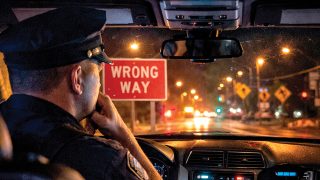
Pretextual stops for minor traffic violations are down across Los Angeles after a new policy passed in March that limits the circumstances under which officers can make them.

According to data from the LAPD, stops for non-moving and equipment violations — justifications used in the past for pretextual stops and searches — are down 40% compared to the same period last year.

Indeed, in the five months from April to the end of August this year, stops for minor offenses such as broken taillights or expired plates accounted for just 12% of total stops, compared to 21% in the same period in 2021.

The only change between this year and the last was the new policy approved by the Los Angeles Police Commission, a five-member civilian oversight board, that limits police officers to making stops only if they have a reasonable suspicion that a more serious crime has been committed.

The policy also requires officers to record their reasoning on a body camera before stopping an individual. If officers fail to do so, they can be disciplined.

Data also shows the policy change is leading to more targeted and successful searches. In stops following the ruling, police found something illegal in 26% of searches, implying they are being more selective about who they stop. Officers are also not relying as much on drivers’ consent to search their vehicle, but instead on sound judgment and reasonable suspicion.

“What we’re doing is we’re explaining ourselves more and identifying the reasoning behind it, instead of, ‘Well, I just had a hunch. I saw the guy and he looked like he might have been doing something. He gave me that look,’” LAPD Sergeant William Batista said. “That’s not enough. We got to make sure that we’re appropriately criminally profiling. We don’t do racial profiling. We do criminal profiling.”

In the past, pretextual stops were a useful tactic employed by police to confiscate drugs and illegal firearms. However, following the killing of George Floyd in 2020, pretextual stops have been increasingly seen as a form of discrimination against minorities, and have led to a breakdown of trust between police and the community.

According to the policy, officers are expected to use their “training, experience and expertise” to decide whether to make a stop and cannot make their decision based “on a mere hunch or on generalized characteristics such as a person’s race, gender, age, homeless circumstance, or presence in a high-crime location.”

The commission approved the policy despite objections from the Los Angeles Police Protective League (LAPPL) — the union representing LAPD officers — that pretextual stops were necessary to ensure public safety.

LAPD Chief Michel Moore also expressed concern to the commission the agency did not have enough time to train officers to follow the new guidelines. Lizabeth Rhodes, director of the LAPD’s Office of Constitutional Policing and Policy, said it could take four months to train officers on the new policy.

LAPPL leaders argued that the new policy will negatively impact public safety, as pretextual stops have proven effective at getting guns off the street. The union also argued that the policy violated its collective bargaining agreement with the city and is considering legal options to oppose it.

Officers Jason Goode and Michael Babel told the Los Angeles Times that stopping people for minor violations is now a rare occurrence.

“We don’t do those anymore because it’s not a public safety issue,” Babel said. “It’s in the vehicle code, and we can’t enforce it. That’s the weird thing — it’s so odd.”

Batista said stops now depend on the context. He explained that in a case of multiple burglaries in a neighborhood, stopping a car with an expired registration would be justifiable.

“Is that a pretext? Absolutely, but you had prior information of criminal activity. And as long as you identify that it was a pretext stop and you justify the reasons why you did it, it’s completely OK,” he said.


Categories: Policy Tags: public safety, union, pretextual stops, minor traffic violations, expired plates, inequality, civilian oversight board, LAPD, policy, Michel Moore

Primary Sidebar

Recent Articles

  • The first officers on scene on September 11
  • Accentuating safety for first responders
  • A surprise sting operation
  • Frankpledge to forensics: A brief history of law enforcement
  • NLEOMF announces July 2026 Officer of the Month
  • Police leadership development
  • Can they do it? Will they do it?
  • More than just a red shirt and a Sharpie
  • The sixth sense in policing
  • A unique approach to salvaging a troubled employee

Footer

Our Mission
To serve as a trusted voice of the nation’s law enforcement community, providing informative, entertaining and inspiring content on interesting and engaging topics affecting peace officers today.

Contact us: info@apbweb.com | (800) 234-0056.

  • Facebook
  • Instagram
  • Twitter

Categories

  • Editor’s Picks
  • On the Job
  • Labor
  • Tech
  • Training
  • Policy
  • Health/Wellness
  • Community
  • Offbeat
  • We Remember
  • Jobs and Careers
  • Events

Editor’s Picks

No two days are ever the same

No two days are ever the same

July 24, 2026

Training dipshittery, Part 2

Training dipshittery, Part 2

July 23, 2026

Tactical medicine for cops

Tactical medicine for cops

July 18, 2026

Why good cops quit

Why good cops quit

July 14, 2026

Policies | Consent Preferences | Copyright © 2026 APB Media, LLC | Website design, development and maintenance by 911MEDIA

Open

Subscribe

Close

Receive the latest news and updates from American Police Beat directly to your inbox!

  • This field is for validation purposes and should be left unchanged.