• Skip to primary navigation
  • Skip to main content
  • Skip to primary sidebar
  • Skip to footer
  • Home
  • About
  • The Magazine
  • Events
  • Partners
  • Products
  • Contact
  • Jobs and Careers
  • Advertise
  • Facebook
  • Instagram
  • Twitter
  • Subscribe
American Police Beat

American Police Beat Magazine

Law Enforcement Publication

  • Home
  • Leadership
    • Clarifying your “true north”
      The job has changed — have you?
      Perpetual recognition of line-of-duty deaths
      Understanding the boundaries of professional relationships with the...
      Why you should lead from 30,000 feet
  • Topics
    • Leadership
      • Clarifying your “true north”
        The job has changed — have you?
        Perpetual recognition of line-of-duty deaths
        Understanding the boundaries of professional relationships with the...
        Why you should lead from 30,000 feet
    • Editor’s Picks
      • Smile and let them swing
        The job has changed — have you?
        The days that follow
        Perpetual recognition of line-of-duty deaths
        Let’s get moving!
    • On the Job
      • High-rise rescue in Brooklyn
        Swift thinking
        K-9 officer turns children’s book author
        K-9 Day demonstrates scope of officers’ duties
        Testing the waters — literally
    • Labor
      • Drama in Georgia: Mayor fires entire police department for...
        Smile and let them swing
        The Promise Gap
        Cut the cops, save a dollar?
        Labor release under fire
    • Tech
      • NYC’s electric vehicle fleet for LE passes milestone
        New Mexico license plate readers save lives, lead to “precise...
        A modern field guide to understanding research in policing
        Gear that moves with you
        A new breed of cop car
    • Training
      • Rules or results?
        Enhance your preparedness
        Good enough never is
        Pushback as a training signal
        Let’s get moving!
    • Policy
      • Police and local government leaders join forces to build community...
        Police pause license plate readers
        Corruption, collusion and impunity
        E-bikes spark public safety concerns
        Try racing without wheels
    • Health/Wellness
      • The days that follow
        Addressing stress, vicarious trauma and burnout
        Nervous system regulation
        The nature of the job
        Promoting organizational wellness
    • Community
      • Working community connections
        Cops promote National Donate Life Month
        Police officer kicks up social media praise
        Donning denim in solidarity with victims and survivors of sexual...
        Improving autism awareness
    • Offbeat
      • “Teenage Mutant Ninja Deer” rescued
        An unexpected burglar
        Police humor only a cop would understand
        Not eggzactly a perfect heist
        Pizza … with a side of alligator?
    • We Remember
      • Shooting of Chicago police officers prompts call for new regulations...
        The sacrifice continues
        A Tribute to Fallen Heroes
        Markers of service and remembrance
        Tragedy strikes Baker to Vegas
    • HOT Mail
      • The War on Cops Continues Unabated
  • On the Job
    • High-rise rescue in Brooklyn
      Swift thinking
      K-9 officer turns children’s book author
      K-9 Day demonstrates scope of officers’ duties
      Testing the waters — literally
  • Labor
    • Drama in Georgia: Mayor fires entire police department for...
      Smile and let them swing
      The Promise Gap
      Cut the cops, save a dollar?
      Labor release under fire
  • Tech
    • NYC’s electric vehicle fleet for LE passes milestone
      New Mexico license plate readers save lives, lead to “precise...
      A modern field guide to understanding research in policing
      Gear that moves with you
      A new breed of cop car
  • Training
    • Rules or results?
      Enhance your preparedness
      Good enough never is
      Pushback as a training signal
      Let’s get moving!
  • Policy
    • Police and local government leaders join forces to build community...
      Police pause license plate readers
      Corruption, collusion and impunity
      E-bikes spark public safety concerns
      Try racing without wheels
  • Health/Wellness
    • The days that follow
      Addressing stress, vicarious trauma and burnout
      Nervous system regulation
      The nature of the job
      Promoting organizational wellness
  • Community
    • Working community connections
      Cops promote National Donate Life Month
      Police officer kicks up social media praise
      Donning denim in solidarity with victims and survivors of sexual...
      Improving autism awareness
  • Offbeat
    • “Teenage Mutant Ninja Deer” rescued
      An unexpected burglar
      Police humor only a cop would understand
      Not eggzactly a perfect heist
      Pizza … with a side of alligator?
  • We Remember
    • Shooting of Chicago police officers prompts call for new regulations...
      The sacrifice continues
      A Tribute to Fallen Heroes
      Markers of service and remembrance
      Tragedy strikes Baker to Vegas
  • HOT Mail
    • The War on Cops Continues Unabated
  • About
  • The Magazine
  • Events
  • Partners
  • Products
  • Contact
  • Jobs and Careers
  • Advertise
  • Subscribe
Search

Training

Equipping your patrol rifle with low-powered variable optics

Todd Fletcher Published April 17, 2023 @ 6:00 am PDT

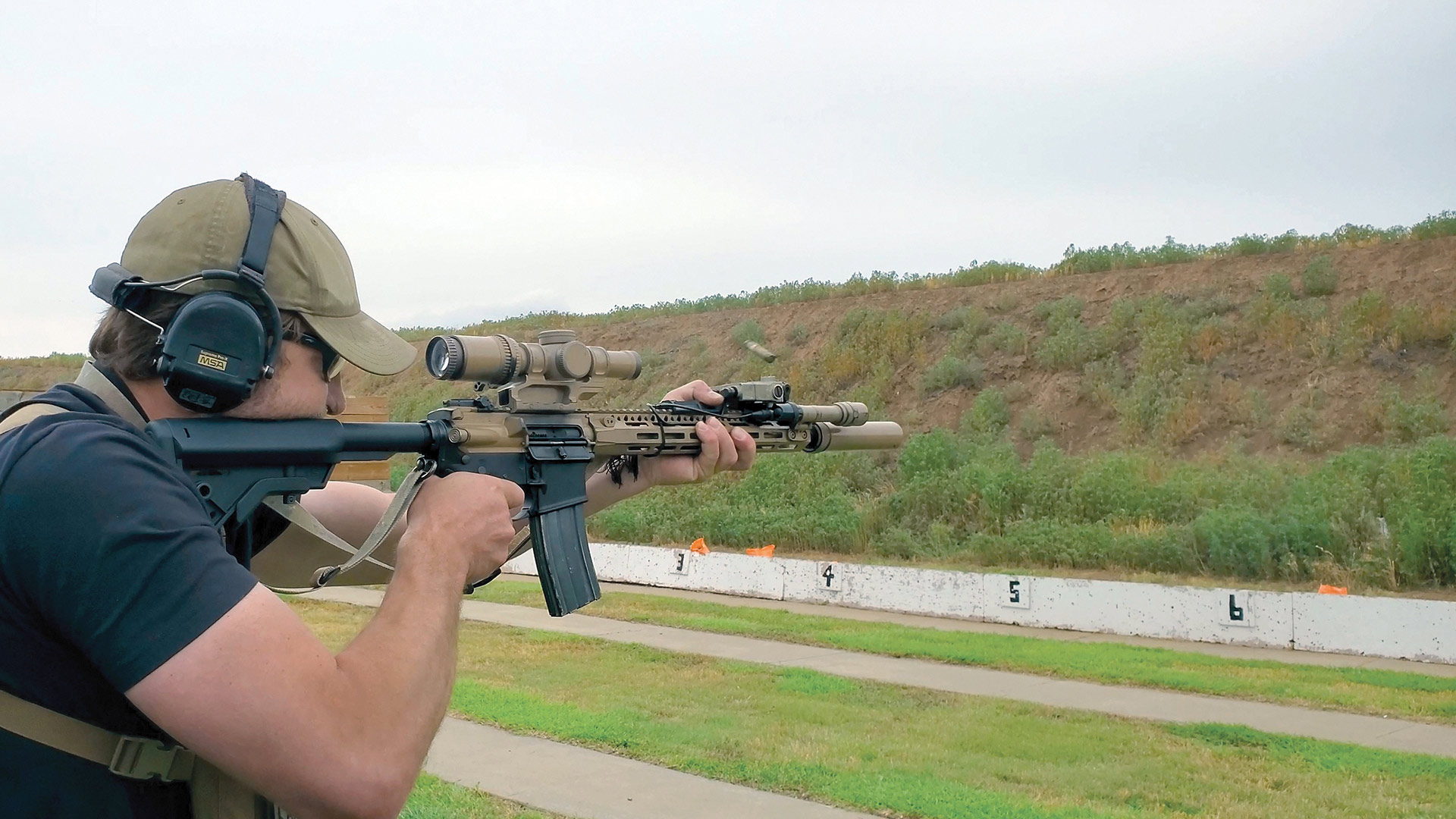
An LVPO can make officers more precise and more accurate, and provides better information-gathering for threat assessment and target identification. (Combative Firearms Training, LLC)

Not all that long ago, it was unusual to see a rifle in a city police officer’s patrol car. The 1997 North Hollywood Bank of America shootout changed everything. Two heavily armed criminals wearing body armor and hell-bent on escaping with their riches demonstrated why it is mandatory to equip officers with patrol rifles. A few years later, it became commonplace to see a rifle mounted between the seats of nearly all patrol cars.

In the early 2000s, most patrol rifles were equipped with nothing more than iron sights. Many firearm instructors swore they would never switch to red dot optics on rifles because “iron sights never fail.” However, modern red dot optics have proven durable and reliable beyond any reasonable measure. Instructors have seen how red dot optics on patrol rifles have led to better accuracy and overall officer competency. Today, it’s unusual to see a patrol rifle setup without a red dot optic. The next step in the evolution of optics on patrol rifles is the more widespread use of low-powered variable optics (LPVOs).

Better and safer

LPVOs are rifle-mounted optics that can be adjusted from no magnification to a low-magnification setting somewhere between 4x and 6x of normal vision. This allows a tremendous amount of flexibility depending on the user’s needs. Leaving the LPVO on 1x (or no magnification) maintains the same advantages as traditional red dot optics on a patrol rifle. At close-quarter distances, no magnification allows for a wide field of view and rapid target acquisition. 

The vast majority of LPVOs come equipped with an etched reticle that functions with or without battery power. If the battery goes down, all you lose is illumination, and the etched reticle continues to be available. In contrast, non-magnified red dot reticles generally rely on battery power to provide a point of aim. Without battery power, there is no dot, and you lose the benefits of the red dot optic. Additionally, LPVOs with an etched reticle provide the user with superior sharpness, especially for shooters with astigmatism. The starburst or halo effect can be a significant problem when using non-magnified red dot optics. However, very few officers with astigmatism report problems using LPVOs.

As the distance increases, the adjustable magnification really begins to illustrate the advantages of mounting an LPVO on a patrol rifle. If more precise shot placement is required to stop a threat, an LPVO is a much better tool for the job. Without a doubt, it is significantly easier to make accurate hits on target at extended distances using an LPVO. It’s also easier to make accurate hits on much smaller targets at longer distances.

When it comes to shooting well quickly, I have found that I’m just as fast in close with an LPVO as I am with a non-magnified red dot. I can also say with absolute confidence that, outside 25 yards, I’m much quicker and more precise with an LPVO.

As much as shot placement improves, the single biggest advantage of adjustable magnification for patrol rifles is what happens before the trigger is pressed. There should be no doubt that accurate threat assessment and positive target identification are critical when engaging with deadly force. This is where a patrol rifle equipped with an LPVO really shines, and a non-magnified red dot optic can’t even compete. Increased magnification provides a much better and more accurate view of the threat. It’s possible mistake-of-fact shootings could be reduced through better information and target identification, which is inherently provided with the use of LPVOs. The advantage of improved vision means better decision-making. That’s a win for everyone.
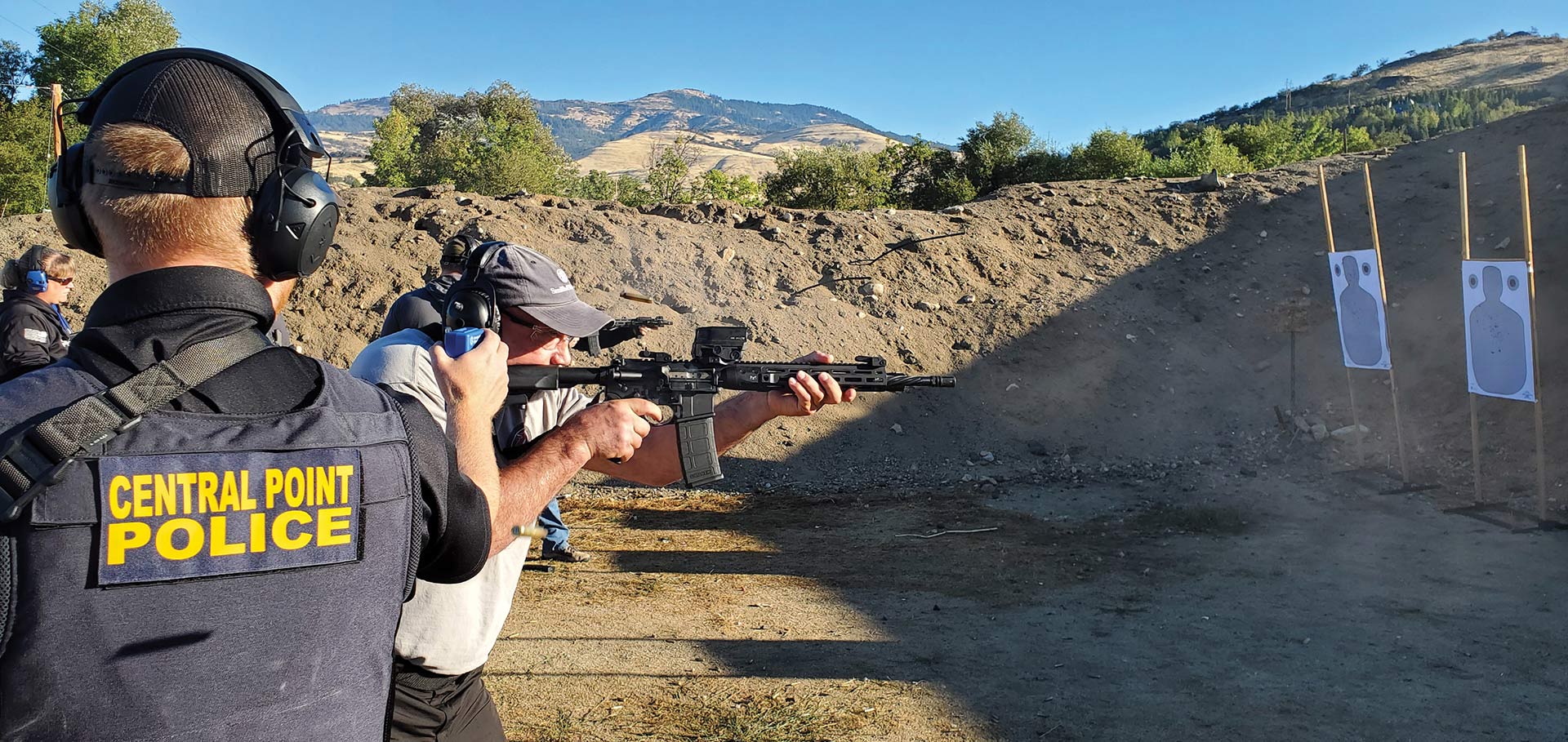
Non-magnified red dot optics are less expensive and significantly lighter. (Combative Firearms Training, LLC)

The drawbacks

With the advantages of LPVOs, it cannot be said that they are without drawbacks. First, LPVOs are more expensive than non-magnified red dot optics of similar quality. Retail prices of duty-ready LPVOs can easily range between $1,000 and $3,000. Again, these are duty-ready optics built to withstand the conditions and rigors of law enforcement work. You get what you pay for, but this is significantly more expensive than duty-ready red dots. This doesn’t mean that LPVOs aren’t worth the money. As a matter of fact, how much value can you put on better threat assessment and target identification? Value depends on application.

Aside from price, LPVOs come with a size and weight penalty. A red dot optic from one of the popular optic brands takes up less real estate on the upper receiver and weighs only 5.9 ounces with the mount. In comparison, an LPVO from this same manufacturer leaves barely enough room for a backup iron sight and weighs 23.2 ounces. It’s easy to understand why there’s such a significant size and weight discrepancy. Magnified optics need more glass and require distance between the lenses to work. Glass is heavy, and the more magnification there is, the more glass is needed, adding more size and weight. The weight penalty alone could be enough to dissuade some officers from choosing the LPVO option.

The single biggest operational downside to LPVOs is a more defined limit for eye relief compared to a non-magnified red dot sight. Eye relief refers to the distance between your eye and the rear lens of the optic while having a full downrange view through the glass. If you have ever looked through a scope and seen a black ring around the image, you were either too close or too far away from the optic and outside the eye relief range. Eye relief can change based on shooting positions. Standing, sitting and prone positions affect how far your eye is from the glass and can result in a limited view through the LPVO. The simple solution is to mount the optic on the rifle to accommodate your most likely shooting positions. After that, it’s back to the range to practice and train so that you are consistently placing your cheek on the stock in the sweet spot without conscious thought.

Modern firearms, ammunition, optics and training have advanced the capability and accuracy of our officers. LPVOs are another equipment option that may be the perfect choice for someone who wants the ability to accurately identify and hit small targets at distances between zero and 200 yards without compromising the capability of fast engagements at close quarters. More and more officers have started to make this decision, allowing them to wring the most performance out of their patrol rifles. From door-kicking building searches to downrange information-gathering, LPVOs have you covered.

Todd Fletcher

Todd Fletcher

Todd Fletcher is a retired sergeant from central Oregon with over 30 years of law enforcement experience. He presents firearms training, instructor certification and instructor development classes nationwide. Todd has presented at multiple regional, national and international conferences, including multiple ILEETA conferences and IALEFI events. He owns Combative Firearms Training, LLC, providing firearms training, handgun and patrol rifle instructor certification, and instructor development classes to law enforcement, military and private security. He can be contacted at Todd@CombativeFirearms.com.

View articles by Todd Fletcher

As seen in the April 2023 issue of American Police Beat magazine.
Don’t miss out on another issue today! Click below:


SUBSCRIBE TODAY!

Categories: Training

Primary Sidebar

Recent Articles

  • Drama in Georgia: Mayor fires entire police department for criticizing his wife
  • Shooting of Chicago police officers prompts call for new regulations on electronic monitoring
  • High-rise rescue in Brooklyn
  • Swift thinking
  • Cheektowaga P.D. boosts patrol efficiency with Patrolfinder
  • Working community connections
  • “Teenage Mutant Ninja Deer” rescued
  • NLEOMF announces April 2026 Officers of the Month
  • Rules or results?
  • The sacrifice continues

Footer

Our Mission
To serve as a trusted voice of the nation’s law enforcement community, providing informative, entertaining and inspiring content on interesting and engaging topics affecting peace officers today.

Contact us: info@apbweb.com | (800) 234-0056.

  • Facebook
  • Instagram
  • Twitter

Categories

  • Editor’s Picks
  • On the Job
  • Labor
  • Tech
  • Training
  • Policy
  • Health/Wellness
  • Community
  • Offbeat
  • We Remember
  • Jobs and Careers
  • Events

Editor’s Picks

Smile and let them swing

Smile and let them swing

May 16, 2026

The job has changed — have you?

The job has changed — have you?

May 15, 2026

The days that follow

The days that follow

May 11, 2026

Perpetual recognition of line-of-duty deaths

Perpetual recognition of line-of-duty deaths

May 10, 2026

Policies | Consent Preferences | Copyright © 2026 APB Media, LLC | Website design, development and maintenance by 911MEDIA

Open

Subscribe

Close

Receive the latest news and updates from American Police Beat directly to your inbox!

  • This field is for validation purposes and should be left unchanged.