• Skip to primary navigation
  • Skip to main content
  • Skip to primary sidebar
  • Skip to footer
  • Home
  • About
  • The Magazine
  • Events
  • Partners
  • Products
  • Contact
  • Jobs and Careers
  • Advertise
  • Facebook
  • Instagram
  • Twitter
  • Subscribe
American Police Beat

American Police Beat Magazine

Law Enforcement Publication

  • Home
  • Leadership
    • The relentless pursuit of excellence
      An effective strategy for difficult discussions
      Developing and enhancing assertiveness
      Clarifying your “true north”
      The job has changed — have you?
  • Topics
    • Leadership
      • The relentless pursuit of excellence
        An effective strategy for difficult discussions
        Developing and enhancing assertiveness
        Clarifying your “true north”
        The job has changed — have you?
    • Editor’s Picks
      • No two days are ever the same
        Training dipshittery, Part 2
        Tactical medicine for cops
        Why good cops quit
        Smile and let them swing
    • On the Job
      • From warrior to peacekeeper
        Hats off to a new uniform look
        Overcoming climate and conditions to rescue child
        Father and son mark career milestones together
        Officer’s determination closes case and surprises cancer patient
    • Labor
      • The shift happens long before the resignation letter
        Facing the oral board
        Why good cops quit
        Succession planning
        Why more staff won’t fix your operational slowdowns
    • Tech
      • Take Me Home program offers effective tool for police and families
        Get the most out of simulation training
        The virtual beat
        Training with an AI partner?
        NYC’s electric vehicle fleet for LE passes milestone
    • Training
      • Train them to ask why
        Nobody is coming to do it for you
        Precision, adaptability and response: The need for LPVOs in equipping...
        Training dipshittery, Part 2
        Tactical medicine for cops
    • Policy
      • Out of chaos comes opportunity
        Massachusetts law establishes fund to care for retired K-9s
        Portlanders will not vote on diverting climate funds for police...
        Surviving internal affairs investigations
        Fighting human trafficking at the local level
    • Health/Wellness
      • Understanding why police officers think alcohol works
        Has the job quietly stolen your humanity?
        No two days are ever the same
        Changing the narrative
        Supporting your peer support team
    • Community
      • Pittsburgh mounted patrol officer helps inner-city kids saddle up
        Wyoming girl on a mission to collect “hero patches”
        Texas sheriff’s office nominates 7-year-old for commendation
        Cops try to net DEA agents
        A different type of teen takeover
    • Offbeat
      • Could cadaver otters help close cold cases?
        Police chief catches cat in the act
        “Teenage Mutant Ninja Deer” rescued
        An unexpected burglar
        Police humor only a cop would understand
    • We Remember
      • Protecting America with the USA PATRIOT Act
        Distant cousins connect to honor fallen family member 110 years after...
        9/11 Victim Compensation Fund: A journey to coverage
        Driver charged with murder after striking LAPD sergeant at 112 mph
        Unsung heroes: New York City correction officers
    • HOT Mail
      • The War on Cops Continues Unabated
  • On the Job
    • From warrior to peacekeeper
      Hats off to a new uniform look
      Overcoming climate and conditions to rescue child
      Father and son mark career milestones together
      Officer’s determination closes case and surprises cancer patient
  • Labor
    • The shift happens long before the resignation letter
      Facing the oral board
      Why good cops quit
      Succession planning
      Why more staff won’t fix your operational slowdowns
  • Tech
    • Take Me Home program offers effective tool for police and families
      Get the most out of simulation training
      The virtual beat
      Training with an AI partner?
      NYC’s electric vehicle fleet for LE passes milestone
  • Training
    • Train them to ask why
      Nobody is coming to do it for you
      Precision, adaptability and response: The need for LPVOs in equipping...
      Training dipshittery, Part 2
      Tactical medicine for cops
  • Policy
    • Out of chaos comes opportunity
      Massachusetts law establishes fund to care for retired K-9s
      Portlanders will not vote on diverting climate funds for police...
      Surviving internal affairs investigations
      Fighting human trafficking at the local level
  • Health/Wellness
    • Understanding why police officers think alcohol works
      Has the job quietly stolen your humanity?
      No two days are ever the same
      Changing the narrative
      Supporting your peer support team
  • Community
    • Pittsburgh mounted patrol officer helps inner-city kids saddle up
      Wyoming girl on a mission to collect “hero patches”
      Texas sheriff’s office nominates 7-year-old for commendation
      Cops try to net DEA agents
      A different type of teen takeover
  • Offbeat
    • Could cadaver otters help close cold cases?
      Police chief catches cat in the act
      “Teenage Mutant Ninja Deer” rescued
      An unexpected burglar
      Police humor only a cop would understand
  • We Remember
    • Protecting America with the USA PATRIOT Act
      Distant cousins connect to honor fallen family member 110 years after...
      9/11 Victim Compensation Fund: A journey to coverage
      Driver charged with murder after striking LAPD sergeant at 112 mph
      Unsung heroes: New York City correction officers
  • HOT Mail
    • The War on Cops Continues Unabated
  • About
  • The Magazine
  • Events
  • Partners
  • Products
  • Contact
  • Jobs and Careers
  • Advertise
  • Subscribe
Search

Health/Wellness

Imagery tactics for peak performance

How mental practice can yield real results

Dr. Stephanie Barone McKenny and Trinity McKenny Published January 25, 2024 @ 3:00 pm PST

iStock.com/Mihaela Rosu

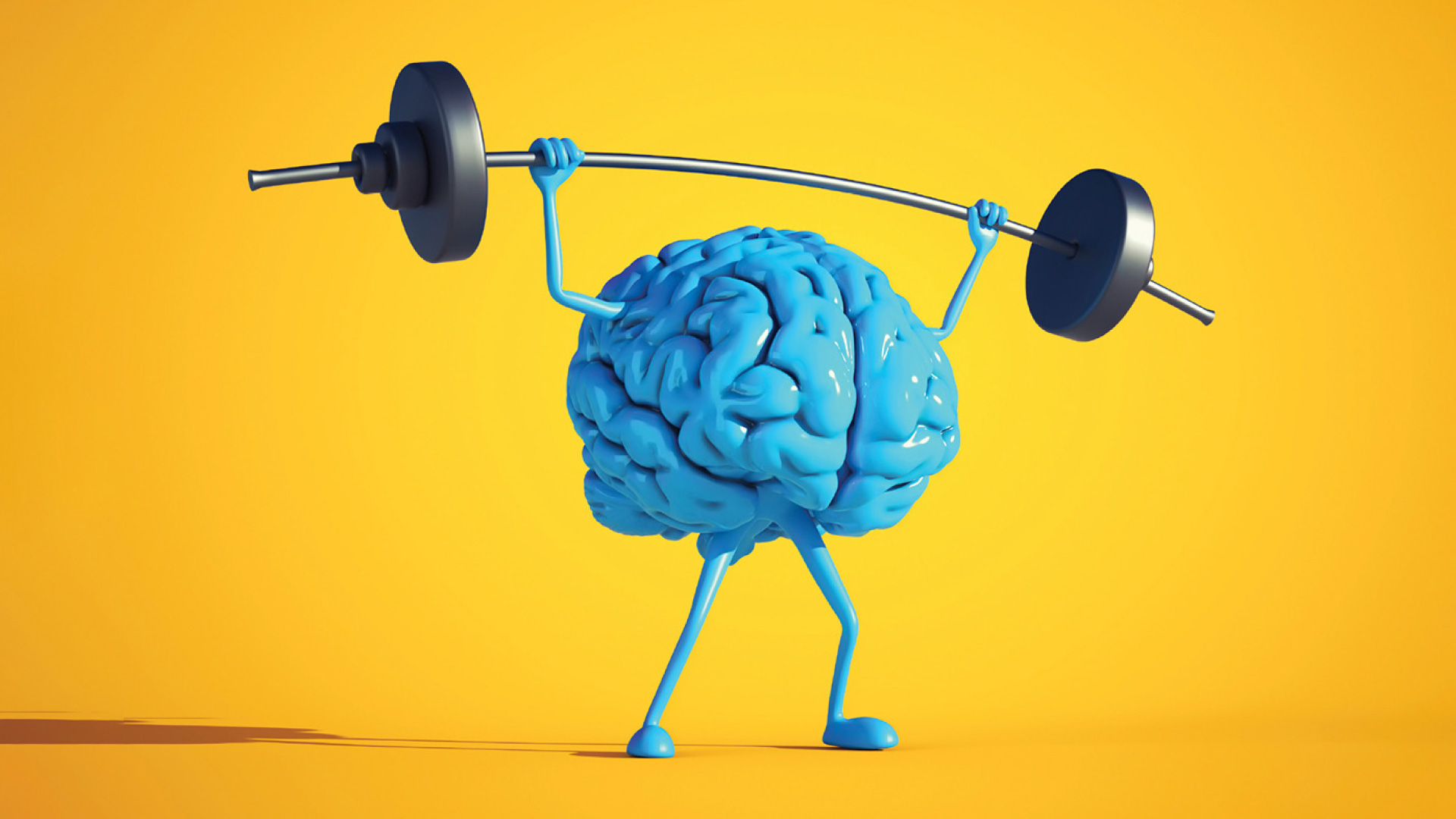
Research demonstrates that mental practice — mental rehearsal of a particular task without engaging in overt actions — is better than no practice at all. Think about that when you are IOD and assigned to home, when you are recovering from surgery or when you are working mandatory OT and do not have enough time even to sleep.

Mental practice will also boost your performance over others who did not engage in such practice, even if they had identical tactical, physical and mental skills training. Think about that when you are preparing for your next promotional exam, when you are vying for the Baker to Vegas race or when you want to improve your score on the next quarterly quals at the shooting range.

Imagery training involves mental rehearsal of the desired task. Officers imagine themselves performing the task without engaging in the actual physical movements involved. They recall sensory input (say, from the shooting range) that they have already stored in memory; e.g.: standing shoulder width apart, left foot a little in front of the right, weight distributed to lead foot, everything goes forward, hand on forearm, mounting the gun, bringing firearm to the face, pushing into the gun butt to absorb the recoil, comb against cheek, leaning into the firearm, lining up sights, standing natural and comfortable, ready and steady, pulling the trigger and shooting the targets as they come, hearing the gun fire, hitting the bullseye each time. All of this is done in the absence of external stimuli — meaning, without actually being on the shooting range, looking at any targets or holding the shotgun.

The following are some guidelines for using imagery as a performance enhancement tool for law enforcement officers, along with potential problems and how to correct them.

The more senses you use in your mental rehearsal, the more vivid, better-quality and more effective your imagery training will be.

Imagery tactics

Use all senses. Imagery training involves more than visualization. The more senses you use in your mental rehearsal, the more vivid, better-quality and more effective your imagery training will be. For example, do not just see the target, the gun sights or the cloud of smoke. Feel the butt against your shoulder, the comb against your cheek, your hand on the stock, your finger unlocking the safety, your finger pulling the trigger. Hear the gunshot, the ejected cartridge, the pump action. Smell, or even taste, the rotten-egg smoke. 

Control content. The brain will ultimately perform in the way it is trained. If you are using positive imagery (e.g., hitting the bullseye, running the sub-5:30 mile, catching the suspect, getting the promotion), your brain will take you there. If you are using negative imagery (e.g., missing the bullseye or the target completely, being distracted by onlookers, twisting the ankle, not making the running team), your brain will take you there. So ask yourself where you really want to go, and practice controlling your imagery.

Shift perspectives. Practice imagery using internal perspectives (e.g., mentally rehearse shooting the gun from the perspective of being inside your body, actually experiencing performing the task). Also practice imagery using external perspectives (e.g., mentally rehearse shooting the gun from the perspective of watching yourself perform the task, from the vantage point of the safety instructor or your duty partner or perhaps even projected onto a movie screen).

Combine with relaxation. Imagery and relaxation yield greater performance than imagery training alone — and this is particularly true for beginners in imagery training. Intensity regulation aimed at relaxation (e.g., breath control, passive progressive muscle relaxation) can clear mental distractions and aid performance.

Use in schools and before shifts. Olympic and elite athletes will use imagery training in practice and before competitions. Officers should consider their various schools as “practice” and their shifts as “competitions.” In reality, each officer must always be ready, because true work “competitions” (e.g., chasing the suspect), unlike for the competitive athlete, are never scheduled. The officer never knows the day, time, place, event (e.g., sprint or long-distance running, boxing, hurdling, wrestling, shooting), environmental conditions (e.g., distracting crowd, broken windows, police cars on fire) and additional skills required (e.g., CPR, tourniquet for severed limb). 

Develop coping. There are times (albeit rarely) to incorporate negative imagery, and this should be utilized strategically. If officers choose to implement negative imagery as a coping strategy to turn around poor performance, it is best implemented, say, when they are home IOD and certainly not immediately prior to a work shift.

Use recordings. Video and audio recordings can be helpful in developing and reinforcing the imagery that you want. You can have the police psychologist make a recorded script tailored just for you that you could play (for example) on the way to work each day. You can make your own recording(s) to reinforce the same cues that you want to use during any given shift. You can record yourself in a training situation (e.g., shooting range, EVOC course, WMD school, peer support school), and for those situations where you performed well, these success tapes can be particularly helpful in your imagery training. You can also download generic recordings made by others. 

Incorporate cues. Cues — words, phrases, kinesthetic movements or other sensory experiences — can enhance imagery rehearsal and quality. What cue word do you use when you shoot? Do you say “press” or “smooth” when you pull the trigger? Do you say “relax” or “be calm” when you are angry or anxious at work? You want to be able to mentally evoke the appropriate performance image(s) when you use your cue(s).

Incorporate movement. The feel of any given task is important (e.g., the shotgun butt against your shoulder), so it can be helpful to literally move during imagery rehearsal (e.g., change your stance, move as if you are bringing the gun to you, move as if you are looking through the sights). This will also help you more clearly recall the sensory experiences needed for your imagery rehearsals.

Emphasize real time. The bulk of an officer’s imagery training should be done in real time (as opposed to slow play or fast-forward). You can slow down mental rehearsal of your shot or your run to analyze technical performance. You can speed up mental rehearsal of your task; this is particularly helpful if it is a long performance task (e.g., Unity Tour ride, ultramarathon run, boxing match, Ironman competition). Real time is primarily utilized in most imagery training because the actual task is done in real time.

Use logs. Officers are encouraged to monitor their imagery practice and their progress. Logs help increase awareness and self-confidence, identify better cues, and identify when and why better performances occur. This is why runners routinely use logs, and why people who are having trouble sleeping often start a sleep log. It may help your imagery training and boost performance.

Practice regularly. Skills training of any kind requires commitment and regular practice for proficiency. Integrate imagery training into your daily practice. For best results, practice multiple times a day.

Imagery training is not a quick fix for weak performance. It requires attention, commitment,
time and energy.

Potential pitfalls

Imagery training is not a quick fix for weak performance. It requires attention, commitment, time and energy. It will not compensate for inadequate tactical and physical skills. It will not make you an overnight superstar.  

Do not assume that imagery training is not working if you are not seeing immediate performance improvements. Stay the course. Maintain your commitment to daily practice. Even brief attention (sometimes even just a few seconds) can help in the moment to correct what you did wrong or reinforce what you did well. 

No man is an island. To maximize the probability of your success in imagery training, consider consulting with the department police psychologist or a sports psychologist for coaching and support. But know that it all begins and ends with your mind.

Success is where preparation and opportunity meet.

Dr. Stephanie Barone McKenny and Trinity McKenny

Dr. Stephanie Barone McKenny and Trinity McKenny

Dr. Stephanie Barone McKenny is the chair of the International Association of Chiefs of Police (IACP) Police Psychological Services Section (PPSS). She proudly served the men and women of the Los Angeles Police Department for over 20 years and continues to provide consultation to law enforcement agencies around the world as her mission. She is also a diplomate in sports psychology. All correspondence concerning this article should be addressed to Dr. McKenny at smckenny@gmail.com.

Trinity McKenny is a biomedical engineering intern at Kaiser Permanente’s neuroscience center. She is an LAPD volunteer who has created biomedical devices for law enforcement, a second dan black belt in taekwondo, and gold medalist and record holder in the California State Cross-Country Running Championships.

View articles by Dr. Stephanie Barone McKenny and Trinity McKenny

As seen in the January 2024 issue of American Police Beat magazine.
Don’t miss out on another issue today! Click below:


SUBSCRIBE TODAY!

Categories: Health/Wellness

Primary Sidebar

Recent Articles

  • Train them to ask why
  • Nobody is coming to do it for you
  • Protecting America with the USA PATRIOT Act
  • The shift happens long before the resignation letter
  • Out of chaos comes opportunity
  • From warrior to peacekeeper
  • Pittsburgh mounted patrol officer helps inner-city kids saddle up
  • NLEOMF announces 2026 National Officer Safety and Wellness Award Winners
  • Could cadaver otters help close cold cases?
  • GOSAFE Technology announces public safety initiative focused on firearm security and risk reduction

Footer

Our Mission
To serve as a trusted voice of the nation’s law enforcement community, providing informative, entertaining and inspiring content on interesting and engaging topics affecting peace officers today.

Contact us: info@apbweb.com | (800) 234-0056.

  • Facebook
  • Instagram
  • Twitter

Categories

  • Editor’s Picks
  • On the Job
  • Labor
  • Tech
  • Training
  • Policy
  • Health/Wellness
  • Community
  • Offbeat
  • We Remember
  • Jobs and Careers
  • Events

Editor’s Picks

No two days are ever the same

No two days are ever the same

July 24, 2026

Training dipshittery, Part 2

Training dipshittery, Part 2

July 23, 2026

Tactical medicine for cops

Tactical medicine for cops

July 18, 2026

Why good cops quit

Why good cops quit

July 14, 2026

Policies | Consent Preferences | Copyright © 2026 APB Media, LLC | Website design, development and maintenance by 911MEDIA

Open

Subscribe

Close

Receive the latest news and updates from American Police Beat directly to your inbox!

  • This field is for validation purposes and should be left unchanged.