• Skip to primary navigation
  • Skip to main content
  • Skip to primary sidebar
  • Skip to footer
  • Home
  • About
  • The Magazine
  • Events
  • Partners
  • Products
  • Contact
  • Jobs and Careers
  • Advertise
  • Facebook
  • Instagram
  • Twitter
  • Subscribe
American Police Beat

American Police Beat Magazine

Law Enforcement Publication

  • Home
  • Leadership
    • Understanding the boundaries of professional relationships with the...
      Why you should lead from 30,000 feet
      Public perception and trust
      When performance reviews are a waste of time
      Taking a page from Toyota’s playbook
  • Topics
    • Leadership
      • Understanding the boundaries of professional relationships with the...
        Why you should lead from 30,000 feet
        Public perception and trust
        When performance reviews are a waste of time
        Taking a page from Toyota’s playbook
    • Editor’s Picks
      • Liability challenges in contemporary policing
        When performance reviews are a waste of time
        Proactive wellness visits
        Taking a page from Toyota’s playbook
        Law enforcement’s missing weapon
    • On the Job
      • Villains and heroes in the Big Apple
        Right place, right time — again
        Some good news on crime
        Mom-to-be named Cop of the Year
        Fatherly instincts save boy from icy water
    • Labor
      • The Promise Gap
        Cut the cops, save a dollar?
        Labor release under fire
        Who’s watching the watchmen?
        Crime and punishment (or lack thereof) in Seattle
    • Tech
      • New Mexico license plate readers save lives, lead to “precise...
        A modern field guide to understanding research in policing
        Gear that moves with you
        A new breed of cop car
        The future of patrol is here
    • Training
      • The five minutes before the ambulance
        Navigating danger
        Critical thinking in police training
        Threshold neuroscience
        Integrated virtual reality training
    • Policy
      • Corruption, collusion and impunity
        E-bikes spark public safety concerns
        Try racing without wheels
        Law enforcement accreditation: Why it matters
        Liability challenges in contemporary policing
    • Health/Wellness
      • Addressing stress, vicarious trauma and burnout
        Nervous system regulation
        The nature of the job
        Promoting organizational wellness
        Telling cops to get more sleep isn’t working
    • Community
      • Improving autism awareness
        Shop with a Cop
        Community engagement: What is it moving forward?
        Contradictory crossroads
        Back-to-school season brings out police support nationwide
    • Offbeat
      • An unexpected burglar
        Police humor only a cop would understand
        Not eggzactly a perfect heist
        Pizza … with a side of alligator?
        Wisconsin man charged with impersonating Border Patrol agent twice in...
    • We Remember
      • Heroes of the World Trade Center
        Forty heroes: United Airlines Flight 93
        The Pentagon
        A nation propelled to war, lives changed forever
        A Christmas loss
    • HOT Mail
      • The War on Cops Continues Unabated
  • On the Job
    • Villains and heroes in the Big Apple
      Right place, right time — again
      Some good news on crime
      Mom-to-be named Cop of the Year
      Fatherly instincts save boy from icy water
  • Labor
    • The Promise Gap
      Cut the cops, save a dollar?
      Labor release under fire
      Who’s watching the watchmen?
      Crime and punishment (or lack thereof) in Seattle
  • Tech
    • New Mexico license plate readers save lives, lead to “precise...
      A modern field guide to understanding research in policing
      Gear that moves with you
      A new breed of cop car
      The future of patrol is here
  • Training
    • The five minutes before the ambulance
      Navigating danger
      Critical thinking in police training
      Threshold neuroscience
      Integrated virtual reality training
  • Policy
    • Corruption, collusion and impunity
      E-bikes spark public safety concerns
      Try racing without wheels
      Law enforcement accreditation: Why it matters
      Liability challenges in contemporary policing
  • Health/Wellness
    • Addressing stress, vicarious trauma and burnout
      Nervous system regulation
      The nature of the job
      Promoting organizational wellness
      Telling cops to get more sleep isn’t working
  • Community
    • Improving autism awareness
      Shop with a Cop
      Community engagement: What is it moving forward?
      Contradictory crossroads
      Back-to-school season brings out police support nationwide
  • Offbeat
    • An unexpected burglar
      Police humor only a cop would understand
      Not eggzactly a perfect heist
      Pizza … with a side of alligator?
      Wisconsin man charged with impersonating Border Patrol agent twice in...
  • We Remember
    • Heroes of the World Trade Center
      Forty heroes: United Airlines Flight 93
      The Pentagon
      A nation propelled to war, lives changed forever
      A Christmas loss
  • HOT Mail
    • The War on Cops Continues Unabated
  • About
  • The Magazine
  • Events
  • Partners
  • Products
  • Contact
  • Jobs and Careers
  • Advertise
  • Subscribe
Search

Editor's Picks

Is what you’re calling “training” really just “compliance”?

Scott Savage Published January 18, 2024 @ 6:00 am PST

iStock.com/Aslan Alphan

A movie about police training? Count me in! Recently, a new documentary chronicling how the martial arts have influenced police defensive tactics training was released. The documentary is called Wrist Lock and is well worth your time. Speaking of time, which do you think takes longer: watching this 91-minute movie or attending a police officer’s yearly minimum defensive tactics training? The answer may surprise you.

The Wrist Lock documentary is about “the influence of martial arts on police use of force training.” This movie is a collection of interviews of high-level trainers and practitioners discussing the chasm between the training needed to maintain proficiency in defensive tactics compared with how the average officer is actually trained. (For clarity, I am using the term “defensive tactics” to describe what may otherwise be known as arrest and control techniques, hand-to-hand skills, etc.) Throughout the interviews with police trainers and martial artists, they all agree on one key fact: the average police officer is insufficiently trained.

Too often, the focus is making sure the officer met a predetermined standard number of hours, with little thought given to whether learning occurred.

Minimum training standards vary by state — if any standard exists at all. As a California police officer, it took me longer to watch the documentary than it would have taken to attend my yearly required defensive tactics training. Sound unbelievable? Let me explain.

In California, police officers are required to attend four hours of defensive tactics training every two years. That means every other year, there is no requirement to attend defensive tactics training at all. In other words, if I don’t complete any type of training in physical control skills for a period of one year, I would still be perfectly compliant with the standard. But consider this question: Would I be trained? Let’s take a closer look at conventional California defensive tactics training and I’ll let you decide.

During the year it is required, the four-hour minimum will include things like instructor introductions, bathroom breaks, instructor lecture, the ever-present PowerPoint slide deck, etc., so in actuality I won’t be receiving a full four hours of training. Also, because many students will rotate through the various training evolutions, there will of course be some downtime. This means the actual time an individual officer like me will spend physically training on a motor skill like handcuffing or control holds may be just a few minutes per skill. The focus will be on techniques, and the instructors may have a checklist of steps that each student must complete in order to perform the technique correctly. Students may go though a handful of scenarios stations, where the focus is on safety instead of realism. (After all, if an officer gets hurt, that will affect the already dismal staffing situation on the street.) I’m sure you would agree this training standard is feeble. Worse yet, many states do not even have this feeble hourly requirement.

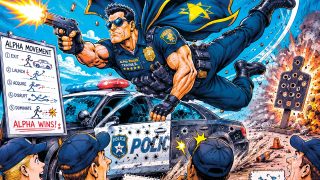
But is this really training? The word “training” is prevalent in the law enforcement industry. Agencies of any significant size will have their own training unit, and officers will routinely attend a day of activity that is referred to as “training.” But would a more accurate term for the activity be “compliance”?

After the tragedies in Uvalde and with George Floyd, there was a lot of discussion about how the officers were trained. In both
cases, media outlets were quick to point out that the officers attended training. In the trial of Derek Chauvin, the officer who was convicted of killing George Floyd, the jury spent hours analyzing how many hours of training Chauvin received. They failed to ask a more important question: Did he learn anything? Simply attending training isn’t synonymous with being trained. The purpose of having officers attend one, two or even 100 hours of training may really be more about being compliant with a requirement versus actually training them to perform. Too often, the focus of such activity is making sure the officer met a predetermined standard number of hours, with little thought given to whether learning occurred.

As the movie Wrist Lock points out, society cannot ask police officers to perform skillfully in the field without providing them the training to do so. Training, real training, should involve officers embedding information into long-term memory and developing the skills to retrieve that information when it’s needed. Training should involve helping officers operate in the tense, uncertain and rapidly evolving circumstances they so frequently see in the field. Training should involve helping officers develop sense-making and decision-making skills. Yes, there should be compliance as well, but if we as a society have to choose, I would rather the officer be trained than compliant.

Scott Savage

Scott Savage

Scott Savage is an active-duty law enforcement officer in Northern California. He is also the founder of the Savage Training Group, a professional law enforcement training organization. For more information, go to savagetraininggroup.com.

View articles by Scott Savage

As seen in the January 2024 issue of American Police Beat magazine.
Don’t miss out on another issue today! Click below:


SUBSCRIBE TODAY!

Categories: Editor's Picks, Training

Primary Sidebar

Recent Articles

  • Heroes of the World Trade Center
  • The Promise Gap
  • Corruption, collusion and impunity
  • The five minutes before the ambulance
  • New Mexico license plate readers save lives, lead to “precise policing”
  • Addressing stress, vicarious trauma and burnout
  • Understanding the boundaries of professional relationships with the boss
  • E-bikes spark public safety concerns
  • Improving autism awareness
  • Cut the cops, save a dollar?

Footer

Our Mission
To serve as a trusted voice of the nation’s law enforcement community, providing informative, entertaining and inspiring content on interesting and engaging topics affecting peace officers today.

Contact us: info@apbweb.com | (800) 234-0056.

  • Facebook
  • Instagram
  • Twitter

Categories

  • Editor’s Picks
  • On the Job
  • Labor
  • Tech
  • Training
  • Policy
  • Health/Wellness
  • Community
  • Offbeat
  • We Remember
  • Jobs and Careers
  • Events

Editor’s Picks

Liability challenges in contemporary policing

Liability challenges in contemporary policing

February 27, 2026

When performance reviews are a waste of time

When performance reviews are a waste of time

February 26, 2026

Proactive wellness visits

Proactive wellness visits

February 25, 2026

Taking a page from Toyota’s playbook

Taking a page from Toyota’s playbook

February 23, 2026

Policies | Consent Preferences | Copyright © 2026 APB Media, LLC | Website design, development and maintenance by 911MEDIA

Open

Subscribe

Close

Receive the latest news and updates from American Police Beat directly to your inbox!

  • This field is for validation purposes and should be left unchanged.