• Skip to primary navigation
  • Skip to main content
  • Skip to primary sidebar
  • Skip to footer
  • Home
  • About
  • The Magazine
  • Events
  • Partners
  • Products
  • Contact
  • Jobs and Careers
  • Advertise
  • Facebook
  • Instagram
  • Twitter
  • Subscribe
American Police Beat

American Police Beat Magazine

Law Enforcement Publication

  • Home
  • Leadership
    • Clarifying your “true north”
      The job has changed — have you?
      Perpetual recognition of line-of-duty deaths
      Understanding the boundaries of professional relationships with the...
      Why you should lead from 30,000 feet
  • Topics
    • Leadership
      • Clarifying your “true north”
        The job has changed — have you?
        Perpetual recognition of line-of-duty deaths
        Understanding the boundaries of professional relationships with the...
        Why you should lead from 30,000 feet
    • Editor’s Picks
      • Let’s get moving!
        Heroes of the World Trade Center
        The Promise Gap
        Corruption, collusion and impunity
        Liability challenges in contemporary policing
    • On the Job
      • Testing the waters — literally
        Frankpledge to forensics: A brief history of law enforcement
        Villains and heroes in the Big Apple
        Right place, right time — again
        Some good news on crime
    • Labor
      • Smile and let them swing
        The Promise Gap
        Cut the cops, save a dollar?
        Labor release under fire
        Who’s watching the watchmen?
    • Tech
      • New Mexico license plate readers save lives, lead to “precise...
        A modern field guide to understanding research in policing
        Gear that moves with you
        A new breed of cop car
        The future of patrol is here
    • Training
      • Pushback as a training signal
        Let’s get moving!
        The five minutes before the ambulance
        Navigating danger
        Critical thinking in police training
    • Policy
      • Police pause license plate readers
        Corruption, collusion and impunity
        E-bikes spark public safety concerns
        Try racing without wheels
        Law enforcement accreditation: Why it matters
    • Health/Wellness
      • The days that follow
        Addressing stress, vicarious trauma and burnout
        Nervous system regulation
        The nature of the job
        Promoting organizational wellness
    • Community
      • Improving autism awareness
        Shop with a Cop
        Community engagement: What is it moving forward?
        Contradictory crossroads
        Back-to-school season brings out police support nationwide
    • Offbeat
      • An unexpected burglar
        Police humor only a cop would understand
        Not eggzactly a perfect heist
        Pizza … with a side of alligator?
        Wisconsin man charged with impersonating Border Patrol agent twice in...
    • We Remember
      • A Tribute to Fallen Heroes
        Markers of service and remembrance
        Tragedy strikes Baker to Vegas
        Heroes of the World Trade Center
        Forty heroes: United Airlines Flight 93
    • HOT Mail
      • The War on Cops Continues Unabated
  • On the Job
    • Testing the waters — literally
      Frankpledge to forensics: A brief history of law enforcement
      Villains and heroes in the Big Apple
      Right place, right time — again
      Some good news on crime
  • Labor
    • Smile and let them swing
      The Promise Gap
      Cut the cops, save a dollar?
      Labor release under fire
      Who’s watching the watchmen?
  • Tech
    • New Mexico license plate readers save lives, lead to “precise...
      A modern field guide to understanding research in policing
      Gear that moves with you
      A new breed of cop car
      The future of patrol is here
  • Training
    • Pushback as a training signal
      Let’s get moving!
      The five minutes before the ambulance
      Navigating danger
      Critical thinking in police training
  • Policy
    • Police pause license plate readers
      Corruption, collusion and impunity
      E-bikes spark public safety concerns
      Try racing without wheels
      Law enforcement accreditation: Why it matters
  • Health/Wellness
    • The days that follow
      Addressing stress, vicarious trauma and burnout
      Nervous system regulation
      The nature of the job
      Promoting organizational wellness
  • Community
    • Improving autism awareness
      Shop with a Cop
      Community engagement: What is it moving forward?
      Contradictory crossroads
      Back-to-school season brings out police support nationwide
  • Offbeat
    • An unexpected burglar
      Police humor only a cop would understand
      Not eggzactly a perfect heist
      Pizza … with a side of alligator?
      Wisconsin man charged with impersonating Border Patrol agent twice in...
  • We Remember
    • A Tribute to Fallen Heroes
      Markers of service and remembrance
      Tragedy strikes Baker to Vegas
      Heroes of the World Trade Center
      Forty heroes: United Airlines Flight 93
  • HOT Mail
    • The War on Cops Continues Unabated
  • About
  • The Magazine
  • Events
  • Partners
  • Products
  • Contact
  • Jobs and Careers
  • Advertise
  • Subscribe
Search

Training

Implementing a reality-based training program

Mike Geier Published February 18, 2024 @ 6:00 am PST

Mike Geier

Today’s police officers are well trained and highly skilled. Most police academy basic and in-service training is focused on skill development. However, while skill training is essential, it can be incomplete. Officers need to use good judgment and make the right decision in a specific circumstance, with a particular person, at a particular time. This is the foundation of effective police work and is necessary for officers to master the “craft” of policing.

Law enforcement is held to a higher standard of performance by society, the courts and even the Department of Justice. Officers deserve training that will provide problem-solving skills to help their decision-making capabilities and improve their performance in the field. At what risk are we putting our personnel and our citizens by not providing the most realistic training possible? Large settlements have been awarded through litigation against federal, state and local law enforcement agencies. Are we setting up our personnel and our agencies for failure by not providing training at the highest level possible?

One solution is to develop a reality-based training program (RBT). This begins with proper training and selection of the instructors. There are numerous entities providing scenario-based or reality-based instructor training. They are not all created equal — agencies should conduct research into them. Ask other departments you know that are conducting RBT and ask where they received their instructor training. One can attend training from numerous sources and learn something from most, but a lot from only a select few. You must develop operating procedures for the program to ensure safety, professionalism, quality, consistency, longevity and legally defensible training. These procedures must be in writing and approved by the organization and your legal department, if possible.

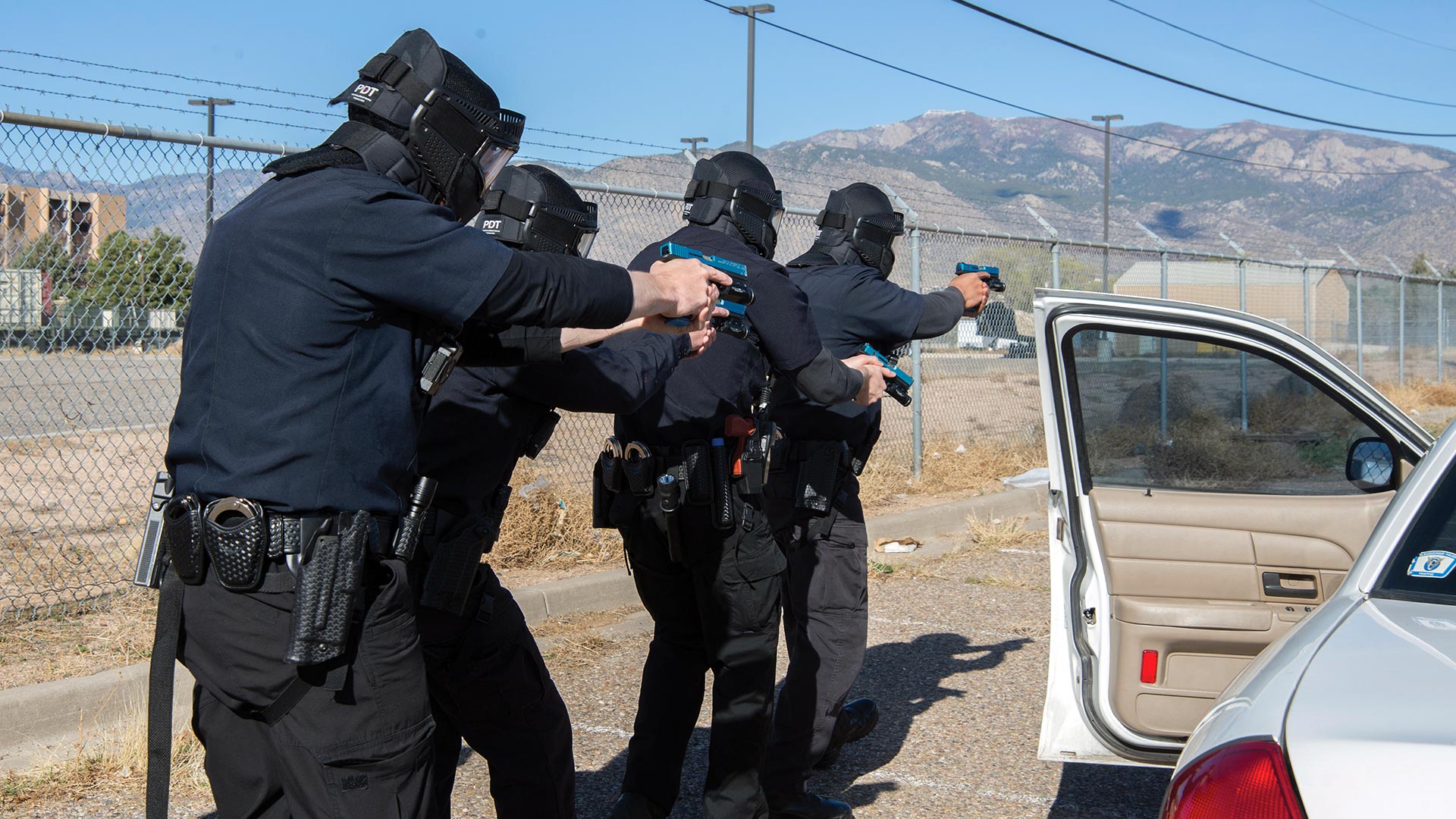
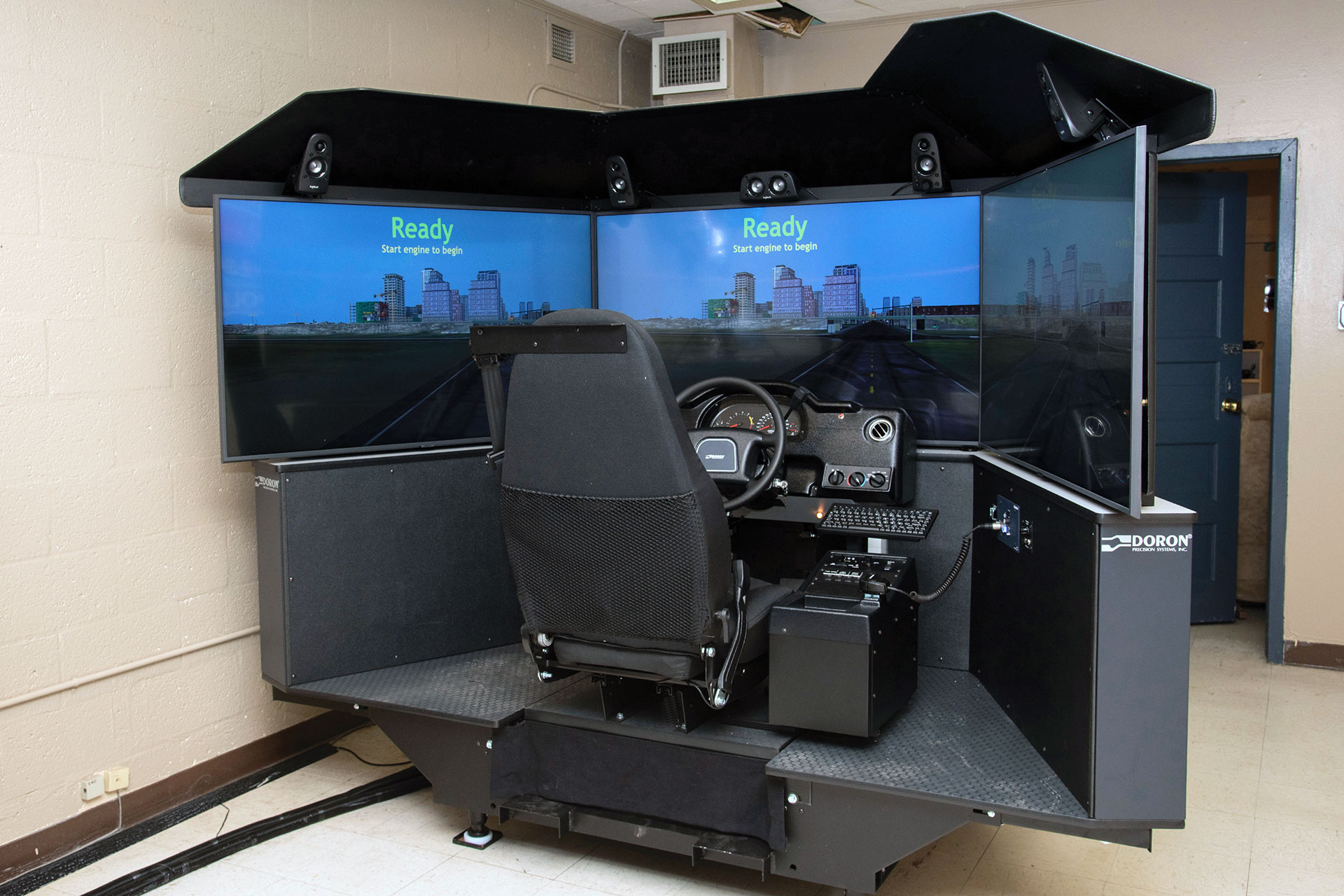
The Albuquerque, New Mexico, Police Department (APD) implemented the RBT concept in a pilot project in 2014 after being placed under a consent decree by the Department of Justice. It has developed since then into a designated training facility with full-time employees, both sworn and civilian, and part-time personnel. The two-story facility is housed in a former National Guard Armory compound and has been converted to have realistic furnished rooms and settings, such as a convenience store, apartments, offices, a bar and a working dispatch center used to communicate with students during training exercises. A large parking lot is used to simulate traffic stops and outdoor scenarios. This state-of-the-art facility also houses a firearms simulator and a police driving simulator with over 3,000 realistic scenarios.

Many police departments are utilizing scenario-based training. According to the former director of the APD program, Sergeant Ray Defrates, RBT is where the student, with the use of tools and/or technology, participates in a scenario with specific training objectives. The scenario immerses them in the most realistic environment possible to reinforce tactics, training, law and policy and to introduce “stress inoculation” with intensity to provide officers with the needed skills to survive on the streets.
Mike Geier

Defrates describes stress inoculation as “training in which the student is exposed to stress in a controlled and measured way to increase their ‘psychological resilience’ against stressors.” This is intended to help with the consequences of previous stress and “inoculate” against future stressors. Quality training occurs in a highly controlled setting where the student learns adaptive strategies for dealing with the situation in the future.

Stress inoculation comes from a well-written, objective-based, winnable scenario conducted in a realistic manner. It is not yelling at a student during training or belittling them after. Our job is a stressful one, making dealing with the stress of the job important. However, the stress should not be artificially induced by an instructor but realistically created by the well-written scenario. RBT is based on the Socratic method of teaching, which fosters critical thinking. It is used today for academy cadets, in-service refresher training and even promotional assessment centers.

Your training location must be capable of ensuring student and staff safety. It also should give the student the feeling of “being there in the scenario,” not frustration trying to imagine this classroom is a city park. This can be achieved through both site location selection and creative scenario writing. A scenario should be based on realistic problems your organization must solve. They must be based on policy/procedures and the law. They must have specific, achievable objectives. The objectives must be exactly that: objective, not subjective. 

The instructors must conduct practice runs of the scenario on themselves and other experienced employees who can give constructive feedback on the realism, level of difficulty (i.e., basic trainee, experienced officer or tactical team member), and any difficulties encountered that artificially interfered with achieving the objectives. If it will be organization-wide training, it should be reviewed by the head of the organization (or designee) and by your legal department.

You will need role players for scenarios. Their training and selection are important, and when conducting quality RBT, you cannot use the students as role players. You will have to have dedicated personnel for this. They will have to be selected carefully to ensure they can follow their scripts without deviation or improvising. Remember, the scenarios must be fair, consistent and achievable for every student! Role-player scripting, part of the scenario development, is also key to the success of the training. The script will have several “if-then” contingencies built-in. This must be the most difficult part of scenario development. Not every employee will achieve the objectives in exactly the same manner. Therefore, the role player will need to have a script to follow based on the expected actions or statements by the students. This is another reason why role-player selection is important; they must be able to memorize all the possibilities of the script, the practice runs will assist with this as well.

At the conclusion of the exercise, the facilitator reviews and discusses the performance of the trainees, pointing out both their mistakes as well as reinforcing correct actions. As to be expected, especially with recruit officers, there will be a number of areas needing improvement. Rather than leave the participants with a sense of failure, they are given a second chance after their debriefing to do the same training exercise with the intent that they will not make the same mistakes in this subsequent attempt. The goal is to leave them with a positive sense of accomplishment and, hopefully, a true and lasting learning experience since we can learn from both our failures and successes.

This approach to 21st-century police training is a step in the right direction in not only providing quality training but also building trust and legitimacy in our communities while reducing overall liability. This is an example of what constitutes best practices for our officers and agencies.

For additional information on reality-based training, contact rbtconsulting.net.

Mike Geier

Mike Geier

Mike Geier is the former chief of police of the Albuquerque, New Mexico, Police Department. His career began in 1974 with the Wilmette, Illinois, Police Department, where he retired as a lieutenant after 20 years in 1994. He then joined APD as a recruit and served another 20 years, retiring in 2014 as a commander to become the police chief in Rio Rancho, New Mexico. He returned to APD in 2017 as the chief until he retired in 2020. For additional information on reality-based training, contact rbtconsulting.net.

View articles by Mike Geier

As seen in the February 2024 issue of American Police Beat magazine.
Don’t miss out on another issue today! Click below:


SUBSCRIBE TODAY!

Categories: Training

Primary Sidebar

Recent Articles

  • Clarifying your “true north”
  • Smile and let them swing
  • The job has changed — have you?
  • New National Law Enforcement Museum exhibit revisits D.C. snipers case
  • A hero’s legacy through a mother’s love
  • The days that follow
  • Perpetual recognition of line-of-duty deaths
  • A Tribute to Fallen Heroes
  • NLEOMF Fund announces March 2026 Officers of the Month
  • Markers of service and remembrance

Footer

Our Mission
To serve as a trusted voice of the nation’s law enforcement community, providing informative, entertaining and inspiring content on interesting and engaging topics affecting peace officers today.

Contact us: info@apbweb.com | (800) 234-0056.

  • Facebook
  • Instagram
  • Twitter

Categories

  • Editor’s Picks
  • On the Job
  • Labor
  • Tech
  • Training
  • Policy
  • Health/Wellness
  • Community
  • Offbeat
  • We Remember
  • Jobs and Careers
  • Events

Editor’s Picks

Let’s get moving!

Let’s get moving!

April 27, 2026

Heroes of the World Trade Center

Heroes of the World Trade Center

April 24, 2026

The Promise Gap

The Promise Gap

April 22, 2026

Corruption, collusion and impunity

Corruption, collusion and impunity

April 21, 2026

Policies | Consent Preferences | Copyright © 2026 APB Media, LLC | Website design, development and maintenance by 911MEDIA

Open

Subscribe

Close

Receive the latest news and updates from American Police Beat directly to your inbox!

  • This field is for validation purposes and should be left unchanged.