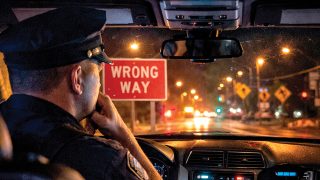
With over 681 state and local police academies in the United States training over 60,000 new police recruits annually, there is little standardization. Graduation rates nationwide for recruits hover around 86%. There are 18,000 police agencies, of which about 80% are 50 officers or less. The average-sized police department is only 25 officers in size.
According to the most recent Bureau of Justice Statistics (BJS) data, police recruits in the U.S. spend an average of 633 hours completing the basic academy. Louisiana requires only 360 hours for basic academy training. North Carolina boasts one of the longest training programs for peace officers, clocking in at an impressive 903 hours over 22 weeks. State police/highway patrol academies had an average length of 1,074 hours of academy training. The California Highway Patrol (CHP) academy is 1,100 hours over 27 weeks.
The landscape of policing faces significant evolution, with calls for reform echoing across communities and political spheres.
In Japan, the police academy training period is 12 months for high school graduates and six months for college graduates. In Norway, police training covers three years, which includes on-the-job experience after the second year. Finland requires 4,500 hours of training, the same as Norway and Indonesia. Germany requires 4,000 hours of training, while the United Kingdom requires 2,250 hours.
The current state of police academy training
For decades, basic police training was little more than remembering facts and statutes with the success on a multiple-choice test along with mastering basic motor skills (such as defensive tactics, driving skills, firearms, vehicle stops and building searches). The evolution of academies today must embrace problem-solving, communication skills, writing, interviewing, crisis intervention, ethics and higher functioning requirements that face officers daily on patrol.
According to PERF Executive Director Chuck Wexler, American police training is “outdated, antiquated” and trying to cheaply do what other countries have “done in a comprehensive way.”
The public expects police officers to demonstrate principles of “procedural justice.” The Department of Justice (DOJ) bases the definition of procedural justice on four central principles: “treating people with dignity and respect, giving citizens a voice during encounters, being neutral in decision making and conveying trustworthy motives.” Procedural justice is a way of building police legitimacy, public trust and officer safety and efficacy.
The landscape of policing faces significant evolution, with calls for reform echoing across communities and political spheres. While traditional para-military training has been the structure of police academies, that structure must blend a learning environment that goes beyond memorization and physical skill sets. Certainly, officer survival and physical ability training remains critical.
The roots of police academy training trace back to the early days of modern policing, with a focus on equipping officers with the skills necessary for crime prevention and control. However, as societal expectations have evolved, the training programs have struggled to keep pace, resulting in a growing misalignment between the demands placed on law enforcement and the skills they acquire during their training.
The PERF report concluded that recruit training has not “kept pace with the dramatic changes that have taken place in policing” recently or with the “increasingly complex and challenging realities that today’s police officers face.” Too often, academies continue to “train officers to be warriors” even though agencies and surrounding communities need them to be “guardians, social workers and community partners” as well.
Limited emphasis
Traditional police academy training has often emphasized a militaristic and authoritative approach, with less attention given to the principles of community policing. Limited training hours have placed emphasis on force and control without growing skills training in problem-solving, communication skills and positive police–community relations, contributing to the erosion of trust between law enforcement and the communities they serve.
Evolving challenges in policing must also include technological advances. In the digital age, law enforcement faces new challenges and opportunities arising from technological advancements. Current police academy training may fall short of adequately preparing officers to navigate the complexities of cybercrime, data analytics and the responsible use of emerging technologies.
Ethical use of technology is not a common discussion in police academies. Yet, as the use of body cameras, vehicle cameras and automatic license plate readers (ALPR) continues to grow, so must the training on the responsible and ethical use of technology in police academy training.
Simulation training that incorporates realistic and immersive virtual training can enhance the preparedness of officers for various scenarios they may encounter in the field. Simulation training builds decision-making skills, improves situational awareness and prepares recruits in near “real-life scenarios” before they arrive on the street.
The call for reform
The demand for a shift in the way law enforcement officers are trained continues to rise. Public perception of law enforcement is a key factor influencing the demand for reform. There have been many high-profile incidents of police misconduct that have gone viral that have eroded public trust and heightened the need for training reforms.
At the Kansas Law Enforcement Training Center (KLETC), Director Darin Beck removed the podiums from all classrooms used for basic training. The center also removed tiered “lecture-style” classrooms in favor of multi-purpose classrooms with desks that can be configured to support multiple activities.
According to Beck, “The effective instructor today must be able to create learning activities that fully engage the learner. Passive listening gives way to discussion, demonstration, role-play and other activities. The instructor must also understand how to develop learning objectives and competencies to plan a training class.”
There have been many high-profile incidents of police misconduct that have gone viral that have eroded public trust and heightened the need for training reforms.
Elements of reform
This reform will embrace ethical conduct, cultural competence and unbiased policing, as well as de-escalation skills that are critical in diffusing potentially volatile situations and minimizing the use of force. Police training must become a thinking person’s process that prioritizes communication and conflict resolution.
“People call those soft skills … those are hard,” Wexler said. “Those are important skills — to know your limitations and also to ask the right questions.” Shifting training to focus on de-escalation and critical thinking skills is not only “safer for the person you’re dealing with, but it’s actually safer for police officers.”
In an increasingly diverse society, law enforcement officers must possess cultural competence to effectively serve their communities. The topics of diversity and cultural sensitivity training are necessary for police academy curricula, fostering an understanding of different perspectives and promoting equitable policing practices. The inclusion of comprehensive crisis or mental health training in police academy programs empowers officers to respond empathetically and effectively to individuals experiencing mental health challenges.
Overcoming resistance and implementing change
There are inherent challenges to introducing reforms in a profession deeply rooted in tradition and a distinct organizational culture. Strategies for overcoming resistance are often funding-based and involve elected officials failing to invest in benchmarks that all other developed countries have already made. Police executives must lead the charge for change, and that must begin with the basic academy and extend to supervisory and management teams within police agencies. Successful reform of police academies requires collaboration among various stakeholders, including law enforcement agencies, community leaders, educators and policymakers, or forced change will surely follow from our constituents.
Conclusion
As calls for police reform continue, the need for a comprehensive overhaul of police academy training becomes increasingly apparent. We have touched on the deficiencies in the current training paradigm, explored the evolving challenges faced by law enforcement and advocated for transformative shifts in training approaches.
“Competency-based education,” according to Beck, “is the trend within most educational settings, shifting the design question from ‘what do we want the student to know’ to ‘what do we want the student to be able to do.’ Assessing well-developed competencies then becomes much easier to conceive but, typically, much more challenging logistically. This requires specialized training space. The classroom gives way to the sally port, a mat room or a cul-de-sac of houses.”
By prioritizing community policing, embracing technological advancements and instilling a commitment to ethical conduct, police academies can undergo a meaningful transformation, ensuring that officers are better equipped to navigate the complexities of modern policing. The time for reform is now, and the collective efforts of communities, law enforcement agencies and policymakers can pave the way for a more just, accountable and effective approach to policing.

Robert Spinks
As seen in the May 2024 issue of American Police Beat magazine.
Don’t miss out on another issue today! Click below: