• Skip to primary navigation
  • Skip to main content
  • Skip to primary sidebar
  • Skip to footer
  • Home
  • About
  • The Magazine
  • Events
  • Partners
  • Products
  • Contact
  • Jobs and Careers
  • Advertise
  • Facebook
  • Instagram
  • Twitter
  • Subscribe
American Police Beat

American Police Beat Magazine

Law Enforcement Publication

  • Home
  • Leadership
    • Perpetual recognition of line-of-duty deaths
      Understanding the boundaries of professional relationships with the...
      Why you should lead from 30,000 feet
      Public perception and trust
      When performance reviews are a waste of time
  • Topics
    • Leadership
      • Perpetual recognition of line-of-duty deaths
        Understanding the boundaries of professional relationships with the...
        Why you should lead from 30,000 feet
        Public perception and trust
        When performance reviews are a waste of time
    • Editor’s Picks
      • Let’s get moving!
        Heroes of the World Trade Center
        The Promise Gap
        Corruption, collusion and impunity
        Liability challenges in contemporary policing
    • On the Job
      • Testing the waters — literally
        Frankpledge to forensics: A brief history of law enforcement
        Villains and heroes in the Big Apple
        Right place, right time — again
        Some good news on crime
    • Labor
      • The Promise Gap
        Cut the cops, save a dollar?
        Labor release under fire
        Who’s watching the watchmen?
        Crime and punishment (or lack thereof) in Seattle
    • Tech
      • New Mexico license plate readers save lives, lead to “precise...
        A modern field guide to understanding research in policing
        Gear that moves with you
        A new breed of cop car
        The future of patrol is here
    • Training
      • Pushback as a training signal
        Let’s get moving!
        The five minutes before the ambulance
        Navigating danger
        Critical thinking in police training
    • Policy
      • Police pause license plate readers
        Corruption, collusion and impunity
        E-bikes spark public safety concerns
        Try racing without wheels
        Law enforcement accreditation: Why it matters
    • Health/Wellness
      • The days that follow
        Addressing stress, vicarious trauma and burnout
        Nervous system regulation
        The nature of the job
        Promoting organizational wellness
    • Community
      • Improving autism awareness
        Shop with a Cop
        Community engagement: What is it moving forward?
        Contradictory crossroads
        Back-to-school season brings out police support nationwide
    • Offbeat
      • An unexpected burglar
        Police humor only a cop would understand
        Not eggzactly a perfect heist
        Pizza … with a side of alligator?
        Wisconsin man charged with impersonating Border Patrol agent twice in...
    • We Remember
      • A Tribute to Fallen Heroes
        Markers of service and remembrance
        Tragedy strikes Baker to Vegas
        Heroes of the World Trade Center
        Forty heroes: United Airlines Flight 93
    • HOT Mail
      • The War on Cops Continues Unabated
  • On the Job
    • Testing the waters — literally
      Frankpledge to forensics: A brief history of law enforcement
      Villains and heroes in the Big Apple
      Right place, right time — again
      Some good news on crime
  • Labor
    • The Promise Gap
      Cut the cops, save a dollar?
      Labor release under fire
      Who’s watching the watchmen?
      Crime and punishment (or lack thereof) in Seattle
  • Tech
    • New Mexico license plate readers save lives, lead to “precise...
      A modern field guide to understanding research in policing
      Gear that moves with you
      A new breed of cop car
      The future of patrol is here
  • Training
    • Pushback as a training signal
      Let’s get moving!
      The five minutes before the ambulance
      Navigating danger
      Critical thinking in police training
  • Policy
    • Police pause license plate readers
      Corruption, collusion and impunity
      E-bikes spark public safety concerns
      Try racing without wheels
      Law enforcement accreditation: Why it matters
  • Health/Wellness
    • The days that follow
      Addressing stress, vicarious trauma and burnout
      Nervous system regulation
      The nature of the job
      Promoting organizational wellness
  • Community
    • Improving autism awareness
      Shop with a Cop
      Community engagement: What is it moving forward?
      Contradictory crossroads
      Back-to-school season brings out police support nationwide
  • Offbeat
    • An unexpected burglar
      Police humor only a cop would understand
      Not eggzactly a perfect heist
      Pizza … with a side of alligator?
      Wisconsin man charged with impersonating Border Patrol agent twice in...
  • We Remember
    • A Tribute to Fallen Heroes
      Markers of service and remembrance
      Tragedy strikes Baker to Vegas
      Heroes of the World Trade Center
      Forty heroes: United Airlines Flight 93
  • HOT Mail
    • The War on Cops Continues Unabated
  • About
  • The Magazine
  • Events
  • Partners
  • Products
  • Contact
  • Jobs and Careers
  • Advertise
  • Subscribe
Search

Editor's Picks

Traffic enforcement: What’s your purpose?

Dave Bryant Published October 23, 2024 @ 6:00 am PDT

iStock.com/IPGGutenbergUKLtd

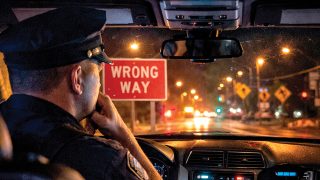
For most citizens, a traffic stop might be their only encounter with a police officer. These are the same folks who vote and serve on juries. As a uniformed traffic cop, you represent our whole profession to them. That one encounter will establish their opinion of every law enforcement officer for years to come. Scratching out citations like a dispassionate Robocop pisses off the public. It is undignified and counterproductive to our primary mission. We are not toll collectors. We don’t need to create new adversarial relationships. People love to talk about their contacts with us. They will not accurately report their own responsibility when telling their story. They will talk about how they felt and express their opinion of the motivation of the LEO who stopped them. I recently saw a local television news story boasting of a week-long ticket blitz by the New York State Police. Sure enough, I saw radar cars set up almost every 10 miles along the Thruway, writing “gotcha” speeding tickets to impress administrators with stats. No real safety purpose was served with this campaign, and the cost to our reputation with the public was great. We want people to trust us and have confidence in our laws. Playing these games wastes resources. It reinforces fear of police and an adversarial relationship. It’s just wrong.

Scratching out citations like a dispassionate Robocop pisses off the public. It is undignified and counterproductive to our primary mission.

Is traffic enforcement really your true passion as a law enforcement officer? Most of us would say no. It is merely a necessary function of patrol and an easy way to document activity. Police work is a lot more than uniformed traffic enforcement, but that is where many of us begin our careers. It is also the most visible police presence to the public. Traffic stops are great ways to find more serious criminal activity, including drunks, drugs and outstanding warrants.

iStock.com/RichLegg

For those who feel a genuine calling for saving lives by reducing crashes on the roads and highways, I salute you. But I respectfully suggest you reconsider whether the techniques you most commonly use are the best, most efficient methods for achieving that noble goal. If you run a radar in a comfortable “cherry patch,” where the speed limit is lower than motorists expect, I contend you are being used as a revenue agent. If you really want to save lives on the highway, perhaps your efforts are better spent bird-dogging red-light runners at an intersection with a high crash history or left-lane squatters who are oblivious to the chaos they cause behind them.

Tickets are quite expensive but cost far more than the fine. Increased insurance rates follow, and accumulated points can lead to the suspension of a driver’s license. These costs disproportionately affect folks at the lower end of the socioeconomic spectrum, making traffic laws inherently regressive. Unpaid fines become criminal warrants just because drivers are overwhelmed by compounding costs they cannot afford. We know that a good percentage of those who flee from a traffic stop do so because they have outstanding traffic warrants, suspensions, failures to appear, unpaid fines or other crimes that are only due to an inability to pay traffic fines. We have plenty of genuine criminal bad guys to apprehend without creating more artificial ones with traffic laws.

Consider using these traffic stops as an opportunity to create positive public relations. If no criminal behavior is present, offer friendly advice on safety or driver education and leave the motorist with the impression that you really are a professional who is serious about your oath to “protect and serve” the public. Don’t be an NPC Robocop. You’re better than that! Take care of yourself and stay safe.

Dave Bryant

Dave Bryant

Dave Bryant is a retired police officer with over 30 years of experience with several agencies. He is an FDLE and NRA law enforcement instructor and active member of IALEFI. He has a private business as a polygraph examiner in Tampa, Florida. He can be reached at SenseiDave@msn.com.

View articles by Dave Bryant

As seen in the October 2024 issue of American Police Beat magazine.
Don’t miss out on another issue today! Click below:


SUBSCRIBE TODAY!

Categories: Editor's Picks, On the Job

Primary Sidebar

Recent Articles

  • New National Law Enforcement Museum exhibit revisits D.C. snipers case
  • A hero’s legacy through a mother’s love
  • The days that follow
  • Perpetual recognition of line-of-duty deaths
  • A Tribute to Fallen Heroes
  • NLEOMF Fund announces March 2026 Officers of the Month
  • Markers of service and remembrance
  • Testing the waters — literally
  • Police pause license plate readers
  • Tragedy strikes Baker to Vegas

Footer

Our Mission
To serve as a trusted voice of the nation’s law enforcement community, providing informative, entertaining and inspiring content on interesting and engaging topics affecting peace officers today.

Contact us: info@apbweb.com | (800) 234-0056.

  • Facebook
  • Instagram
  • Twitter

Categories

  • Editor’s Picks
  • On the Job
  • Labor
  • Tech
  • Training
  • Policy
  • Health/Wellness
  • Community
  • Offbeat
  • We Remember
  • Jobs and Careers
  • Events

Editor’s Picks

Let’s get moving!

Let’s get moving!

April 27, 2026

Heroes of the World Trade Center

Heroes of the World Trade Center

April 24, 2026

The Promise Gap

The Promise Gap

April 22, 2026

Corruption, collusion and impunity

Corruption, collusion and impunity

April 21, 2026

Policies | Consent Preferences | Copyright © 2026 APB Media, LLC | Website design, development and maintenance by 911MEDIA

Open

Subscribe

Close

Receive the latest news and updates from American Police Beat directly to your inbox!

  • This field is for validation purposes and should be left unchanged.