• Skip to primary navigation
  • Skip to main content
  • Skip to primary sidebar
  • Skip to footer
  • Home
  • About
  • The Magazine
  • Events
  • Partners
  • Products
  • Contact
  • Jobs and Careers
  • Advertise
  • Facebook
  • Instagram
  • Twitter
  • Subscribe
American Police Beat

American Police Beat Magazine

Law Enforcement Publication

  • Home
  • Leadership
    • Clarifying your “true north”
      The job has changed — have you?
      Perpetual recognition of line-of-duty deaths
      Understanding the boundaries of professional relationships with the...
      Why you should lead from 30,000 feet
  • Topics
    • Leadership
      • Clarifying your “true north”
        The job has changed — have you?
        Perpetual recognition of line-of-duty deaths
        Understanding the boundaries of professional relationships with the...
        Why you should lead from 30,000 feet
    • Editor’s Picks
      • Let’s get moving!
        Heroes of the World Trade Center
        The Promise Gap
        Corruption, collusion and impunity
        Liability challenges in contemporary policing
    • On the Job
      • Testing the waters — literally
        Frankpledge to forensics: A brief history of law enforcement
        Villains and heroes in the Big Apple
        Right place, right time — again
        Some good news on crime
    • Labor
      • Smile and let them swing
        The Promise Gap
        Cut the cops, save a dollar?
        Labor release under fire
        Who’s watching the watchmen?
    • Tech
      • New Mexico license plate readers save lives, lead to “precise...
        A modern field guide to understanding research in policing
        Gear that moves with you
        A new breed of cop car
        The future of patrol is here
    • Training
      • Pushback as a training signal
        Let’s get moving!
        The five minutes before the ambulance
        Navigating danger
        Critical thinking in police training
    • Policy
      • Police pause license plate readers
        Corruption, collusion and impunity
        E-bikes spark public safety concerns
        Try racing without wheels
        Law enforcement accreditation: Why it matters
    • Health/Wellness
      • The days that follow
        Addressing stress, vicarious trauma and burnout
        Nervous system regulation
        The nature of the job
        Promoting organizational wellness
    • Community
      • Improving autism awareness
        Shop with a Cop
        Community engagement: What is it moving forward?
        Contradictory crossroads
        Back-to-school season brings out police support nationwide
    • Offbeat
      • An unexpected burglar
        Police humor only a cop would understand
        Not eggzactly a perfect heist
        Pizza … with a side of alligator?
        Wisconsin man charged with impersonating Border Patrol agent twice in...
    • We Remember
      • A Tribute to Fallen Heroes
        Markers of service and remembrance
        Tragedy strikes Baker to Vegas
        Heroes of the World Trade Center
        Forty heroes: United Airlines Flight 93
    • HOT Mail
      • The War on Cops Continues Unabated
  • On the Job
    • Testing the waters — literally
      Frankpledge to forensics: A brief history of law enforcement
      Villains and heroes in the Big Apple
      Right place, right time — again
      Some good news on crime
  • Labor
    • Smile and let them swing
      The Promise Gap
      Cut the cops, save a dollar?
      Labor release under fire
      Who’s watching the watchmen?
  • Tech
    • New Mexico license plate readers save lives, lead to “precise...
      A modern field guide to understanding research in policing
      Gear that moves with you
      A new breed of cop car
      The future of patrol is here
  • Training
    • Pushback as a training signal
      Let’s get moving!
      The five minutes before the ambulance
      Navigating danger
      Critical thinking in police training
  • Policy
    • Police pause license plate readers
      Corruption, collusion and impunity
      E-bikes spark public safety concerns
      Try racing without wheels
      Law enforcement accreditation: Why it matters
  • Health/Wellness
    • The days that follow
      Addressing stress, vicarious trauma and burnout
      Nervous system regulation
      The nature of the job
      Promoting organizational wellness
  • Community
    • Improving autism awareness
      Shop with a Cop
      Community engagement: What is it moving forward?
      Contradictory crossroads
      Back-to-school season brings out police support nationwide
  • Offbeat
    • An unexpected burglar
      Police humor only a cop would understand
      Not eggzactly a perfect heist
      Pizza … with a side of alligator?
      Wisconsin man charged with impersonating Border Patrol agent twice in...
  • We Remember
    • A Tribute to Fallen Heroes
      Markers of service and remembrance
      Tragedy strikes Baker to Vegas
      Heroes of the World Trade Center
      Forty heroes: United Airlines Flight 93
  • HOT Mail
    • The War on Cops Continues Unabated
  • About
  • The Magazine
  • Events
  • Partners
  • Products
  • Contact
  • Jobs and Careers
  • Advertise
  • Subscribe
Search

Training

Video analysis can improve shooter performance

Todd Fletcher Published December 2, 2024 @ 6:00 am PST

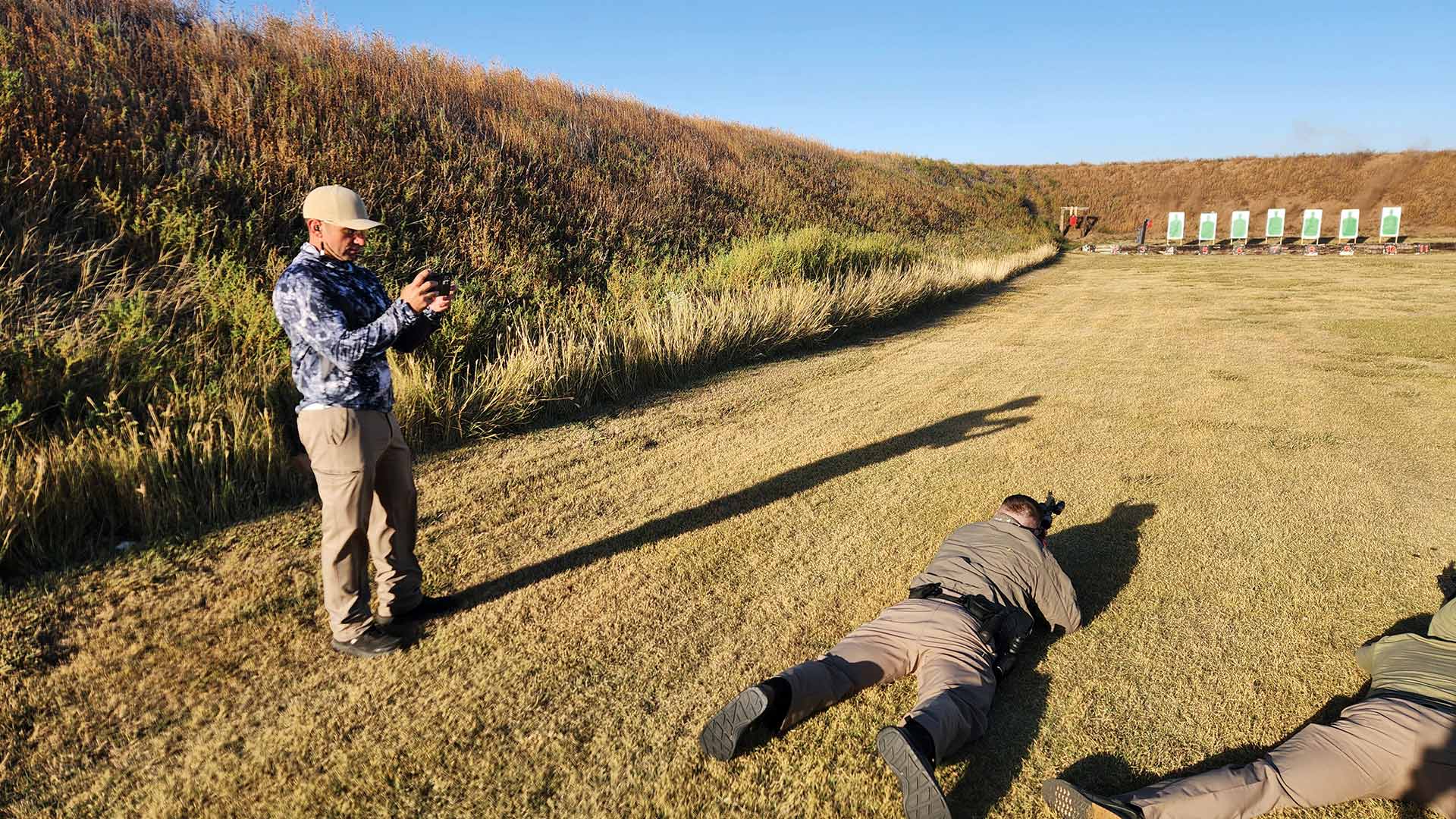
Billy Etheredge, Potter County (TX) Sheriff’s Office

Law enforcement officers are surrounded by video cameras. Body-worn cameras, dash cameras and surveillance cameras have changed the way we operate on a daily basis. These cameras provide more evidence for our investigations, document our public interactions and give us an opportunity to debrief our performance from call to call. However, it’s only been recently that some forward-thinking law enforcement firearms instructors have embraced the use of video technology on the live-fire range.

Video as a training tool is not a new or novel idea. Law enforcement trainers have been using video during classes for years to emphasize a point, discuss the finer details of a tactic or just to offer a brain break for students. But video can do much more. Video analysis of shooter performance can offer a way to continue the learning environment long after shooters have left the range.

It wasn’t long ago that law enforcement firearms instructors would shudder at the thought of officers bringing their cellphones onto the range. Cellphones on the range were thought to be just another distraction. However, these instructors are missing a great training opportunity. In all our classes, we encourage students to dig those phones out of their range bags and use them as a training tool.

The VisualEyes app has the ability to import two videos to compare side by side, giving instructors and shooters a way to compare and contrast two different runs on a drill. (Billy Etheredge, Potter County (TX) Sheriff’s Office)

Performance shooting

Video analysis by competition shooters has been utilized since the days of the large VHS camcorders. Shooters would videotape their stages and then spend time pouring over the tapes frame by frame to see where they can make up time and improve their game performance. Today, it’s quite common to see small video cameras mounted on the hats of competitors. Some even have friends placing cameras around various parts of a stage to capture images from different angles.

Coaches and competitors in many different sports use video analysis to improve their performance and provide them with a competitive advantage. Even though video doesn’t tell the whole story, video analysis of shooting performance can show you where you’re quick, efficient and why you were accurate. It can also show you where you are slow, ineffective and why you miss. Instead of relying on your own self-awareness, video shows you more about what occurs under time duress. 

Why aren’t we giving our shooters the same competitive advantage, especially considering that officers aren’t playing a game? Lives are on the line, and officers should be given every opportunity to improve their performance.

Just like in sports, firearm instructors should debrief shooters after every drill. But how often have you been shown exactly how you performed? Video analysis offers
instructors the ability to show shooters exactly what they did and how they did it with little room for argument. This creates a uniquely individual debriefing, helping to create a deeper understanding of shooting performance.

The basic video recording function available on every cellphone is a valuable tool we can use to provide feedback. Recording a shooter’s performance and using it to debrief afterward is a great way to reinforce good habits and to correct errors. Most cellphones also can record slow-motion video, which can help identify specific details of shooter performance we may miss when viewed at regular speed.

There are many other ways to use video to improve the quality of your firearms training programs. Whenever instructors are training or discussing tactics, video can help students understand how movement can help them see what they need to see and help offer a safer operating environment. For example, a camera set up to record the view of various angles in a live-fire shoothouse can help students understand how to use certain angles to help them safely clear corners.

Beyond the basic

If you’re ready to go beyond basic video capabilities, there are some useful phone apps that can make firearms training more effective. VisualEyes is a coaching and video analysis tool for athletes, coaches and trainers. It includes features that make analyzing movement and technique simple. The app can record high-speed videos in up to 4K resolution and any frame rate supported by your device. You can analyze every aspect of your performance in detail and frame by frame.

VisualEyes also includes a slow-motion feature that lets you watch your videos back at fractions of their original speed. You can zoom in and move videos around on the screen for a closer look. The ability to compare videos side by side or overlayed allows you to show progress and compare techniques. VisualEyes even lets instructors record coaching voiceovers to provide additional guidance and feedback. The videos can be exported from the app with the push of a button and shared with individual students.

Another app to consider is CoachView. CoachView allows instructors and students to analyze performance with a frame-by-frame breakdown or slow-motion video playback. It’s a video player designed specifically for coaches and athletes who want to improve their technique in any sport. CoachView works on any existing video, so there is no need to reshoot. It’s remarkably simple to import the video to CoachView and use the slow motion or frame-by-frame features. Instructors can record their own analysis and share it with their students, opening endless coaching possibilities.

Another good thing about these apps is that they can be used for anything, including shooting, baseball, softball, football, tennis, hockey, soccer and many more. So, if you’re also a coach of your kid’s team, this can be a good addition to your coaching toolbox.

Something to consider

There are some caveats to what we allow to be photographed or recorded on the range. If there are students assigned to undercover assignments where public exposure of their identity could jeopardize their safety, then no phones are allowed. Additionally, we caution against posting videos that may embarrass others in the class. All our classes are briefed on these rules, and everyone is expected to behave like adults. If your shooters can accept these two simple rules, everything will be fine. If they can’t follow these rules, leave the video recording of student performance up to the instructors.

One last point. Allowing shooters to take videos and photos of different drills on the range gives them ideas they can use in their own practice sessions. Good drills in class become great drills when shooters can remember them for their own practice. Everyone has gone to a class and forgotten something important that could have been useful later.
Videos can be viewed later, giving shooters an opportunity to refresh their memory while
extending the value of training.

Don’t leave the cellphones in the range bags. Get them on the range and use them to benefit your training program. Video analysis can help students see what the instructors are seeing. Once students see what they are doing, they develop a better understanding of how to improve. At that point, students become active participants in their own learning and performance.

Todd Fletcher

Todd Fletcher

Todd Fletcher is a retired sergeant from central Oregon with over 30 years of law enforcement experience. He presents firearms training, instructor certification and instructor development classes nationwide. Todd has presented at multiple regional, national and international conferences, including multiple ILEETA conferences and IALEFI events. He owns Combative Firearms Training, LLC, providing firearms training, handgun and patrol rifle instructor certification, and instructor development classes to law enforcement, military and private security. He can be contacted at Todd@CombativeFirearms.com.

View articles by Todd Fletcher

As seen in the November 2024 issue of American Police Beat magazine.
Don’t miss out on another issue today! Click below:


SUBSCRIBE TODAY!

Categories: Training

Primary Sidebar

Recent Articles

  • Clarifying your “true north”
  • Smile and let them swing
  • The job has changed — have you?
  • New National Law Enforcement Museum exhibit revisits D.C. snipers case
  • A hero’s legacy through a mother’s love
  • The days that follow
  • Perpetual recognition of line-of-duty deaths
  • A Tribute to Fallen Heroes
  • NLEOMF Fund announces March 2026 Officers of the Month
  • Markers of service and remembrance

Footer

Our Mission
To serve as a trusted voice of the nation’s law enforcement community, providing informative, entertaining and inspiring content on interesting and engaging topics affecting peace officers today.

Contact us: info@apbweb.com | (800) 234-0056.

  • Facebook
  • Instagram
  • Twitter

Categories

  • Editor’s Picks
  • On the Job
  • Labor
  • Tech
  • Training
  • Policy
  • Health/Wellness
  • Community
  • Offbeat
  • We Remember
  • Jobs and Careers
  • Events

Editor’s Picks

Let’s get moving!

Let’s get moving!

April 27, 2026

Heroes of the World Trade Center

Heroes of the World Trade Center

April 24, 2026

The Promise Gap

The Promise Gap

April 22, 2026

Corruption, collusion and impunity

Corruption, collusion and impunity

April 21, 2026

Policies | Consent Preferences | Copyright © 2026 APB Media, LLC | Website design, development and maintenance by 911MEDIA

Open

Subscribe

Close

Receive the latest news and updates from American Police Beat directly to your inbox!

  • This field is for validation purposes and should be left unchanged.