• Skip to primary navigation
  • Skip to main content
  • Skip to primary sidebar
  • Skip to footer
  • Home
  • About
  • The Magazine
  • Events
  • Partners
  • Products
  • Contact
  • Jobs and Careers
  • Advertise
  • Facebook
  • Instagram
  • Twitter
  • Subscribe
American Police Beat

American Police Beat Magazine

Law Enforcement Publication

  • Home
  • Leadership
    • Understanding the boundaries of professional relationships with the...
      Why you should lead from 30,000 feet
      Public perception and trust
      When performance reviews are a waste of time
      Taking a page from Toyota’s playbook
  • Topics
    • Leadership
      • Understanding the boundaries of professional relationships with the...
        Why you should lead from 30,000 feet
        Public perception and trust
        When performance reviews are a waste of time
        Taking a page from Toyota’s playbook
    • Editor’s Picks
      • Liability challenges in contemporary policing
        When performance reviews are a waste of time
        Proactive wellness visits
        Taking a page from Toyota’s playbook
        Law enforcement’s missing weapon
    • On the Job
      • Villains and heroes in the Big Apple
        Right place, right time — again
        Some good news on crime
        Mom-to-be named Cop of the Year
        Fatherly instincts save boy from icy water
    • Labor
      • The Promise Gap
        Cut the cops, save a dollar?
        Labor release under fire
        Who’s watching the watchmen?
        Crime and punishment (or lack thereof) in Seattle
    • Tech
      • New Mexico license plate readers save lives, lead to “precise...
        A modern field guide to understanding research in policing
        Gear that moves with you
        A new breed of cop car
        The future of patrol is here
    • Training
      • The five minutes before the ambulance
        Navigating danger
        Critical thinking in police training
        Threshold neuroscience
        Integrated virtual reality training
    • Policy
      • Corruption, collusion and impunity
        E-bikes spark public safety concerns
        Try racing without wheels
        Law enforcement accreditation: Why it matters
        Liability challenges in contemporary policing
    • Health/Wellness
      • Addressing stress, vicarious trauma and burnout
        Nervous system regulation
        The nature of the job
        Promoting organizational wellness
        Telling cops to get more sleep isn’t working
    • Community
      • Improving autism awareness
        Shop with a Cop
        Community engagement: What is it moving forward?
        Contradictory crossroads
        Back-to-school season brings out police support nationwide
    • Offbeat
      • An unexpected burglar
        Police humor only a cop would understand
        Not eggzactly a perfect heist
        Pizza … with a side of alligator?
        Wisconsin man charged with impersonating Border Patrol agent twice in...
    • We Remember
      • Heroes of the World Trade Center
        Forty heroes: United Airlines Flight 93
        The Pentagon
        A nation propelled to war, lives changed forever
        A Christmas loss
    • HOT Mail
      • The War on Cops Continues Unabated
  • On the Job
    • Villains and heroes in the Big Apple
      Right place, right time — again
      Some good news on crime
      Mom-to-be named Cop of the Year
      Fatherly instincts save boy from icy water
  • Labor
    • The Promise Gap
      Cut the cops, save a dollar?
      Labor release under fire
      Who’s watching the watchmen?
      Crime and punishment (or lack thereof) in Seattle
  • Tech
    • New Mexico license plate readers save lives, lead to “precise...
      A modern field guide to understanding research in policing
      Gear that moves with you
      A new breed of cop car
      The future of patrol is here
  • Training
    • The five minutes before the ambulance
      Navigating danger
      Critical thinking in police training
      Threshold neuroscience
      Integrated virtual reality training
  • Policy
    • Corruption, collusion and impunity
      E-bikes spark public safety concerns
      Try racing without wheels
      Law enforcement accreditation: Why it matters
      Liability challenges in contemporary policing
  • Health/Wellness
    • Addressing stress, vicarious trauma and burnout
      Nervous system regulation
      The nature of the job
      Promoting organizational wellness
      Telling cops to get more sleep isn’t working
  • Community
    • Improving autism awareness
      Shop with a Cop
      Community engagement: What is it moving forward?
      Contradictory crossroads
      Back-to-school season brings out police support nationwide
  • Offbeat
    • An unexpected burglar
      Police humor only a cop would understand
      Not eggzactly a perfect heist
      Pizza … with a side of alligator?
      Wisconsin man charged with impersonating Border Patrol agent twice in...
  • We Remember
    • Heroes of the World Trade Center
      Forty heroes: United Airlines Flight 93
      The Pentagon
      A nation propelled to war, lives changed forever
      A Christmas loss
  • HOT Mail
    • The War on Cops Continues Unabated
  • About
  • The Magazine
  • Events
  • Partners
  • Products
  • Contact
  • Jobs and Careers
  • Advertise
  • Subscribe
Search

Training

Training vs. practice: Improve or maintain?

Todd Fletcher Published May 23, 2025 @ 6:00 am PDT

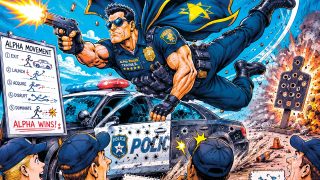
Training will push your performance to the next level by helping you shoot faster, shoot more accurately and move more efficiently. (Todd Fletcher)

When you go to the range to get some shooting time, do you go to train or practice? The difference may seem subtle, but there is a clear distinction between training and practicing. If you want to improve your skills, then you should focus on training. If your goal is to maintain your skills, then practice is an effective way to approach that range session.

More than semantics

The difference between training and practicing lies in their objectives and approaches. If we were to use a football analogy, let’s look at the difference between training camp and practice. These are two different animals and involve different goals.

Football training camp is intensive. It’s a period of training where players focus on developing their skills, improving fitness, learning plays and building team chemistry. Receivers are working on their defensive reads and routes. Linemen are working on their footwork and technique. Quarterbacks are working on getting their arms conditioned and fine-tuning their ability to read defensive alignments. The workouts are intense, and every member of the team is working together to get stronger, faster and ready for the rigors of a long football season. It serves as a time to get players into peak physical shape and prepare them mentally for the upcoming season.

Once the regular football season starts, in-season practices are typically less intense than training camp. The focus shifts more toward preparing for specific games, refining plays and maintaining fitness levels while giving bodies time to recover. Practices help prepare players for specific opponents and what they may face during game conditions. Practices are generally much shorter and focused on addressing specific goals and objectives.

In essence, training camp workouts are longer, more intense, and the goal is to prepare players for the season ahead in all aspects, while in-season practices are shorter, more focused and aimed at maintaining performance.

I’ve said it before, and I’ll say it again: Dry-fire practice is the place to start if you want to work on skill maintenance.

Practice

Since practice is about maintaining your current skills and ensuring they stay sharp, it involves repetitive exercises to reinforce what you already know. Practicing is about consistency and maintenance. Here are some things you can do on a regular basis to keep your current skill set.

I’ve said it before, and I’ll say it again: Dry-fire practice is the place to start if you want to work on skill maintenance. Dry-fire practice can also help refine and polish your skills, but it’s more about maintaining your firearm fitness. Without recoil masking your mistakes, you can recognize, diagnose and correct your own shooting errors.

Quality dry practice doesn’t take much time. Even better, it can be fun and inexpensive. Five minutes of quality dry practice time three to four times per week is all it takes. Dry practice is about quality, not quantity.

Start with working on a smooth, fluid draw and presentation. With your handgun, make sure you have a firm grip high on the backstrap while disengaging the holster retention devices in one smooth motion. The draw continues by lifting the handgun straight up out of the holster. A bit of advice at this point: If you put slight pressure on the bottom of the trigger guard with your strong hand middle finger, the handgun rotates toward the target with little effort. Less effort, increased efficiency and faster execution. From this point, acquire the desired grip with the support hand and continue extending toward the eye/target line.

Practice at a smooth pace until it becomes natural, then gradually add speed. Don’t try to go beyond 90% of your fastest draw speed. If you try to draw too quickly, things tend to go wrong — such as missing your initial grip, failing to release holster retention devices or spearing the gun toward the target. For a video reviewing additional points of drawing a handgun quickly and smoothly, check out youtu.be/II-OBhxnjwQ.

Patrol rifles and shotguns are easier to shoot well, but most officers struggle with weapon handling. With your patrol rifles and shotguns, make sure to work on your presentations while working the selector/safety switch. That pesky “on/off” switch perplexes many shooters, so practice some turns and presentations while working the selector switch. Don’t cheat by working the selector switch before the presentation. We need to practice good habits.

Competitive shooting will help push your skills against the clock and test your ability to perform at your finest. (Todd Fletcher)

Training

We have already covered how training focuses on pushing yourself to perform at a higher level and improving your skills. Training is about growth and improvement. It involves structured activities designed to enhance your abilities and achieve specific goals. So here are some ways to push yourself and improve your skills.

First, get to training. In-service training is fine, but if you’re serious about performance improvement and taking your skills to the next level, you need to go to training outside your department. Find a class with a reputable and skilled instructor who can help you develop your skills while pushing you to be faster, more efficient and more accurate. A good instructor will help you identify where you are strong, but more importantly, they will help you address weaknesses. They will push you to the edge of performance so you can see for yourself where your true abilities lie.

Next, get to the range and shoot with people who are better than you. Competition shooting is the perfect place to work on pushing your skills to the next level of performance. There’s a reason high-speed military teams have been training with elite competition shooters. Competition shooting is tactical training, but it will absolutely push your firearms skills to higher levels of performance.

Shooting a match may expose deficiencies in your firearms skills and give you ideas on how to improve. Most law enforcement officers and instructors have never pushed their skills to their limits. How fast can you shoot accurately? While moving? On moving targets? From cover and in awkward positions? At different-sized targets and at distances from 3 feet to 30-plus yards? Competitive shooting like USPSA, IDPA or three-gun matches are an opportunity to practice old skills while developing new ones in a safe environment. They’re not designed to teach tactics, but they will help you develop better firearms skills. Competitive shooting is a test that will expose weaknesses. Those are the same weaknesses you will have on the street under the stress of a gunfight.

The first step to improving your skills is to commit to the process, and the process involves training and practice. Training will help build your skills, and practice will help polish and maintain your skills. Both are important. Once you figure out your goals, you’ll know whether you need to be training or practicing.

Todd Fletcher

Todd Fletcher

Todd Fletcher is a retired sergeant from central Oregon with over 30 years of law enforcement experience. He presents firearms training, instructor certification and instructor development classes nationwide. Todd has presented at multiple regional, national and international conferences, including multiple ILEETA conferences and IALEFI events. He owns Combative Firearms Training, LLC, providing firearms training, handgun and patrol rifle instructor certification, and instructor development classes to law enforcement, military and private security. He can be contacted at Todd@CombativeFirearms.com.

View articles by Todd Fletcher

As seen in the May 2025 issue of American Police Beat magazine.
Don’t miss out on another issue today! Click below:


SUBSCRIBE TODAY!

Categories: Training

Primary Sidebar

Recent Articles

  • Heroes of the World Trade Center
  • The Promise Gap
  • Corruption, collusion and impunity
  • The five minutes before the ambulance
  • New Mexico license plate readers save lives, lead to “precise policing”
  • Addressing stress, vicarious trauma and burnout
  • Understanding the boundaries of professional relationships with the boss
  • E-bikes spark public safety concerns
  • Improving autism awareness
  • Cut the cops, save a dollar?

Footer

Our Mission
To serve as a trusted voice of the nation’s law enforcement community, providing informative, entertaining and inspiring content on interesting and engaging topics affecting peace officers today.

Contact us: info@apbweb.com | (800) 234-0056.

  • Facebook
  • Instagram
  • Twitter

Categories

  • Editor’s Picks
  • On the Job
  • Labor
  • Tech
  • Training
  • Policy
  • Health/Wellness
  • Community
  • Offbeat
  • We Remember
  • Jobs and Careers
  • Events

Editor’s Picks

Liability challenges in contemporary policing

Liability challenges in contemporary policing

February 27, 2026

When performance reviews are a waste of time

When performance reviews are a waste of time

February 26, 2026

Proactive wellness visits

Proactive wellness visits

February 25, 2026

Taking a page from Toyota’s playbook

Taking a page from Toyota’s playbook

February 23, 2026

Policies | Consent Preferences | Copyright © 2026 APB Media, LLC | Website design, development and maintenance by 911MEDIA

Open

Subscribe

Close

Receive the latest news and updates from American Police Beat directly to your inbox!

  • This field is for validation purposes and should be left unchanged.