• Skip to primary navigation
  • Skip to main content
  • Skip to primary sidebar
  • Skip to footer
  • Home
  • About
  • The Magazine
  • Events
  • Partners
  • Products
  • Contact
  • Jobs and Careers
  • Advertise
  • Facebook
  • Instagram
  • Twitter
  • Subscribe
American Police Beat

American Police Beat Magazine

Law Enforcement Publication

  • Home
  • Leadership
    • Clarifying your “true north”
      The job has changed — have you?
      Perpetual recognition of line-of-duty deaths
      Understanding the boundaries of professional relationships with the...
      Why you should lead from 30,000 feet
  • Topics
    • Leadership
      • Clarifying your “true north”
        The job has changed — have you?
        Perpetual recognition of line-of-duty deaths
        Understanding the boundaries of professional relationships with the...
        Why you should lead from 30,000 feet
    • Editor’s Picks
      • Let’s get moving!
        Heroes of the World Trade Center
        The Promise Gap
        Corruption, collusion and impunity
        Liability challenges in contemporary policing
    • On the Job
      • Testing the waters — literally
        Frankpledge to forensics: A brief history of law enforcement
        Villains and heroes in the Big Apple
        Right place, right time — again
        Some good news on crime
    • Labor
      • Smile and let them swing
        The Promise Gap
        Cut the cops, save a dollar?
        Labor release under fire
        Who’s watching the watchmen?
    • Tech
      • New Mexico license plate readers save lives, lead to “precise...
        A modern field guide to understanding research in policing
        Gear that moves with you
        A new breed of cop car
        The future of patrol is here
    • Training
      • Pushback as a training signal
        Let’s get moving!
        The five minutes before the ambulance
        Navigating danger
        Critical thinking in police training
    • Policy
      • Police pause license plate readers
        Corruption, collusion and impunity
        E-bikes spark public safety concerns
        Try racing without wheels
        Law enforcement accreditation: Why it matters
    • Health/Wellness
      • The days that follow
        Addressing stress, vicarious trauma and burnout
        Nervous system regulation
        The nature of the job
        Promoting organizational wellness
    • Community
      • Donning denim in solidarity with victims and survivors of sexual...
        Improving autism awareness
        Shop with a Cop
        Community engagement: What is it moving forward?
        Contradictory crossroads
    • Offbeat
      • An unexpected burglar
        Police humor only a cop would understand
        Not eggzactly a perfect heist
        Pizza … with a side of alligator?
        Wisconsin man charged with impersonating Border Patrol agent twice in...
    • We Remember
      • A Tribute to Fallen Heroes
        Markers of service and remembrance
        Tragedy strikes Baker to Vegas
        Heroes of the World Trade Center
        Forty heroes: United Airlines Flight 93
    • HOT Mail
      • The War on Cops Continues Unabated
  • On the Job
    • Testing the waters — literally
      Frankpledge to forensics: A brief history of law enforcement
      Villains and heroes in the Big Apple
      Right place, right time — again
      Some good news on crime
  • Labor
    • Smile and let them swing
      The Promise Gap
      Cut the cops, save a dollar?
      Labor release under fire
      Who’s watching the watchmen?
  • Tech
    • New Mexico license plate readers save lives, lead to “precise...
      A modern field guide to understanding research in policing
      Gear that moves with you
      A new breed of cop car
      The future of patrol is here
  • Training
    • Pushback as a training signal
      Let’s get moving!
      The five minutes before the ambulance
      Navigating danger
      Critical thinking in police training
  • Policy
    • Police pause license plate readers
      Corruption, collusion and impunity
      E-bikes spark public safety concerns
      Try racing without wheels
      Law enforcement accreditation: Why it matters
  • Health/Wellness
    • The days that follow
      Addressing stress, vicarious trauma and burnout
      Nervous system regulation
      The nature of the job
      Promoting organizational wellness
  • Community
    • Donning denim in solidarity with victims and survivors of sexual...
      Improving autism awareness
      Shop with a Cop
      Community engagement: What is it moving forward?
      Contradictory crossroads
  • Offbeat
    • An unexpected burglar
      Police humor only a cop would understand
      Not eggzactly a perfect heist
      Pizza … with a side of alligator?
      Wisconsin man charged with impersonating Border Patrol agent twice in...
  • We Remember
    • A Tribute to Fallen Heroes
      Markers of service and remembrance
      Tragedy strikes Baker to Vegas
      Heroes of the World Trade Center
      Forty heroes: United Airlines Flight 93
  • HOT Mail
    • The War on Cops Continues Unabated
  • About
  • The Magazine
  • Events
  • Partners
  • Products
  • Contact
  • Jobs and Careers
  • Advertise
  • Subscribe
Search

Editor's Picks

Why every agency needs a polygraph examiner

Dave Bryant Published October 16, 2023 @ 6:00 am PDT

iStock.com/standret

Lie detection is one of the most misunderstood tools of law enforcement. There is no such thing as a lie detector machine. That technology does not exist. Lies are a normal and even necessary part of human communication. Some lies are socially acceptable and expected in a polite society. They are complex psychological processes that serve to spare hurt feelings, expedite interactions or avoid conflict. However, some lies cause great harm. There is good reason why “Thou shalt not bear false witness” made God’s top 10 list. In law enforcement, we waste a great deal of effort because of lies. The ability to detect deception has always been critical to obtaining justice. 

The polygraph instrument is not the magic box we see used so easily in movies. It simply records multiple channels of physiological data simultaneously that are affected by psychological processes. The goal of the detective is to obtain truthful information while motivating the suspect toward confession. Interrogators use a variety of techniques to elicit information. Some are simple conversational tactics, while others — such as kinesics and statement analysis — can be very technical. The best tool by far is polygraph. Hollywood has trained so many with bad information that people who should know better believe polygraph to be either an infallible panacea or worthless voodoo. Neither is true, of course. Done properly, it is a critical technology that should be part of every law enforcement agency. 

There are no cheap substitutes. Computerized voice stress analysis (CVSA) has no scientific validity; it is merely an interrogation prop that mimics polygraph to trick a subject into revealing information. Lots of research has been done by the federal government to determine whether it has any limited usefulness as a forensic science. It does not. It is true that the costs of training and maintaining a detective certified in polygraph are significant, but the cost of not doing so is even greater. Smaller agencies should consider hiring a part-time detective specialist or contracting with a qualified private examiner. Applicant screening, internal affairs investigations and major crimes are some of the areas where these specialized interrogators get information that may otherwise be impossible to obtain. Enhancing the credibility of informants for search warrants is another area often overlooked. Understanding this unique combination of the art of interrogation and the science of collecting psychophysiological data is key to appreciating its value. 

Polygraph best practices

A proper polygraph session will begin with the examiner obtaining all the information possible about the case and the subject. Then, in the interview, the examiner will elicit all the information the subject will disclose on the relevant issue. The relevant questions are reviewed, with the objective being to verify truthfulness rather than detect lies.

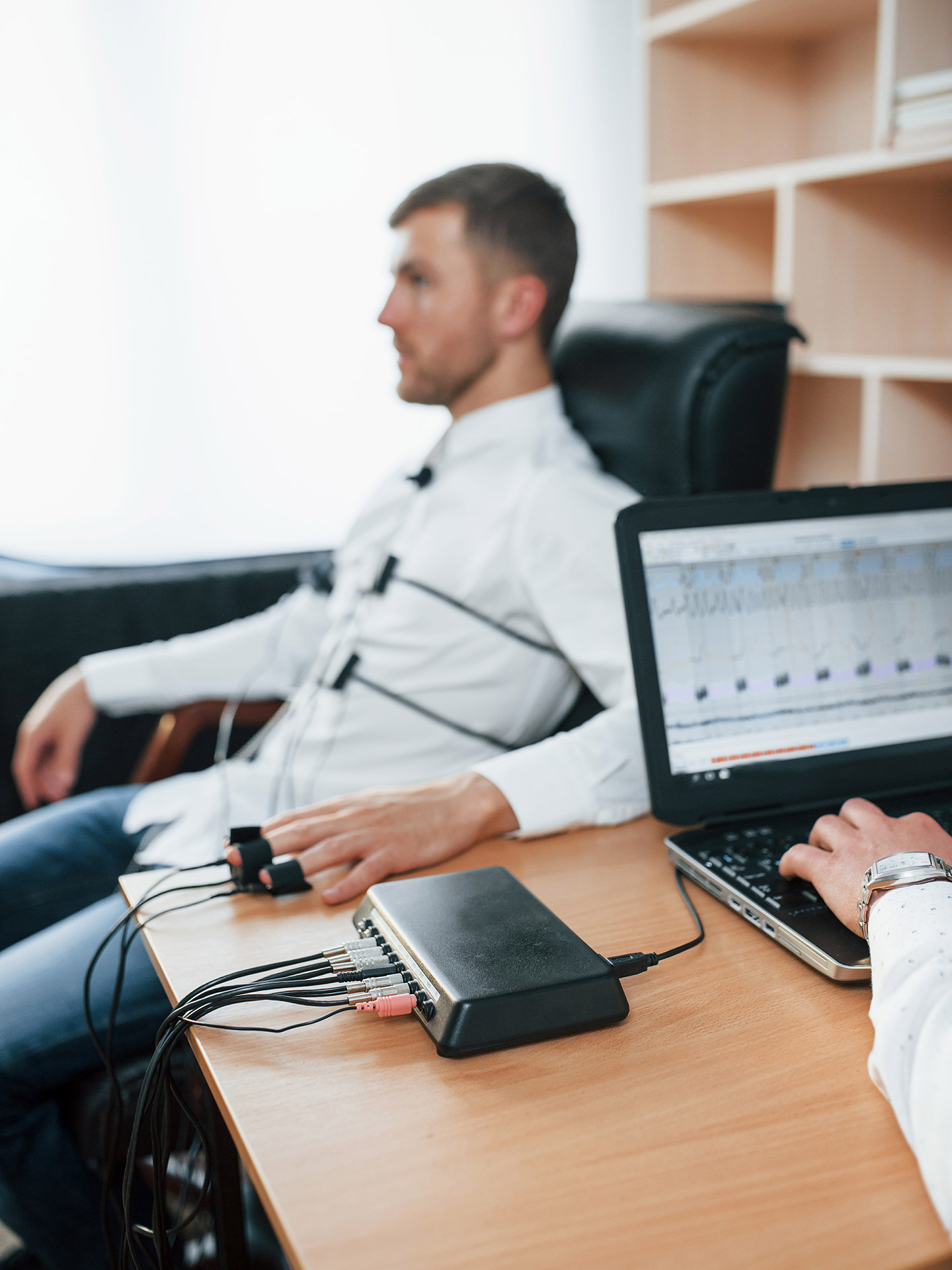
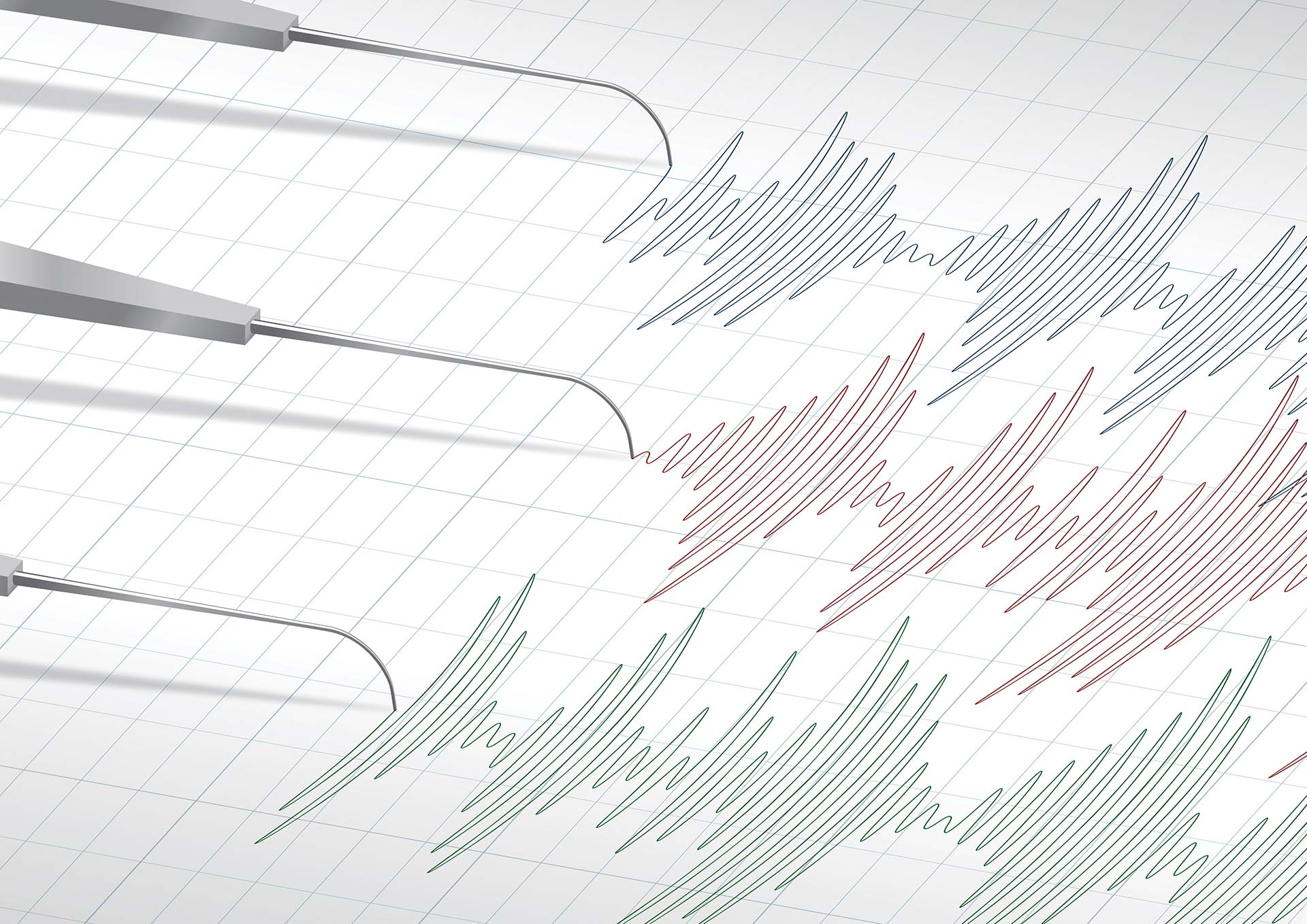
Testing consists of asking the reviewed questions several times. Data must be replicated and consistent in order to meet scoring criteria. The data collection utilizes a pneumograph to record inhalation/exhalation ratio and changes in breathing patterns; electrodes to monitor galvanic skin conductivity; a plethysmograph to measure blood flow; a sphygmomanometer to monitor mean blood pressure levels, pulse rate and blood volume changes; and a motion sensor to ensure the subject remains still during the collection of data. 

Once a sufficient quantity and quality of data is collected, the examiner evaluates and scores the charts. The scoring systems are well researched and standardized. Computer algorithms help with quality control, making results even more reliable. 

Ideally, the subject has disclosed all relevant information in the pre-test and will show no significant reactions. Passing the test confirms the information given is complete and accurate. If the subject fails, the examiner has a huge advantage to begin interrogation. First and foremost, polygraph examiners are interrogators.
iStock.com/Jobalou

Myths about polygraph

Let’s dispel some common myths: 

“Polygraph is not admissible in court.” Although most states give no blanket admissibility for polygraph as evidence (nor should they, in my opinion), this argument misses the real value of this investigative tool. Polygraph does find its way to court in a number of ways, but generally it is used in pre-trial negotiations and post-conviction probation issues, such as with sex offenders. 

“Nervous people will fail.” Everyone is nervous, but not everyone lies. There is a difference between being nervous and being deceptive. It’s normal to be nervous.

“People who habitually lie can beat it.” True pathological liars will show no deception on polygraph only because they actually believe they are telling the truth. These rare individuals are clearly mentally ill, not just good liars.

“Psychopathic people like Ted Bundy can pass a polygraph.” Psychopaths have no empathy or remorse, but they do have self-interest at stake and know when they are lying. If they lie, they fail.

“One can get confused by the questions.” During the pre-test interview, all the questions are discussed and reworded until they can be comfortably answered with “yes” or “no.”

“People can take drugs or put a tack in their shoe to fool the polygraph.” Any well-trained examiner can easily spot pain or discomfort and distinguish it from the subtle, genuine phasic reactions consistent with truth or deception. Drugs act uniformly to suppress or stimulate the system and cannot be selectively deployed for individual questions, thus making this attempted countermeasure futile.

“Polygraph results are 100% accurate.” Even DNA testing has an error rate. Validity studies show polygraph is about 85% to 95% accurate overall — very good and useful, but not perfect. Some situations can utilize a searching peak of tension format that has a less than 1% error rate.

The takeaway

Having certified forensic polygraph examiners available saves time in investigations, not only in getting confessions from criminals but also in gaining cooperation of witnesses and clearing the innocent. In applicant screening, there are many issues that will only be revealed with polygraph. There are good reasons why all of the three-letter federal agencies rely on it. The American Polygraph Association and the American Association of Police Polygraphists offer training, set standards for certification and are a great resource for establishing a polygraph program, including model policies for accreditation. 

Take care of yourself and stay safe!

Dave Bryant

Dave Bryant

Dave Bryant is a retired police officer with over 30 years of experience with several agencies. He is an FDLE and NRA law enforcement instructor and active member of IALEFI. He has a private business as a polygraph examiner in Tampa, Florida. He can be reached at SenseiDave@msn.com.

View articles by Dave Bryant

As seen in the October 2023 issue of American Police Beat magazine.
Don’t miss out on another issue today! Click below:


SUBSCRIBE TODAY!

Categories: Editor's Picks, Tech

Primary Sidebar

Recent Articles

  • Donning denim in solidarity with victims and survivors of sexual assault
  • Clarifying your “true north”
  • Smile and let them swing
  • The job has changed — have you?
  • New National Law Enforcement Museum exhibit revisits D.C. snipers case
  • A hero’s legacy through a mother’s love
  • The days that follow
  • Perpetual recognition of line-of-duty deaths
  • A Tribute to Fallen Heroes
  • NLEOMF Fund announces March 2026 Officers of the Month

Footer

Our Mission
To serve as a trusted voice of the nation’s law enforcement community, providing informative, entertaining and inspiring content on interesting and engaging topics affecting peace officers today.

Contact us: info@apbweb.com | (800) 234-0056.

  • Facebook
  • Instagram
  • Twitter

Categories

  • Editor’s Picks
  • On the Job
  • Labor
  • Tech
  • Training
  • Policy
  • Health/Wellness
  • Community
  • Offbeat
  • We Remember
  • Jobs and Careers
  • Events

Editor’s Picks

Let’s get moving!

Let’s get moving!

April 27, 2026

Heroes of the World Trade Center

Heroes of the World Trade Center

April 24, 2026

The Promise Gap

The Promise Gap

April 22, 2026

Corruption, collusion and impunity

Corruption, collusion and impunity

April 21, 2026

Policies | Consent Preferences | Copyright © 2026 APB Media, LLC | Website design, development and maintenance by 911MEDIA

Open

Subscribe

Close

Receive the latest news and updates from American Police Beat directly to your inbox!

  • This field is for validation purposes and should be left unchanged.