• Skip to primary navigation
  • Skip to main content
  • Skip to primary sidebar
  • Skip to footer
  • Home
  • About
  • The Magazine
  • Events
  • Partners
  • Products
  • Contact
  • Jobs and Careers
  • Advertise
  • Facebook
  • Instagram
  • Twitter
  • Subscribe
American Police Beat

American Police Beat Magazine

Law Enforcement Publication

  • Home
  • Leadership
    • Police leadership development
      Can they do it? Will they do it?
      A unique approach to salvaging a troubled employee
      The relentless pursuit of excellence
      An effective strategy for difficult discussions
  • Topics
    • Leadership
      • Police leadership development
        Can they do it? Will they do it?
        A unique approach to salvaging a troubled employee
        The relentless pursuit of excellence
        An effective strategy for difficult discussions
    • Editor’s Picks
      • No two days are ever the same
        Training dipshittery, Part 2
        Tactical medicine for cops
        Why good cops quit
        Smile and let them swing
    • On the Job
      • Frankpledge to forensics: A brief history of law enforcement
        The sixth sense in policing
        From warrior to peacekeeper
        Hats off to a new uniform look
        Overcoming climate and conditions to rescue child
    • Labor
      • The shift happens long before the resignation letter
        Facing the oral board
        Why good cops quit
        Succession planning
        Why more staff won’t fix your operational slowdowns
    • Tech
      • Accentuating safety for first responders
        Take Me Home program offers effective tool for police and families
        Get the most out of simulation training
        The virtual beat
        Training with an AI partner?
    • Training
      • More than just a red shirt and a Sharpie
        Train them to ask why
        Nobody is coming to do it for you
        Precision, adaptability and response: The need for LPVOs in equipping...
        Training dipshittery, Part 2
    • Policy
      • Out of chaos comes opportunity
        Massachusetts law establishes fund to care for retired K-9s
        Portlanders will not vote on diverting climate funds for police...
        Surviving internal affairs investigations
        Fighting human trafficking at the local level
    • Health/Wellness
      • Understanding why police officers think alcohol works
        Has the job quietly stolen your humanity?
        No two days are ever the same
        Changing the narrative
        Supporting your peer support team
    • Community
      • National Night Out 2026
        Pittsburgh mounted patrol officer helps inner-city kids saddle up
        Wyoming girl on a mission to collect “hero patches”
        Texas sheriff’s office nominates 7-year-old for commendation
        Cops try to net DEA agents
    • Offbeat
      • A surprise sting operation
        Could cadaver otters help close cold cases?
        Police chief catches cat in the act
        “Teenage Mutant Ninja Deer” rescued
        An unexpected burglar
    • We Remember
      • Honoring the Fallen Heroes of 9-11
        Steel Across America
        The first officers on scene on September 11
        Protecting America with the USA PATRIOT Act
        Distant cousins connect to honor fallen family member 110 years after...
    • HOT Mail
      • The War on Cops Continues Unabated
  • On the Job
    • Frankpledge to forensics: A brief history of law enforcement
      The sixth sense in policing
      From warrior to peacekeeper
      Hats off to a new uniform look
      Overcoming climate and conditions to rescue child
  • Labor
    • The shift happens long before the resignation letter
      Facing the oral board
      Why good cops quit
      Succession planning
      Why more staff won’t fix your operational slowdowns
  • Tech
    • Accentuating safety for first responders
      Take Me Home program offers effective tool for police and families
      Get the most out of simulation training
      The virtual beat
      Training with an AI partner?
  • Training
    • More than just a red shirt and a Sharpie
      Train them to ask why
      Nobody is coming to do it for you
      Precision, adaptability and response: The need for LPVOs in equipping...
      Training dipshittery, Part 2
  • Policy
    • Out of chaos comes opportunity
      Massachusetts law establishes fund to care for retired K-9s
      Portlanders will not vote on diverting climate funds for police...
      Surviving internal affairs investigations
      Fighting human trafficking at the local level
  • Health/Wellness
    • Understanding why police officers think alcohol works
      Has the job quietly stolen your humanity?
      No two days are ever the same
      Changing the narrative
      Supporting your peer support team
  • Community
    • National Night Out 2026
      Pittsburgh mounted patrol officer helps inner-city kids saddle up
      Wyoming girl on a mission to collect “hero patches”
      Texas sheriff’s office nominates 7-year-old for commendation
      Cops try to net DEA agents
  • Offbeat
    • A surprise sting operation
      Could cadaver otters help close cold cases?
      Police chief catches cat in the act
      “Teenage Mutant Ninja Deer” rescued
      An unexpected burglar
  • We Remember
    • Honoring the Fallen Heroes of 9-11
      Steel Across America
      The first officers on scene on September 11
      Protecting America with the USA PATRIOT Act
      Distant cousins connect to honor fallen family member 110 years after...
  • HOT Mail
    • The War on Cops Continues Unabated
  • About
  • The Magazine
  • Events
  • Partners
  • Products
  • Contact
  • Jobs and Careers
  • Advertise
  • Subscribe
Search

Training

Tactically sound vehicle selection

In traffic stops, go for quality over quantity

Dan Kickert and Lauren Sheehan Published December 10, 2021 @ 7:00 am PST

iStock.com/ImageegamI

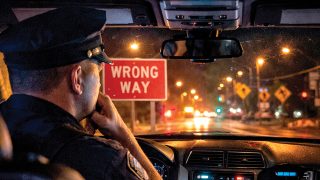
In the 21st century, a lot has changed in our culture of policing, and it seems many law enforcement officers are slowly becoming less productive. There are officers all around the country who are only responding to calls for service, saying they are basically firefighters now and asking themselves when they are going to get some recliners in the briefing room. There are a myriad of reasons for this change. Some officers blame society, politicians and the media. Some of us officers have the mindset that most people still support the police. I believe this statement to be true regardless of the jurisdiction you’re in. However, I agree that if we make a mistake, the spotlight we will find ourselves in is bigger and brighter than ever. I also agree that every contact we have, every traffic stop we make, is an opportunity for things to go sideways. 

We all became cops to do whatever we can to make a little piece of the world a better place to exist. We all have the things we like to make stops for and things we feel good about. It’s a pretty safe bet that getting guns, drugs and violent felons off the street are the gold standards for what we get out of a stop. We still want to make our part of the planet a better place, but we also want to keep our jobs and stay out of prison. So, we need to figure out how we are going to give ourselves the best odds of doing both while staying safe. 

The first step is fairly easy: Every individual officer needs to study their jurisdiction’s laws and their agency’s policy and procedure manual, and get up to speed on case law. The second and final step is even more simple: Make more tactically sound stops. As officers, we cannot help but stare when we see the 1997 Buick Le Sabre with blacked-out windows, air fresheners in the window, leaking muffler, expired registration and, as the only functioning headlight, a hardware store flashlight taped to the fender. I am sure some of us could find even more and burn through half a citation book on that Buick. But ask yourself, would Miguel Angel Felix Gallardo or Joaquin “El Chapo” Guzman be running drugs in a beat-up, run-down car? No, because they are professionals, and if we want to start getting more than ducks from the ashtray and a little bit of crotch weed, we need to start looking for professionals. The idea here is to reduce the quantity of stops and increase the quality of
your stops. 

For basic interdiction work, there are a few things you can determine from the vehicle itself. Professionals and high-level criminals want to blend in. They did not get where they are by sticking out like a sore thumb. The things you are going to be looking for concerning the vehicle itself are things like out-of-state plates and rental car status, especially a rental pick-up with a bed cover. The vast majority, and I mean 99%, of the reasons we need to stop cars are for the occupants themselves. We are not talking about racial profiling, but people profiling. 

Find a fairly decent stretch of road where traffic is visible to you and you are visible to traffic. Yes, we are asking you to find a spot where you are visible to traffic. You want to see what happens when people see you. Most cars will continue on as if you weren’t even there. If someone is speeding, they will likely slow down, because this is normal human behavior. Once you spend enough time staring at normal cars that are doing normal things, random things will start to catch your eye. When you first start watching traffic, you will start to pick up on more obvious behaviors, such as the drivers slowing down when they were already traveling below the speed limit, or the cars that are weaving within and occasionally outside of their lanes because they are overly fixated on what you are doing when you pull out behind them. Eventually, you will start to key in on the behaviors of the occupants themselves.  

Some officers have stated that it is almost impossible to see occupant behavior in the split-second you observe them. That is not the case. You do see the occupants, but you need to train your brain to process what your eyes see more quickly. It is the same concept in shooting fast, with acceptable accuracy. Instead of focusing on the dot or the front sight, you are focusing on the people in a given vehicle. Eventually, you will see if the driver had their hands at “10 and 2” with their eyes fixed straight ahead, because no one really drives like this. You will also notice the driver turning their head and sometimes even their body away from you, attempting to conceal themselves or simply not wanting to be near you. There are also nervous behaviors, such as the driver rubbing their face with their hand or taking a sip of a drink when they pass by. After watching thousands of cars with none of the occupants doing any of those things, you will pick up on this type of behavior instantly. 

If you look for this type of behavior before initiating your stop, your odds of finding guns, drugs, wanted persons and people engaged in other serious crimes will greatly improve. When doing this type of work, remember that you are looking for criminal activity and signs of criminal activity. There is a lot of case law that supports making stops based on a lower standard than probable cause, including:

  • Illinois v. Wardlow, 528 U. S. 119, 125. P. 3: “Courts must therefore permit officers to make commonsense judgments and inferences about human behavior.”
  • United States v. Cortez, 449 U. S. 411, 417: “An officer may initiate a brief investigative traffic stop when he has ‘a particularized and objective basis’ to suspect legal wrongdoing.”
  • Prado Navarette v. California, 572 U. S. 393, 402: “The level of suspicion required is less than that necessary for probable cause and ‘depends on’ the factual and practical considerations of everyday life on which reasonable and prudent men, not legal technicians, act.”

The idea of stopping vehicles based on reasonable suspicion has been around just as long as interdiction work. However, there was never any solid training in this area. Most of the training came from interdiction officers themselves, who would simply share their secrets with other officers like them in the same area. Now this is starting to change. There are different classes around the country that are focused on teaching cops how to make better stops. In Illinois, there are different Mobile Training Units (MTUs), and each one has its own local “guru” teaching a class on how to get better results from traffic stops. There are also companies such as Street Cop Training that are taking their show on the road and on the national level. They are based out of New Jersey; however, they host classes all across the country. 

Remember, we understand that safety is your number one priority. Make sure your stops are safe and you are well-versed in case law, in addition to policies and procedures put in place by your administration. If your agency prefers that you write a “PC” ticket, keep in mind that you can find a violation on virtually any vehicle if you follow it long enough. As you become more skilled at interpreting human behavior, you will start making better stops and searching more vehicles. Do not forget your traffic tactics and never ignore that feeling in your gut.

Dan Kickert and Lauren Sheehan

Dan Kickert and Lauren Sheehan

Dan Kickert is a police officer in the south suburbs of Chicago with 15 years of experience. He is currently assigned to patrol and training. He serves his agency as a field training officer, range master, tactics instructor and training coordinator. He was previously assigned to investigations, where he worked as a homicide investigator in a task force setting for seven years.

Lauren Sheehan spent four years with the Olympia Fields Police Department before going to work as a deputy sheriff in a collar county of Chicago. She has an M.S. in criminal social justice from Lewis University. She has served as a crisis intervention team officer, accident reconstructionist, juvenile specialist and firearms trainer, as well as volunteering to coordinate events such as the National Night Out Against Crime and Cop on Top fundraisers for the Special Olympics of Illinois.

View articles by Dan Kickert and Lauren Sheehan

As seen in the November 2021 issue of American Police Beat magazine.
Don’t miss out on another issue today! Click below:


SUBSCRIBE TODAY!

Categories: Training

Primary Sidebar

Recent Articles

  • Honoring the Fallen Heroes of 9-11
  • Serving every survivor, every sacrifice
  • Steel Across America
  • The first officers on scene on September 11
  • National Night Out 2026
  • Accentuating safety for first responders
  • A surprise sting operation
  • Frankpledge to forensics: A brief history of law enforcement
  • NLEOMF announces July 2026 Officer of the Month
  • Police leadership development

Footer

Our Mission
To serve as a trusted voice of the nation’s law enforcement community, providing informative, entertaining and inspiring content on interesting and engaging topics affecting peace officers today.

Contact us: info@apbweb.com | (800) 234-0056.

  • Facebook
  • Instagram
  • Twitter

Categories

  • Editor’s Picks
  • On the Job
  • Labor
  • Tech
  • Training
  • Policy
  • Health/Wellness
  • Community
  • Offbeat
  • We Remember
  • Jobs and Careers
  • Events

Editor’s Picks

No two days are ever the same

No two days are ever the same

July 24, 2026

Training dipshittery, Part 2

Training dipshittery, Part 2

July 23, 2026

Tactical medicine for cops

Tactical medicine for cops

July 18, 2026

Why good cops quit

Why good cops quit

July 14, 2026

Policies | Consent Preferences | Copyright © 2026 APB Media, LLC | Website design, development and maintenance by 911MEDIA

Open

Subscribe

Close

Receive the latest news and updates from American Police Beat directly to your inbox!

  • This field is for validation purposes and should be left unchanged.