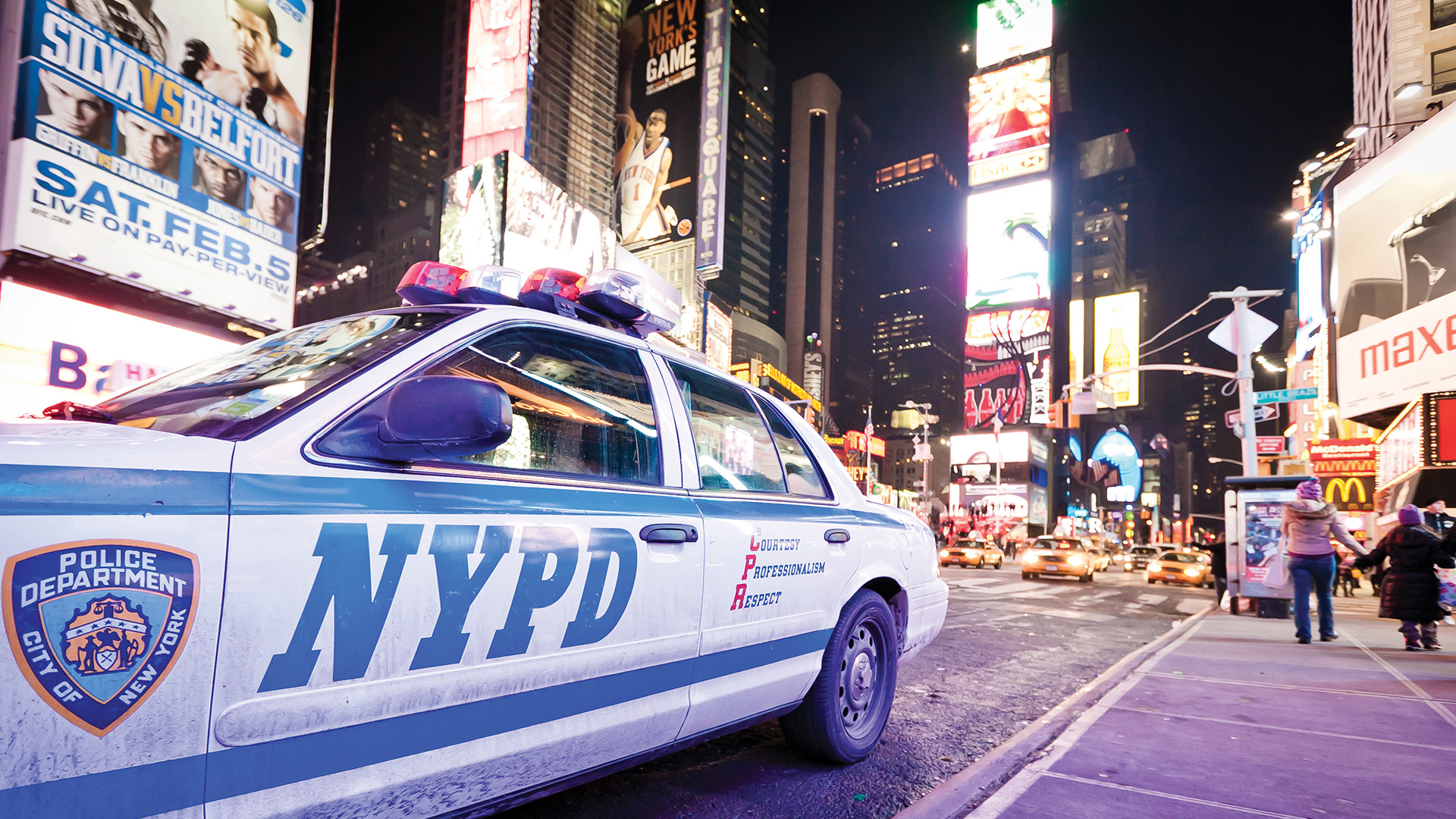
The stunning results of a survey reported exclusively by the New York Post show more than half of New York City cops wish they had never joined the department.
The internal New York City Police Department (NYPD) survey was responded to by 5,935 NYPD cops, with 56% saying they would not do it all over again. The New York Post also reported 79% of the respondents think conditions will only get worse over the next two years.
The NYPD survey came five years after a similar survey by the Police Benevolent Association of the City of New York (PBA), the union representing NYPD cops, found that most New York police officers disliked their job and believed they were safer before Mayor Bill de Blasio took office.
PBA President Patrick Lynch told the New York Post that the NYPD survey results “should surprise nobody.” “New York City police officers are well past our breaking point, and Mayor de Blasio and the outgoing City Council are still piling on with policies that punish cops and erode public safety,” he said, calling the environment “intolerable.”
Cops who once knew their purpose now question their purpose, leaving them without a sense of fulfillment.
An intolerable environment that may be a product of a perfect storm with the convergence of multiple fronts consisting of the “defund the police” movement, bail reform, George Floyd’s death, Black Lives Matter riots, district attorneys and prosecutors refusing to prosecute many crimes, and the creation of legislation that seems to punish cops and embolden criminals. And, as a storm does, it moves on to cause chaos, destruction and death elsewhere, leaving the police to deal with the resulting disaster. The one thing police cannot do is bring life back to the pile of bodies left in the storm’s wake.
Lynch knows the negative climate affecting his members is not unique to the NYPD; he recognizes it as a national issue. “There isn’t a cop in this country who would be surprised by the (survey) results. They’re a window into the mind of every person who puts on a uniform and goes out to protect the public in this terrible climate,” he said. “New York City just happens to be the epicenter of the anti-police lunacy. When I meet cops from other departments, we discover we’re all experiencing the same issues. But I always tell them: trust us, it can get worse.”
One of the biggest threats leading to what could be labeled the “American policing crisis” is the effort to end qualified immunity for police officers. In simplest terms, qualified immunity is not absolute immunity but a limited protection that may allow public employees to avoid civil legal liability if their actions were in the performance of their duties and judged to be in good faith.
In a litigious society such as ours, the loss of qualified immunity for police officers could eliminate officers’ willingness to enforce the law, creating an untenable existence for the public.
A bill to end qualified immunity for New York City police officers sponsored by Councilmember Stephen Levin was passed by the New York City Council on March 25, 2021. Mayor de Blasio told cable news station NY1, “It makes it easier if someone has a concern to bring legal action, but it does not put the individual financial penalty on the officer.” Councilmember Levin told the same news outlet quite the opposite when he said, “Offending officers would be liable whether they’re indemnified by the City or not.”
These confusing statements led retired NYPD Detective Sergeant Joseph Giacalone, now an adjunct professor at City University of New York’s John Jay College of Criminal Justice, to ponder if the opposing views are part of an intentional vagueness setting a path of least resistance for cops. “What can they do? Damned if you do and damned if you don’t. The don’t part sounds like a lot less trouble to get in.” Another law enforcement source added that New York City has become a national lab for reimagining policing with the liberal City Council turning NYPD cops into lab rats. Yet another source, a police sergeant who supervises elite cops in an Emergency Service Unit, said, “They are standardizing the stupidity.”
So how does this play into a police officer’s mindset? Peter Killeen, a doctor of counseling psychology, police psychotherapist and a former police officer, said cops are trained to confront crime and lawlessness; however, now out of fear of retaliation, they hold back. “Cops who once knew their purpose now question their purpose, leaving them without a sense of fulfillment,” he said. “This certainly can lead to depression because you have a certain vision and expectations that are not met.” Killeen understands the number one stress experienced by police officers is not from what a cop handles on the street. “No,” he says, “the number one stress for law enforcement is the administration.” Killeen explained that whatever problems the executive ranks deal with will be pushed down upon the shoulders of the cops. One retired police officer who was a union representative said, “Whenever I was in a meeting with command personnel discussing a problem, I would look around, if I saw I was the lowest rank in the room I would immediately state, ‘I’m the lowest rank here, it must be my fault.’” It appears police officer discontent is not new but has morphed from dislike to regret, leading Professor Giacalone to suggest that maybe the current climate of liberal governing bodies and activist prosecutors and district attorneys may have an intended effect of “police defunding
themselves.”
It is difficult to discuss the current state of policing without delving into the politics responsible for damaging law enforcement and the creation of a disgruntled workforce. The voice to take up the political fight is that of the people, not the rank and file. Police officers are agents of government and must carry out the policies and procedures established by those elected by the people. It is only when the people become dismayed and frightened does the political atmosphere change — a change that may be coming.
Recently, we have heard encouraging talk from the mayors of Chicago, San Francisco and New York City.
New York City Mayor Eric Adams, a retired NYPD captain who took office on January 1, told New Yorkers, “When I ran to become mayor of New York City, I said I was going to reinstitute an anti-gun unit in plainclothes.” He continued, “What I said on the campaign trail is what you’re going to see in City Hall, and I’m not backing away from that.” Adams’ words came after the NYPD disbanded its anti-crime plainclothes unit that was responsible for taking illegal guns off the streets. Critics say that move led to an increase in shootings, gun violence and homicides.
San Francisco Mayor London Breed did not mince words when she announced proposals to address the crime increase in her city. “To be clear, what I’m proposing today and what I will be proposing in the future will make a lot of people uncomfortable and I don’t care,” she said. “We are past the point where what we see is even remotely acceptable.” One of Breed’s proposals is arranging emergency funding for law enforcement. This coming after San Francisco planned to move $120 million from police department funding to other community projects.
Chicago Mayor Lori Lightfoot, whose policies some believe are responsible for the out-of-control crime infecting her city, admitted, “We cannot continue to endure the level of violence we are now experiencing.” Lightfoot said she has asked the United States attorney general to send Bureau of Alcohol, Tobacco, Firearms and Explosives agents along with United States Marshals and federal prosecutors to assist local law enforcement. “We need these additional resources well in advance of summer,” she said.
If what we are hearing from these three city leaders goes further and includes outright support for their police officers, future police department surveys may have totally different findings. If not, policing in America will remain, in the words of New York City PBA President Lynch, “intolerable.”

Bobby Egbert
As seen in the March 2022 issue of American Police Beat magazine.
Don’t miss out on another issue today! Click below: