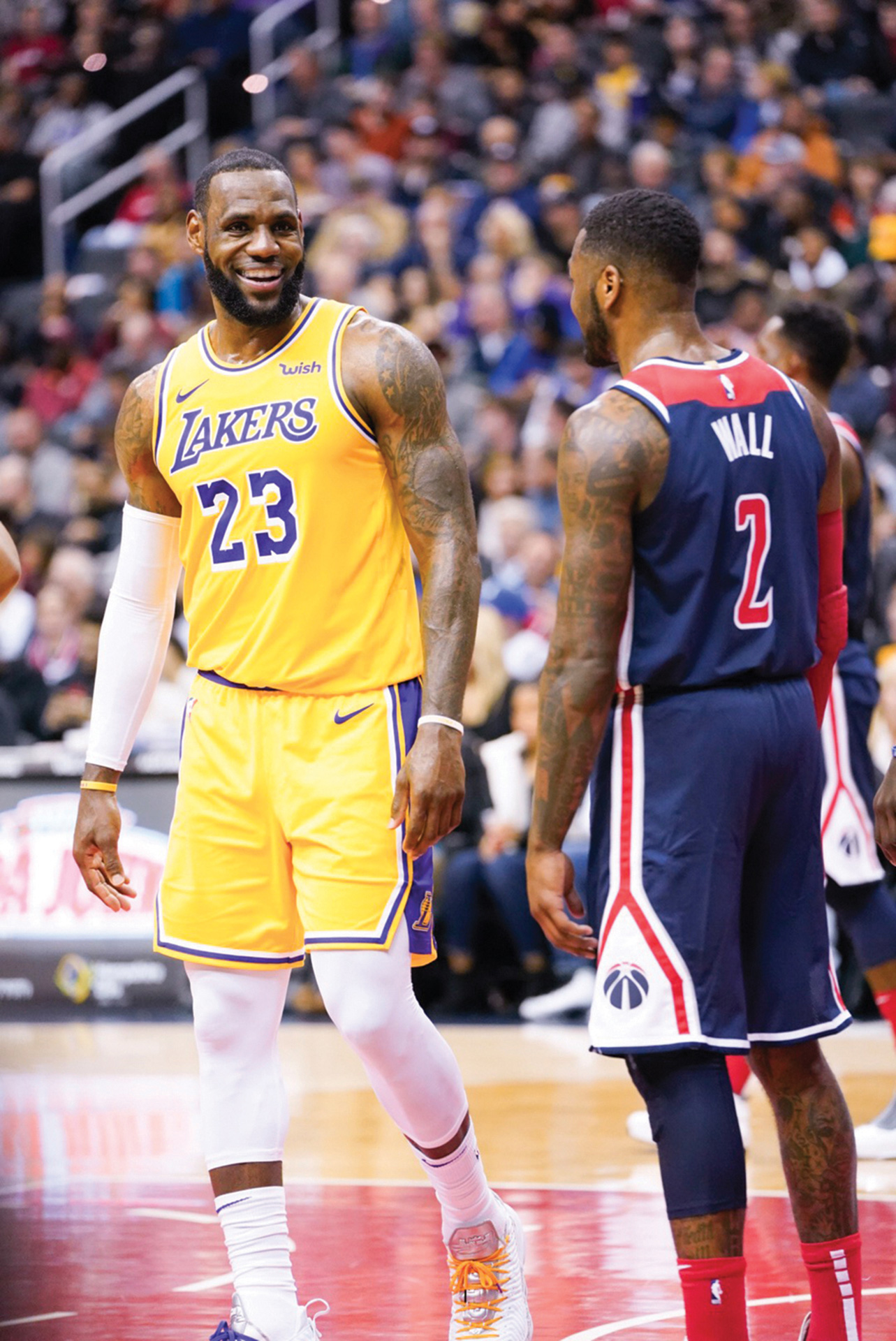
In case you live under a rock or (like me) simply deplore social media drama, there was recently an incident involving a tweet by NBA superstar LeBron James. As with most news fodder these days, it started with some cops. An officer in Columbus, Ohio, responded to a call about a young girl with a knife. Within seconds of arriving on scene, the officer shot the girl as she charged another girl with the knife. The incident occurred shortly before the jury in the Derek Chauvin trial would announce a verdict of “guilty” on all counts. James tweeted an image of an officer at the scene with the caption, “You’re next. #accountability.” After a public backlash that accused James of (among other things) potentially inciting violence against the officers involved, he removed the tweet.
The incident has obviously sparked discussion about police brutality, rushes to judgment and a litany of other things. But it’s James’ explanation of why he removed the tweet that may be the most telling thing about the incident.
The law enforcement profession has, thankfully, become more attuned to the importance of mental health for police officers. The very real issue of officer suicide is being discussed more frequently, and many departments are taking various steps to help address mental and physical wellness in their employees. Ironically, this is all taking place at a time that is perhaps the most difficult in modern history to be a cop. To turn on the TV or computer is to see a story hammering the police. Recruiting and retention are becoming more problematic for agencies, and future studies will no doubt find that society’s rhetoric took an enormous toll on the mental health of those who chose to continue wearing the badge. An officer’s ability to stand firm in the midst of the ongoing storm has much to do with their perspective, and James’ response does much to show us what an officer’s perspective should be.
If an officer finds themselves in the proverbial crosshairs, it may not be completely because of anything they’ve done. Sometimes a movement just needs a cop to be irate about, and any cop will do.
When explaining why he took down the original tweet, James said, “This isn’t about one officer. It’s about the entire system and they always use our words to create more racism. I am so desperate for more ACCOUNTABILITY.” He basically came out and admitted that the narrative he was trying to create wasn’t about that particular officer-involved incident. As he explained, the narrative he was trying to portray was about something far bigger. This short statement is incredibly important for officers to digest and understand. Here’s why.
In Leadership on the Line, authors Ronald Heifetz and Marty Linsky introduce the concept of “roles.” Generally speaking, each of us fill roles in our lives. These roles may become intertwined with our personality, but it’s important to realize that much of the attacks we suffer may be directed toward the role we’re filling, not toward us as individuals. For example, a local city councilman may be getting destroyed in the local media because of a controversial new road they’re trying to build. If they weren’t trying to build the road, the councilman wouldn’t be getting attacked. Therefore, much of the anger they see directed toward “them” in the morning news isn’t really directed toward them as a person. It’s directed toward the councilman role they happen to be filling. Why is this important? Because most of us are hardwired with an innate desire to be liked. We need to feel like we’re doing a good job, that our fellow man appreciates the hard work we’re doing and the sacrifices we’re giving to make our community a better place. As much as we’d like those around us to think that we’re John Wayne, we really do care what people think about us. It’s incredibly useful (for one’s mental health) to be able to tell when someone is mad at us versus when someone is mad at the role we happen to be filling.
Cops nowadays turn on the news, internet or even the latest Hollywood awards show to see constant rhetoric about how horrible they are. James, by his explanation for removing his initial tweet, gives us a great deal of insight into who and what the intended targets of this rhetoric are. James’ original tweet was thrown up quickly, with little to no research into the specifics of the event. Sadly, that’s not uncommon with so much of the public’s response to police use-of-force incidents. It’s almost as if some of the public doesn’t care if the individual officer actually did anything wrong. One would almost think that they have already made up their mind about an overarching issue and are just looking for evidence to support a conclusion they’ve already reached.
If it seems that way, it’s because that’s exactly what’s going on. James, to his credit, basically admitted this in his response. “It’s not about one officer. It’s about the entire system…” He holds a strong belief about the “system” and posted the tweet because he thought the incident would serve as supporting evidence for something he’s already reached a conclusion about. It mattered little that he was calling into question a real person’s integrity and denying them even a basic modicum of due process.
Police officers are trained to examine evidence and then reach conclusions based off that evidence. A young officer will, naturally, assume that the rest of the world is doing the same thing. That is, unfortunately, not necessarily true.
It’s equally important to realize that the current public rhetoric is not just about law enforcement. Police officers are the face of government. When a legislative body passes a law in a faraway capitol building, police officers go out into their communities to enforce it. While many citizens will go their whole life without meeting their legislator or any of the myriad bureaucrats who make the government run, they’ll see cops in uniform all the time. While much of the public’s anger is specifically directed toward cops, the “system” that James referenced encompasses far more than the law enforcement profession. Much of the current racial tension in our nation stems from historic wrongs perpetrated by a system that included far more than the men and women who wear a uniform to work.
If an officer is to survive emotionally in the toxic environment of today, they need to have a proper perspective. In layman’s terms, they have to be cautious about taking things they see personally. As a law enforcement officer, you fill a role. There are countless interests with varying goals in play. James’ response when removing his original tweet reveals that many of these interests already have a predetermined view of the cops and a set agenda. If an officer finds themselves in the proverbial crosshairs, it may not be completely because of anything they’ve done. Sometimes a movement just needs a cop to be irate about, and any cop will do.
A quick caveat is in order. We must evaluate these situations honestly and as objectively as possible. We all make mistakes, both as a profession and as individuals. If we’re honestly in the wrong, we need to own it. That being said, it’s so important that individual cops understand the part that “roles” play in these situations of mass outrage. The outrage in the world right now is complicated. It’s about far more than cops. Police officers just happen to be the unfortunate scapegoat for much of the wrongs (real and perceived) done by the government over the years. In the same manner, it might not be about you as a person. If you honestly didn’t do anything wrong but the world seems set against you, try to remember that. It might not be you at all. It might be the uniform you’re wearing and your value to some group’s narrative. It’s still not fair, but it’s important that cops know this before they find themselves in a situation where the world seems levied against them. The massive, toxic weight of public opinion can be intolerable for an individual to bear. It’s important for cops to survive mentally, and this realization can make all the difference toward that end.

Cliff Couch
As seen in the March 2022 issue of American Police Beat magazine.
Don’t miss out on another issue today! Click below: