
While researching this article, I came across an undated essay written by Roxana Robinson for an organization named STAT®REC. The article is titled “Militarizing the Police,” and she explained succinctly the presence of military equipment in law enforcement when she wrote:
“In 1990, after the fall of the Soviet Union and the Iron Curtain, the United States no longer needed a powerful physical military presence in Europe. Congress passed legislation allowing the Department of Defense to release $6 billion dollars’ worth of surplus military equipment to our local police departments across the country. This consignment included tanks, mine-resistant vehicles (MRAPs), assault rifles, grenade launchers and bayonets.”
Since that time, law enforcement agencies have had the permission to purchase excess or property disposal office (PDO) military equipment sold at auction under the Department of Defense (DOD) 1033 program. It wasn’t until the infamous 1997 Los Angeles bank robbery, where Larry Phillips and Emil Matasareanu fired upon 64 police officers (wounding 11) and 18 bystanders (wounding six), that police tactics took a dramatic change (ABC7 Los Angeles, February 28, 2022). The firefight lasted 44 minutes, and both suspects were armed with illegally modified rifles, including two Norinco Type 56 S rifles, one Norinco Type 56 S-1 rifle and a Bushmaster XM15-ES2 Dissipator, all of which were modified to be able to fire fully automatic. The robbers were also armed with an H&K Model 91 .308 rifle, thousands of rounds and body armor that was custom fitted.
Because criminals had transitioned by the early 1990s to using semi-automatic pistols and other weapons with enormous firepower while committing crimes, law enforcement found the S&W Model 15 .38 caliber revolvers to be insufficient and an officer safety issue when engaging suspects. The bank robbery in Los Angeles highlighted the superiority of criminals when engaging in a firefight because the bank robbers outgunned a majority of police officers who had arrived carrying the S&W Model 15 revolvers while some officers arrived carrying semi-automatic pistols. Until the Los Angeles SWAT team arrived, the on-scene supervisors recognized the need to obtain weapons from a nearby gun store to engage the suspects with firepower equal to what the suspects were using.
Incidents throughout the nation demonstrated an obvious disparity in the firepower between law enforcement and the criminal element. Because police officers were increasingly becoming outgunned by suspects, law enforcement agencies found the need to “militarize” their agency to some degree. Senior administrators recognized that police officers needed to have the necessary firepower and equipment to engage a criminal element that had improved how they would succeed in their criminal endeavors. Because criminals had become sophisticated in their planning and tactics to perpetuate their criminal endeavors, so too was the necessity for law enforcement to re-think how violent suspects and criminal groups were engaged to stop the action and arrest the suspects. In describing the mission differences between the military and civilian law enforcement, an organization named the Constitution Project wrote:
“Our military’s core function is to fight and deter foreign enemies, which often requires speed, surprise and the use of specialized weapons and heavy artillery. Civilian police, in contrast, is meant to keep the peace and to protect local communities while safeguarding civil liberties” (2016, “Demilitarizing America’s Police: A Constitutional Analysis”).
What the authors of that 40-page document minimized in their analysis is how sophisticated the criminal element has become. Many times law enforcement has had to use military-type tactics to breach a well-fortified home or building while engaging well-armed and dedicated criminals willing to use lethal force against law enforcement without hesitation. Whereas in the past, local law enforcement may have had to engage the mafia, today’s officers must engage various street gangs and factions of Mexican cartels with camera and intruder-detection systems, advanced scouting capabilities to gather intelligence information and counterterrorist-type training to repel any intruder. While most of the gangs are somewhat less sophisticated, there are many factions that are not.
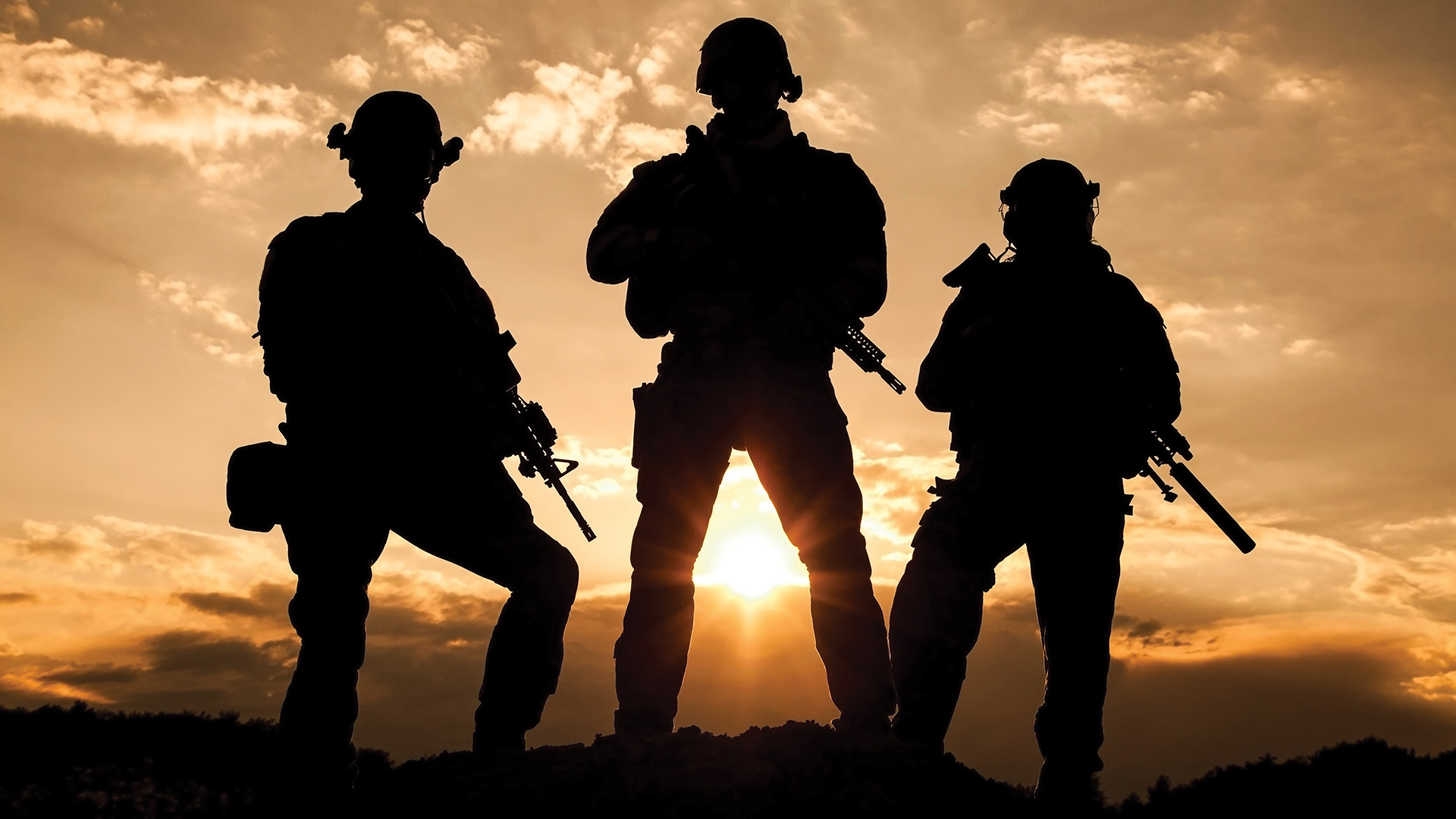
A problem arose as a result of equipping police officers and agencies with military-style equipment by causing the citizenry to become apprehensive, intimidated, concerned and scared. Images of police officers wearing uniforms and equipment giving the appearance of an elite military fighting squad walking next to a tactical vehicle during riots and confrontations with the public exacerbated the issue by giving an impression citizens are living in a “police state.” Incidents like Michael Brown and George Floyd helped fuel the flames for demilitarizing and defunding law enforcement because law enforcement responded with military-style equipment using military-style tactics to quell the unrest. The flames of anger are further ignited by the press and political pundits who give unfavorable reports of police actions.
Obtaining military-style activewear and equipment has also posed First, Fourth and 14th Amendment questions by both the public and some elected officials. The First Amendment concern is a citizen’s right to assemble peacefully, and their freedom of speech and expression may be infringed via the use of military equipment and tactics. Fourth Amendment concern is violations that may occur when serving a warrant if police officers are too aggressive and use military-type uniforms and equipment. The 14th Amendment concern is that minorities may be targeted or suffer because police officers may become overly zealous.
So, what is the solution? How do we turn the opinions and attitudes of elected officials and citizens around? How do we justify
the need for the equipment and the need to modernize? The answer is simple, and that is through public relations, education and commitment.
First, the public needs to understand the criminal element does not play by the same rules a civilized society does. Police officers do not intentionally seek to injure a suspect, as many people who have or are about to commit a crime try to harm a police officer. Second, the public needs to understand that police officers are people too, and like many citizens, we go to work for the expressed purpose of making a difference and doing the job the best that we can. Third, and most importantly, the public needs to understand how we approach and engage people, and our tactics are based on over 100 years of police officers killed while doing their job. No police officer expects a kindly and somewhat frail 80-year-old woman to pull a .357 magnum from her purse as the officer looks away, killing the officer because she was afraid he would take her driver’s license away.
Senior leaders need to actively engage all news reports that may or have influenced the public via innuendo, misinformation or false information by suggesting police officers have violated the rights of any citizen, especially a minority. Becoming an active partner with the press will aid in ensuring the truth is reported and help mitigate the intentions and actions of crowds with the potential to become unruly. Finally, promoting community policing and neighborhood watch programs and actively working to propel these initiatives to the forefront of a police agency’s daily practices will enhance and bind the relationship between police officers and citizens to a point that long-term friendships develop.
The bottom line is the perception of the public and elected officials are dependent on what senior leadership in law enforcement does. Let the media run the narrative unchecked, and officers will be subjected to the verbal and physical abuse of an uninformed public. Actively engage with the press, elected officials and the public, and the truth and transparency of the incident can be reported, and you will have a well-informed community.

Steve Foldy
As seen in the August 2022 issue of American Police Beat magazine.
Don’t miss out on another issue today! Click below:




