• Skip to primary navigation
  • Skip to main content
  • Skip to primary sidebar
  • Skip to footer
  • Home
  • About
  • The Magazine
  • Events
  • Partners
  • Products
  • Contact
  • Jobs and Careers
  • Advertise
  • Facebook
  • Instagram
  • Twitter
  • Subscribe
American Police Beat

American Police Beat Magazine

Law Enforcement Publication

  • Home
  • Leadership
    • The hidden costs of micromanagement
      Police leadership development
      Can they do it? Will they do it?
      A unique approach to salvaging a troubled employee
      The relentless pursuit of excellence
  • Topics
    • Leadership
      • The hidden costs of micromanagement
        Police leadership development
        Can they do it? Will they do it?
        A unique approach to salvaging a troubled employee
        The relentless pursuit of excellence
    • Editor’s Picks
      • No two days are ever the same
        Training dipshittery, Part 2
        Tactical medicine for cops
        Why good cops quit
        Smile and let them swing
    • On the Job
      • Frankpledge to forensics: A brief history of law enforcement
        The sixth sense in policing
        From warrior to peacekeeper
        Hats off to a new uniform look
        Overcoming climate and conditions to rescue child
    • Labor
      • The shift happens long before the resignation letter
        Facing the oral board
        Why good cops quit
        Succession planning
        Why more staff won’t fix your operational slowdowns
    • Tech
      • Accentuating safety for first responders
        Take Me Home program offers effective tool for police and families
        Get the most out of simulation training
        The virtual beat
        Training with an AI partner?
    • Training
      • More than just a red shirt and a Sharpie
        Train them to ask why
        Nobody is coming to do it for you
        Precision, adaptability and response: The need for LPVOs in equipping...
        Training dipshittery, Part 2
    • Policy
      • Out of chaos comes opportunity
        Massachusetts law establishes fund to care for retired K-9s
        Portlanders will not vote on diverting climate funds for police...
        Surviving internal affairs investigations
        Fighting human trafficking at the local level
    • Health/Wellness
      • Trauma exposure and preventing officer suicide
        Understanding why police officers think alcohol works
        Has the job quietly stolen your humanity?
        No two days are ever the same
        Changing the narrative
    • Community
      • National Night Out 2026
        Pittsburgh mounted patrol officer helps inner-city kids saddle up
        Wyoming girl on a mission to collect “hero patches”
        Texas sheriff’s office nominates 7-year-old for commendation
        Cops try to net DEA agents
    • Offbeat
      • A surprise sting operation
        Could cadaver otters help close cold cases?
        Police chief catches cat in the act
        “Teenage Mutant Ninja Deer” rescued
        An unexpected burglar
    • We Remember
      • Honoring the Fallen Heroes of 9-11
        Steel Across America
        The first officers on scene on September 11
        Protecting America with the USA PATRIOT Act
        Distant cousins connect to honor fallen family member 110 years after...
    • HOT Mail
      • The War on Cops Continues Unabated
  • On the Job
    • Frankpledge to forensics: A brief history of law enforcement
      The sixth sense in policing
      From warrior to peacekeeper
      Hats off to a new uniform look
      Overcoming climate and conditions to rescue child
  • Labor
    • The shift happens long before the resignation letter
      Facing the oral board
      Why good cops quit
      Succession planning
      Why more staff won’t fix your operational slowdowns
  • Tech
    • Accentuating safety for first responders
      Take Me Home program offers effective tool for police and families
      Get the most out of simulation training
      The virtual beat
      Training with an AI partner?
  • Training
    • More than just a red shirt and a Sharpie
      Train them to ask why
      Nobody is coming to do it for you
      Precision, adaptability and response: The need for LPVOs in equipping...
      Training dipshittery, Part 2
  • Policy
    • Out of chaos comes opportunity
      Massachusetts law establishes fund to care for retired K-9s
      Portlanders will not vote on diverting climate funds for police...
      Surviving internal affairs investigations
      Fighting human trafficking at the local level
  • Health/Wellness
    • Trauma exposure and preventing officer suicide
      Understanding why police officers think alcohol works
      Has the job quietly stolen your humanity?
      No two days are ever the same
      Changing the narrative
  • Community
    • National Night Out 2026
      Pittsburgh mounted patrol officer helps inner-city kids saddle up
      Wyoming girl on a mission to collect “hero patches”
      Texas sheriff’s office nominates 7-year-old for commendation
      Cops try to net DEA agents
  • Offbeat
    • A surprise sting operation
      Could cadaver otters help close cold cases?
      Police chief catches cat in the act
      “Teenage Mutant Ninja Deer” rescued
      An unexpected burglar
  • We Remember
    • Honoring the Fallen Heroes of 9-11
      Steel Across America
      The first officers on scene on September 11
      Protecting America with the USA PATRIOT Act
      Distant cousins connect to honor fallen family member 110 years after...
  • HOT Mail
    • The War on Cops Continues Unabated
  • About
  • The Magazine
  • Events
  • Partners
  • Products
  • Contact
  • Jobs and Careers
  • Advertise
  • Subscribe
Search

On the Job

A tale of a new homicide investigator

Michael Delaney Published September 5, 2022 @ 6:00 am PDT

iStock.com/SARINYAPINNGAM

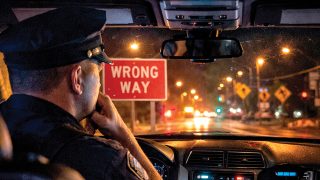
In 2001, a Navy petty officer and another innocent victim were shot and killed in Maryland for simply “being in the wrong place, at the wrong time.” Both victims were found in a wooded area, 15 miles from where Maryland borders Washington, D.C. The case was immediately given a high priority classification, aka a “red ball.”

At the time, I was finishing my fifth year as a robbery detective in Maryland and was busy investigating a series of robberies that had taken place close to where the bodies were found. We had so many robberies that those five years were like 10 years working any other investigation. I had come to know the backgrounds of most of the criminals working in the area. So, naturally, the lead homicide detective requested my assistance. The experience totally changed my mindset on conducting major investigations.

Early on in the investigation, I made the lead investigator aware of the suspects I had been investigating for those earlier robberies. I didn’t have enough evidence to charge the suspects but was beginning to piece my cases together. One thing was clear — these suspects wouldn’t hesitate to point a gun in a person’s face to get what they wanted. 

As a robbery detective, I had learned to work fast and work efficiently. There was always the chance that I’d be called out to investigate a new robbery before the ink dried on the report I had just finished typing. Needless to say, I was ready to make immediate arrests, conduct interrogations, execute the necessary search warrants, interview pertinent witnesses and review recovered evidence. In my mind, this case would be wrapped up in a few hours. Of course, that’s not how it works in homicide — especially one involving a Navy officer. This case took coordination and time. 

One of the robberies I had been investigating was a carjacking that happened in the same vicinity moments before the homicides. The victim in that case had been robbed of his vehicle at gunpoint and was able to escape on foot by tossing his car keys in a nearby yard before being shot. When I showed the carjacking victim the suspect photo spread, he knew exactly who he was looking at.

We were sure the suspects in the carjacking case were involved in the homicides as well. I was chomping at the bit to handle one of the interrogations and get this case closed. 

Because the victim was a Navy petty officer, not only was my department on the case but there were NCIS, federal and state investigators assisting. No decision could be finalized until everyone met and discussed for what seemed like hours. I wasn’t used to working that way. In my investigative world, I would make a decision and go. From my point of view, there was way too much game planning and not enough action.

On top of that, there was nowhere for me to cool off. The second I walked into the hallway to catch my breath, there was a commander asking questions. Local and national news media were camped in front of the police station to be the first to break any developments.  

When the lead homicide detective finally asked if I was ready to interrogate, the look I gave her was all the assurance she needed. 

The pressure was high. I needed to build enough trust with the suspect for him to speak to me without an attorney. I needed to handle the grieving family members who were demanding answers. And I needed to pull this off as my first homicide interrogation. The slightest mistake could cause the entire case to stall. I felt as if the weight of the world was on my shoulders going into that interrogation room, but I was ready.

Once I was sitting face to face with the suspect, I offered him a cigarette to set the tone. I eased in, asking about his childhood and upbringing. I didn’t want to bring up the reason for the arrest right away. I wanted to inch closer and closer to asking about the homicides by making him feel comfortable.

As we continued to converse, I could see his posture beginning to change. When we first began the interview, he leaned forward in his seat with his head down on the table. The only time he sat up was to quickly smoke his cigarette. But now, he sat back in his seat with his arms lightly folded. He was feeling at ease speaking with me. I knew I was going in the right direction.

This was my chance to take the next step. The plan we devised was to start the interrogation with a focus on the robberies. I told the suspect that I wanted to explain why he was in custody. I could see the anticipation in his eyes as he slowly unfolded his arms. He wanted to know what we knew.

I told him that he’d been identified by the victim of the carjacking and I gave him some details about the incident. I could see his wheels turning as he tried to figure out what was going on. He seemed confused because he was prepared to deny the homicides, not the carjacking.

Having taken him off guard, he admitted to the carjacking and even mentioned how he had to find the victim’s car keys in a neighbor’s front yard.

The suspect confessed to committing other armed robberies, too. He felt that confessing to those lesser crimes worked out better than admitting to killing two innocent people. He became more and more comfortable speaking with me, and I had no intentions of stopping him. 

Once I gathered enough details to lock him into his statements about the robberies, I began building myself up to ask questions about the homicides. My transition from the robberies to the night of the homicides was natural and unassuming.

“I know you’re not a bad person,” I said, knowing quite well that the opposite was true, but wanting him to feel like I was on his side. “What did those people do that got them shot?” 

I remember him giving me a look as if he had been caught red-handed. Without much hesitation, the suspect began describing what led to the murders. He told me that he and his boys decided to carjack the next car they came across. So when the victims pulled off the road to take a quick break from driving, the suspects robbed, assaulted and shot them to death just for being “in the wrong place, at the wrong time.”

When all was said and done, five suspects were charged with the homicides of the two victims. Shortly after their arrests, I was transferred into the homicide unit, where I served for 14 years.

Throughout my investigative career, every investigation took me back to this case. I was forced to slow down and examine each aspect of the investigation. I learned to work with other units and departments to piece my cases together. And importantly, I learned to build trust with the suspects by listening to their stories and trying to walk in their shoes, even when they walked the most heinous paths because that’s how I got confessions and closed cases.

Michael Delaney

Michael Delaney

Detective Michael Delaney is an investigator with nearly 30 years of experience in law enforcement. Delaney has supervised and trained new investigators in major crime investigations, robbery investigations, extortion investigations, homicide investigations, natural death in-vestigations, interrogation techniques, courtroom testimony and tactical surveillance techniques. Recognizing the need to strengthen community-police relations, Delaney volunteers to support incarcerated youth and spends much of his time teaching Insight Policing: Conflict Resolution for Law Enforcement, a skillset that helps officers communicate effectively on the job even in situations of high stress.

View articles by Michael Delaney

As seen in the August 2022 issue of American Police Beat magazine.
Don’t miss out on another issue today! Click below:


SUBSCRIBE TODAY!

Categories: On the Job

Primary Sidebar

Recent Articles

  • NLEOMF to hold Online Silent Auction during Police Weekend
  • Trauma exposure and preventing officer suicide
  • The hidden costs of micromanagement
  • Honoring the Fallen Heroes of 9-11
  • Serving every survivor, every sacrifice
  • Steel Across America
  • The first officers on scene on September 11
  • National Night Out 2026
  • Accentuating safety for first responders
  • A surprise sting operation

Footer

Our Mission
To serve as a trusted voice of the nation’s law enforcement community, providing informative, entertaining and inspiring content on interesting and engaging topics affecting peace officers today.

Contact us: info@apbweb.com | (800) 234-0056.

  • Facebook
  • Instagram
  • Twitter

Categories

  • Editor’s Picks
  • On the Job
  • Labor
  • Tech
  • Training
  • Policy
  • Health/Wellness
  • Community
  • Offbeat
  • We Remember
  • Jobs and Careers
  • Events

Editor’s Picks

No two days are ever the same

No two days are ever the same

July 24, 2026

Training dipshittery, Part 2

Training dipshittery, Part 2

July 23, 2026

Tactical medicine for cops

Tactical medicine for cops

July 18, 2026

Why good cops quit

Why good cops quit

July 14, 2026

Policies | Consent Preferences | Copyright © 2026 APB Media, LLC | Website design, development and maintenance by 911MEDIA

Open

Subscribe

Close

Receive the latest news and updates from American Police Beat directly to your inbox!

  • This field is for validation purposes and should be left unchanged.