• Skip to primary navigation
  • Skip to main content
  • Skip to primary sidebar
  • Skip to footer
  • Home
  • About
  • The Magazine
  • Events
  • Partners
  • Products
  • Contact
  • Jobs and Careers
  • Advertise
  • Facebook
  • Instagram
  • Twitter
  • Subscribe
American Police Beat

American Police Beat Magazine

Law Enforcement Publication

  • Home
  • Leadership
    • Understanding the boundaries of professional relationships with the...
      Why you should lead from 30,000 feet
      Public perception and trust
      When performance reviews are a waste of time
      Taking a page from Toyota’s playbook
  • Topics
    • Leadership
      • Understanding the boundaries of professional relationships with the...
        Why you should lead from 30,000 feet
        Public perception and trust
        When performance reviews are a waste of time
        Taking a page from Toyota’s playbook
    • Editor’s Picks
      • Let’s get moving!
        Heroes of the World Trade Center
        The Promise Gap
        Corruption, collusion and impunity
        Liability challenges in contemporary policing
    • On the Job
      • Frankpledge to forensics: A brief history of law enforcement
        Villains and heroes in the Big Apple
        Right place, right time — again
        Some good news on crime
        Mom-to-be named Cop of the Year
    • Labor
      • The Promise Gap
        Cut the cops, save a dollar?
        Labor release under fire
        Who’s watching the watchmen?
        Crime and punishment (or lack thereof) in Seattle
    • Tech
      • New Mexico license plate readers save lives, lead to “precise...
        A modern field guide to understanding research in policing
        Gear that moves with you
        A new breed of cop car
        The future of patrol is here
    • Training
      • Pushback as a training signal
        Let’s get moving!
        The five minutes before the ambulance
        Navigating danger
        Critical thinking in police training
    • Policy
      • Corruption, collusion and impunity
        E-bikes spark public safety concerns
        Try racing without wheels
        Law enforcement accreditation: Why it matters
        Liability challenges in contemporary policing
    • Health/Wellness
      • Addressing stress, vicarious trauma and burnout
        Nervous system regulation
        The nature of the job
        Promoting organizational wellness
        Telling cops to get more sleep isn’t working
    • Community
      • Improving autism awareness
        Shop with a Cop
        Community engagement: What is it moving forward?
        Contradictory crossroads
        Back-to-school season brings out police support nationwide
    • Offbeat
      • An unexpected burglar
        Police humor only a cop would understand
        Not eggzactly a perfect heist
        Pizza … with a side of alligator?
        Wisconsin man charged with impersonating Border Patrol agent twice in...
    • We Remember
      • Heroes of the World Trade Center
        Forty heroes: United Airlines Flight 93
        The Pentagon
        A nation propelled to war, lives changed forever
        A Christmas loss
    • HOT Mail
      • The War on Cops Continues Unabated
  • On the Job
    • Frankpledge to forensics: A brief history of law enforcement
      Villains and heroes in the Big Apple
      Right place, right time — again
      Some good news on crime
      Mom-to-be named Cop of the Year
  • Labor
    • The Promise Gap
      Cut the cops, save a dollar?
      Labor release under fire
      Who’s watching the watchmen?
      Crime and punishment (or lack thereof) in Seattle
  • Tech
    • New Mexico license plate readers save lives, lead to “precise...
      A modern field guide to understanding research in policing
      Gear that moves with you
      A new breed of cop car
      The future of patrol is here
  • Training
    • Pushback as a training signal
      Let’s get moving!
      The five minutes before the ambulance
      Navigating danger
      Critical thinking in police training
  • Policy
    • Corruption, collusion and impunity
      E-bikes spark public safety concerns
      Try racing without wheels
      Law enforcement accreditation: Why it matters
      Liability challenges in contemporary policing
  • Health/Wellness
    • Addressing stress, vicarious trauma and burnout
      Nervous system regulation
      The nature of the job
      Promoting organizational wellness
      Telling cops to get more sleep isn’t working
  • Community
    • Improving autism awareness
      Shop with a Cop
      Community engagement: What is it moving forward?
      Contradictory crossroads
      Back-to-school season brings out police support nationwide
  • Offbeat
    • An unexpected burglar
      Police humor only a cop would understand
      Not eggzactly a perfect heist
      Pizza … with a side of alligator?
      Wisconsin man charged with impersonating Border Patrol agent twice in...
  • We Remember
    • Heroes of the World Trade Center
      Forty heroes: United Airlines Flight 93
      The Pentagon
      A nation propelled to war, lives changed forever
      A Christmas loss
  • HOT Mail
    • The War on Cops Continues Unabated
  • About
  • The Magazine
  • Events
  • Partners
  • Products
  • Contact
  • Jobs and Careers
  • Advertise
  • Subscribe
Search

Policy

California decriminalizes jaywalking in new law

APB Team Published October 8, 2022 @ 6:00 am PDT

iStock.com/mokee81

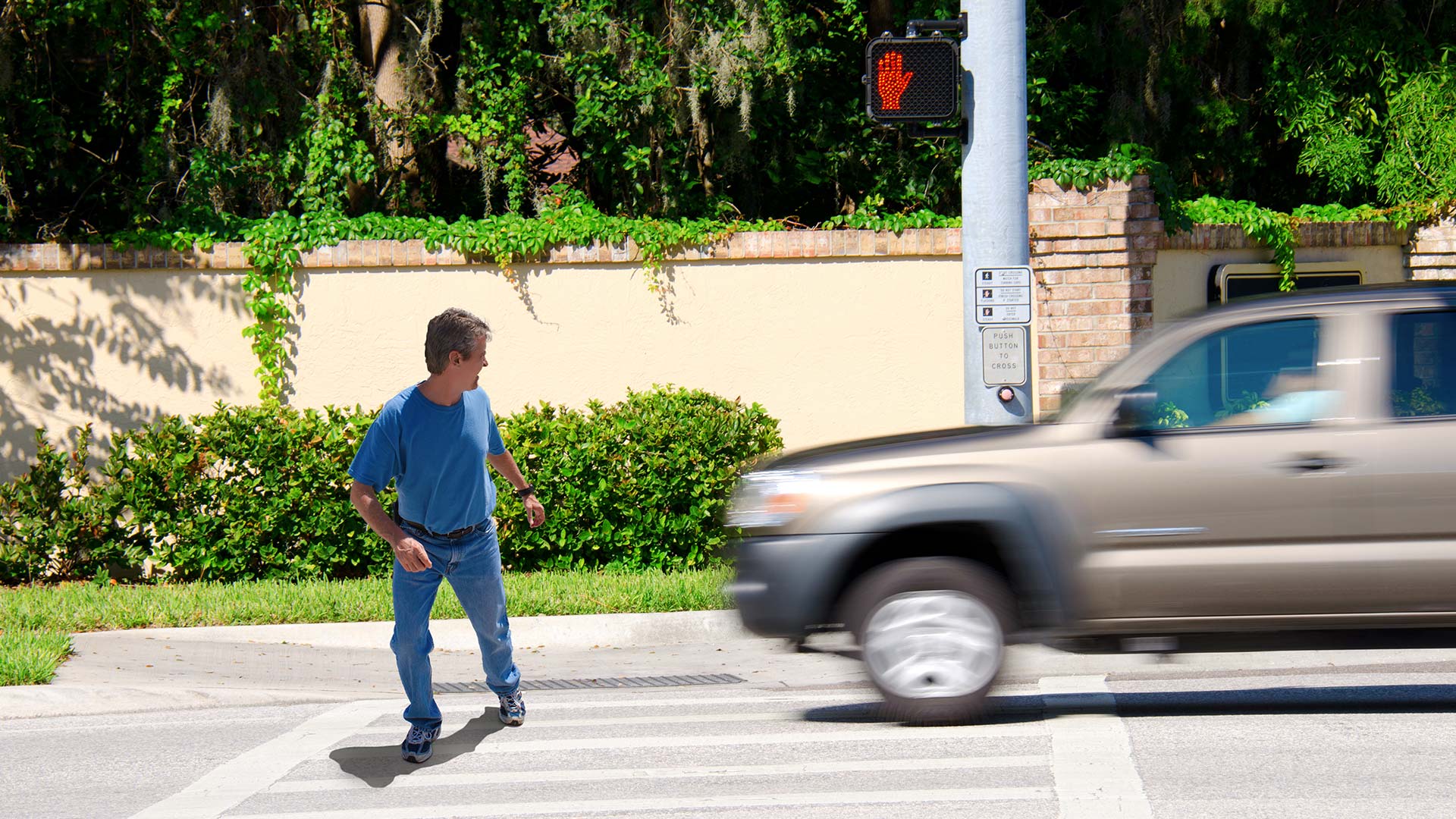
Starting next year, California police officers will no longer be able enforce many jaywalking violations, due to recently passed legislation that decriminalizes the act.

The Freedom to Walk Act, authored by San Francisco Assemblymember Phil Ting, was signed into law by Governor Gavin Newsom on September 30 and will go into effect on January 1, 2023.

According to the law’s supporters, jaywalking citations have unfairly impacted marginalized and low-income residents, particularly people of color. Under the new law, pedestrians will be able to cross the street outside of designated intersections or against traffic lights without risking a citation as long as they are not endangering themselves or others in the process.

“It’s still technically illegal to cross the street in the middle of the street,” Ting told LAist. “But we’re directing law enforcement not to cite people, unless there’s an immediate hazard.”

The bill states that jaywalking should not be cited “unless a reasonably careful person would realize there is an immediate danger of collision with a moving vehicle or other device moving exclusively by human power,” such as a bicycle or scooter.

Jaywalking laws, historically enacted in the 1930s with the rise of automobile usage, are enforced across the country. However, in major cities such as Boston and New York, ticketing is less common.

In California, citations are frequently handed out to individuals who cross the street outside of a marked crosswalk or fail to get to the other side before the countdown signal finishes. And while the state’s base fine for the offense is $25, additional penalties and surcharges bring the total cost of a ticket to nearly $200.

Critics of jaywalking laws argue that they create opportunities for racial profiling and unequitable enforcement. Ting’s office cited data from the California Racial and Identity Profiling Act, which showed that Black Californians were 4.5 times more likely to receive jaywalking citations. According to a press release from Ting’s office, there have also been numerous cases where jaywalking stops have led to fatal police encounters.

Opponents of the law argued that it would make streets less safe at a time when pedestrian fatalities are on the rise, and that the “reasonably careful” criteria is vague and leaves too much to officer discretion.

The bill’s co-author, Assemblymember Laura Friedman of Glendale, argued that citing people for jaywalking is not a deterrent and has little effect on public safety. “If people are jaywalking a lot in an area, it’s probably because they don’t have a good way to get across the street,” she explained to LAist. “I’d rather have communities start thinking about adding more crosswalks, adding better signage, putting a light up, putting up a stop sign, adding a sidewalk — doing all the things that we know actually do make people safer.”

“It should not be a criminal offense to safely cross the street,” Ting stated. “When expensive tickets and unnecessary confrontations with police impact only certain communities, it’s time to reconsider how we use our law enforcement resources and whether our jaywalking laws really do protect pedestrians. Plus, we should be encouraging people to get out of their cars and walk for health and environmental reasons.”

Other states and municipalities that have decriminalized jaywalking include Nevada (which changed it from a misdemeanor to a civil penalty), Virginia (which changed it to a secondary offense, so that officers cannot stop pedestrians solely due to jaywalking) and Kansas City, Missouri (which eliminated jaywalking tickets and penalties).

To measure the impact of the new law on public safety, the Commissioner of the California Highway Patrol (CHP) will work with the Institute of Transportation Studies at the University of California to submit a report detailing pedestrian-related traffic crash data to the California Legislature by January 1, 2028.


Categories: Policy Tags: law, jaywalking, Freedom to Walk, Phil Ting, Law Enforcement, reform, California, legislation, Gavin Newsom, racial profiling

Primary Sidebar

Recent Articles

  • Frankpledge to forensics: A brief history of law enforcement
  • Pushback as a training signal
  • Let’s get moving!
  • Heroes of the World Trade Center
  • The Promise Gap
  • Corruption, collusion and impunity
  • The five minutes before the ambulance
  • New Mexico license plate readers save lives, lead to “precise policing”
  • Addressing stress, vicarious trauma and burnout
  • Understanding the boundaries of professional relationships with the boss

Footer

Our Mission
To serve as a trusted voice of the nation’s law enforcement community, providing informative, entertaining and inspiring content on interesting and engaging topics affecting peace officers today.

Contact us: info@apbweb.com | (800) 234-0056.

  • Facebook
  • Instagram
  • Twitter

Categories

  • Editor’s Picks
  • On the Job
  • Labor
  • Tech
  • Training
  • Policy
  • Health/Wellness
  • Community
  • Offbeat
  • We Remember
  • Jobs and Careers
  • Events

Editor’s Picks

Let’s get moving!

Let’s get moving!

April 27, 2026

Heroes of the World Trade Center

Heroes of the World Trade Center

April 24, 2026

The Promise Gap

The Promise Gap

April 22, 2026

Corruption, collusion and impunity

Corruption, collusion and impunity

April 21, 2026

Policies | Consent Preferences | Copyright © 2026 APB Media, LLC | Website design, development and maintenance by 911MEDIA

Open

Subscribe

Close

Receive the latest news and updates from American Police Beat directly to your inbox!

  • This field is for validation purposes and should be left unchanged.