• Skip to primary navigation
  • Skip to main content
  • Skip to primary sidebar
  • Skip to footer
  • Home
  • About
  • The Magazine
  • Events
  • Partners
  • Products
  • Contact
  • Jobs and Careers
  • Advertise
  • Facebook
  • Instagram
  • Twitter
  • Subscribe
American Police Beat

American Police Beat Magazine

Law Enforcement Publication

  • Home
  • Leadership
    • Perpetual recognition of line-of-duty deaths
      Understanding the boundaries of professional relationships with the...
      Why you should lead from 30,000 feet
      Public perception and trust
      When performance reviews are a waste of time
  • Topics
    • Leadership
      • Perpetual recognition of line-of-duty deaths
        Understanding the boundaries of professional relationships with the...
        Why you should lead from 30,000 feet
        Public perception and trust
        When performance reviews are a waste of time
    • Editor’s Picks
      • Let’s get moving!
        Heroes of the World Trade Center
        The Promise Gap
        Corruption, collusion and impunity
        Liability challenges in contemporary policing
    • On the Job
      • Testing the waters — literally
        Frankpledge to forensics: A brief history of law enforcement
        Villains and heroes in the Big Apple
        Right place, right time — again
        Some good news on crime
    • Labor
      • The Promise Gap
        Cut the cops, save a dollar?
        Labor release under fire
        Who’s watching the watchmen?
        Crime and punishment (or lack thereof) in Seattle
    • Tech
      • New Mexico license plate readers save lives, lead to “precise...
        A modern field guide to understanding research in policing
        Gear that moves with you
        A new breed of cop car
        The future of patrol is here
    • Training
      • Pushback as a training signal
        Let’s get moving!
        The five minutes before the ambulance
        Navigating danger
        Critical thinking in police training
    • Policy
      • Police pause license plate readers
        Corruption, collusion and impunity
        E-bikes spark public safety concerns
        Try racing without wheels
        Law enforcement accreditation: Why it matters
    • Health/Wellness
      • The days that follow
        Addressing stress, vicarious trauma and burnout
        Nervous system regulation
        The nature of the job
        Promoting organizational wellness
    • Community
      • Improving autism awareness
        Shop with a Cop
        Community engagement: What is it moving forward?
        Contradictory crossroads
        Back-to-school season brings out police support nationwide
    • Offbeat
      • An unexpected burglar
        Police humor only a cop would understand
        Not eggzactly a perfect heist
        Pizza … with a side of alligator?
        Wisconsin man charged with impersonating Border Patrol agent twice in...
    • We Remember
      • A Tribute to Fallen Heroes
        Markers of service and remembrance
        Tragedy strikes Baker to Vegas
        Heroes of the World Trade Center
        Forty heroes: United Airlines Flight 93
    • HOT Mail
      • The War on Cops Continues Unabated
  • On the Job
    • Testing the waters — literally
      Frankpledge to forensics: A brief history of law enforcement
      Villains and heroes in the Big Apple
      Right place, right time — again
      Some good news on crime
  • Labor
    • The Promise Gap
      Cut the cops, save a dollar?
      Labor release under fire
      Who’s watching the watchmen?
      Crime and punishment (or lack thereof) in Seattle
  • Tech
    • New Mexico license plate readers save lives, lead to “precise...
      A modern field guide to understanding research in policing
      Gear that moves with you
      A new breed of cop car
      The future of patrol is here
  • Training
    • Pushback as a training signal
      Let’s get moving!
      The five minutes before the ambulance
      Navigating danger
      Critical thinking in police training
  • Policy
    • Police pause license plate readers
      Corruption, collusion and impunity
      E-bikes spark public safety concerns
      Try racing without wheels
      Law enforcement accreditation: Why it matters
  • Health/Wellness
    • The days that follow
      Addressing stress, vicarious trauma and burnout
      Nervous system regulation
      The nature of the job
      Promoting organizational wellness
  • Community
    • Improving autism awareness
      Shop with a Cop
      Community engagement: What is it moving forward?
      Contradictory crossroads
      Back-to-school season brings out police support nationwide
  • Offbeat
    • An unexpected burglar
      Police humor only a cop would understand
      Not eggzactly a perfect heist
      Pizza … with a side of alligator?
      Wisconsin man charged with impersonating Border Patrol agent twice in...
  • We Remember
    • A Tribute to Fallen Heroes
      Markers of service and remembrance
      Tragedy strikes Baker to Vegas
      Heroes of the World Trade Center
      Forty heroes: United Airlines Flight 93
  • HOT Mail
    • The War on Cops Continues Unabated
  • About
  • The Magazine
  • Events
  • Partners
  • Products
  • Contact
  • Jobs and Careers
  • Advertise
  • Subscribe
Search

On the Job

Little red Corvette

Bobby Egbert Published November 17, 2022 @ 5:11 pm PST

Port Authority PBA

I spent the majority of my first 10 years working foot patrol in the Port Authority Police Department’s Port Authority Bus Terminal Command, known as the BT, in New York City’s Hell’s Kitchen. It is a command where you learn to be a good street cop, but more than that, you learn a lot about yourself. It was the 1980s and ’90s, a time when New York City was threatened by the crack cocaine and AIDS epidemics, daily homicides, crazed homeless people, street violence and total disorder. If you were a BT cop, you had no choice but to learn the job quickly if you planned on surviving.

Occasionally, academy classmates, who were spread out over the department’s 15 other commands, often asked why other cops and I stayed there. That question often gave me cause to ask myself the same question. For me, it simply came down to what I was used to, and that I learned from the most knowledgeable and best cops on the job.

Then came that one morning most cops come to where, upon waking up, I slapped my face and said, “What the hell am I doing?” It took me 10 years to come to that realization. I put my transfer papers in and accepted an assignment in the department’s JFK Airport Command.

I soon found airport policing to be busy, complicated and often difficult. Violent crime did, at times, visit JFK, but it was not the daily onslaught of violence experienced at my previous command. Non-violent crimes, though, were unrelenting. Transportation hubs are magnets for criminals, and with the airport being a city within a city counting daily populations of 150,000 to 200,000, major roadways and highways running through it and hundreds of businesses, it presented the police department with the same issues common in any city of comparable size.

After returning to the Corvette, I had a conversation with the driver. I made vehicle stops on the bike many times, but this one was special.

So, I settled into working a radio car instead of walking a post. I soon learned a radio car operator was a slave to the radio, responding to jobs, taking reports and, of course, getting the commanding officer’s newspaper.

One day, during roll call, the sergeant read a training opportunity for bike patrol. I thought, “Why not? I know I can ride a bicycle and wouldn’t have a problem with the physical assessment.”

I was somewhat concerned about my evaluations, not that I had any discipline problems at the JFK command, but cops who came from the BT command were viewed as difficult to supervise. The truth is, not that the department would admit it, we were expected to practice what I called confrontational policing. Confronting the street thugs was real proactive policing, and it worked. I applied, passed all criteria, and was sent to the academy for training.

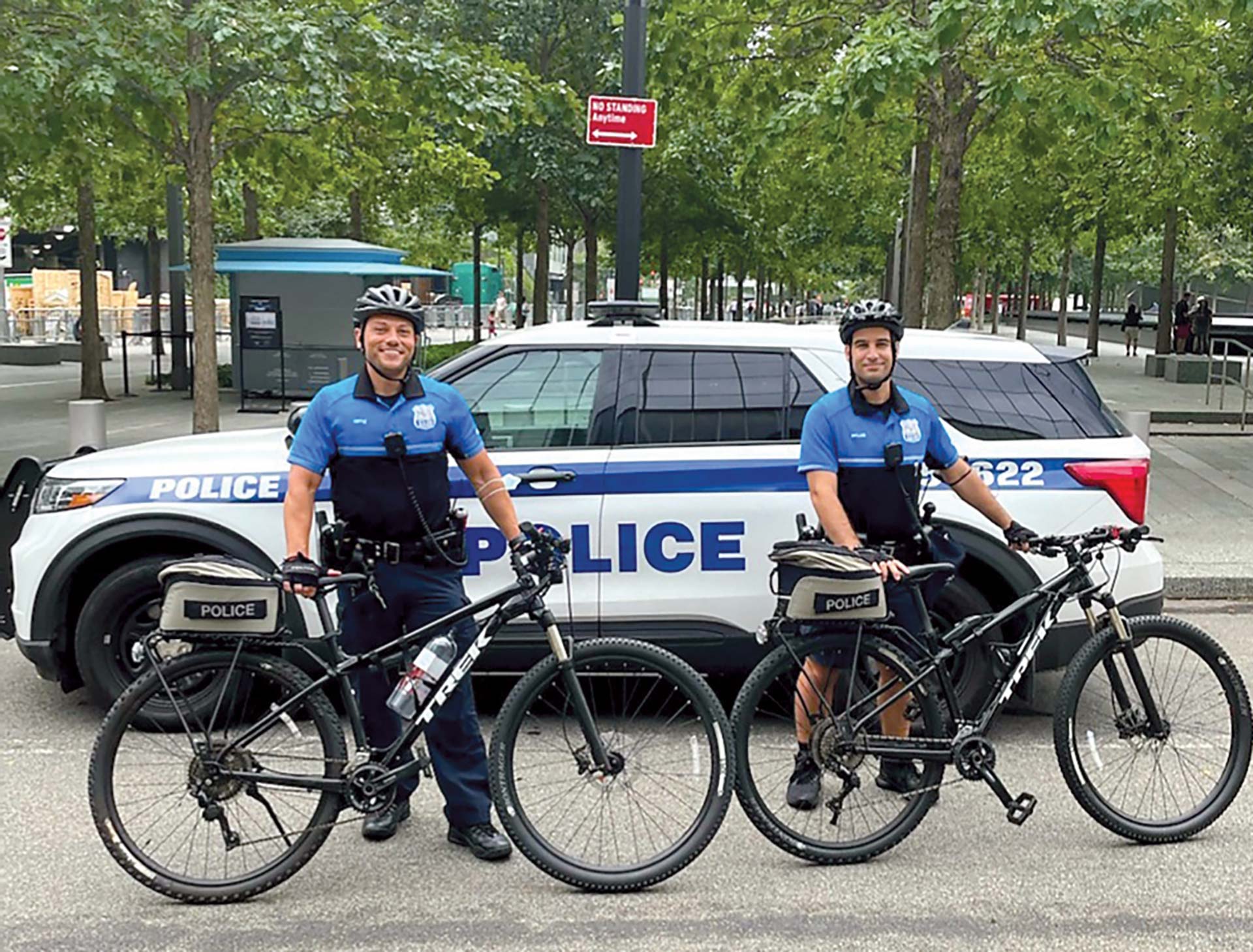
I returned and was assigned a bicycle and worked steady bike patrol at the 25-square-mile command concentrating on the terminal area and its nine terminals targeting pickpockets, thieves and hustlers. Bike patrol put a spark back into my waning enthusiasm for the job. Even though radio cars were available to the bike unit, I rode in all weather conditions, including the dead of winter. Cops in cars, as cops in cars do, would pull up next to me and want to talk. I did not want to be rude, but in the winter, I had to remind my colleagues I needed to keep moving to stay warm. Cops still pulled up next to me. 

Before working bike patrol, I was part of the command’s plainclothes unit. Criminals always knew when a plainclothes team was working an area. Yet, I learned that on a bike wearing a very visible uniform with the word POLICE appearing all over me, I could ride up on the usual suspects undetected. 

There were some embarrassing moments. One day, I was watching the activity as a terminal emptied out. As I approached a sidewalk, with my focus on two known bag thieves, I mistimed my jump to clear the curb and went over the handlebar, landing in front of a group of senior citizen ladies. I immediately got back on my feet, looked at the shocked women, and said, “Don’t worry, ladies, I do that all the time.” I quickly got back on the bike, riding off, feeling the pain.

Embarrassment aside, I was enjoying the freedom on a bike. I rode the bike everywhere, even to court. One spring morning, I was returning from traffic court when the driver of a red Corvette stomped the gas and blew by me. I was approaching a bend in the road that led to an intersection controlled by a traffic light. I put my legs into high gear and thought, “If there’s a God, that guy will be stopped by a red light.” 

I rounded the bend, and there it was, the little red Corvette stopped in traffic. I pulled next to the ’Vette and motioned the driver to pull to the side of the road. I took my time checking the driver’s paperwork. He was clear, with no suspensions or wants. 

After returning to the Corvette, I had a conversation with the driver. I made vehicle stops on the bike many times, but this one was special. I was, though, in a forgiving mood and handed the driver, who worked for a company at the airport, his paperwork. 

I said, “I have your information and know where you work. Take this as a warning, but there is something you’re going to do. You must tell your coworkers, and I will check, that you were speeding in your Corvette and caught by the old cop on a bicycle.” 

The driver agreed and made good on the deal. I was a happy bike cop.

Bobby Egbert

Bobby Egbert

Bobby Egbert is a retired Port Authority police officer, a 9/11 first responder veteran and the public information officer for the Port Authority Police Benevolent Association.

View articles by Bobby Egbert

As seen in the November 2022 issue of American Police Beat magazine.
Don’t miss out on another issue today! Click below:

SUBSCRIBE TODAY!

Categories: On the Job

Primary Sidebar

Recent Articles

  • New National Law Enforcement Museum exhibit revisits D.C. snipers case
  • A hero’s legacy through a mother’s love
  • The days that follow
  • Perpetual recognition of line-of-duty deaths
  • A Tribute to Fallen Heroes
  • NLEOMF Fund announces March 2026 Officers of the Month
  • Markers of service and remembrance
  • Testing the waters — literally
  • Police pause license plate readers
  • Tragedy strikes Baker to Vegas

Footer

Our Mission
To serve as a trusted voice of the nation’s law enforcement community, providing informative, entertaining and inspiring content on interesting and engaging topics affecting peace officers today.

Contact us: info@apbweb.com | (800) 234-0056.

  • Facebook
  • Instagram
  • Twitter

Categories

  • Editor’s Picks
  • On the Job
  • Labor
  • Tech
  • Training
  • Policy
  • Health/Wellness
  • Community
  • Offbeat
  • We Remember
  • Jobs and Careers
  • Events

Editor’s Picks

Let’s get moving!

Let’s get moving!

April 27, 2026

Heroes of the World Trade Center

Heroes of the World Trade Center

April 24, 2026

The Promise Gap

The Promise Gap

April 22, 2026

Corruption, collusion and impunity

Corruption, collusion and impunity

April 21, 2026

Policies | Consent Preferences | Copyright © 2026 APB Media, LLC | Website design, development and maintenance by 911MEDIA

Open

Subscribe

Close

Receive the latest news and updates from American Police Beat directly to your inbox!

  • This field is for validation purposes and should be left unchanged.