• Skip to primary navigation
  • Skip to main content
  • Skip to primary sidebar
  • Skip to footer
  • Home
  • About
  • The Magazine
  • Events
  • Partners
  • Products
  • Contact
  • Jobs and Careers
  • Advertise
  • Facebook
  • Instagram
  • Twitter
  • Subscribe
American Police Beat

American Police Beat Magazine

Law Enforcement Publication

  • Home
  • Leadership
    • Police leadership development
      Can they do it? Will they do it?
      A unique approach to salvaging a troubled employee
      The relentless pursuit of excellence
      An effective strategy for difficult discussions
  • Topics
    • Leadership
      • Police leadership development
        Can they do it? Will they do it?
        A unique approach to salvaging a troubled employee
        The relentless pursuit of excellence
        An effective strategy for difficult discussions
    • Editor’s Picks
      • No two days are ever the same
        Training dipshittery, Part 2
        Tactical medicine for cops
        Why good cops quit
        Smile and let them swing
    • On the Job
      • Frankpledge to forensics: A brief history of law enforcement
        The sixth sense in policing
        From warrior to peacekeeper
        Hats off to a new uniform look
        Overcoming climate and conditions to rescue child
    • Labor
      • The shift happens long before the resignation letter
        Facing the oral board
        Why good cops quit
        Succession planning
        Why more staff won’t fix your operational slowdowns
    • Tech
      • Accentuating safety for first responders
        Take Me Home program offers effective tool for police and families
        Get the most out of simulation training
        The virtual beat
        Training with an AI partner?
    • Training
      • More than just a red shirt and a Sharpie
        Train them to ask why
        Nobody is coming to do it for you
        Precision, adaptability and response: The need for LPVOs in equipping...
        Training dipshittery, Part 2
    • Policy
      • Out of chaos comes opportunity
        Massachusetts law establishes fund to care for retired K-9s
        Portlanders will not vote on diverting climate funds for police...
        Surviving internal affairs investigations
        Fighting human trafficking at the local level
    • Health/Wellness
      • Understanding why police officers think alcohol works
        Has the job quietly stolen your humanity?
        No two days are ever the same
        Changing the narrative
        Supporting your peer support team
    • Community
      • National Night Out 2026
        Pittsburgh mounted patrol officer helps inner-city kids saddle up
        Wyoming girl on a mission to collect “hero patches”
        Texas sheriff’s office nominates 7-year-old for commendation
        Cops try to net DEA agents
    • Offbeat
      • A surprise sting operation
        Could cadaver otters help close cold cases?
        Police chief catches cat in the act
        “Teenage Mutant Ninja Deer” rescued
        An unexpected burglar
    • We Remember
      • Honoring the Fallen Heroes of 9-11
        Steel Across America
        The first officers on scene on September 11
        Protecting America with the USA PATRIOT Act
        Distant cousins connect to honor fallen family member 110 years after...
    • HOT Mail
      • The War on Cops Continues Unabated
  • On the Job
    • Frankpledge to forensics: A brief history of law enforcement
      The sixth sense in policing
      From warrior to peacekeeper
      Hats off to a new uniform look
      Overcoming climate and conditions to rescue child
  • Labor
    • The shift happens long before the resignation letter
      Facing the oral board
      Why good cops quit
      Succession planning
      Why more staff won’t fix your operational slowdowns
  • Tech
    • Accentuating safety for first responders
      Take Me Home program offers effective tool for police and families
      Get the most out of simulation training
      The virtual beat
      Training with an AI partner?
  • Training
    • More than just a red shirt and a Sharpie
      Train them to ask why
      Nobody is coming to do it for you
      Precision, adaptability and response: The need for LPVOs in equipping...
      Training dipshittery, Part 2
  • Policy
    • Out of chaos comes opportunity
      Massachusetts law establishes fund to care for retired K-9s
      Portlanders will not vote on diverting climate funds for police...
      Surviving internal affairs investigations
      Fighting human trafficking at the local level
  • Health/Wellness
    • Understanding why police officers think alcohol works
      Has the job quietly stolen your humanity?
      No two days are ever the same
      Changing the narrative
      Supporting your peer support team
  • Community
    • National Night Out 2026
      Pittsburgh mounted patrol officer helps inner-city kids saddle up
      Wyoming girl on a mission to collect “hero patches”
      Texas sheriff’s office nominates 7-year-old for commendation
      Cops try to net DEA agents
  • Offbeat
    • A surprise sting operation
      Could cadaver otters help close cold cases?
      Police chief catches cat in the act
      “Teenage Mutant Ninja Deer” rescued
      An unexpected burglar
  • We Remember
    • Honoring the Fallen Heroes of 9-11
      Steel Across America
      The first officers on scene on September 11
      Protecting America with the USA PATRIOT Act
      Distant cousins connect to honor fallen family member 110 years after...
  • HOT Mail
    • The War on Cops Continues Unabated
  • About
  • The Magazine
  • Events
  • Partners
  • Products
  • Contact
  • Jobs and Careers
  • Advertise
  • Subscribe
Search

Training

The importance of a good field training officer

Michael Delaney Published November 30, 2022 @ 6:00 am PST

iStock.com/kali9

My FTO made all the difference in preparing me for the street. 

In 1992, several months shy of my 21st birthday, I entered the Federal Law Enforcement Training Center (FLETC) in Glynn County, Georgia. I had no idea what I was getting myself into. I was gearing up for a bootcamp-style, in-your-face yelling and cursing, grabbing-you-by-the-shirt-collar drill instructor to whip the recruits into shape. What I experienced was totally different. The FLETC instructors treated recruits like adults. I breezed through a nine-week basic training course and was amped to be unleashed to demonstrate my law enforcement prowess to the world. Little did I know, my duties after graduating from FLETC consisted of checking government ID cards and flagging in vehicles all day. Needless to say, my career as a federal police officer was short lived.

I joined the Prince George’s County Maryland Police Academy in 1994. And the very first day of training had me wondering what I was thinking. The instructors were spitting images of the barrel-chested, frowny-faced, beady-eyed, fire-breathing soldiers that I imagined would be barking out orders during my FLETC training. From the very start, instructors pushed us to the limits. I did more running, push-ups, sit-ups and burpees those first couple of weeks than I’d ever done in my entire life. 

Every scenario during training seemed like a no-win situation. The simplest call for service involving an elderly woman needing her tire changed resulted in bad guys jumping out from the woman’s vehicle and pointing shotguns in our faces. I understood why they had to train us that way. The instructors were giving us the worst, so we would be prepared to face the worst. 

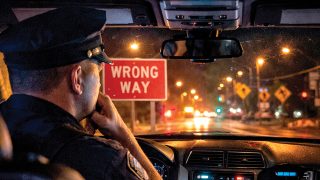
After six months of torturous training, the recruits who survived were introduced to their field training officers, also known as FTOs. These were to be our mentors as we transitioned from school to the street. And frankly speaking, I was not impressed with mine. To my young mind, he was a low-key dinosaur — probably two days shy of his 50th year in the department. After six months of nerve-racking training, I was ready to have a mentor who would show me the action. 

I was assigned to work the graveyard shift, and I had already made up my mind that I was going to be a ball of fire from the start. My FTO wouldn’t be able to hold me back. 

Our very first call was to handle a car accident on a busy highway. My adrenaline was pumping as my FTO got word from the dispatcher. He told me to watch how he handled the call and how he interacted with the drivers. 

One of the drivers was frantic. She had been rear-ended by the other vehicle and was screaming at the top of her lungs. My first thought was to demand that she keep quiet to allow us to figure things out. If she resisted, we’d have her restrained in an instant. But my FTO wasn’t showing his authority that way. He calmly spoke with her, letting her know that the other driver was at fault. 

To my surprise, his calm approach instantly brought the driver down and de-escalated the situation. He got the information he needed for the accident report and instructed both drivers to move their vehicles out of the roadway, which they did without incident. 

I remember he turned to me, my eyes wide, jaw dropped. “You can holster your weapon now,” he joked.

My FTO went on to explain that I would have to learn how to put 90% of the training that was pounded into my head in the academy into context in order to do well in this job. He assured me that a very small percentage of police work required the use of an officer’s handgun. “You have to work with people and communicate with them,” he told me. And while I didn’t want to hear about communicating with people — that didn’t line up with the adrenaline rush I was looking for — it became apparent that effectively communicating was key to solving problems and staying safe while doing it. 

I was assigned to ride with my FTO for three months. In the beginning, I was skeptical. I thought I would regret every second of it. But I was fortunate to have an experienced FTO who took the time to explain each situation to me and allow me the opportunity to learn how to police effectively, with listening, patience and curiosity — tools that I have since passed on to rookie officers once I had the opportunity to train.

The truth of the job is that 90% of calls are routine — people comply, you fill out the paperwork, nothing dramatic happens. While you need to be ready for those 10% that could go sideways, you also need to be equipped with common sense and the ability to communicate. This way, you don’t turn something routine into something dangerous just because you are primed to expect the worst. Field training officers are an essential mentorship piece of law enforcement training and why a good FTO makes all the difference.

Michael Delaney

Michael Delaney

Detective Michael Delaney is an investigator with nearly 30 years of experience in law enforcement. Delaney has supervised and trained new investigators in major crime investigations, robbery investigations, extortion investigations, homicide investigations, natural death in-vestigations, interrogation techniques, courtroom testimony and tactical surveillance techniques. Recognizing the need to strengthen community-police relations, Delaney volunteers to support incarcerated youth and spends much of his time teaching Insight Policing: Conflict Resolution for Law Enforcement, a skillset that helps officers communicate effectively on the job even in situations of high stress.

View articles by Michael Delaney

As seen in the November 2022 issue of American Police Beat magazine.
Don’t miss out on another issue today! Click below:


SUBSCRIBE TODAY!

Categories: Training

Primary Sidebar

Recent Articles

  • Honoring the Fallen Heroes of 9-11
  • Serving every survivor, every sacrifice
  • Steel Across America
  • The first officers on scene on September 11
  • National Night Out 2026
  • Accentuating safety for first responders
  • A surprise sting operation
  • Frankpledge to forensics: A brief history of law enforcement
  • NLEOMF announces July 2026 Officer of the Month
  • Police leadership development

Footer

Our Mission
To serve as a trusted voice of the nation’s law enforcement community, providing informative, entertaining and inspiring content on interesting and engaging topics affecting peace officers today.

Contact us: info@apbweb.com | (800) 234-0056.

  • Facebook
  • Instagram
  • Twitter

Categories

  • Editor’s Picks
  • On the Job
  • Labor
  • Tech
  • Training
  • Policy
  • Health/Wellness
  • Community
  • Offbeat
  • We Remember
  • Jobs and Careers
  • Events

Editor’s Picks

No two days are ever the same

No two days are ever the same

July 24, 2026

Training dipshittery, Part 2

Training dipshittery, Part 2

July 23, 2026

Tactical medicine for cops

Tactical medicine for cops

July 18, 2026

Why good cops quit

Why good cops quit

July 14, 2026

Policies | Consent Preferences | Copyright © 2026 APB Media, LLC | Website design, development and maintenance by 911MEDIA

Open

Subscribe

Close

Receive the latest news and updates from American Police Beat directly to your inbox!

  • This field is for validation purposes and should be left unchanged.