• Skip to primary navigation
  • Skip to main content
  • Skip to primary sidebar
  • Skip to footer
  • Home
  • About
  • The Magazine
  • Events
  • Partners
  • Products
  • Contact
  • Jobs and Careers
  • Advertise
  • Facebook
  • Instagram
  • Twitter
  • Subscribe
American Police Beat

American Police Beat Magazine

Law Enforcement Publication

  • Home
  • Leadership
    • Understanding the boundaries of professional relationships with the...
      Why you should lead from 30,000 feet
      Public perception and trust
      When performance reviews are a waste of time
      Taking a page from Toyota’s playbook
  • Topics
    • Leadership
      • Understanding the boundaries of professional relationships with the...
        Why you should lead from 30,000 feet
        Public perception and trust
        When performance reviews are a waste of time
        Taking a page from Toyota’s playbook
    • Editor’s Picks
      • Liability challenges in contemporary policing
        When performance reviews are a waste of time
        Proactive wellness visits
        Taking a page from Toyota’s playbook
        Law enforcement’s missing weapon
    • On the Job
      • Villains and heroes in the Big Apple
        Right place, right time — again
        Some good news on crime
        Mom-to-be named Cop of the Year
        Fatherly instincts save boy from icy water
    • Labor
      • The Promise Gap
        Cut the cops, save a dollar?
        Labor release under fire
        Who’s watching the watchmen?
        Crime and punishment (or lack thereof) in Seattle
    • Tech
      • New Mexico license plate readers save lives, lead to “precise...
        A modern field guide to understanding research in policing
        Gear that moves with you
        A new breed of cop car
        The future of patrol is here
    • Training
      • The five minutes before the ambulance
        Navigating danger
        Critical thinking in police training
        Threshold neuroscience
        Integrated virtual reality training
    • Policy
      • Corruption, collusion and impunity
        E-bikes spark public safety concerns
        Try racing without wheels
        Law enforcement accreditation: Why it matters
        Liability challenges in contemporary policing
    • Health/Wellness
      • Addressing stress, vicarious trauma and burnout
        Nervous system regulation
        The nature of the job
        Promoting organizational wellness
        Telling cops to get more sleep isn’t working
    • Community
      • Improving autism awareness
        Shop with a Cop
        Community engagement: What is it moving forward?
        Contradictory crossroads
        Back-to-school season brings out police support nationwide
    • Offbeat
      • An unexpected burglar
        Police humor only a cop would understand
        Not eggzactly a perfect heist
        Pizza … with a side of alligator?
        Wisconsin man charged with impersonating Border Patrol agent twice in...
    • We Remember
      • Heroes of the World Trade Center
        Forty heroes: United Airlines Flight 93
        The Pentagon
        A nation propelled to war, lives changed forever
        A Christmas loss
    • HOT Mail
      • The War on Cops Continues Unabated
  • On the Job
    • Villains and heroes in the Big Apple
      Right place, right time — again
      Some good news on crime
      Mom-to-be named Cop of the Year
      Fatherly instincts save boy from icy water
  • Labor
    • The Promise Gap
      Cut the cops, save a dollar?
      Labor release under fire
      Who’s watching the watchmen?
      Crime and punishment (or lack thereof) in Seattle
  • Tech
    • New Mexico license plate readers save lives, lead to “precise...
      A modern field guide to understanding research in policing
      Gear that moves with you
      A new breed of cop car
      The future of patrol is here
  • Training
    • The five minutes before the ambulance
      Navigating danger
      Critical thinking in police training
      Threshold neuroscience
      Integrated virtual reality training
  • Policy
    • Corruption, collusion and impunity
      E-bikes spark public safety concerns
      Try racing without wheels
      Law enforcement accreditation: Why it matters
      Liability challenges in contemporary policing
  • Health/Wellness
    • Addressing stress, vicarious trauma and burnout
      Nervous system regulation
      The nature of the job
      Promoting organizational wellness
      Telling cops to get more sleep isn’t working
  • Community
    • Improving autism awareness
      Shop with a Cop
      Community engagement: What is it moving forward?
      Contradictory crossroads
      Back-to-school season brings out police support nationwide
  • Offbeat
    • An unexpected burglar
      Police humor only a cop would understand
      Not eggzactly a perfect heist
      Pizza … with a side of alligator?
      Wisconsin man charged with impersonating Border Patrol agent twice in...
  • We Remember
    • Heroes of the World Trade Center
      Forty heroes: United Airlines Flight 93
      The Pentagon
      A nation propelled to war, lives changed forever
      A Christmas loss
  • HOT Mail
    • The War on Cops Continues Unabated
  • About
  • The Magazine
  • Events
  • Partners
  • Products
  • Contact
  • Jobs and Careers
  • Advertise
  • Subscribe
Search

Policy

Federal judge blocks Texas immigration law allowing arrests of migrants at U.S.–Mexico border

APB Team Published March 4, 2024 @ 10:15 am PST

iStock.com/Naeblys

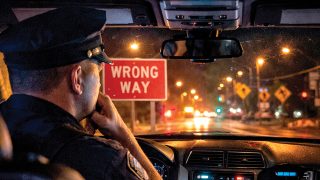
A federal judge in Austin has halted the implementation of a new Texas immigration law that would have granted broad powers to state police to arrest individuals suspected of crossing the U.S.–Mexico border illegally.

The ruling, issued by U.S. District Judge David Ezra, comes amid a heated legal battle between Texas and various immigration advocacy organizations, as well as the federal government.

The law in question, Senate Bill 4 (SB 4), signed by Texas Governor Greg Abbott in December, was set to take effect on March 5.

The law would have made illegally crossing the border a Class B misdemeanor punishable by up to six months in jail. If convicted, the law requires migrants to return to Mexico under law enforcement transport.

In addition, the law permits judges to waive all charges if the person decides to voluntarily return to Mexico.

However, Ezra’s preliminary injunction blocks its enforcement pending further court proceedings.

The judge highlighted the potentially grave consequences of the law, asserting that its implementation could pave the way for other states to pass their own immigration laws, resulting in a fragmented and inconsistent regulatory landscape.

Ezra further underscored the supremacy of federal jurisdiction over immigration matters, stating: “SB 4 threatens the fundamental notion that the United States must regulate immigration with one voice.”

Moreover, he expressed concerns about the law’s impact on migrants potentially eligible for political asylum, warning that their arrest and deportation could violate constitutional principles and U.S. treaty obligations.

“Finally, the Court does not doubt the risk that cartels and drug trafficking pose to many people in Texas,” Ezra wrote in the court ruling. “But as explained, Texas can and does already criminalize those activities. Nothing in this Order stops those enforcement efforts. No matter how emphatic Texas’s criticism of the federal government’s handling of immigration on the border may be to some, disagreement with the federal government’s immigration policy does not justify a violation of the Supremacy Clause.”

In response, Governor Abbott and State Attorney General Ken Paxton have vowed to vigorously defend the law, expressing confidence that the case will eventually reach the U.S. Supreme Court.

Governor Abbott said the state was determined to combat what he termed an “invasion,” citing concerns over the influx of migrants at the Texas–Mexico border.

Opponents of SB 4, including immigrant rights advocates and civil liberties groups, welcomed the court’s decision, hailing it as a victory for Texas communities.

Aron Thorn, a senior attorney at the Texas Civil Rights Project, lauded the ruling for preventing the enforcement of what he described as an “extreme law” that could harm residents.

“This decision is a victory for all our communities as it stops a harmful, unconstitutional, and discriminatory state policy from taking effect and impacting the lives of millions of Texans,” said Edna Yang of the nonprofit American Gateways. “Local officials should not be federal immigration agents, and our state should not be creating its own laws that deny people their right to seek protection here in the U.S.”

The legal battle surrounding SB 4 reflects broader tensions over immigration policy and enforcement measures at the state and federal levels.

The ruling is expected to have significant implications for the ongoing debate over immigration laws and states’ roles in their enforcement.

As the legal proceedings continue, the fate of SB 4 remains uncertain, with its proponents and opponents gearing up for a protracted legal showdown that could shape the landscape of immigration enforcement in Texas and beyond.

In the midst of this legal battle, President Joe Biden and former President Donald Trump made visits to Texas’ southern border.


Categories: Policy Tags: Texas, migrants, southern border, invasion, Greg Abbott, immigration law, federal court, David Ezra, Judge, arrest

Primary Sidebar

Recent Articles

  • Heroes of the World Trade Center
  • The Promise Gap
  • Corruption, collusion and impunity
  • The five minutes before the ambulance
  • New Mexico license plate readers save lives, lead to “precise policing”
  • Addressing stress, vicarious trauma and burnout
  • Understanding the boundaries of professional relationships with the boss
  • E-bikes spark public safety concerns
  • Improving autism awareness
  • Cut the cops, save a dollar?

Footer

Our Mission
To serve as a trusted voice of the nation’s law enforcement community, providing informative, entertaining and inspiring content on interesting and engaging topics affecting peace officers today.

Contact us: info@apbweb.com | (800) 234-0056.

  • Facebook
  • Instagram
  • Twitter

Categories

  • Editor’s Picks
  • On the Job
  • Labor
  • Tech
  • Training
  • Policy
  • Health/Wellness
  • Community
  • Offbeat
  • We Remember
  • Jobs and Careers
  • Events

Editor’s Picks

Liability challenges in contemporary policing

Liability challenges in contemporary policing

February 27, 2026

When performance reviews are a waste of time

When performance reviews are a waste of time

February 26, 2026

Proactive wellness visits

Proactive wellness visits

February 25, 2026

Taking a page from Toyota’s playbook

Taking a page from Toyota’s playbook

February 23, 2026

Policies | Consent Preferences | Copyright © 2026 APB Media, LLC | Website design, development and maintenance by 911MEDIA

Open

Subscribe

Close

Receive the latest news and updates from American Police Beat directly to your inbox!

  • This field is for validation purposes and should be left unchanged.