• Skip to primary navigation
  • Skip to main content
  • Skip to primary sidebar
  • Skip to footer
  • Home
  • About
  • The Magazine
  • Events
  • Partners
  • Products
  • Contact
  • Jobs and Careers
  • Advertise
  • Facebook
  • Instagram
  • Twitter
  • Subscribe
American Police Beat

American Police Beat Magazine

Law Enforcement Publication

  • Home
  • Leadership
    • Understanding the boundaries of professional relationships with the...
      Why you should lead from 30,000 feet
      Public perception and trust
      When performance reviews are a waste of time
      Taking a page from Toyota’s playbook
  • Topics
    • Leadership
      • Understanding the boundaries of professional relationships with the...
        Why you should lead from 30,000 feet
        Public perception and trust
        When performance reviews are a waste of time
        Taking a page from Toyota’s playbook
    • Editor’s Picks
      • Liability challenges in contemporary policing
        When performance reviews are a waste of time
        Proactive wellness visits
        Taking a page from Toyota’s playbook
        Law enforcement’s missing weapon
    • On the Job
      • Villains and heroes in the Big Apple
        Right place, right time — again
        Some good news on crime
        Mom-to-be named Cop of the Year
        Fatherly instincts save boy from icy water
    • Labor
      • Cut the cops, save a dollar?
        Labor release under fire
        Who’s watching the watchmen?
        Crime and punishment (or lack thereof) in Seattle
        Labor leadership out in the field
    • Tech
      • New Mexico license plate readers save lives, lead to “precise...
        A modern field guide to understanding research in policing
        Gear that moves with you
        A new breed of cop car
        The future of patrol is here
    • Training
      • Navigating danger
        Critical thinking in police training
        Threshold neuroscience
        Integrated virtual reality training
        Hit the pause button
    • Policy
      • E-bikes spark public safety concerns
        Try racing without wheels
        Law enforcement accreditation: Why it matters
        Liability challenges in contemporary policing
        The war on drugs is evolving
    • Health/Wellness
      • Addressing stress, vicarious trauma and burnout
        Nervous system regulation
        The nature of the job
        Promoting organizational wellness
        Telling cops to get more sleep isn’t working
    • Community
      • Improving autism awareness
        Shop with a Cop
        Community engagement: What is it moving forward?
        Contradictory crossroads
        Back-to-school season brings out police support nationwide
    • Offbeat
      • An unexpected burglar
        Police humor only a cop would understand
        Not eggzactly a perfect heist
        Pizza … with a side of alligator?
        Wisconsin man charged with impersonating Border Patrol agent twice in...
    • We Remember
      • Forty heroes: United Airlines Flight 93
        The Pentagon
        A nation propelled to war, lives changed forever
        A Christmas loss
        York County ambush leaves three officers dead, others critically...
    • HOT Mail
      • The War on Cops Continues Unabated
  • On the Job
    • Villains and heroes in the Big Apple
      Right place, right time — again
      Some good news on crime
      Mom-to-be named Cop of the Year
      Fatherly instincts save boy from icy water
  • Labor
    • Cut the cops, save a dollar?
      Labor release under fire
      Who’s watching the watchmen?
      Crime and punishment (or lack thereof) in Seattle
      Labor leadership out in the field
  • Tech
    • New Mexico license plate readers save lives, lead to “precise...
      A modern field guide to understanding research in policing
      Gear that moves with you
      A new breed of cop car
      The future of patrol is here
  • Training
    • Navigating danger
      Critical thinking in police training
      Threshold neuroscience
      Integrated virtual reality training
      Hit the pause button
  • Policy
    • E-bikes spark public safety concerns
      Try racing without wheels
      Law enforcement accreditation: Why it matters
      Liability challenges in contemporary policing
      The war on drugs is evolving
  • Health/Wellness
    • Addressing stress, vicarious trauma and burnout
      Nervous system regulation
      The nature of the job
      Promoting organizational wellness
      Telling cops to get more sleep isn’t working
  • Community
    • Improving autism awareness
      Shop with a Cop
      Community engagement: What is it moving forward?
      Contradictory crossroads
      Back-to-school season brings out police support nationwide
  • Offbeat
    • An unexpected burglar
      Police humor only a cop would understand
      Not eggzactly a perfect heist
      Pizza … with a side of alligator?
      Wisconsin man charged with impersonating Border Patrol agent twice in...
  • We Remember
    • Forty heroes: United Airlines Flight 93
      The Pentagon
      A nation propelled to war, lives changed forever
      A Christmas loss
      York County ambush leaves three officers dead, others critically...
  • HOT Mail
    • The War on Cops Continues Unabated
  • About
  • The Magazine
  • Events
  • Partners
  • Products
  • Contact
  • Jobs and Careers
  • Advertise
  • Subscribe
Search

Policy

Conflict of interest or great opportunity?

APB Team Published July 30, 2024 @ 6:00 am PDT

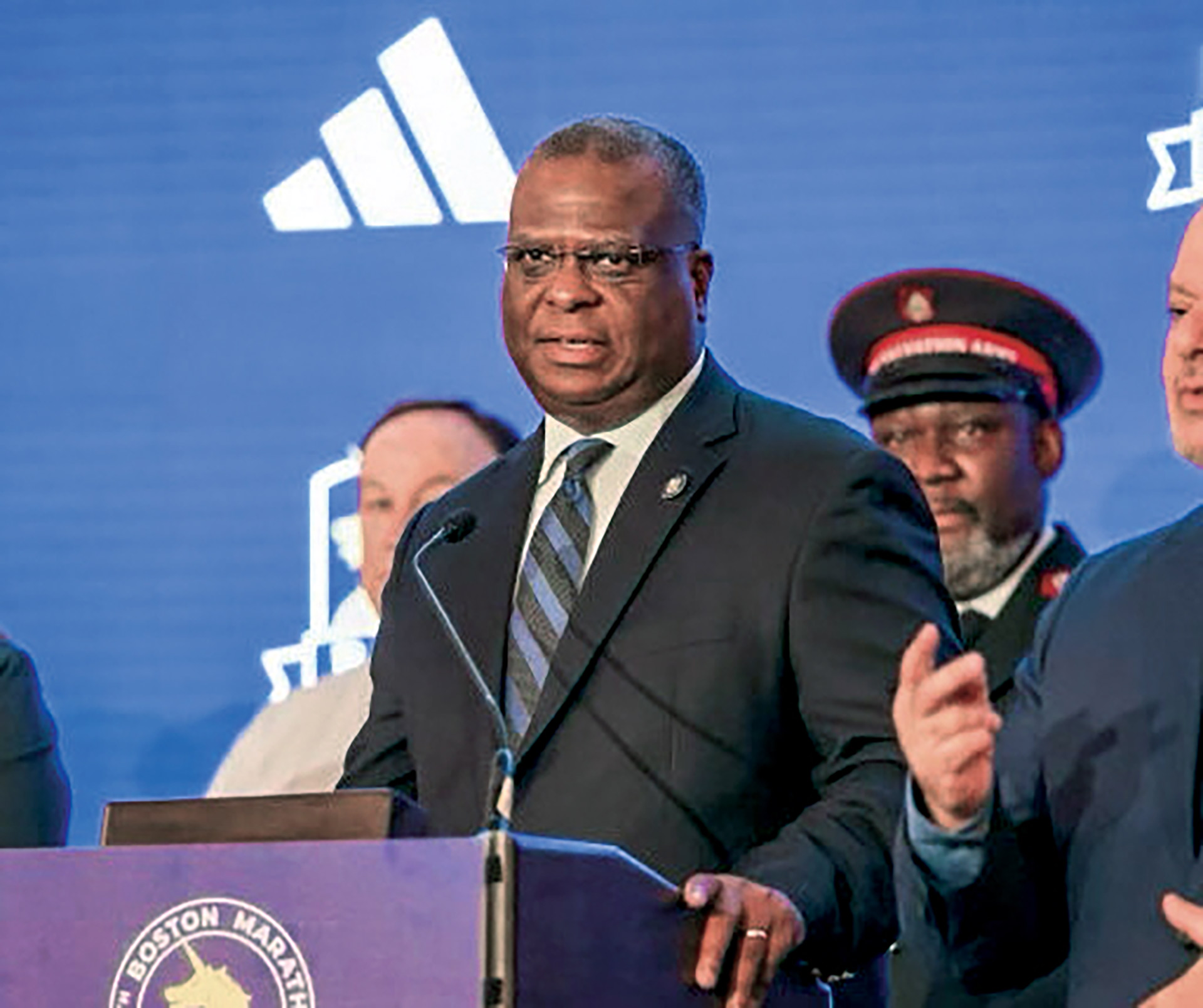
Massachusetts State Police, Public domain, via Wikimedia Commons

Policy experts are weighing in on whether a Boston police administrator should have been demoted for accepting a position on a state-level commission.

Deputy Superintendent Eddy Chrispin joined the Boston Police Department in 1999, eventually being promoted to a command staff rank by former superintendent William Gross. In May, he received an appointment to the state POST commission. He was allegedly ordered to resign from the POST by the current Boston Police commissioner, Michael Cox. When he refused, he was demoted and removed from the commissioner’s command staff.

Various groups have voiced opposition to the decision. Many of the groups appear to be race- or ethnicity-related, such as LLEGO Boston, the Massachusetts Association of Minority Law Enforcement Officers (MAMLEO) and the National Association of Black Law Enforcement Officers. Chrispin once served as the MAMLEO president.

Boston Mayor Michelle Wu supported Commissioner Cox’s right to choose who serves on his own command staff and to decide whether they should be on the state’s POST Commission.

“The mayor fully supports the commissioner’s judgment on how best to build his command staff as the most effective senior leadership team for the department and the city,” a spokesperson for Wu told WBUR.

Cox’s office suggested that “conflicts of interest” stemming from Chrispin’s service on the panel would disqualify him from serving on Cox’s staff. However, Attorney General Andrea Campbell, who appointed Chrispin to POST, pushed back on that concern.

“Deputy Superintendent Chrispin has served Boston’s communities for 25 years, where he has advocated for better community policing and greater opportunity for officers of color and women,” she said in a statement. “After a thorough vetting process, I was proud to appoint Chrispin to the POST Commission, an appointment that was entirely consistent with the state conflict of interest law.”

Tim Nolan, a criminologist and former Boston Police lieutenant, stated, “It could pose a huge challenge to the public having trust in this commission — and certainly call into question the level of political influence in these appointments.”

While it’s impossible to know what’s really going on behind the scenes, the situation does illustrate an interesting dilemma in the law enforcement profession. Every police department has an official chain of command with clear lines of authority and responsibility. In larger departments, the sheriff, chief or commissioner will often have an even closer group of individuals on their “command staff.” These individuals are responsible for helping the chief implement their vision and department policies. As such, the chief often has a wide range of discretion in selecting this close-knit group of administrators. Outside of the department’s clearly defined rank structure, though, very real power structures exist. Organizations, professional groups and unions often wield political power that could work in opposition to what the chief is trying to accomplish. On a more personal level, a person holding power through one of these organizations might be able to leverage it against the higher-ranking people in their chain of command.

This is especially true of POST commissions. In most states, POST commissions make incredibly important decisions that affect the ability of law enforcement officers to even work. They often make decisions that could have profound consequences for agencies in their states.


Categories: Policy Tags: Eddy Chrispin, Boston Police commissioner, Michael Cox, Police, Boston, administrator

Primary Sidebar

Recent Articles

  • New Mexico license plate readers save lives, lead to “precise policing”
  • Addressing stress, vicarious trauma and burnout
  • Understanding the boundaries of professional relationships with the boss
  • E-bikes spark public safety concerns
  • Improving autism awareness
  • Cut the cops, save a dollar?
  • Villains and heroes in the Big Apple
  • NLEOMF announces February 2026 Officers of the Month
  • Fallen law enforcement officers from across the country to be honored during 38th Annual Candlelight Vigil on May 13 in Washington, D.C.
  • Nervous system regulation

Footer

Our Mission
To serve as a trusted voice of the nation’s law enforcement community, providing informative, entertaining and inspiring content on interesting and engaging topics affecting peace officers today.

Contact us: info@apbweb.com | (800) 234-0056.

  • Facebook
  • Instagram
  • Twitter

Categories

  • Editor’s Picks
  • On the Job
  • Labor
  • Tech
  • Training
  • Policy
  • Health/Wellness
  • Community
  • Offbeat
  • We Remember
  • Jobs and Careers
  • Events

Editor’s Picks

Liability challenges in contemporary policing

Liability challenges in contemporary policing

February 27, 2026

When performance reviews are a waste of time

When performance reviews are a waste of time

February 26, 2026

Proactive wellness visits

Proactive wellness visits

February 25, 2026

Taking a page from Toyota’s playbook

Taking a page from Toyota’s playbook

February 23, 2026

Policies | Consent Preferences | Copyright © 2026 APB Media, LLC | Website design, development and maintenance by 911MEDIA

Open

Subscribe

Close

Receive the latest news and updates from American Police Beat directly to your inbox!

  • This field is for validation purposes and should be left unchanged.