• Skip to primary navigation
  • Skip to main content
  • Skip to primary sidebar
  • Skip to footer
  • Home
  • About
  • The Magazine
  • Events
  • Partners
  • Products
  • Contact
  • Jobs and Careers
  • Advertise
  • Facebook
  • Instagram
  • Twitter
  • Subscribe
American Police Beat

American Police Beat Magazine

Law Enforcement Publication

  • Home
  • Leadership
    • Clarifying your “true north”
      The job has changed — have you?
      Perpetual recognition of line-of-duty deaths
      Understanding the boundaries of professional relationships with the...
      Why you should lead from 30,000 feet
  • Topics
    • Leadership
      • Clarifying your “true north”
        The job has changed — have you?
        Perpetual recognition of line-of-duty deaths
        Understanding the boundaries of professional relationships with the...
        Why you should lead from 30,000 feet
    • Editor’s Picks
      • Smile and let them swing
        The job has changed — have you?
        The days that follow
        Perpetual recognition of line-of-duty deaths
        Let’s get moving!
    • On the Job
      • K-9 officer turns children’s book author
        K-9 Day demonstrates scope of officers’ duties
        Testing the waters — literally
        Frankpledge to forensics: A brief history of law enforcement
        Villains and heroes in the Big Apple
    • Labor
      • Smile and let them swing
        The Promise Gap
        Cut the cops, save a dollar?
        Labor release under fire
        Who’s watching the watchmen?
    • Tech
      • NYC’s electric vehicle fleet for LE passes milestone
        New Mexico license plate readers save lives, lead to “precise...
        A modern field guide to understanding research in policing
        Gear that moves with you
        A new breed of cop car
    • Training
      • Pushback as a training signal
        Let’s get moving!
        The five minutes before the ambulance
        Navigating danger
        Critical thinking in police training
    • Policy
      • Police and local government leaders join forces to build community...
        Police pause license plate readers
        Corruption, collusion and impunity
        E-bikes spark public safety concerns
        Try racing without wheels
    • Health/Wellness
      • The days that follow
        Addressing stress, vicarious trauma and burnout
        Nervous system regulation
        The nature of the job
        Promoting organizational wellness
    • Community
      • Cops promote National Donate Life Month
        Police officer kicks up social media praise
        Donning denim in solidarity with victims and survivors of sexual...
        Improving autism awareness
        Shop with a Cop
    • Offbeat
      • An unexpected burglar
        Police humor only a cop would understand
        Not eggzactly a perfect heist
        Pizza … with a side of alligator?
        Wisconsin man charged with impersonating Border Patrol agent twice in...
    • We Remember
      • A Tribute to Fallen Heroes
        Markers of service and remembrance
        Tragedy strikes Baker to Vegas
        Heroes of the World Trade Center
        Forty heroes: United Airlines Flight 93
    • HOT Mail
      • The War on Cops Continues Unabated
  • On the Job
    • K-9 officer turns children’s book author
      K-9 Day demonstrates scope of officers’ duties
      Testing the waters — literally
      Frankpledge to forensics: A brief history of law enforcement
      Villains and heroes in the Big Apple
  • Labor
    • Smile and let them swing
      The Promise Gap
      Cut the cops, save a dollar?
      Labor release under fire
      Who’s watching the watchmen?
  • Tech
    • NYC’s electric vehicle fleet for LE passes milestone
      New Mexico license plate readers save lives, lead to “precise...
      A modern field guide to understanding research in policing
      Gear that moves with you
      A new breed of cop car
  • Training
    • Pushback as a training signal
      Let’s get moving!
      The five minutes before the ambulance
      Navigating danger
      Critical thinking in police training
  • Policy
    • Police and local government leaders join forces to build community...
      Police pause license plate readers
      Corruption, collusion and impunity
      E-bikes spark public safety concerns
      Try racing without wheels
  • Health/Wellness
    • The days that follow
      Addressing stress, vicarious trauma and burnout
      Nervous system regulation
      The nature of the job
      Promoting organizational wellness
  • Community
    • Cops promote National Donate Life Month
      Police officer kicks up social media praise
      Donning denim in solidarity with victims and survivors of sexual...
      Improving autism awareness
      Shop with a Cop
  • Offbeat
    • An unexpected burglar
      Police humor only a cop would understand
      Not eggzactly a perfect heist
      Pizza … with a side of alligator?
      Wisconsin man charged with impersonating Border Patrol agent twice in...
  • We Remember
    • A Tribute to Fallen Heroes
      Markers of service and remembrance
      Tragedy strikes Baker to Vegas
      Heroes of the World Trade Center
      Forty heroes: United Airlines Flight 93
  • HOT Mail
    • The War on Cops Continues Unabated
  • About
  • The Magazine
  • Events
  • Partners
  • Products
  • Contact
  • Jobs and Careers
  • Advertise
  • Subscribe
Search

Training

Firearms training myths

Todd Fletcher Published September 3, 2024 @ 6:00 am PDT

Todd Fletcher

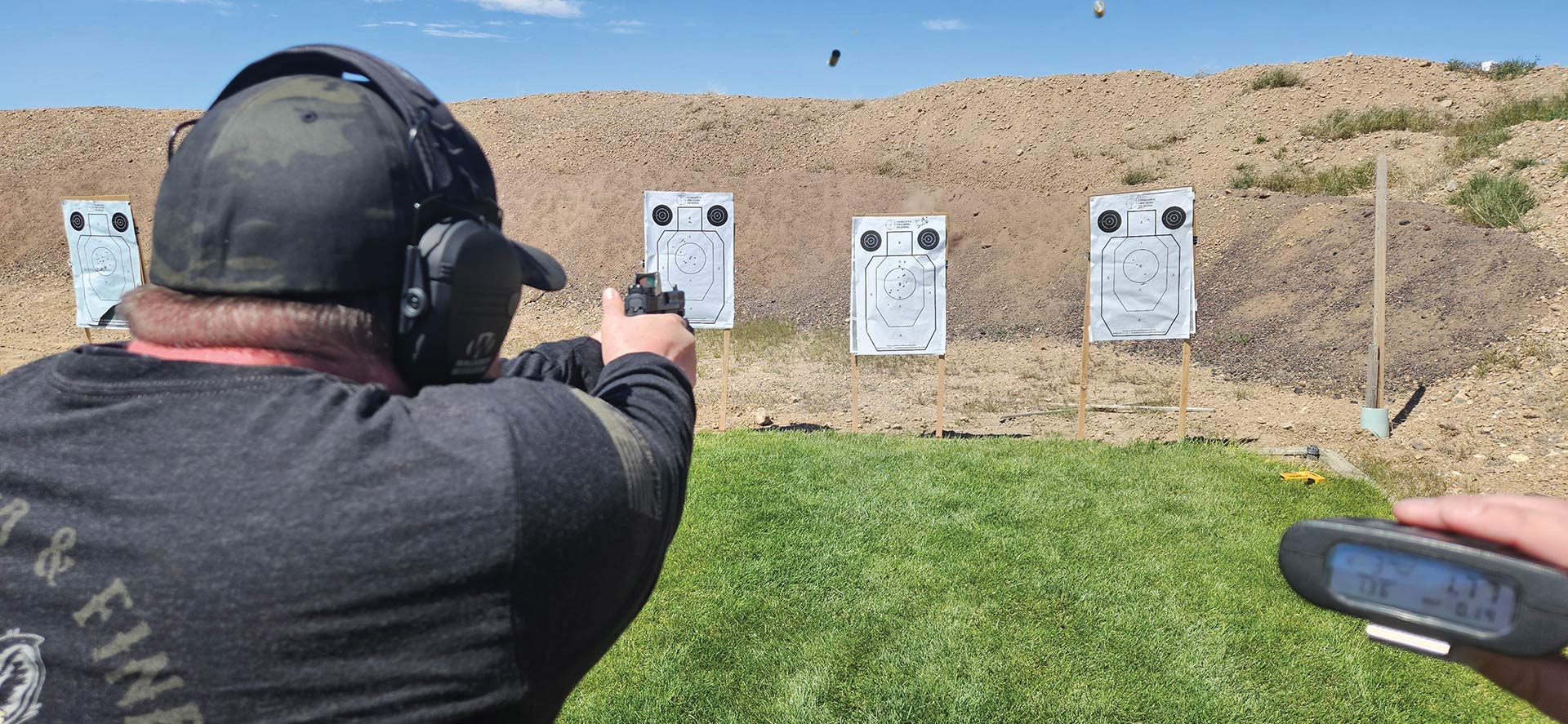
Numerous firearms training myths have spread through law enforcement training, and many of these myths continue to be spread by firearms instructors worldwide. Unfortunately for the safety of our officers and their families, many of these myths are universally accepted as fact and reiterated without critical thought. Instead of helping our shooters, they are resulting in the same dismal hit rates and lack of improvement. From this point forward, I suggest we stop spreading these myths and focus on helping officers prevail in their gunfights.

To paraphrase Crash Davis from the movie Bull Durham, you may have a $2,500 pistol, but it won’t fix your 5-cent skill.

Equipment fixes

Contrary to what the gun geeks want to believe, equipment doesn’t give you skill. To paraphrase Crash Davis from the movie Bull Durham, you may have a $2,500 pistol, but it won’t fix your 5-cent skill. The only way to improve your shooting performance is quality training followed by quality practice. Instead of spending that $2,500 on a new gun, spend $600 on a new gun and the rest on training and practice ammunition.

Training and quality practice will make you a better shooter. It gives you time behind the gun with a knowledgeable and skilled instructor who can identify your strengths and weaknesses. Those instructors should be able to provide you with some dry-fire and live-fire practice drills so you can continue to refine what you learned in class. The biggest problem with this plan is that it requires work and effort. Most people don’t want to put in the effort to be good. They’d rather have the shiny new blaster.

Anticipating recoil

When I first became a firearms instructor, I kept hearing instructors tell students, “You’re anticipating recoil.” At the time, this made some sense to me because I saw so many shooters convulsively tighten their grip on their handguns immediately before firing. I realized this was a common problem for shooters — even for those who were extremely proficient. These skilled shooters would occasionally throw a shot, and I would hear an instructor correct them by saying, “You’re anticipating recoil.” Being the new guy on the range, when I saw a shooter convulsively tighten their grip, I modeled the behavior I saw from my mentor. I started telling them the same thing.

Over time, instead of observing the shooter from afar or just interpreting their target, I began to ask questions and pay detailed attention to what the shooter was doing at the gun. I began asking shooters why they thought they were missing, what they were seeing and what thoughts were going through their mind at the time the shot broke. It confirmed my belief that the problem was an attempt to capture the perfect sight picture. Most of these shooters told me their sights were perfectly aligned, and they wanted the gun to shoot … now! This made sense to me because I found that I would suffer this same shooting malady occasionally. Shooters were attempting to time the shot to coincide with what they perceived to be the perfect sight picture.  

The surprise for me was that the problem had nothing to do with recoil. They were trying to capture the perfect sight picture, and instructors were telling them they had a recoil problem. A retired law enforcement officer, noted gun writer and accomplished instructor named Dave Spaulding told me most instructors don’t properly diagnose shooter problems because they’ve never been given the tools to do it properly. His guidance caused me to better examine the words we were using and how shooters could interpret them. 

Anticipating means to expect, predict or foresee something that may occur in the future. However, to a lot of our shooters, it also implies a certain amount of fear, anxiety or apprehension. Basically, we were telling our shooters, even our skilled shooters, that they were afraid of their handguns because of recoil. Instead of “anticipating recoil,” maybe we need to correctly diagnose the problem as “anticipating ignition.” If a shooter fears or has anxiety about the noise or movement caused by recoil, by all means, continue that diagnosis as anticipating recoil. Just identify the correct problem. 

“Train like you fight” is one of the most inane and absurd things I’ve heard in law enforcement training.

Train like you fight

How many of us know with certainty what our fight is going to look like? If we knew what our fight was going to look like, then we would only spend time training the skills we would need for that fight. “Train like you fight” is one of the most inane and absurd things I’ve heard in law enforcement
training. None of us know what our fight will look like, so we need to be ready for anything.

“Train like you fight” most often means we should train using the same uniforms and gear we use on the street. I can’t argue with that logic. We’ve all seen the detectives and command staff on the range using duty gear that needed to be dusted off and resized before training. We do need to train with our duty gear to be ready to fight under those conditions. But we don’t need to work on skill development wearing all that gear. Being weighed down and burdened by a lot of uncomfortable gear actually hampers the learning process. Instead of learning, we’re counting down the seconds until we can gear down and go home. No one wants to continuously train while uncomfortable.

What happens if our fight takes place while we’re off duty and in plain clothes? Not counting court, meetings and other ancillary duties, most of us spend 40–48 hours per week working. Even though it is more likely for us to be involved in a fight at work, we still have 120–128 hours left in the week for our fight to occur. Since you don’t know what your fight is going to look like or where the fight will take place, how do you “train like you fight”? What if your fight takes place at your home in the middle of the night? Does this mean we should be training on the range wearing boxer shorts or our tighty-whities?

Speaking of training like you fight, video footage of officer-
involved shootings shows officers generally shoot as fast as they can press the trigger. However, how many officers have been trained to shoot accurately while shooting that quickly? Most law enforcement training involves shooting small groups incredibly slowly. Instead, let’s train them to shoot fast and accurately.

Slow is smooth, and smooth is fast

Lastly, this is the one that makes me roll my eyes and vomit a little. Just because you are slow doesn’t mean you’re smooth. And smooth doesn’t mean you’re going to be fast, either. Slow is slow. Fast is fast. There’s a difference.

What it comes down to is highly efficient movement is fast. Being highly efficient in your draw and presentation, target transitions, movement and footwork all looks smooth and more effortless than someone who has spastic and unnecessary movement. If you’re trying to be fast, your muscles contract and the result is slow and clumsy looking. If you’re relaxed and have practiced ways to preserve the economy of motion, then you will look smooth and fast. But slow is still slow, no matter how you slice it.

Many of these firearms training myths can be overcome by better instructor training, so there is hope that we can overcome them. Our law enforcement officers and their families will benefit from being better trained and prepared.

Todd Fletcher

Todd Fletcher

Todd Fletcher is a retired sergeant from central Oregon with over 30 years of law enforcement experience. He presents firearms training, instructor certification and instructor development classes nationwide. Todd has presented at multiple regional, national and international conferences, including multiple ILEETA conferences and IALEFI events. He owns Combative Firearms Training, LLC, providing firearms training, handgun and patrol rifle instructor certification, and instructor development classes to law enforcement, military and private security. He can be contacted at Todd@CombativeFirearms.com.

View articles by Todd Fletcher

As seen in the August 2024 issue of American Police Beat magazine.
Don’t miss out on another issue today! Click below:


SUBSCRIBE TODAY!

Categories: Training

Primary Sidebar

Recent Articles

  • NLEOMF announces April 2026 Officers of the Month
  • K-9 officer turns children’s book author
  • Police and local government leaders join forces to build community trust
  • K-9 Day demonstrates scope of officers’ duties
  • Cops promote National Donate Life Month
  • NYC’s electric vehicle fleet for LE passes milestone
  • Police officer kicks up social media praise
  • Donning denim in solidarity with victims and survivors of sexual assault
  • Clarifying your “true north”
  • Smile and let them swing

Footer

Our Mission
To serve as a trusted voice of the nation’s law enforcement community, providing informative, entertaining and inspiring content on interesting and engaging topics affecting peace officers today.

Contact us: info@apbweb.com | (800) 234-0056.

  • Facebook
  • Instagram
  • Twitter

Categories

  • Editor’s Picks
  • On the Job
  • Labor
  • Tech
  • Training
  • Policy
  • Health/Wellness
  • Community
  • Offbeat
  • We Remember
  • Jobs and Careers
  • Events

Editor’s Picks

Smile and let them swing

Smile and let them swing

May 16, 2026

The job has changed — have you?

The job has changed — have you?

May 15, 2026

The days that follow

The days that follow

May 11, 2026

Perpetual recognition of line-of-duty deaths

Perpetual recognition of line-of-duty deaths

May 10, 2026

Policies | Consent Preferences | Copyright © 2026 APB Media, LLC | Website design, development and maintenance by 911MEDIA

Open

Subscribe

Close

Receive the latest news and updates from American Police Beat directly to your inbox!

  • This field is for validation purposes and should be left unchanged.