
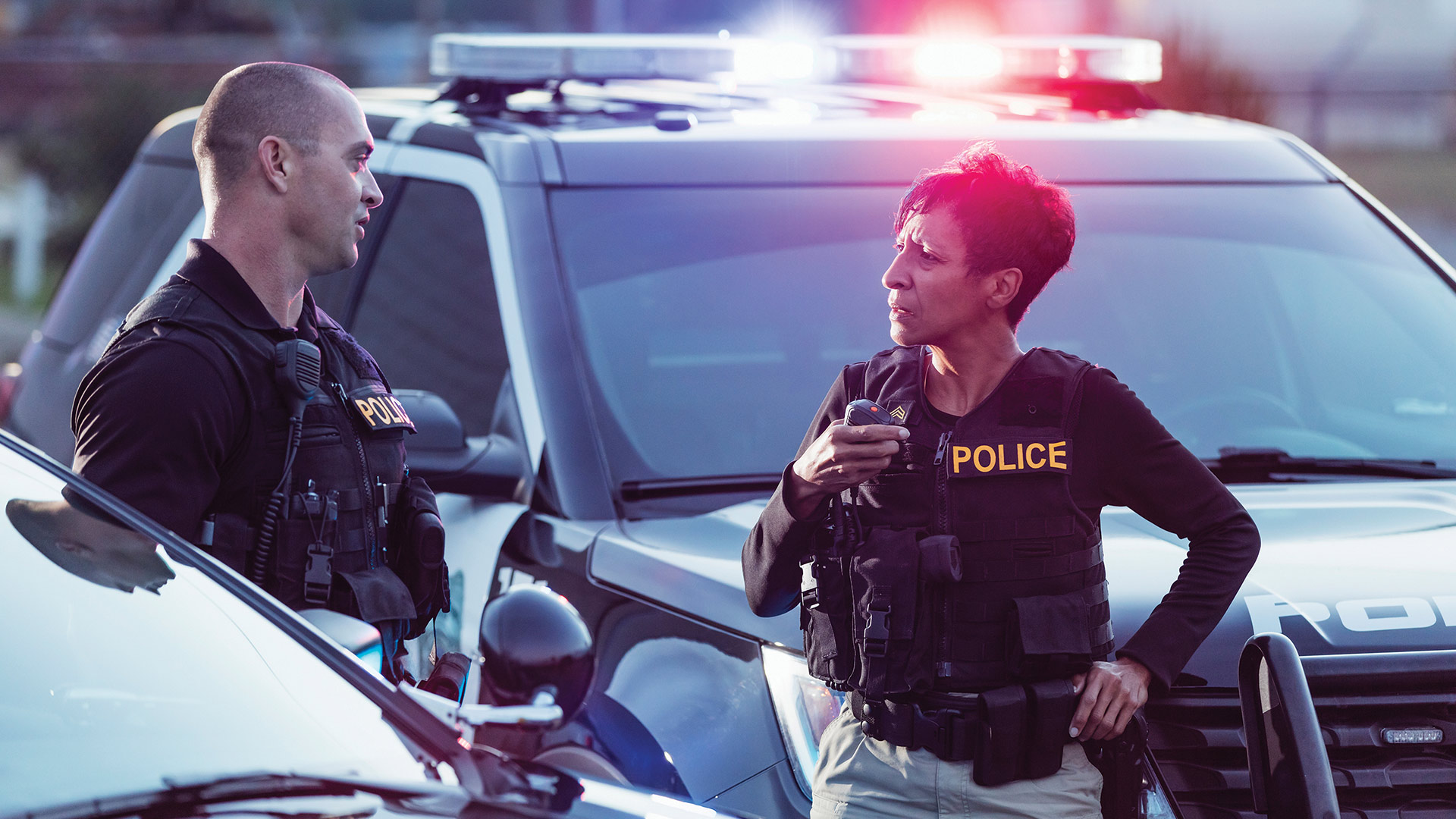
In today’s society, most police officers receive training on both explicit bias and implicit bias. Explicit bias involves making conscious decisions about certain groups of people based on negative feelings. Implicit bias, on the other hand, occurs unconsciously when the brain takes mental shortcuts based on limited information. Implicit biases are particularly problematic because they operate outside our conscious awareness despite our best efforts to avoid being predisposed toward them. Research has indicated that implicit bias affects everyone and is even amplified by stress and fatigue.
Nevertheless, officers are trained to reduce implicit bias in several ways. The first is to slow down when possible. Admittedly, slowing down is not always an option in the dynamic world of policing; however, it should be noted that implicit bias is more likely to occur when quick decisions take place. Next, officers are trained to focus on behavior instead of personal characteristics, which reduces the chances of being influenced by implicit biases. Moreover, when officers remain open-minded and ask genuine questions instead of jumping to conclusions too early, it helps keep implicit bias in check.
In general, the amount of training that officers take on implicit bias has increased significantly in the last decade. Yet it is important to recognize that most of society at large has not been trained on implicit bias. As such, people may harbor implicit bias against the policing profession. This article will discuss some of the hidden ways professional or personal bias against police starts and is even passed on from generation to generation. By knowing the dynamics of implicit bias against police, officers can better overcome these barriers in their work. Understanding how some of these implicit biases originate may enable officers to reduce their negative effects. However, to fully grasp the impact of implicit bias, let me share a story that emphasizes how implicit bias affected me.
While we can’t change the past or some people’s views, our actions can help reduce implicit bias against the profession in the future.
A great day planned
I stepped out of my vehicle, breathing in the crisp South Dakota air. Excited to meet my sister, I watched my kids march out of our van. My wife reviewed safety rules as we arrived at Falls Park, north of downtown Sioux Falls. The park’s beautiful cascading waterfalls can be dangerous for kids. We found my sister and enjoyed overdue conversation and coffee in the sunshine. When discussing our next activity, my wife suggested the Sertoma Butterfly House, a family attraction with hundreds of free-flying butterflies in a tropical oasis.
Into the dragon’s lair
As my wife suggested the butterfly house, I felt a shiver down my spine. Unbeknownst to them, I had always been uncomfortable around butterflies. Their chaotic flight patterns and sticky landings unnerved me. Proud of my experience as a brave police officer, I didn’t want to admit my fear. Before I could object, my sister surprisingly confessed her own fear of butterflies. Despite this, my kids began chanting for the butterfly house. My sister, not wanting to disappoint them, offered to face her fears. I took a deep breath and decided to do the same. We made it through the experience, but my secret fear was now out in the open. Apparently, everyone could tell that I, too, was afraid of butterflies.
A mystery solved
Later, during a call with our mother, my sister mentioned our shared fear of butterflies. Our mother laughed and explained that she is severely allergic to butterflies — contact could be fatal. As children, we were conditioned to yell “butterfly!” and run to safety when one approached. Neither my sister nor I remembered this, yet an unconscious bias took root. This butterfly experience impacted our subconscious thoughts, beliefs and attitudes even as adults.
Policing is an honorable profession
First, let me say the policing profession is an honorable profession. Its ranks are filled with brave individuals who risk their lives daily to serve their communities. The Officer Down Memorial Page clearly testifies to the sacrifice our law enforcement officers make. Furthermore, officers often work nights, weekends and holidays and are regularly subjected to tragic and stressful situations. It is a thankless job, to be sure. Over the years, I have seen many new officers raise their right hand and swear their oath of office. Many of these new officers have not yet done anything either right or wrong in the policing profession. These officers are well-intentioned and want to help their communities. Despite this, when new officers choose to enter law enforcement, they also enter a career with a long history. Unfortunately, some of the history of policing is not admirable.
Policing during the civil rights era
Most police officers have no direct memory or direct involvement in the civil rights violations of the 1960s. Still, the policing profession as a whole cannot be disconnected from that history. Police need to recognize that the past still deeply affects the thoughts, beliefs and attitudes of the Black community toward police. Knowing the history of slavery and civil rights violations of the past helps put the relationship with the Black community into context. In essence, the past often forms the basis for the mistrust within the Black community. Often, the tragic stories and attitudes of the past are passed down from generation to generation, which can influence views toward police today and how current events are interpreted. Law enforcement officers don’t create laws, but their duty to enforce them ties them closely to all legislation, whether they agree with it or not. The consequences of our nation’s past failures are serious. The scars, trauma, pain and ramifications of the past are still at play today. Taken together, law enforcement should understand the past and have an attitude of understanding and respect to improve relations and build trust.
Children of arrested parents
Officers should remember that sometimes parents need to be arrested. Even if the arrest is justified and necessary, it may instill mistrust of police in children, creating long-term negative implicit bias against law enforcement. The arrest of a parent can have a significant traumatic impact on children, causing fear, anxiety or anger toward the arresting officers. Officers should be intentional in treating these children with the utmost compassion and care. Whenever possible, officers should avoid arresting parents in front of their children. While this may not always be feasible in emergency situations, it should be a priority when circumstances allow. Officers should also make every effort to keep families connected, even if a parent is incarcerated. Similarly, officers should ensure that children have a safe place to go if their parents are taken into custody.
Conclusion
Officers must remember that all people carry biases outside of their control. When you think about it, people’s views on policing in the U.S. are similar to my butterfly experience. Yet people’s implicit biases are shaped by more than just civil rights issues and the arrest of parents, as I discussed in this article. These biases can be influenced by various factors. Negative police stories that receive widespread media attention often play a significant role. Additionally, family and friends’ attitudes toward police can shape one’s perspective. Professors or advocates who strongly promote their views may also impact people’s opinions. Even criminals set in their ways and who dislike police contribute to the formation of these biases. It’s important to note that personal experiences, such as a single negative encounter during a traffic stop, can lead someone to judge the entire profession unfairly. In conclusion, people will have professional or personal biases against police for numerous reasons. However, it’s important to keep in mind that while we can’t change the past or some people’s views, our actions — based on ethical decision-making, understanding and showing respect — can help reduce implicit bias against the profession in the future.

Dr. Matthew Loeslie
As seen in the September 2024 issue of American Police Beat magazine.
Don’t miss out on another issue today! Click below:




