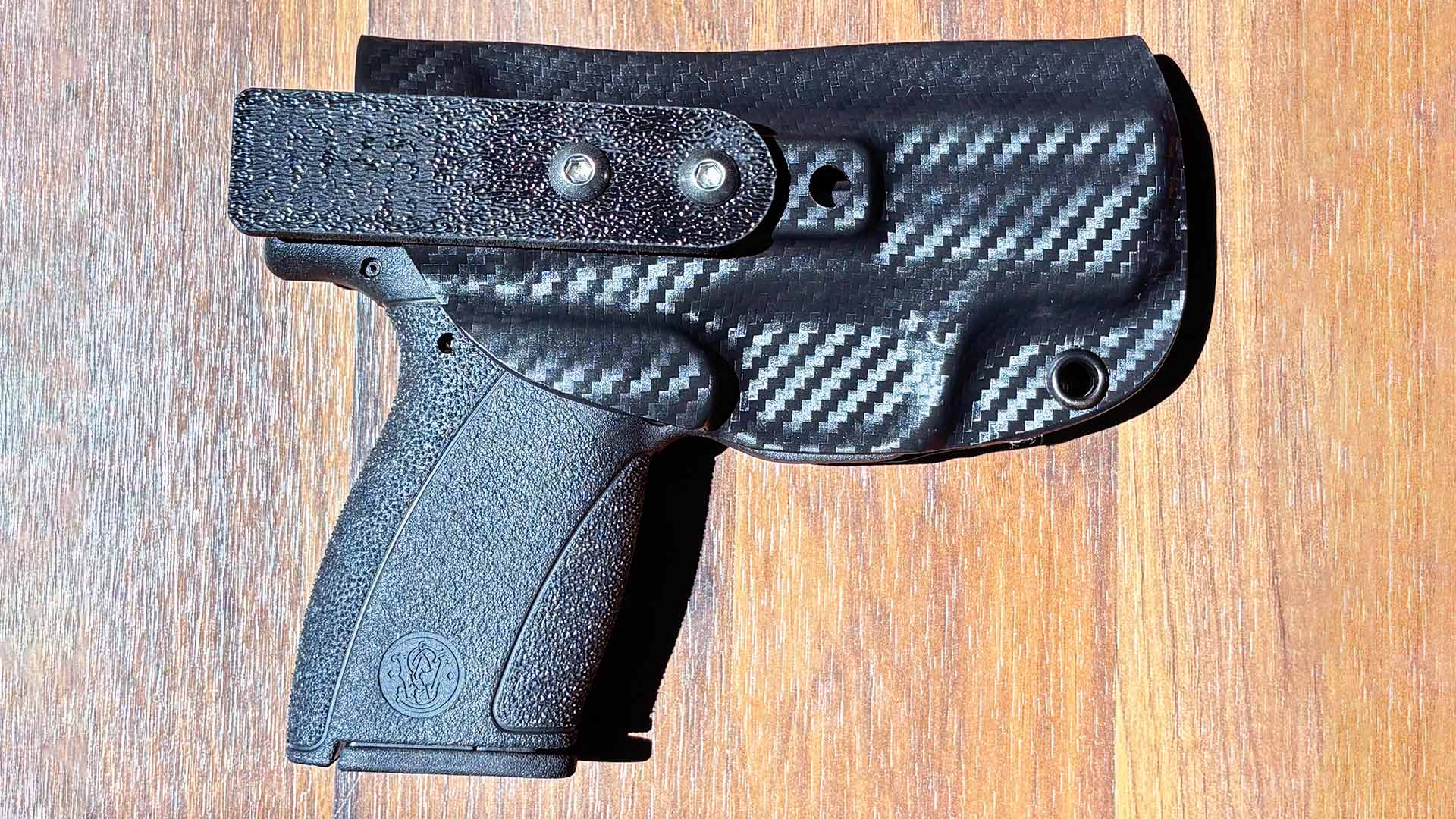
In exercise science, the concept of the minimum effective dose asks: What’s the least you can do and still see results? Not everyone has the time or discipline for six days a week at the gym, multiple sets and a mix of HIIT and cardio. Yet, a few focused workouts each week can still maintain health. Pocket carry for self-defense follows a similar philosophy. Ideally, I’d carry a full-size 9mm with a red dot, a 17-round magazine, a backup magazine, a tourniquet to prevent bleeding, a melt-your-face-bright flashlight and a combat knife — everything you’d want for a worst-case scenario. But the reality is the environment rarely allows for that level of preparedness. Most days, carrying all that gear simply isn’t practical or even possible.
Why consider pocket carry?
The primary advantage of pocket carry is its ability to integrate seamlessly into daily life. While more firepower and equipment are always preferable in theory, the demands of real life often dictate otherwise. For example, if I’m at the park with my kids and they want me to join them on the monkey bars, appendix carry with a single-stack 9mm handgun just isn’t feasible. It’s uncomfortable, restrictive and risks exposure. With a pocket-carried pistol, I can participate fully, climb, swing and play without anyone noticing I’m armed or feeling hindered by my gear.
The same principle applies to other daily activities. I’ve gone on brisk walks, jogged around the neighborhood and even gone for runs with my Kydex holster securely in my pocket. The gun stays protected, the holster doesn’t shift and I retain full mobility. In contrast, trying to run or play sports with an appendix or waistband holster is not only uncomfortable, but also increases the risk of printing or an accident.
More firepower is desirable in theory, but if it means leaving your firearm at home because it’s heavy and uncomfortable, it defeats the purpose. Pocket carry represents the minimum effective dose of self-defense: not perfect, but practical, ensuring you’re prepared regardless of the day’s demands.
Holster selection: The critical variable
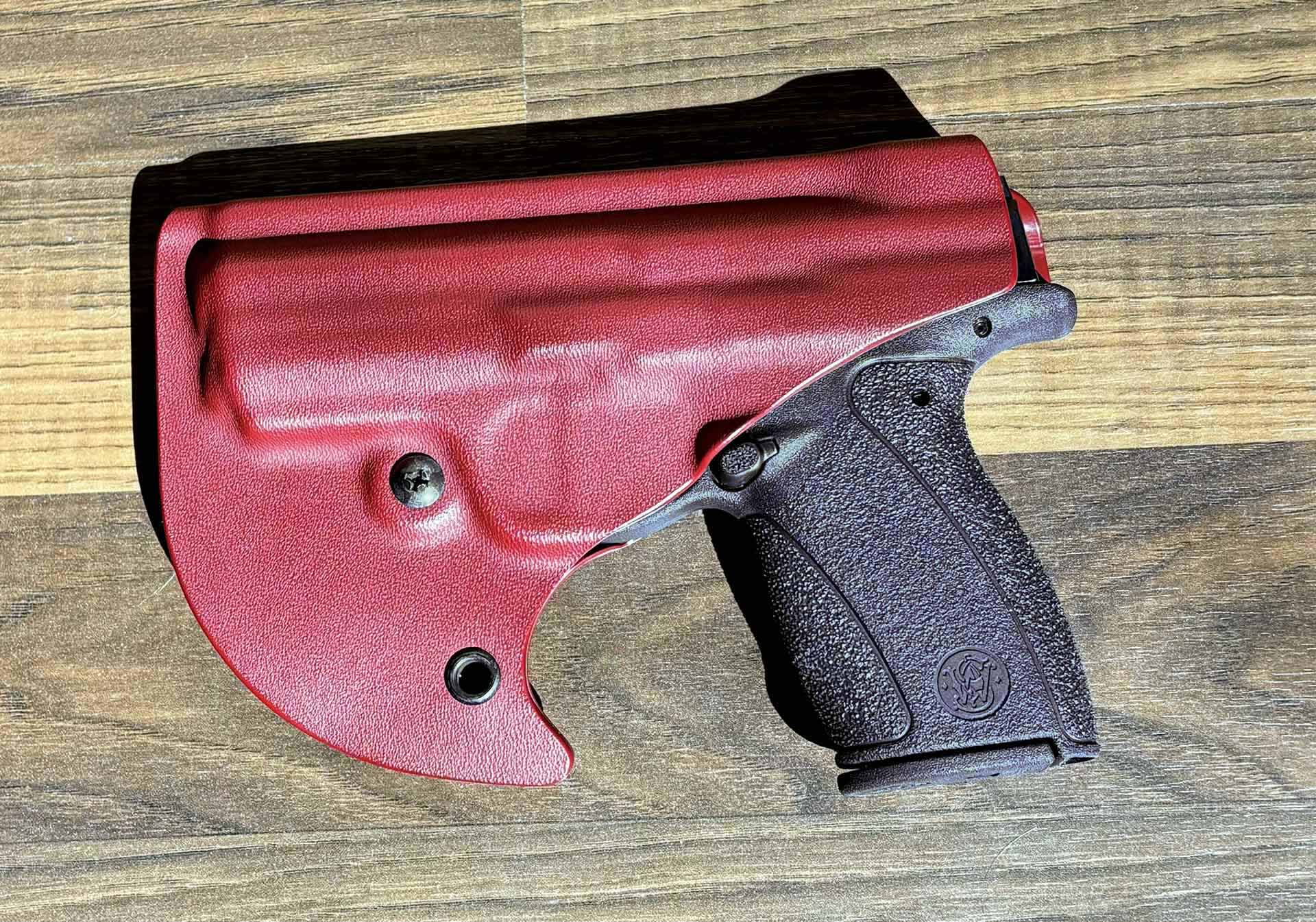
Holster choice is fundamental to safe and effective pocket carry. The right holster secures the firearm, protects the trigger and ensures a consistent, safe draw. I recommend a Kydex holster with a secure fit and a push-off thumb tab. This configuration anchors the holster in the pocket and allows for a confident, one-handed draw. Several models include these features, such as the Vedder Kydex Pocket Locker holster and the HAWG STASH holster.
While some opt for soft holsters, I find them lacking in trigger protection. A soft holster can be compressed or folded, increasing the risk of something inadvertently pressing against the trigger. In contrast, a well-molded Kydex holster maintains its shape, secures the firearm in the holster and provides a firm barrier around the trigger guard, significantly reducing the risk of accidental discharge.
Pocket and wardrobe considerations
The effectiveness of pocket carry is also influenced by your clothing. Some pockets are too tight, making access difficult; others are deep or loose, which can hinder a quick draw or allow the holster to shift. The key is to test your setup: make sure you can achieve a proper grip and avoid printing. The optimal setup combines a well-designed Kydex holster with clothing that supports safe, discreet carry.
Training and adaptation
Like any defensive method, pocket carry is only as effective as the training and habits that support it. According to Claude Werner, a firearms training expert who operates the Tactical Professor website, pocket carry offers some advantages in terms of access and speed. It’s far easier to access a gun in a coat pocket than to undo your coat and draw from a holster, especially when you’re seated in a vehicle with your seat belt on. With pocket carry, you can put your hand on your gun as soon as you perceive trouble or even walk around with your hand casually in your pocket. If the situation escalates, you’re already set up for the fastest possible response. For most people, a draw from the pocket — when your hand is already on the gun — is faster than drawing from under a cover garment or from a concealed holster. This edge in speed and concealment can be critical if a situation escalates or becomes threatening.
Ballistics matter — there’s no question that a 9mm outperforms a .380 ACP in that department. But at the end of the day, shot placement is even more important than caliber. And shot placement is a direct result of solid training.
Developing routines that fit your lifestyle is essential. For quick errands, dog walks or spontaneous trips to the grocery store or playground, pocket carry offers a practical alternative to more cumbersome methods like appendix carry, especially when seat belts make appendix holsters inconvenient, uncomfortable and a safety concern if involved in a car accident.
Your carry environment
Your environment should always guide your carry method. In lower-risk neighborhoods, pocket carry is often more than adequate. When I’m at home or running errands in my own community — where I know the people and routines — I’m comfortable relying on my pocket-carried .380 in a Kydex holster. It’s discreet, comfortable and doesn’t interfere with family activities.
But not every setting is the same. If you live or spend time in higher-risk areas, a more robust carry setup may be warranted. Yes, it’s less comfortable and more cumbersome, but the increased preparedness is worth it when the environment demands it.
The key is adaptability: balancing your preparedness with your environment. Some days, pocket carry is the minimum effective dose that keeps you covered without slowing you down. Other days, you may need to scale up your equipment and accept a little extra inconvenience for the sake of safety. Let your honest assessment of risk, not habit or convenience, drive your decisions.
Discretion and practicality
Pocket carry excels in being concealed. It allows you to carry a firearm in a way that’s nearly as inconspicuous as carrying a phone, minimizing the risk of exposure or drawing unwanted attention. This level of concealment is especially important for off-duty officers. Some departments strongly encourage off-duty carry, recognizing that officers are often expected to be ready to protect life, even when they’re not in uniform. The principle remains clear: as an off-duty officer, you only draw your firearm if it’s absolutely necessary to protect life. Pocket carry supports this mission by keeping you prepared while allowing you to blend in.
Equipment choices
Selecting the right firearm for pocket carry is crucial. Over the years, I’ve used several .380 models, including KelTecs and Rugers. Most recently, I’ve settled on the Smith & Wesson Bodyguard 2.0, which strikes a balance between concealability, magazine capacity and shootability. The ergonomics are excellent, too. For me, anything larger — including most single-stack 9mm pistols — is simply too big and heavy for effective pocket carry.
Conclusion
How often do you meet up with co-workers who claim to “everyday carry,” but when you ask where their gun is, the answer is, “Oh, it’s in my truck,” or “I left it at home because it’s too big and uncomfortable”? This is the reality for many. Pocket carry allows for true everyday carry because it is comfortable, concealable and secure. When used with the right holster, gun, wardrobe and training, pocket carry offers a practical, consistent means of everyday preparedness. It’s not about achieving perfection, but about ensuring you’re always equipped to respond if needed. By focusing on the minimum effective dose, you can maintain readiness while fully participating in daily life — whether you’re playing with your kids, going to the store or just enjoying a walk with your family. In the end, the best gun is the one you’ll actually carry. Pocket carry increases your chances of having one when it matters most.
References
Pocket Locker Holster. (n.d.). Vedder Holsters. vedderholsters.com/pocket-locker-holster.
Stash — Secure Thumb Activated Secret Holster. (n.d.). Hawg Holsters — Custom Kydex Holsters. hawgholsters.com/store/p170/HAWG_STASH.html.
Werner, C. (2023, December 20). Pocket Carry. The Tactical Professor. thetacticalprofessor.net/2023/12/20/pocket-carry.

Dr. Matthew Loeslie
As seen in the August 2025 issue of American Police Beat magazine.
Don’t miss out on another issue today! Click below: