• Skip to primary navigation
  • Skip to main content
  • Skip to primary sidebar
  • Skip to footer
  • Home
  • About
  • The Magazine
  • Events
  • Partners
  • Products
  • Contact
  • Jobs and Careers
  • Advertise
  • Facebook
  • Instagram
  • Twitter
  • Subscribe
American Police Beat

American Police Beat Magazine

Law Enforcement Publication

  • Home
  • Leadership
    • Clarifying your “true north”
      The job has changed — have you?
      Perpetual recognition of line-of-duty deaths
      Understanding the boundaries of professional relationships with the...
      Why you should lead from 30,000 feet
  • Topics
    • Leadership
      • Clarifying your “true north”
        The job has changed — have you?
        Perpetual recognition of line-of-duty deaths
        Understanding the boundaries of professional relationships with the...
        Why you should lead from 30,000 feet
    • Editor’s Picks
      • Let’s get moving!
        Heroes of the World Trade Center
        The Promise Gap
        Corruption, collusion and impunity
        Liability challenges in contemporary policing
    • On the Job
      • K-9 officer turns children’s book author
        K-9 Day demonstrates scope of officers’ duties
        Testing the waters — literally
        Frankpledge to forensics: A brief history of law enforcement
        Villains and heroes in the Big Apple
    • Labor
      • Smile and let them swing
        The Promise Gap
        Cut the cops, save a dollar?
        Labor release under fire
        Who’s watching the watchmen?
    • Tech
      • NYC’s electric vehicle fleet for LE passes milestone
        New Mexico license plate readers save lives, lead to “precise...
        A modern field guide to understanding research in policing
        Gear that moves with you
        A new breed of cop car
    • Training
      • Pushback as a training signal
        Let’s get moving!
        The five minutes before the ambulance
        Navigating danger
        Critical thinking in police training
    • Policy
      • Police and local government leaders join forces to build community...
        Police pause license plate readers
        Corruption, collusion and impunity
        E-bikes spark public safety concerns
        Try racing without wheels
    • Health/Wellness
      • The days that follow
        Addressing stress, vicarious trauma and burnout
        Nervous system regulation
        The nature of the job
        Promoting organizational wellness
    • Community
      • Cops promote National Donate Life Month
        Police officer kicks up social media praise
        Donning denim in solidarity with victims and survivors of sexual...
        Improving autism awareness
        Shop with a Cop
    • Offbeat
      • An unexpected burglar
        Police humor only a cop would understand
        Not eggzactly a perfect heist
        Pizza … with a side of alligator?
        Wisconsin man charged with impersonating Border Patrol agent twice in...
    • We Remember
      • A Tribute to Fallen Heroes
        Markers of service and remembrance
        Tragedy strikes Baker to Vegas
        Heroes of the World Trade Center
        Forty heroes: United Airlines Flight 93
    • HOT Mail
      • The War on Cops Continues Unabated
  • On the Job
    • K-9 officer turns children’s book author
      K-9 Day demonstrates scope of officers’ duties
      Testing the waters — literally
      Frankpledge to forensics: A brief history of law enforcement
      Villains and heroes in the Big Apple
  • Labor
    • Smile and let them swing
      The Promise Gap
      Cut the cops, save a dollar?
      Labor release under fire
      Who’s watching the watchmen?
  • Tech
    • NYC’s electric vehicle fleet for LE passes milestone
      New Mexico license plate readers save lives, lead to “precise...
      A modern field guide to understanding research in policing
      Gear that moves with you
      A new breed of cop car
  • Training
    • Pushback as a training signal
      Let’s get moving!
      The five minutes before the ambulance
      Navigating danger
      Critical thinking in police training
  • Policy
    • Police and local government leaders join forces to build community...
      Police pause license plate readers
      Corruption, collusion and impunity
      E-bikes spark public safety concerns
      Try racing without wheels
  • Health/Wellness
    • The days that follow
      Addressing stress, vicarious trauma and burnout
      Nervous system regulation
      The nature of the job
      Promoting organizational wellness
  • Community
    • Cops promote National Donate Life Month
      Police officer kicks up social media praise
      Donning denim in solidarity with victims and survivors of sexual...
      Improving autism awareness
      Shop with a Cop
  • Offbeat
    • An unexpected burglar
      Police humor only a cop would understand
      Not eggzactly a perfect heist
      Pizza … with a side of alligator?
      Wisconsin man charged with impersonating Border Patrol agent twice in...
  • We Remember
    • A Tribute to Fallen Heroes
      Markers of service and remembrance
      Tragedy strikes Baker to Vegas
      Heroes of the World Trade Center
      Forty heroes: United Airlines Flight 93
  • HOT Mail
    • The War on Cops Continues Unabated
  • About
  • The Magazine
  • Events
  • Partners
  • Products
  • Contact
  • Jobs and Careers
  • Advertise
  • Subscribe
Search

Policy

Washington police reform laws lead to confusion and concern among law enforcement leaders

APB Team Published August 20, 2021 @ 12:00 pm PDT

iStock.com/400tmax

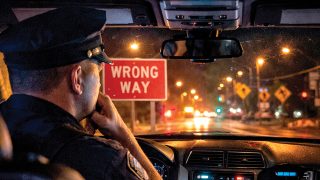
A slate of police reform laws in Washington state signed by Gov. Jay Inslee have led to confusion and discrepancies in how law enforcement should or should not respond to certain situations.

Following the racial justice protests that erupted last year after the death of George Floyd, Washington State passed nearly a dozen controversial and experimental bills to reform the law enforcement industry and increase accountability in the force.

However, after the laws went into effect nearly two months ago, law enforcement is still scratching their head about conflicting language in the bills that could interfere with the way they respond to certain situations like active crime scenes, mental health crises and welfare checks.

Rafael Padilla, the police chief in the south Seattle suburb of Kent, described the language of the law as lacking in clarity. “When you take the legislation and apply it, that’s when you really learn how effective it’s going to be. The challenge is — I’m going to be very frank — the laws were written very poorly, and the combination of them all at the same time has led to there being conflicts in clarity and in what was intended versus what was written,” he said.

The laws, passed by a Democrat-majority Legislature and governor, are the most ambitious and progressive laws passed as a result of last year’s protests and cover nearly all aspects of policing from background checks, use of force, data collection and the establishment of a civilian use-of-force oversight agency.

The Clark County Sheriff’s Office also expressed their concern about the reforms. Sheriff Chuck Atkins wrote in a statement: 

“Our concern is that the new legislation will have some unintentional consequences that could put the public and police officers in jeopardy. I expect that people could see a reduced police response and extended investigations as a result,” he wrote.

Rep. Jesse Johnson, a Democrat who sponsored bills on police tactics and use of force, admitted that the bill needs further clarifications, but that this is not an unexpected occurrence. 

“We have to create new policies, because what we were doing before was not working. What we wanted to do with these bills is set an expectation that officers de-escalate and that there’s less lethal enforcement of the law. A lot of the pushback we’re getting is because it’s a paradigm shift,” he explained.

Major changes in the bills include the banning of chokeholds, neck-restraints and no-knock warrants, as well as requiring officers to intervene if a colleague uses excess force. The laws also restrict officers’ ability to pursue suspects.

There is also more pressure on police to comply with the laws, which are often vague or confusing, due to more personal liability in court and a greater risk of being decertified.

Areas of confusion exist in the definition of “physical force,” which can refer to something as minor as handcuffing someone. Under the new laws, police are restricted from using physical force without probable cause – a higher legal standard of certainty that a criminal act is being committed. 

Previously, police just needed “reasonable suspicion” to act. ABC News said that now police may sometimes “let the bad guy go” as a result of the new measures.

The Criminal Justice Training Commission, which operates the state’s police academy, plans to modify its training to cover the new standards. 

In addition, the laws ban military-grade equipment in order to reduce lethal force, although some military-grade equipment – like bean bag guns – is effective and non-lethal.

Steve Strachan, executive director of the Washington Association of Sheriffs and Police Chiefs, stated his concern about the laws on behalf of the organization.

“The policing reforms may have the positive impact of reducing the number of violent interactions between law enforcement and the public. However, we owe it to the public we serve to be candid and share that we are deeply concerned that some policing reforms may have unintended outcomes that result in increased levels of confusion, frustration, victimization, and increased crime within our communities,” he said.

The laws take effect at the same time that the Seattle Police Department is understaffed and lacking in resources due to anti-police sentiment, with some even refusing to handle community care calls.

Sgt. Tim Meyer, a spokesman for the King County Sheriff’s Office, responded to other agencies’ responses to the bills that they will adapt to the new laws as usual.

“As we get more familiar with the application of these bills, we’re going to adapt and continue to serve the community,” Meyer said.

Sources:

https://abcnews.go.com/Politics/wireStory/confusion-besets-police-reform-laws-washington-state-79062561

https://www.kgw.com/article/news/police-reform-washington/283-3ca459d4-3047-4d8b-b850-3d510ef24cc1


Categories: Policy

Primary Sidebar

Recent Articles

  • K-9 officer turns children’s book author
  • Police and local government leaders join forces to build community trust
  • K-9 Day demonstrates scope of officers’ duties
  • Cops promote National Donate Life Month
  • NYC’s electric vehicle fleet for LE passes milestone
  • Police officer kicks up social media praise
  • Donning denim in solidarity with victims and survivors of sexual assault
  • Clarifying your “true north”
  • Smile and let them swing
  • The job has changed — have you?

Footer

Our Mission
To serve as a trusted voice of the nation’s law enforcement community, providing informative, entertaining and inspiring content on interesting and engaging topics affecting peace officers today.

Contact us: info@apbweb.com | (800) 234-0056.

  • Facebook
  • Instagram
  • Twitter

Categories

  • Editor’s Picks
  • On the Job
  • Labor
  • Tech
  • Training
  • Policy
  • Health/Wellness
  • Community
  • Offbeat
  • We Remember
  • Jobs and Careers
  • Events

Editor’s Picks

Let’s get moving!

Let’s get moving!

April 27, 2026

Heroes of the World Trade Center

Heroes of the World Trade Center

April 24, 2026

The Promise Gap

The Promise Gap

April 22, 2026

Corruption, collusion and impunity

Corruption, collusion and impunity

April 21, 2026

Policies | Consent Preferences | Copyright © 2026 APB Media, LLC | Website design, development and maintenance by 911MEDIA

Open

Subscribe

Close

Receive the latest news and updates from American Police Beat directly to your inbox!

  • This field is for validation purposes and should be left unchanged.