
• Skip to primary navigation
  • Skip to main content
  • Skip to primary sidebar
  • Skip to footer
  • Home
  • About
  • The Magazine
  • Events
  • Partners
  • Products
  • Contact
  • Jobs and Careers
  • Advertise
  • Facebook
  • Instagram
  • Twitter
  • Subscribe
American Police Beat

American Police Beat Magazine

Law Enforcement Publication

  • Home
  • Leadership
    • Understanding the boundaries of professional relationships with the...
      Why you should lead from 30,000 feet
      Public perception and trust
      When performance reviews are a waste of time
      Taking a page from Toyota’s playbook
  • Topics
    • Leadership
      • Understanding the boundaries of professional relationships with the...
        Why you should lead from 30,000 feet
        Public perception and trust
        When performance reviews are a waste of time
        Taking a page from Toyota’s playbook
    • Editor’s Picks
      • Let’s get moving!
        Heroes of the World Trade Center
        The Promise Gap
        Corruption, collusion and impunity
        Liability challenges in contemporary policing
    • On the Job
      • Frankpledge to forensics: A brief history of law enforcement
        Villains and heroes in the Big Apple
        Right place, right time — again
        Some good news on crime
        Mom-to-be named Cop of the Year
    • Labor
      • The Promise Gap
        Cut the cops, save a dollar?
        Labor release under fire
        Who’s watching the watchmen?
        Crime and punishment (or lack thereof) in Seattle
    • Tech
      • New Mexico license plate readers save lives, lead to “precise...
        A modern field guide to understanding research in policing
        Gear that moves with you
        A new breed of cop car
        The future of patrol is here
    • Training
      • Pushback as a training signal
        Let’s get moving!
        The five minutes before the ambulance
        Navigating danger
        Critical thinking in police training
    • Policy
      • Corruption, collusion and impunity
        E-bikes spark public safety concerns
        Try racing without wheels
        Law enforcement accreditation: Why it matters
        Liability challenges in contemporary policing
    • Health/Wellness
      • Addressing stress, vicarious trauma and burnout
        Nervous system regulation
        The nature of the job
        Promoting organizational wellness
        Telling cops to get more sleep isn’t working
    • Community
      • Improving autism awareness
        Shop with a Cop
        Community engagement: What is it moving forward?
        Contradictory crossroads
        Back-to-school season brings out police support nationwide
    • Offbeat
      • An unexpected burglar
        Police humor only a cop would understand
        Not eggzactly a perfect heist
        Pizza … with a side of alligator?
        Wisconsin man charged with impersonating Border Patrol agent twice in...
    • We Remember
      • Heroes of the World Trade Center
        Forty heroes: United Airlines Flight 93
        The Pentagon
        A nation propelled to war, lives changed forever
        A Christmas loss
    • HOT Mail
      • The War on Cops Continues Unabated
  • On the Job
    • Frankpledge to forensics: A brief history of law enforcement
      Villains and heroes in the Big Apple
      Right place, right time — again
      Some good news on crime
      Mom-to-be named Cop of the Year
  • Labor
    • The Promise Gap
      Cut the cops, save a dollar?
      Labor release under fire
      Who’s watching the watchmen?
      Crime and punishment (or lack thereof) in Seattle
  • Tech
    • New Mexico license plate readers save lives, lead to “precise...
      A modern field guide to understanding research in policing
      Gear that moves with you
      A new breed of cop car
      The future of patrol is here
  • Training
    • Pushback as a training signal
      Let’s get moving!
      The five minutes before the ambulance
      Navigating danger
      Critical thinking in police training
  • Policy
    • Corruption, collusion and impunity
      E-bikes spark public safety concerns
      Try racing without wheels
      Law enforcement accreditation: Why it matters
      Liability challenges in contemporary policing
  • Health/Wellness
    • Addressing stress, vicarious trauma and burnout
      Nervous system regulation
      The nature of the job
      Promoting organizational wellness
      Telling cops to get more sleep isn’t working
  • Community
    • Improving autism awareness
      Shop with a Cop
      Community engagement: What is it moving forward?
      Contradictory crossroads
      Back-to-school season brings out police support nationwide
  • Offbeat
    • An unexpected burglar
      Police humor only a cop would understand
      Not eggzactly a perfect heist
      Pizza … with a side of alligator?
      Wisconsin man charged with impersonating Border Patrol agent twice in...
  • We Remember
    • Heroes of the World Trade Center
      Forty heroes: United Airlines Flight 93
      The Pentagon
      A nation propelled to war, lives changed forever
      A Christmas loss
  • HOT Mail
    • The War on Cops Continues Unabated
  • About
  • The Magazine
  • Events
  • Partners
  • Products
  • Contact
  • Jobs and Careers
  • Advertise
  • Subscribe
Search

Community

Everyone needs a PAL

Kansas City police officers bond with youth

APB Team Published December 13, 2021 @ 7:00 am PST

  • everyone-needs-a-pal-1-boxing
    Police Athletic League of Kansas City, Missouri, P.D.
  • everyone-needs-a-pal-2
    Police Athletic League of Kansas City, Missouri, P.D.
  • everyone-needs-a-pal-3
    Police Athletic League of Kansas City, Missouri, P.D.
  • everyone-needs-a-pal-4-kc-pal-van
    Police Athletic League of Kansas City, Missouri, P.D.
  • everyone-needs-a-pal-5-covid-food-banks
    Police Athletic League of Kansas City, Missouri, P.D.

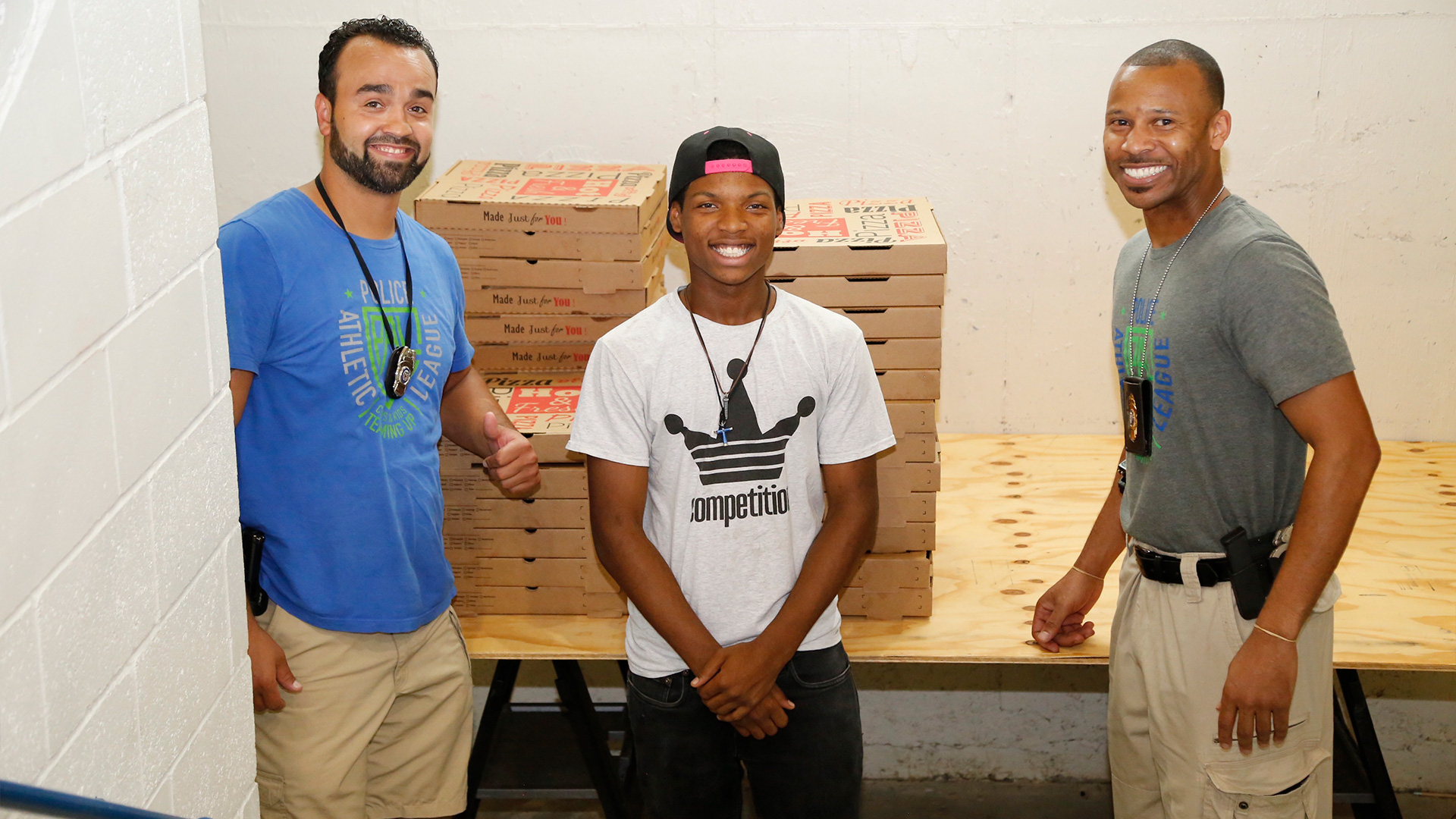
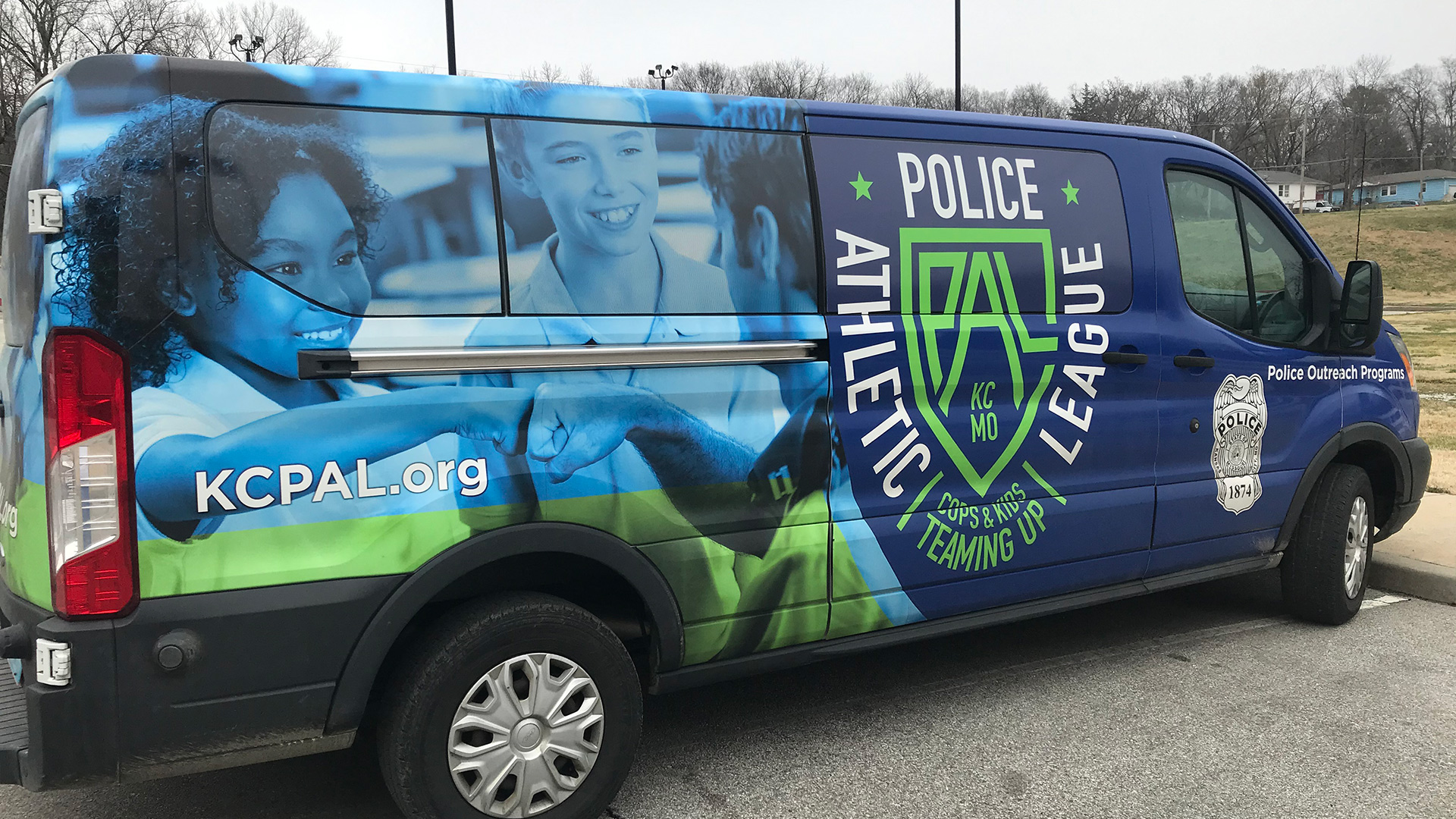
Kansas City, Missouri, police officers are forming relationships with youth in the city’s Police Athletic League (PAL).

“PAL is about building positive relationships,” says Sergeant Skip Cox at PAL. “We collaborate with community volunteers and businesses who work with police officers to help underprivileged youth and their families. Sports, arts and activities are the draw, but PAL is much deeper than that. When those positive relationships are created between the youth and the police officers, the youth actually become our allies in their own homes, helping to bridge gaps and foster open dialogues to build solid relationships.”

As Cox sees it, “Equally important and sometimes overlooked is how those relationships impact our police officers. When our officers engage with youth at PAL, they get to see the kids in their natural environment and see the world from the youth’s perspective (and their families’), which can be missed during a 10-minute 9-1-1 call. PAL invites everyone to see people as people, rather than the negative stereotypes.”

As part of the program, KCPD officers coach and mentor children in a variety of activities kids can sign up for. PAL is an after-school program, and requires youth members “to maintain a 2.0 grade point average in school or attend tutoring and make a good faith effort to raise their GPA,” the website reads. Homework assistance and Wi-Fi are also available for children at the center.

One PAL youth member, Isabel Rivera, enjoys practicing boxing and martial arts with police officers.

“It gives me an opportunity to socialize a little bit better,” Rivera said. 

Student Dewayson Thomas also gave his opinion on the program.

“It’s really helped me ’cause I was kinda not really into talking to people that much, but coming here has really has opened up a variety of meeting new people,” Thomas told KSHB 41. “And finding out what I’m good at, too.”

Crispin Rea, an avid Muhammad Ali fan who grew up two blocks from the center and participated in many of its programs, is now an assistant prosecuting attorney in Jackson County and serves on PAL’s board. 

“For me, it provided a safe haven in a neighborhood where there are many, many challenges,” Rea said. “This is a neighborhood that’s predominately African American and Hispanic families. So any time you’re able to create those opportunities where officers who serve that community are able to interact in a positive way, not only makes the neighborhood safer but [helps police] learn from the families.”

Rea added that programs like PAL aim to rebuild trust with minority communities.

“We’re at an interesting moment where so much is happening in the world with the criminal justice,” he said. “And the relationship between communities of law enforcement and communities of color is so strained. PAL is part of that solution and building that trust.”

According to PAL’s website, they believe all youth “deserve the opportunity to expand their horizons and realize their full potential.”

Local police officers are crucial to making sure children reach that potential by repairing community relationships.

“There’s a lot of relationships that have been severed or have been broken and this is an opportunity to work and prepare those,” Cox said. “We really can be the pinnacle for that change and bridging that gap.”

Cox said that PAL also gives officers a chance to be emotionally invested in the community.

“It’s hard not to be emotionally invested into the program when you get to see these kids on a daily basis. It’s more than just a job,” he said.

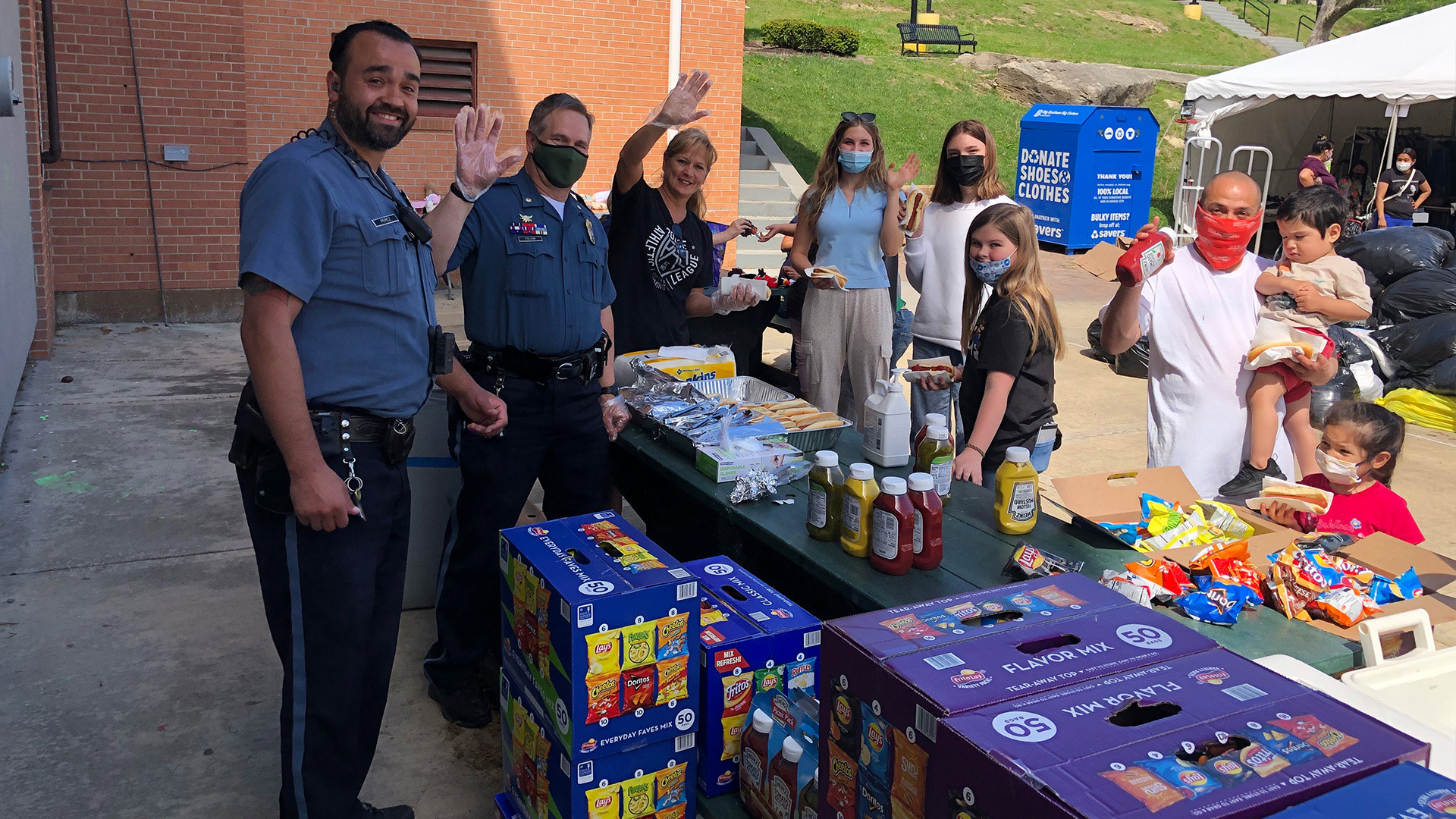
During COVID, PAL officers expanded their relationships beyond students to their families. PAL has even organized food banks during the tough economic times.

“We’ve had to adapt just like everybody. We know we’re really the epicenter for their change, for our kids’ change,” Cox said. “We’ve had countless food banks out here. And knowing that is still a challenge that our families are going through is why we’re here for them.”

PAL officers make roughly 1,300 contacts with kids on a monthly basis. Currently, PAL officers consist of a captain, two sergeants and four officers who work there as their full-time job. 

As seen in the November 2021 issue of American Police Beat magazine.
Don’t miss out on another issue today! Click below:


SUBSCRIBE TODAY!

Categories: Community

Primary Sidebar

Recent Articles

  • Frankpledge to forensics: A brief history of law enforcement
  • Pushback as a training signal
  • Let’s get moving!
  • Heroes of the World Trade Center
  • The Promise Gap
  • Corruption, collusion and impunity
  • The five minutes before the ambulance
  • New Mexico license plate readers save lives, lead to “precise policing”
  • Addressing stress, vicarious trauma and burnout
  • Understanding the boundaries of professional relationships with the boss

Footer

Our Mission
To serve as a trusted voice of the nation’s law enforcement community, providing informative, entertaining and inspiring content on interesting and engaging topics affecting peace officers today.

Contact us: info@apbweb.com | (800) 234-0056.

  • Facebook
  • Instagram
  • Twitter

Categories

  • Editor’s Picks
  • On the Job
  • Labor
  • Tech
  • Training
  • Policy
  • Health/Wellness
  • Community
  • Offbeat
  • We Remember
  • Jobs and Careers
  • Events

Editor’s Picks

Let’s get moving!

Let’s get moving!

April 27, 2026

Heroes of the World Trade Center

Heroes of the World Trade Center

April 24, 2026

The Promise Gap

The Promise Gap

April 22, 2026

Corruption, collusion and impunity

Corruption, collusion and impunity

April 21, 2026

Policies | Consent Preferences | Copyright © 2026 APB Media, LLC | Website design, development and maintenance by 911MEDIA

Open

Subscribe

Close

Receive the latest news and updates from American Police Beat directly to your inbox!

  • This field is for validation purposes and should be left unchanged.