• Skip to primary navigation
  • Skip to main content
  • Skip to primary sidebar
  • Skip to footer
  • Home
  • About
  • The Magazine
  • Events
  • Partners
  • Products
  • Contact
  • Jobs and Careers
  • Advertise
  • Facebook
  • Instagram
  • Twitter
  • Subscribe
American Police Beat

American Police Beat Magazine

Law Enforcement Publication

  • Home
  • Leadership
    • Clarifying your “true north”
      The job has changed — have you?
      Perpetual recognition of line-of-duty deaths
      Understanding the boundaries of professional relationships with the...
      Why you should lead from 30,000 feet
  • Topics
    • Leadership
      • Clarifying your “true north”
        The job has changed — have you?
        Perpetual recognition of line-of-duty deaths
        Understanding the boundaries of professional relationships with the...
        Why you should lead from 30,000 feet
    • Editor’s Picks
      • Smile and let them swing
        The job has changed — have you?
        The days that follow
        Perpetual recognition of line-of-duty deaths
        Let’s get moving!
    • On the Job
      • K-9 officer turns children’s book author
        K-9 Day demonstrates scope of officers’ duties
        Testing the waters — literally
        Frankpledge to forensics: A brief history of law enforcement
        Villains and heroes in the Big Apple
    • Labor
      • Smile and let them swing
        The Promise Gap
        Cut the cops, save a dollar?
        Labor release under fire
        Who’s watching the watchmen?
    • Tech
      • NYC’s electric vehicle fleet for LE passes milestone
        New Mexico license plate readers save lives, lead to “precise...
        A modern field guide to understanding research in policing
        Gear that moves with you
        A new breed of cop car
    • Training
      • Pushback as a training signal
        Let’s get moving!
        The five minutes before the ambulance
        Navigating danger
        Critical thinking in police training
    • Policy
      • Police and local government leaders join forces to build community...
        Police pause license plate readers
        Corruption, collusion and impunity
        E-bikes spark public safety concerns
        Try racing without wheels
    • Health/Wellness
      • The days that follow
        Addressing stress, vicarious trauma and burnout
        Nervous system regulation
        The nature of the job
        Promoting organizational wellness
    • Community
      • Cops promote National Donate Life Month
        Police officer kicks up social media praise
        Donning denim in solidarity with victims and survivors of sexual...
        Improving autism awareness
        Shop with a Cop
    • Offbeat
      • An unexpected burglar
        Police humor only a cop would understand
        Not eggzactly a perfect heist
        Pizza … with a side of alligator?
        Wisconsin man charged with impersonating Border Patrol agent twice in...
    • We Remember
      • A Tribute to Fallen Heroes
        Markers of service and remembrance
        Tragedy strikes Baker to Vegas
        Heroes of the World Trade Center
        Forty heroes: United Airlines Flight 93
    • HOT Mail
      • The War on Cops Continues Unabated
  • On the Job
    • K-9 officer turns children’s book author
      K-9 Day demonstrates scope of officers’ duties
      Testing the waters — literally
      Frankpledge to forensics: A brief history of law enforcement
      Villains and heroes in the Big Apple
  • Labor
    • Smile and let them swing
      The Promise Gap
      Cut the cops, save a dollar?
      Labor release under fire
      Who’s watching the watchmen?
  • Tech
    • NYC’s electric vehicle fleet for LE passes milestone
      New Mexico license plate readers save lives, lead to “precise...
      A modern field guide to understanding research in policing
      Gear that moves with you
      A new breed of cop car
  • Training
    • Pushback as a training signal
      Let’s get moving!
      The five minutes before the ambulance
      Navigating danger
      Critical thinking in police training
  • Policy
    • Police and local government leaders join forces to build community...
      Police pause license plate readers
      Corruption, collusion and impunity
      E-bikes spark public safety concerns
      Try racing without wheels
  • Health/Wellness
    • The days that follow
      Addressing stress, vicarious trauma and burnout
      Nervous system regulation
      The nature of the job
      Promoting organizational wellness
  • Community
    • Cops promote National Donate Life Month
      Police officer kicks up social media praise
      Donning denim in solidarity with victims and survivors of sexual...
      Improving autism awareness
      Shop with a Cop
  • Offbeat
    • An unexpected burglar
      Police humor only a cop would understand
      Not eggzactly a perfect heist
      Pizza … with a side of alligator?
      Wisconsin man charged with impersonating Border Patrol agent twice in...
  • We Remember
    • A Tribute to Fallen Heroes
      Markers of service and remembrance
      Tragedy strikes Baker to Vegas
      Heroes of the World Trade Center
      Forty heroes: United Airlines Flight 93
  • HOT Mail
    • The War on Cops Continues Unabated
  • About
  • The Magazine
  • Events
  • Partners
  • Products
  • Contact
  • Jobs and Careers
  • Advertise
  • Subscribe
Search

Training

A Connecticut police chief says his department needs more drug recognition experts

APB Team Published May 30, 2022 @ 6:00 am PDT

iStock.com/sestovic

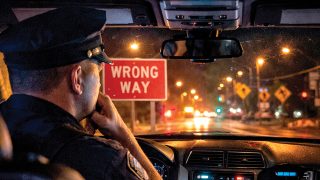
The Torrington, Connecticut, police chief is pushing to train more drug recognition experts (DRE) — officers who are trained to identify people under the influence of various drugs — within his department.

The department currently only has one trained DRE, which is less than the required number based on the town’s population.

DRE training began nationally in 2018 and is required by all police departments. Depending on a city or town’s population, departments are required to have a certain number of trained DREs on staff to respond to accidents with injuries or fatalities.

The training has become more useful for officers in Connecticut after recreational marijuana was legalized in 2021. While officers can use a breathalyzer test to detect a person’s blood alcohol level, officers require specific training standards to detect whether someone is under the influence of a drug like marijuana and whether they are too impaired to drive.

“We’d like to have as many officers trained as we possibly can,” Chief William Baldwin told the City Council. “I want DREs assigned to our accident investigation team.”

City Councilwoman Keri Hoehne asked the chief how many fatal accidents there were last year and whether DREs are required for every accident.

“We did have five or six fatal accidents last year; their severity is increasing,” Baldwin replied. “We can only guess at why, but with summer coming on, motor vehicle accidents are increasing. The concern of law enforcement with the legalization of marijuana is that these accidents will increase.”

Baldwin said that while saliva tests are being developed to test marijuana levels, they are not yet available to police.

“Officers have to be trained to detect possible drugged driving, and there are advanced roadside field sobriety tests that includes driving under the influence of drugs,” Baldwin said. “The only way to detect drunk driving is with a blood alcohol test. Unfortunately, we don’t have the technology yet, to test people who might be influenced by drugs or marijuana. There’s no breather test yet … saliva tests are coming, but they’re not available yet.”

According to the International Association of Chiefs of Police (IACP), the DRE training program consists of a three-phase process with 56 hours of classroom time and 40 to 60 hours for Field Certification.

The training guidelines rely on Standardized Field Sobriety tests, which test drivers’ physical and mental coordination.

“Once trained and certified, DREs become highly effective officers skilled in the detection and identification of persons impaired by alcohol and/or drugs. DREs are trained to conduct a systematic and standardized 12-step evaluation consisting of physical, mental and medical components,” the IACP stated. “Because of the complexity and technical aspects of the DRE training, not all law enforcement officers may be suited for the training. Experience has shown that training a well-defined group of officers proficient in impaired driving enforcement works well and can be very effective.”

DREs must be able detect the kinds of drugs involved in impaired driving accidents, and therefore are required to name and understand all seven drug categories and their effects. They are also trained to conduct psychological and physiological evaluations, prepare reports and testify in cases if needed.

The next two-week training program will take place in Arizona in mid-June.

The only barrier for police departments is the cost of training and convincing city officials that the expense is necessary.

“It can be somewhat expensive to send officers to the training; it’s an unfunded mandate,” Baldwin said.

“The state requires now that if anyone’s involved in a serious accident or fatality that a DRE has to respond to the scene with the accident investigation team,” the chief continued. “We’re asking the City Council to approve the training. If there’s an accident, we have one DRE now and he responds. If he’s not available, we have to reach out to an outside agency, per our union contract. Troop B has a DRE.”


Categories: Training Tags: Connecticut, sobriety test, Drug Recognition Experts, Torrington, William Baldwin, traffic accident, impaired driving, drug test, training, marijuana

Primary Sidebar

Recent Articles

  • K-9 officer turns children’s book author
  • Police and local government leaders join forces to build community trust
  • K-9 Day demonstrates scope of officers’ duties
  • Cops promote National Donate Life Month
  • NYC’s electric vehicle fleet for LE passes milestone
  • Police officer kicks up social media praise
  • Donning denim in solidarity with victims and survivors of sexual assault
  • Clarifying your “true north”
  • Smile and let them swing
  • The job has changed — have you?

Footer

Our Mission
To serve as a trusted voice of the nation’s law enforcement community, providing informative, entertaining and inspiring content on interesting and engaging topics affecting peace officers today.

Contact us: info@apbweb.com | (800) 234-0056.

  • Facebook
  • Instagram
  • Twitter

Categories

  • Editor’s Picks
  • On the Job
  • Labor
  • Tech
  • Training
  • Policy
  • Health/Wellness
  • Community
  • Offbeat
  • We Remember
  • Jobs and Careers
  • Events

Editor’s Picks

Smile and let them swing

Smile and let them swing

May 16, 2026

The job has changed — have you?

The job has changed — have you?

May 15, 2026

The days that follow

The days that follow

May 11, 2026

Perpetual recognition of line-of-duty deaths

Perpetual recognition of line-of-duty deaths

May 10, 2026

Policies | Consent Preferences | Copyright © 2026 APB Media, LLC | Website design, development and maintenance by 911MEDIA

Open

Subscribe

Close

Receive the latest news and updates from American Police Beat directly to your inbox!

  • This field is for validation purposes and should be left unchanged.