• Skip to primary navigation
  • Skip to main content
  • Skip to primary sidebar
  • Skip to footer
  • Home
  • About
  • The Magazine
  • Events
  • Partners
  • Products
  • Contact
  • Jobs and Careers
  • Advertise
  • Facebook
  • Instagram
  • Twitter
  • Subscribe
American Police Beat

American Police Beat Magazine

Law Enforcement Publication

  • Home
  • Leadership
    • Clarifying your “true north”
      The job has changed — have you?
      Perpetual recognition of line-of-duty deaths
      Understanding the boundaries of professional relationships with the...
      Why you should lead from 30,000 feet
  • Topics
    • Leadership
      • Clarifying your “true north”
        The job has changed — have you?
        Perpetual recognition of line-of-duty deaths
        Understanding the boundaries of professional relationships with the...
        Why you should lead from 30,000 feet
    • Editor’s Picks
      • Smile and let them swing
        The job has changed — have you?
        The days that follow
        Perpetual recognition of line-of-duty deaths
        Let’s get moving!
    • On the Job
      • K-9 officer turns children’s book author
        K-9 Day demonstrates scope of officers’ duties
        Testing the waters — literally
        Frankpledge to forensics: A brief history of law enforcement
        Villains and heroes in the Big Apple
    • Labor
      • Smile and let them swing
        The Promise Gap
        Cut the cops, save a dollar?
        Labor release under fire
        Who’s watching the watchmen?
    • Tech
      • NYC’s electric vehicle fleet for LE passes milestone
        New Mexico license plate readers save lives, lead to “precise...
        A modern field guide to understanding research in policing
        Gear that moves with you
        A new breed of cop car
    • Training
      • Pushback as a training signal
        Let’s get moving!
        The five minutes before the ambulance
        Navigating danger
        Critical thinking in police training
    • Policy
      • Police and local government leaders join forces to build community...
        Police pause license plate readers
        Corruption, collusion and impunity
        E-bikes spark public safety concerns
        Try racing without wheels
    • Health/Wellness
      • The days that follow
        Addressing stress, vicarious trauma and burnout
        Nervous system regulation
        The nature of the job
        Promoting organizational wellness
    • Community
      • Cops promote National Donate Life Month
        Police officer kicks up social media praise
        Donning denim in solidarity with victims and survivors of sexual...
        Improving autism awareness
        Shop with a Cop
    • Offbeat
      • “Teenage Mutant Ninja Deer” rescued
        An unexpected burglar
        Police humor only a cop would understand
        Not eggzactly a perfect heist
        Pizza … with a side of alligator?
    • We Remember
      • A Tribute to Fallen Heroes
        Markers of service and remembrance
        Tragedy strikes Baker to Vegas
        Heroes of the World Trade Center
        Forty heroes: United Airlines Flight 93
    • HOT Mail
      • The War on Cops Continues Unabated
  • On the Job
    • K-9 officer turns children’s book author
      K-9 Day demonstrates scope of officers’ duties
      Testing the waters — literally
      Frankpledge to forensics: A brief history of law enforcement
      Villains and heroes in the Big Apple
  • Labor
    • Smile and let them swing
      The Promise Gap
      Cut the cops, save a dollar?
      Labor release under fire
      Who’s watching the watchmen?
  • Tech
    • NYC’s electric vehicle fleet for LE passes milestone
      New Mexico license plate readers save lives, lead to “precise...
      A modern field guide to understanding research in policing
      Gear that moves with you
      A new breed of cop car
  • Training
    • Pushback as a training signal
      Let’s get moving!
      The five minutes before the ambulance
      Navigating danger
      Critical thinking in police training
  • Policy
    • Police and local government leaders join forces to build community...
      Police pause license plate readers
      Corruption, collusion and impunity
      E-bikes spark public safety concerns
      Try racing without wheels
  • Health/Wellness
    • The days that follow
      Addressing stress, vicarious trauma and burnout
      Nervous system regulation
      The nature of the job
      Promoting organizational wellness
  • Community
    • Cops promote National Donate Life Month
      Police officer kicks up social media praise
      Donning denim in solidarity with victims and survivors of sexual...
      Improving autism awareness
      Shop with a Cop
  • Offbeat
    • “Teenage Mutant Ninja Deer” rescued
      An unexpected burglar
      Police humor only a cop would understand
      Not eggzactly a perfect heist
      Pizza … with a side of alligator?
  • We Remember
    • A Tribute to Fallen Heroes
      Markers of service and remembrance
      Tragedy strikes Baker to Vegas
      Heroes of the World Trade Center
      Forty heroes: United Airlines Flight 93
  • HOT Mail
    • The War on Cops Continues Unabated
  • About
  • The Magazine
  • Events
  • Partners
  • Products
  • Contact
  • Jobs and Careers
  • Advertise
  • Subscribe
Search

Training

An equation for performing lawful Terry stops

Don McCrea Published June 24, 2022 @ 6:00 am PDT

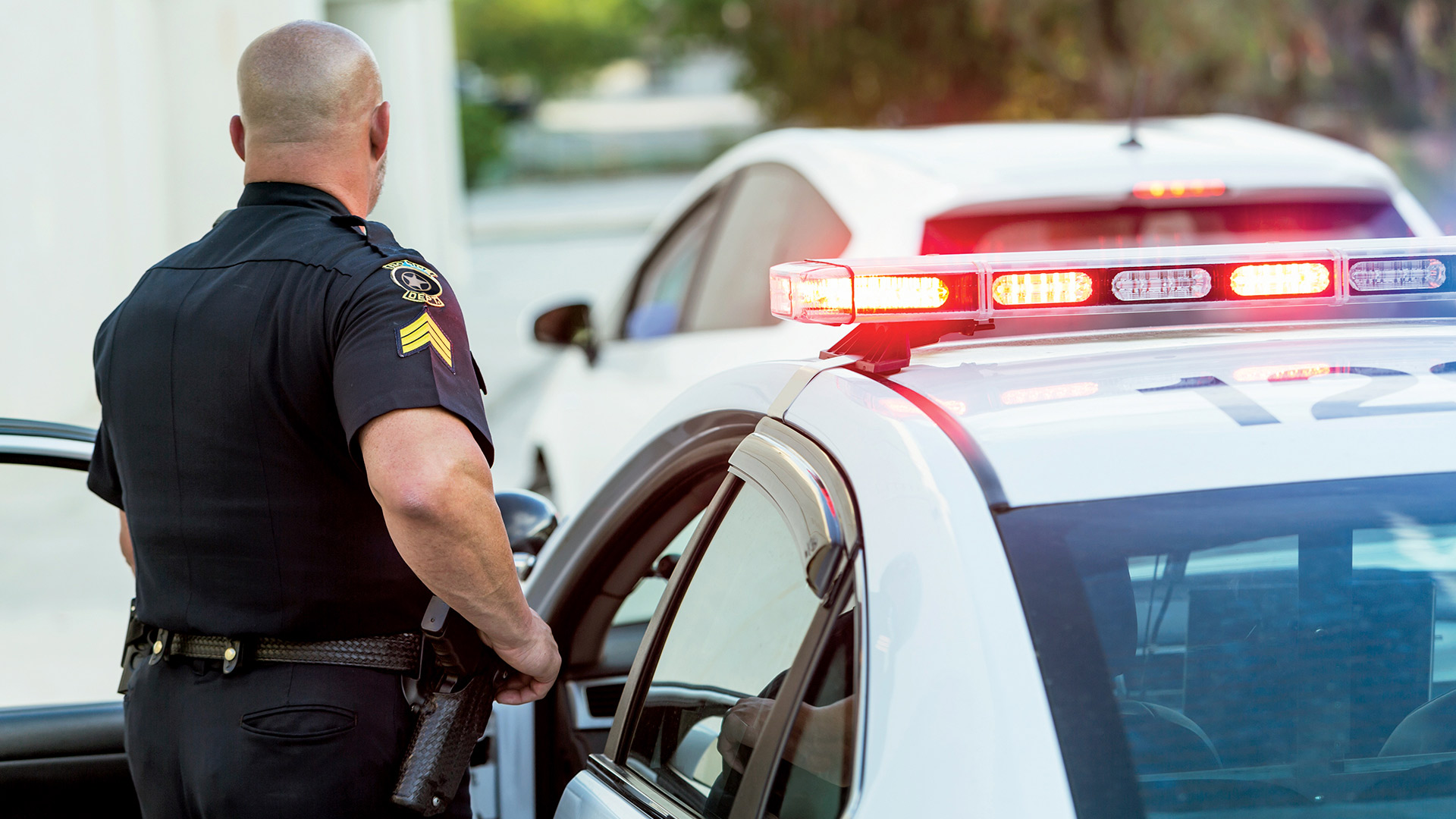
iStock.com/kali9

My school day began like any other. My mother pulled up outside Lamberton Elementary in our Chevrolet Bel Air station wagon and, with a sigh of relief, deposited me and my two brothers outside the east gate. As we jostled with each other on our way to the entrance, I felt an ominous storm cloud hanging over our school.

It was many years later when I learned that storm cloud originated in 1958, when President Eisenhower signed into law the National Defense Education Act — an act that increased federal spending for public schools. Included in this act was something called the “New Math,” a veritable storm cloud unleashed nationwide upon innocent and unsuspecting grade-schoolers like myself. Some parents and educators weren’t too keen on the New Math, either. In fact, Morris Kline, longtime professor of mathematics at New York University, authored a book titled Why Johnny Can’t Add: The Failure of the New Math.

The New Math is remembered as a “dismal mistake,” and has been called “one of the worst ideas of the 20th century.” We weren’t even allowed to use the word “numbers.” Instead, we had to use the word “numerals.” Are you kidding me? When you’re only 6 years old, the word numeral isn’t even a thing.

It’s necessary that officers make lawful stops every time. In doing so, the constitutional rights of citizens are maintained, and the chances of an officer committing a civil rights violation can be significantly reduced.

So if you’re wondering how a kid who grew up under the New Math would eventually develop an equation for performing lawful Terry stops, keep reading!

In my last article for American Police Beat, I identified six reasons officers perform unlawful stops and detentions. Without articulable and particularized reasonable suspicion of crime that has, is or is about to occur, an officer may not:

  • Detain based on a hunch, gut feeling or to conduct a “fishing expedition”
  • Detain because “we got a call for service” or “people are calling us about you”
  • Detain based on mere suspicion alone
  • Detain to see if there is a reason to detain
  • Detain because someone didn’t like what someone else was doing
  • Detain due to a “happenstance of geography”

Unlike a stop based on probable cause (where a violation is observed prior to the stop), a stop based on reasonable suspicion of crime occurs without observing a violation first.

Since unlawful Terry stops can lead to numerous lawsuits and other serious consequences against officers and their agencies, the importance of proper decision-making and articulation under the totality of the circumstances cannot be overstated. Therefore, I’m sharing an equation I developed to assist officers with their Terry stop decision-making and articulation.

That equation is C + R + C = a lawful Terry stop.

The first “C” in the equation represents “crime.” An officer must articulate a particular crime or crimes from the information they receive. Do not perform or attempt a Terry stop based upon any of the six reasons previously listed, as there is no specific, articulable reasonable suspicion of crime associated with any of them.

The “R” in the equation represents “reliability.” There are three primary sources of reasonable suspicion. Those three sources are (1) an officer himself or herself, (2) other officers and (3) citizens. Officers are automatically deemed reliable, and may pass reasonable suspicion to stop and detain to other officers under the collective knowledge doctrine.

Under the citizen–informant doctrine, citizens who are victims or eyewitnesses to crime are a presumptively reliable source of information in one of two ways. If a citizen reports potential criminal activity into a 9-1-1 call center, even anonymously, they are deemed reliable. If a citizen reports potential crime through means other than 9-1-1, they are deemed reliable if they provide their contact information or are otherwise identifiable.

The second “C” in the equation represents “corroboration.” This element involves corroboration of the vehicle and/or suspect description. Corroborating all descriptive points isn’t necessary under Terry, but the more points an officer corroborates, the stronger their case for the legality of the stop under the totality of the circumstances.

For example, how many possible points of corroboration are contained in the following vehicle description: a blue Chevrolet Impala, South Dakota license 675 PRW being driven by an elderly white male?

If you counted 13, you are correct. Isn’t math great?!

An interesting sidenote regarding corroboration. Some officers still operate under the mistaken belief that to perform a lawful Terry stop they need to corroborate or witness the reported crime instead of corroborating the vehicle or suspect description. In essence, these officers won’t make a stop unless they have probable cause instead of reasonable suspicion. This mistaken belief seems most prevalent when officers respond to reports involving a driving or traffic complaint, which can place the traveling public at unnecessary risk.

Here’s a scenario to illustrate how to apply C + R + C = a lawful Terry stop:

An officer receives this report from dispatch: “I have an RP on 9-1-1 reporting that she just observed someone enter her car in the Walmart parking lot and steal her purse from inside. The suspect then drove away in a green Chevrolet Caprice, South Dakota license 634, balance unknown. Suspect is described as a white male, approximately 20 years of age, wearing a blue T-shirt and blue jeans. RP last saw the vehicle leaving the east exit of the store and heading north on Industrial Drive.”

Ten minutes later, the officer spots a green Chevrolet Caprice traveling east on 27th Street. The license plate is South Dakota 634 090, but she couldn’t see who was driving the car. Since the officer never observed the reported violation, does she have the lawful authority to stop this vehicle immediately based on reasonable suspicion of crime provided by the citizen caller?

Let’s use the equation C + R + C = a lawful Terry stop to assist us in determining the answer to that question!

C = Crime. From the information provided by a citizen via dispatch, the officer could reasonably determine that criminal entry into a motor vehicle, or a vehicular burglary, had occurred. This satisfies the first part of the equation.

R = Reliability. Since the citizen reported the potential crime to 9-1-1, the citizen is deemed reliable. This satisfies the second part of the equation.

C = Corroboration. The officer corroborated the vehicle make, model, color, license plate state and the first three positions of the license plate. This sufficiently satisfies the third and final part of the equation.

Thus, the elements of C + R + C were met, and a lawful Terry stop could be performed.

C + R + C also provides a great template for an officer to articulate the legality of their stop in a written report as well as courtroom testimony.

C + R + C can be successfully applied to all types of potential crime, including traffic complaints. Ultimately, when a call goes out, an officer must make a decision whether to stop or not stop. It is my desire that providing this equation will aid officers in their Terry stop decision-making and articulation.

It’s necessary that officers make lawful stops every time. In doing so, the constitutional rights of citizens are maintained, and the chances of an officer committing a civil rights violation can be significantly reduced.

Don McCrea

Don McCrea

Don McCrea is president of Premier Police Training and has 35 years of law enforcement experience. He is a subject-matter expert in non-escalation, de-escalation, search and seizure, and use of force. Don is a nationally and internationally certified instructor and has an IADLEST nationally certified course, “Confident Non-Escalation: This Is Where De-Escalation Training Begins.” He currently serves as academic program coordinator for a four-year law enforcement degree program and offers consulting and training services for law enforcement agencies, the U.S. DOJ, COPS Office and CRI-TAC.

View articles by Don McCrea

As seen in the June 2022 issue of American Police Beat magazine.
Don’t miss out on another issue today! Click below:


SUBSCRIBE TODAY!

Categories: Training

Primary Sidebar

Recent Articles

  • “Teenage Mutant Ninja Deer” rescued
  • NLEOMF announces April 2026 Officers of the Month
  • K-9 officer turns children’s book author
  • Police and local government leaders join forces to build community trust
  • K-9 Day demonstrates scope of officers’ duties
  • Cops promote National Donate Life Month
  • NYC’s electric vehicle fleet for LE passes milestone
  • Police officer kicks up social media praise
  • Donning denim in solidarity with victims and survivors of sexual assault
  • Clarifying your “true north”

Footer

Our Mission
To serve as a trusted voice of the nation’s law enforcement community, providing informative, entertaining and inspiring content on interesting and engaging topics affecting peace officers today.

Contact us: info@apbweb.com | (800) 234-0056.

  • Facebook
  • Instagram
  • Twitter

Categories

  • Editor’s Picks
  • On the Job
  • Labor
  • Tech
  • Training
  • Policy
  • Health/Wellness
  • Community
  • Offbeat
  • We Remember
  • Jobs and Careers
  • Events

Editor’s Picks

Smile and let them swing

Smile and let them swing

May 16, 2026

The job has changed — have you?

The job has changed — have you?

May 15, 2026

The days that follow

The days that follow

May 11, 2026

Perpetual recognition of line-of-duty deaths

Perpetual recognition of line-of-duty deaths

May 10, 2026

Policies | Consent Preferences | Copyright © 2026 APB Media, LLC | Website design, development and maintenance by 911MEDIA

Open

Subscribe

Close

Receive the latest news and updates from American Police Beat directly to your inbox!

  • This field is for validation purposes and should be left unchanged.