
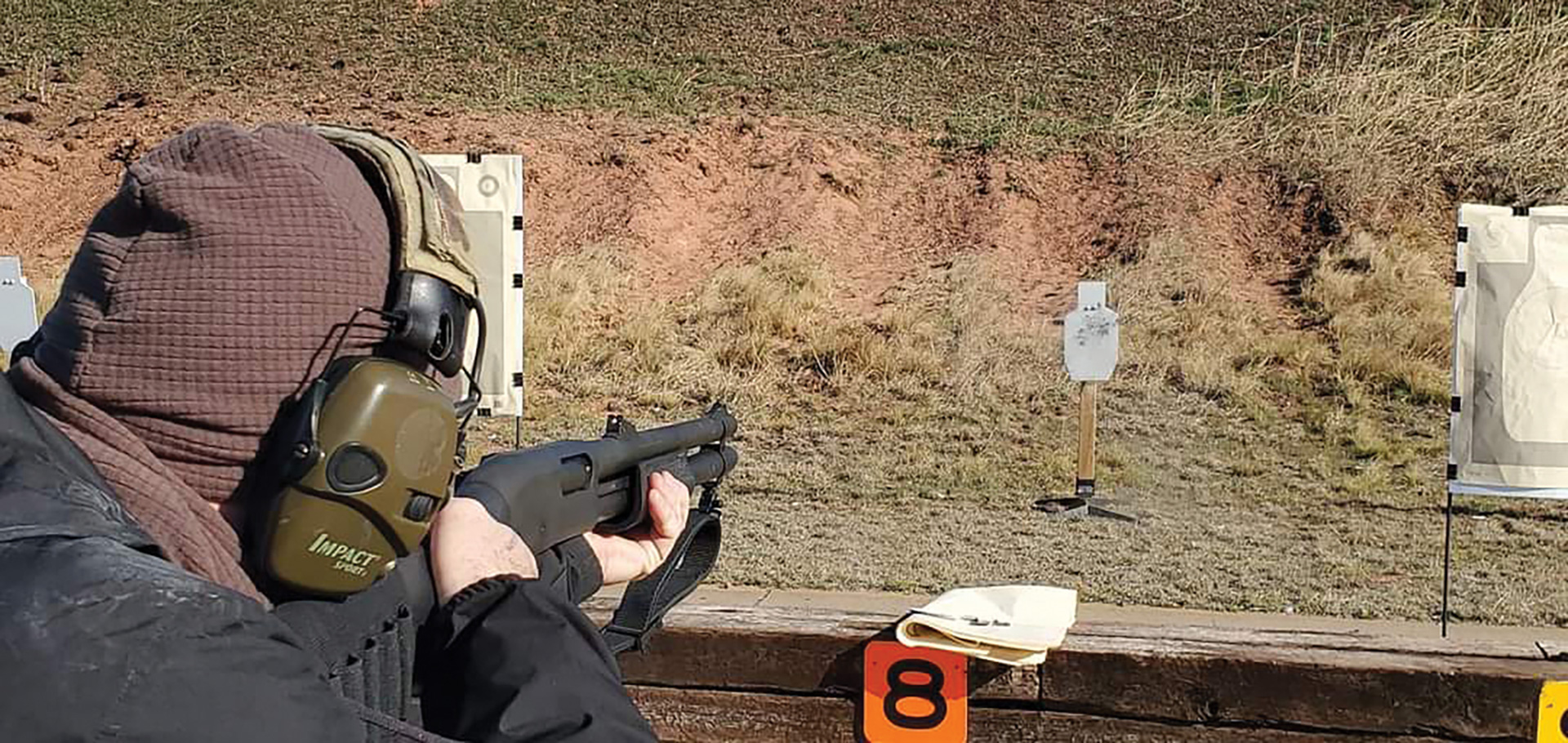
When I started my career, the shotgun was a ubiquitous part of every patrol car. At first, it was carried in the most convenient space available — right along the dash between the driver and passenger seats. When the shotgun was constantly in an officer’s line of sight, it was regularly and routinely deployed. Later, the location was changed to the front of the cage, slightly behind the driver and passenger seats, but it was still highly visible and used frequently.
As time went on, the widespread use of patrol rifles displaced most shotguns to the scrap pile of history. Don’t get me wrong, I’ve been a longtime advocate of rifles for every patrol officer. Unfortunately, many instructors didn’t think officers needed two long gun options, and the shotgun was on the way out. At first, many shotguns were painted bright orange and relegated to less-lethal duties. This worked for a while, but the introduction of more effective less-lethal options spelled the end of the shotgun in law enforcement. Or did it?
Size matters
Years ago, many departments had minimum size standards. When every officer was six feet tall, and most officers didn’t wear body armor, department-issued shotguns fit most everyone. But those height restrictions soon faded, and more officers began wearing body armor. It didn’t take long for officers and instructors to lose interest in training and deploying the shotgun. This wasn’t because the shotgun was suddenly less effective. In fact, newer technology had made the shotgun more effective. However, shorter officers with shorter arms, wearing body armor and maybe a jacket, resulted in shotguns that no longer fit the officers who were expected to utilize them.
Rather than make equipment changes, so the equipment fit the officers, most departments forced officers to train with gear that didn’t fit. When you take a 12-gauge shotgun loaded with full power buckshot or slugs that are too long for the user, the shotgun turns into a medieval torture device that constantly beats up the shooter.
The single biggest hurdle to training and getting the shotgun into the field is recoil. Until we repeal Newton’s third law of motion, the shotgun is going to generate significantly more recoil than a 5.56mm chambered patrol rifle. The effects of recoil are exacerbated by poor fit. We must keep in mind that a tactical shotgun for law enforcement use is a much different animal than your traditional bird-hunting shotgun. The longer stock and length of pull on a traditional bird-hunting shotgun helps a hunter smoothly track a flying bird or clay pigeon while using relatively soft-shooting birdshot shells. When the tactical shotgun is too long, it makes it impossible to get a solid cheek weld or shoulder mount. When using full power buckshot or slugs, the butt of the shotgun slams into the shooter, and the stock smacks the shooter in the face. No one is comfortable shooting under these conditions.
There are several solutions to this situation. For years, instructors who understood the need for shotguns and were willing to solve the problem have used youth stock effectively. Youth stocks shorten the length of pull, making the tactical shotgun much more comfortable for shooters of all sizes. Not only do youth stocks make shooting buckshot and slugs more comfortable, they help users of pump-action shotguns fully work the action. Short stroking a pump shotgun is a common user-induced malfunction, and a youth stock can help prevent this problem.
Another solution is the use of a telescoping stock. Most of these are designed similarly to the adjustable stocks found on AR-15 patrol rifles. The appearance and fit of an adjustable stock may help officers become more comfortable with the use of both their patrol rifle and shotgun. In addition to having a similar feel and function, there are several recoil-reducing shotgun stock systems on the market. There were mixed reviews on some of the early recoil-reducing systems, but duty-ready systems are now available and work well, especially on pump shotguns.
Pump or auto
Pump-action shotguns still rule the tactical market, but semi-autos are commanding more and more attention. Over the past 15 years, competitive three-gun matches have demonstrated the reliability of semi-auto shotguns. A highly-skilled operator can run a pump shotgun nearly as quickly as a semi-auto shotgun, but all things being equal, manually cycling the action of a pump shotgun is slower and requires more effort. Not only is the operating system of a semi-auto more familiar to officers, but autoloaders are easier to shoot while moving or from non-typical positions. And when it comes to shooter comfort, some semi-auto shotgun operating systems transmit less felt recoil, making them more comfortable to train with and deploy.
Some agencies have replaced their traditional pumps with semi-auto shotguns. They’ve found it’s easier to train officers to run the semi-auto systems, and they are more likely to deploy the familiar operating system on calls. This is a good thing, but a word of caution is in order. When shotguns are not individually issued, semi-auto shotguns are going to require more department armorer maintenance. Pump shotguns are much more likely to continue running when dry or dirty. However, semi-auto shotguns need to be clean and properly lubricated to ensure proper function.
Ammo selection
Pump-action shotguns are omnivorous and will digest everything from light birdshot and less-lethal rounds up to magnum buckshot and slug loads. Even some of the most beat-up shells on the range will cycle and shoot through tactical pump shotguns.
On the other hand, autoloading shotguns can be finicky, particularly if improperly maintained. Reduced recoil loads may not function reliably in autoloaders. Even loads that aren’t marketed as being “reduced recoil” may not function reliably, so ammo selection is critical to successful training and use of autoloaders. Adding accessories such as sidesaddles or lights can reduce the dependability of semi-autos, so it’s important to function test before putting them on the street.
Buckshot remains the most commonly utilized law enforcement shotgun ammunition. The typical 2- 3/4-inch 12-gauge buckshot contains nine pellets that are approximately .32 caliber in diameter. Today, all the major manufacturers are turning out tactical loads optimized for law enforcement. I’m particularly fond of Federal’s 00 buckshot loads with the FliteControl wad. Another fantastic duty round is Hornady’s 00 Buckshot Critical Defense shell using their Versatite wad technology. Each of these offerings deliver tight patterns beyond 20 yards without barrel or choke modifications. The fact that felt recoil is considerably less than most buckshot used for hunting is a huge bonus.
Rifled slugs give the shotgun even greater standoff distance and potential. A shotgun loaded with slugs can be used to engage a threat well beyond a practical handgun or buckshot distance. In fact, several years ago, I attended a class where we shot slugs out to 200-plus yards with ease that bordered on being monotonous. An average shotgun slug is 7/8-ounce to 1 ounce, which translates to 382 to 437 grains. This is a lot of mass traveling around 1,700 feet per second, which is a lot of threat-stopping power by any measure.
When it comes to the terminal effect of shotgun slugs, the first autopsy I ever attended was a suspect shot with a slug in the left hip. This guy was unlucky enough to break into the home of a World War II veteran armed with a shotgun and slugs. When the suspect tried to attack the elderly veteran, he earned a trip to the morgue. The slug didn’t remove his leg, but the damage was so severe that when officers arrived on scene, he was beyond any means of resuscitation.
The final chapter of the law enforcement tactical shotgun is yet to be written. This valuable tool is starting to enjoy a comeback, which is good news for everyone involved. Better fitting equipment, more reliable autoloading shotguns and the amazing performance of duty ammunition have made the case for the tactical shotgun to be reintroduced back to patrol. Don’t be afraid of the gauge. Bring the shotgun back to where it belongs.

Todd Fletcher
As seen in the August 2022 issue of American Police Beat magazine.
Don’t miss out on another issue today! Click below:




