• Skip to primary navigation
  • Skip to main content
  • Skip to primary sidebar
  • Skip to footer
  • Home
  • About
  • The Magazine
  • Events
  • Partners
  • Products
  • Contact
  • Jobs and Careers
  • Advertise
  • Facebook
  • Instagram
  • Twitter
  • Subscribe
American Police Beat

American Police Beat Magazine

Law Enforcement Publication

  • Home
  • Leadership
    • Understanding the boundaries of professional relationships with the...
      Why you should lead from 30,000 feet
      Public perception and trust
      When performance reviews are a waste of time
      Taking a page from Toyota’s playbook
  • Topics
    • Leadership
      • Understanding the boundaries of professional relationships with the...
        Why you should lead from 30,000 feet
        Public perception and trust
        When performance reviews are a waste of time
        Taking a page from Toyota’s playbook
    • Editor’s Picks
      • Let’s get moving!
        Heroes of the World Trade Center
        The Promise Gap
        Corruption, collusion and impunity
        Liability challenges in contemporary policing
    • On the Job
      • Frankpledge to forensics: A brief history of law enforcement
        Villains and heroes in the Big Apple
        Right place, right time — again
        Some good news on crime
        Mom-to-be named Cop of the Year
    • Labor
      • The Promise Gap
        Cut the cops, save a dollar?
        Labor release under fire
        Who’s watching the watchmen?
        Crime and punishment (or lack thereof) in Seattle
    • Tech
      • New Mexico license plate readers save lives, lead to “precise...
        A modern field guide to understanding research in policing
        Gear that moves with you
        A new breed of cop car
        The future of patrol is here
    • Training
      • Pushback as a training signal
        Let’s get moving!
        The five minutes before the ambulance
        Navigating danger
        Critical thinking in police training
    • Policy
      • Corruption, collusion and impunity
        E-bikes spark public safety concerns
        Try racing without wheels
        Law enforcement accreditation: Why it matters
        Liability challenges in contemporary policing
    • Health/Wellness
      • Addressing stress, vicarious trauma and burnout
        Nervous system regulation
        The nature of the job
        Promoting organizational wellness
        Telling cops to get more sleep isn’t working
    • Community
      • Improving autism awareness
        Shop with a Cop
        Community engagement: What is it moving forward?
        Contradictory crossroads
        Back-to-school season brings out police support nationwide
    • Offbeat
      • An unexpected burglar
        Police humor only a cop would understand
        Not eggzactly a perfect heist
        Pizza … with a side of alligator?
        Wisconsin man charged with impersonating Border Patrol agent twice in...
    • We Remember
      • Heroes of the World Trade Center
        Forty heroes: United Airlines Flight 93
        The Pentagon
        A nation propelled to war, lives changed forever
        A Christmas loss
    • HOT Mail
      • The War on Cops Continues Unabated
  • On the Job
    • Frankpledge to forensics: A brief history of law enforcement
      Villains and heroes in the Big Apple
      Right place, right time — again
      Some good news on crime
      Mom-to-be named Cop of the Year
  • Labor
    • The Promise Gap
      Cut the cops, save a dollar?
      Labor release under fire
      Who’s watching the watchmen?
      Crime and punishment (or lack thereof) in Seattle
  • Tech
    • New Mexico license plate readers save lives, lead to “precise...
      A modern field guide to understanding research in policing
      Gear that moves with you
      A new breed of cop car
      The future of patrol is here
  • Training
    • Pushback as a training signal
      Let’s get moving!
      The five minutes before the ambulance
      Navigating danger
      Critical thinking in police training
  • Policy
    • Corruption, collusion and impunity
      E-bikes spark public safety concerns
      Try racing without wheels
      Law enforcement accreditation: Why it matters
      Liability challenges in contemporary policing
  • Health/Wellness
    • Addressing stress, vicarious trauma and burnout
      Nervous system regulation
      The nature of the job
      Promoting organizational wellness
      Telling cops to get more sleep isn’t working
  • Community
    • Improving autism awareness
      Shop with a Cop
      Community engagement: What is it moving forward?
      Contradictory crossroads
      Back-to-school season brings out police support nationwide
  • Offbeat
    • An unexpected burglar
      Police humor only a cop would understand
      Not eggzactly a perfect heist
      Pizza … with a side of alligator?
      Wisconsin man charged with impersonating Border Patrol agent twice in...
  • We Remember
    • Heroes of the World Trade Center
      Forty heroes: United Airlines Flight 93
      The Pentagon
      A nation propelled to war, lives changed forever
      A Christmas loss
  • HOT Mail
    • The War on Cops Continues Unabated
  • About
  • The Magazine
  • Events
  • Partners
  • Products
  • Contact
  • Jobs and Careers
  • Advertise
  • Subscribe
Search

Labor

Police departments nationwide experiencing severe staffing shortages ahead of new year

APB Team Published November 3, 2022 @ 2:08 pm PDT

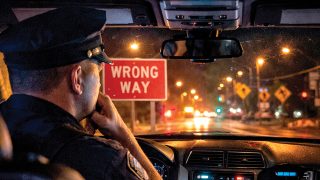
iStock.com/ftwitty

Law enforcement leaders are sounding the alarm on critical staffing shortages affecting police departments in 11 cities across the country.

National Police Association spokesperson retired Sergeant Betsy Branter-Smith recently announced that small and large departments in New York City; Chicago; Los Angeles; Philadelphia; Seattle; St. Louis; Louisville, Kentucky; Austin and San Antonio, Texas; and Phoenix and Tuscon, Arizona, have experienced low staffing levels following the killing of George Floyd in 2020 and subsequent anti-police rhetoric and defunding movement.

“I think this could be a generational problem,” Branter-Smith said. “This could go on for years. Even if, let’s say, I could flip a magic switch tomorrow, and everyone loved the police and every kid in America wanted to be a cop … it takes nine months to a year from the date of hire for a person to become a police officer. So, there’s one problem. Even if we could fix this tomorrow, it’ll be a year before any of those staffing issues are addressed.”

According to Seattle Mayor Bruce Harrel, the Seattle Police Department lost 400 officers between 2020 and 2022, and the number of deployable officers dropped to 954 this year, resulting in the lowest number of police officers in 30 years. In addition, the department has seen a 40% drop in detectives, which has increased both the time needed for investigative work and overtime expenses.

“When you add to the realization that Washington state already ranks at the bottom of police officers per thousand residents in this country, you can see why crime rates have skyrocketed. Homicide rates are at their highest rates in recorded history in many cities,” Washington State Fraternal Order of Police (FOP) President Marco Monteblanco said, adding that 86% of Washington agencies are “ experiencing some sort of staffing shortage.”

“Experts will debate the root cause of this, but the [FOP] has stated before how the demonization of our profession by some politicians has negatively affected the rank-and-file officers throughout this country, and the failure to hold career criminals accountable for their actions has frustrated our officers who sacrifice their lives every day to protect the citizens they serve,” Monteblanco continued.

The New York Police Department said that 4,000 officers are set to leave by the end of 2022.

“We keep ringing the alarm bell louder and louder, and every month the numbers get worse. We have gone from a staffing problem to a staffing crisis and, now, to a full-blown staffing emergency,” NYC Police Benevolent Association (PBA) President Patrick Lynch said in a statement. “The city must immediately address the low pay and punishing work schedules that are driving cops out.”

In Chicago, the number of active-duty personnel has been on a steady decline since 2017. The Louisville Police Department is 300 officers short of its authorized level, and 100 officers will be eligible for retirement by the end of the year. In Phoenix, the department is more than 500 officers short.

Branter-Smith said that in St. Louis, politicians who supported the defunding movement are to blame for low staffing levels, despite police acting heroically in the face of increasing danger.

“We had a big school shooting here in St. Louis. And what did the St. Louis Police Department — who is horrifically short-staffed and one of the most vilified police departments in the country — what did they do? Ran toward the shots, got up to the third floor, killed the shooter, took care of business, rescued all these kids. Their response was just textbook,” Branter-Smith said.

“That has to stop,” she continued, commenting on the demonization of law enforcement. “Every single jurisdiction from the tiniest town or county to the biggest of cities is going to have to basically start a marketing campaign to get police officers. They’re going to have to stop anti-cop rhetoric. They’re going to have to stop the anti-cop actions.”

Branter-Smith, who has worked in law enforcement for the past 29 years, called it “the best job on the planet,” and urged communities and politicians to support local police. She also called for more funding, financial and hiring incentives, effective training and strong leadership to counter the staffing crisis.

“Officers who do not feel supported are not going to stay,” and agencies “will not get anyone to take this job regardless of the benefits,” Monteblanco noted.

“What we can do is make sure that our officers are paid accordingly, have proper time off to reenergize, the ability to have proper training and address long-term benefits with our pensions,” he continued. “Most importantly, a general change in the climate toward us in the media and with many of our politicians would make the most impact on overall morale.”


Categories: Labor Tags: recruitment, crisis, Betsy Branter-Smith, National Police Association, FOP, Louisville Police Department, NYPD, staffing shortage, morale, defund the police

Primary Sidebar

Recent Articles

  • Frankpledge to forensics: A brief history of law enforcement
  • Pushback as a training signal
  • Let’s get moving!
  • Heroes of the World Trade Center
  • The Promise Gap
  • Corruption, collusion and impunity
  • The five minutes before the ambulance
  • New Mexico license plate readers save lives, lead to “precise policing”
  • Addressing stress, vicarious trauma and burnout
  • Understanding the boundaries of professional relationships with the boss

Footer

Our Mission
To serve as a trusted voice of the nation’s law enforcement community, providing informative, entertaining and inspiring content on interesting and engaging topics affecting peace officers today.

Contact us: info@apbweb.com | (800) 234-0056.

  • Facebook
  • Instagram
  • Twitter

Categories

  • Editor’s Picks
  • On the Job
  • Labor
  • Tech
  • Training
  • Policy
  • Health/Wellness
  • Community
  • Offbeat
  • We Remember
  • Jobs and Careers
  • Events

Editor’s Picks

Let’s get moving!

Let’s get moving!

April 27, 2026

Heroes of the World Trade Center

Heroes of the World Trade Center

April 24, 2026

The Promise Gap

The Promise Gap

April 22, 2026

Corruption, collusion and impunity

Corruption, collusion and impunity

April 21, 2026

Policies | Consent Preferences | Copyright © 2026 APB Media, LLC | Website design, development and maintenance by 911MEDIA

Open

Subscribe

Close

Receive the latest news and updates from American Police Beat directly to your inbox!

  • This field is for validation purposes and should be left unchanged.