
• Skip to primary navigation
  • Skip to main content
  • Skip to primary sidebar
  • Skip to footer
  • Home
  • About
  • The Magazine
  • Events
  • Partners
  • Products
  • Contact
  • Jobs and Careers
  • Advertise
  • Facebook
  • Instagram
  • Twitter
  • Subscribe
American Police Beat

American Police Beat Magazine

Law Enforcement Publication

  • Home
  • Leadership
    • Clarifying your “true north”
      The job has changed — have you?
      Perpetual recognition of line-of-duty deaths
      Understanding the boundaries of professional relationships with the...
      Why you should lead from 30,000 feet
  • Topics
    • Leadership
      • Clarifying your “true north”
        The job has changed — have you?
        Perpetual recognition of line-of-duty deaths
        Understanding the boundaries of professional relationships with the...
        Why you should lead from 30,000 feet
    • Editor’s Picks
      • Let’s get moving!
        Heroes of the World Trade Center
        The Promise Gap
        Corruption, collusion and impunity
        Liability challenges in contemporary policing
    • On the Job
      • Testing the waters — literally
        Frankpledge to forensics: A brief history of law enforcement
        Villains and heroes in the Big Apple
        Right place, right time — again
        Some good news on crime
    • Labor
      • Smile and let them swing
        The Promise Gap
        Cut the cops, save a dollar?
        Labor release under fire
        Who’s watching the watchmen?
    • Tech
      • New Mexico license plate readers save lives, lead to “precise...
        A modern field guide to understanding research in policing
        Gear that moves with you
        A new breed of cop car
        The future of patrol is here
    • Training
      • Pushback as a training signal
        Let’s get moving!
        The five minutes before the ambulance
        Navigating danger
        Critical thinking in police training
    • Policy
      • Police pause license plate readers
        Corruption, collusion and impunity
        E-bikes spark public safety concerns
        Try racing without wheels
        Law enforcement accreditation: Why it matters
    • Health/Wellness
      • The days that follow
        Addressing stress, vicarious trauma and burnout
        Nervous system regulation
        The nature of the job
        Promoting organizational wellness
    • Community
      • Police officer kicks up social media praise
        Donning denim in solidarity with victims and survivors of sexual...
        Improving autism awareness
        Shop with a Cop
        Community engagement: What is it moving forward?
    • Offbeat
      • An unexpected burglar
        Police humor only a cop would understand
        Not eggzactly a perfect heist
        Pizza … with a side of alligator?
        Wisconsin man charged with impersonating Border Patrol agent twice in...
    • We Remember
      • A Tribute to Fallen Heroes
        Markers of service and remembrance
        Tragedy strikes Baker to Vegas
        Heroes of the World Trade Center
        Forty heroes: United Airlines Flight 93
    • HOT Mail
      • The War on Cops Continues Unabated
  • On the Job
    • Testing the waters — literally
      Frankpledge to forensics: A brief history of law enforcement
      Villains and heroes in the Big Apple
      Right place, right time — again
      Some good news on crime
  • Labor
    • Smile and let them swing
      The Promise Gap
      Cut the cops, save a dollar?
      Labor release under fire
      Who’s watching the watchmen?
  • Tech
    • New Mexico license plate readers save lives, lead to “precise...
      A modern field guide to understanding research in policing
      Gear that moves with you
      A new breed of cop car
      The future of patrol is here
  • Training
    • Pushback as a training signal
      Let’s get moving!
      The five minutes before the ambulance
      Navigating danger
      Critical thinking in police training
  • Policy
    • Police pause license plate readers
      Corruption, collusion and impunity
      E-bikes spark public safety concerns
      Try racing without wheels
      Law enforcement accreditation: Why it matters
  • Health/Wellness
    • The days that follow
      Addressing stress, vicarious trauma and burnout
      Nervous system regulation
      The nature of the job
      Promoting organizational wellness
  • Community
    • Police officer kicks up social media praise
      Donning denim in solidarity with victims and survivors of sexual...
      Improving autism awareness
      Shop with a Cop
      Community engagement: What is it moving forward?
  • Offbeat
    • An unexpected burglar
      Police humor only a cop would understand
      Not eggzactly a perfect heist
      Pizza … with a side of alligator?
      Wisconsin man charged with impersonating Border Patrol agent twice in...
  • We Remember
    • A Tribute to Fallen Heroes
      Markers of service and remembrance
      Tragedy strikes Baker to Vegas
      Heroes of the World Trade Center
      Forty heroes: United Airlines Flight 93
  • HOT Mail
    • The War on Cops Continues Unabated
  • About
  • The Magazine
  • Events
  • Partners
  • Products
  • Contact
  • Jobs and Careers
  • Advertise
  • Subscribe
Search

Training

Tactical science for incident commanders

An established framework to guide and justify decision-making

Scott Savage Published August 11, 2023 @ 6:00 am PDT

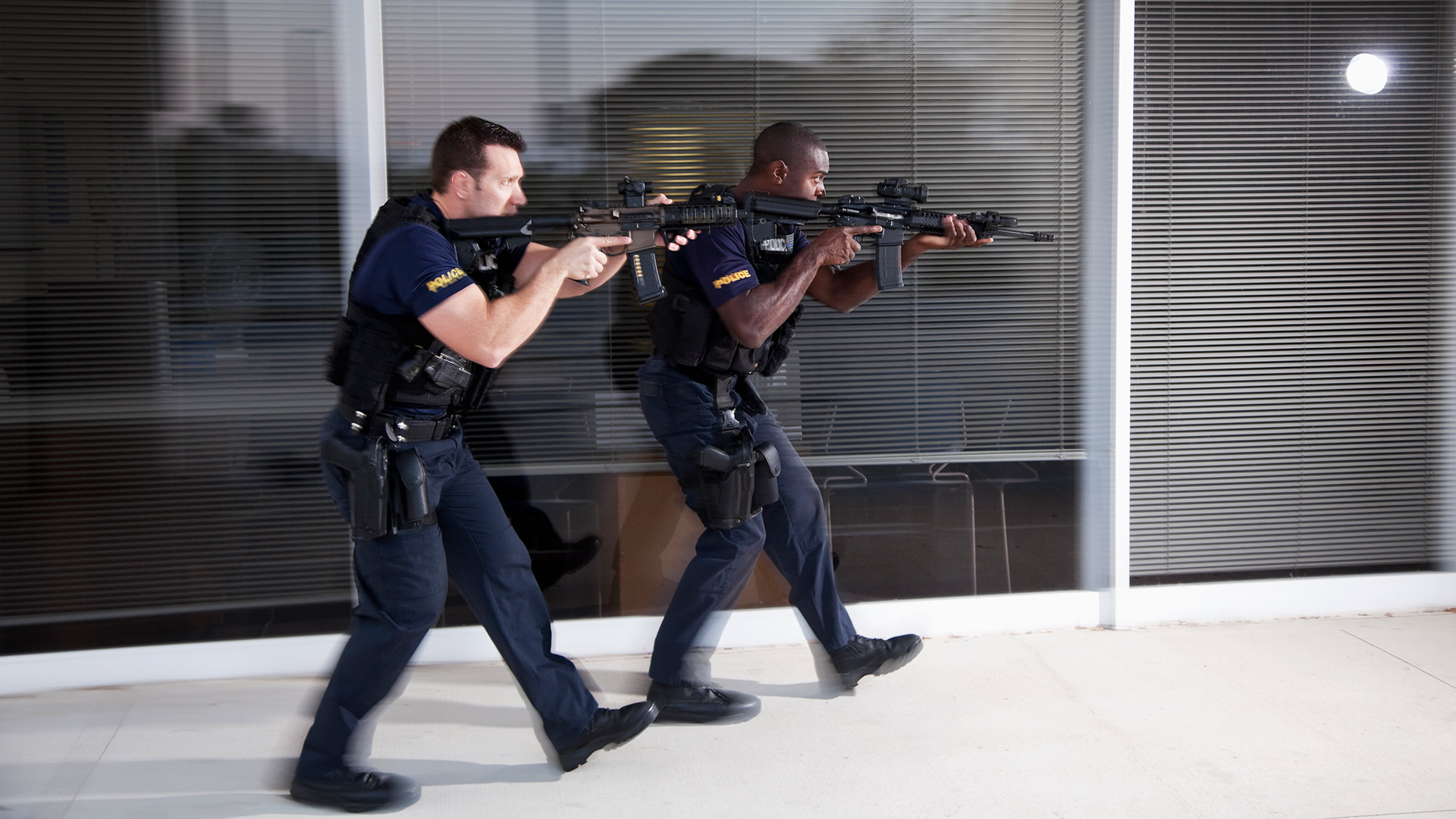
iStock.com/kali9

It seems law enforcement activities are under more scrutiny than ever before. Individual officers and supervisors are often forced to explain why they made certain decisions.

Other public safety professionals who make tough decisions, such as paramedics and hazardous materials technicians, rely heavily on the sciences of anatomy and chemistry, respectively, to guide their decision-making. What science do we as law enforcement officers rely on? If you were being questioned by a grand jury about your decisions during a critical incident response, what science can you cite as the foundational rationale for why you did what you did? 

According to Sid Heal, author of such renowned texts as Field Command and Sound Doctrine: A Tactical Primer, tactical science is “the systematized body of knowledge covering the principles and doctrines associated with tactical operations or emergency responses and reconciling scientific knowledge with practical ends.”[1]Charles “Sid” Heal, Field Command (New York: Lantern Books, 2012), 11.

Whether we give it a formal name like “tactical science” or not, the study and application of principles such as “defining the commander’s intent” and “outmaneuvering a suspect” are keys to success. Tactical science is not lofty academic theory, but rather well-established and sound principles to help guide our decision-making. 

Consider an incident commander leading an operation to apprehend a dangerous suspect who has fled into the neighborhood. His decision-making may have a range of consequences, such as allowing the suspect to escape and therefore endangering the public, inconveniencing citizens by closing streets and even causing overtime expenditures as he brings in additional resources. How does he decide what to do, and can he later justify his decisions? If the incident commander is well versed in tactical science and makes decisions based on sound principles, he has a general idea of how fast a suspect will run and how to employ an envelopment tactic to catch him. He knows how to most efficiently employ his personnel so his impact on the public and overtime cost is only that which is necessary to achieve his well-thought-out mission. He clearly defines his “commander’s intent” to his personnel, who quickly implement his plan and apprehend the suspect. If asked to explain his decisions, he can point back to current tactical science books and training courses as the basis for those decisions.[2]Does this make what the incident commander did “evidence-based”? No, because there is little research to validate what would more accurately be described as “best practices” and … Continue reading

Understanding tactical science or becoming a tactician isn’t just for those assigned to SWAT teams. Anyone who may find themselves being an incident commander or “officer in charge” of a critical incident response can benefit from a basic understanding. That understanding doesn’t automatically come with being promoted or having time on the job. Instead, it comes with years of experience in the field and seeking out the proper education and training.

Scott Savage

Scott Savage

Scott Savage is an active-duty law enforcement officer in Northern California. He is also the founder of the Savage Training Group, a professional law enforcement training organization. For more information, go to savagetraininggroup.com.

View articles by Scott Savage

As seen in the August 2023 issue of American Police Beat magazine.
Don’t miss out on another issue today! Click below:

SUBSCRIBE TODAY!

References[+]

References
1 Charles “Sid” Heal, Field Command (New York: Lantern Books, 2012), 11.
2 Does this make what the incident commander did “evidence-based”? No, because there is little research to validate what would more accurately be described as “best practices” and “industry-standard” techniques.

Categories: Training

Primary Sidebar

Recent Articles

  • Police officer kicks up social media praise
  • Donning denim in solidarity with victims and survivors of sexual assault
  • Clarifying your “true north”
  • Smile and let them swing
  • The job has changed — have you?
  • New National Law Enforcement Museum exhibit revisits D.C. snipers case
  • A hero’s legacy through a mother’s love
  • The days that follow
  • Perpetual recognition of line-of-duty deaths
  • A Tribute to Fallen Heroes

Footer

Our Mission
To serve as a trusted voice of the nation’s law enforcement community, providing informative, entertaining and inspiring content on interesting and engaging topics affecting peace officers today.

Contact us: info@apbweb.com | (800) 234-0056.

  • Facebook
  • Instagram
  • Twitter

Categories

  • Editor’s Picks
  • On the Job
  • Labor
  • Tech
  • Training
  • Policy
  • Health/Wellness
  • Community
  • Offbeat
  • We Remember
  • Jobs and Careers
  • Events

Editor’s Picks

Let’s get moving!

Let’s get moving!

April 27, 2026

Heroes of the World Trade Center

Heroes of the World Trade Center

April 24, 2026

The Promise Gap

The Promise Gap

April 22, 2026

Corruption, collusion and impunity

Corruption, collusion and impunity

April 21, 2026

Policies | Consent Preferences | Copyright © 2026 APB Media, LLC | Website design, development and maintenance by 911MEDIA

Open

Subscribe

Close

Receive the latest news and updates from American Police Beat directly to your inbox!

  • This field is for validation purposes and should be left unchanged.




