• Skip to primary navigation
  • Skip to main content
  • Skip to primary sidebar
  • Skip to footer
  • Home
  • About
  • The Magazine
  • Events
  • Partners
  • Products
  • Contact
  • Jobs and Careers
  • Advertise
  • Facebook
  • Instagram
  • Twitter
  • Subscribe
American Police Beat

American Police Beat Magazine

Law Enforcement Publication

  • Home
  • Leadership
    • Understanding the boundaries of professional relationships with the...
      Why you should lead from 30,000 feet
      Public perception and trust
      When performance reviews are a waste of time
      Taking a page from Toyota’s playbook
  • Topics
    • Leadership
      • Understanding the boundaries of professional relationships with the...
        Why you should lead from 30,000 feet
        Public perception and trust
        When performance reviews are a waste of time
        Taking a page from Toyota’s playbook
    • Editor’s Picks
      • Let’s get moving!
        Heroes of the World Trade Center
        The Promise Gap
        Corruption, collusion and impunity
        Liability challenges in contemporary policing
    • On the Job
      • Testing the waters — literally
        Frankpledge to forensics: A brief history of law enforcement
        Villains and heroes in the Big Apple
        Right place, right time — again
        Some good news on crime
    • Labor
      • The Promise Gap
        Cut the cops, save a dollar?
        Labor release under fire
        Who’s watching the watchmen?
        Crime and punishment (or lack thereof) in Seattle
    • Tech
      • New Mexico license plate readers save lives, lead to “precise...
        A modern field guide to understanding research in policing
        Gear that moves with you
        A new breed of cop car
        The future of patrol is here
    • Training
      • Pushback as a training signal
        Let’s get moving!
        The five minutes before the ambulance
        Navigating danger
        Critical thinking in police training
    • Policy
      • Police pause license plate readers
        Corruption, collusion and impunity
        E-bikes spark public safety concerns
        Try racing without wheels
        Law enforcement accreditation: Why it matters
    • Health/Wellness
      • Addressing stress, vicarious trauma and burnout
        Nervous system regulation
        The nature of the job
        Promoting organizational wellness
        Telling cops to get more sleep isn’t working
    • Community
      • Improving autism awareness
        Shop with a Cop
        Community engagement: What is it moving forward?
        Contradictory crossroads
        Back-to-school season brings out police support nationwide
    • Offbeat
      • An unexpected burglar
        Police humor only a cop would understand
        Not eggzactly a perfect heist
        Pizza … with a side of alligator?
        Wisconsin man charged with impersonating Border Patrol agent twice in...
    • We Remember
      • Markers of service and remembrance
        Tragedy strikes Baker to Vegas
        Heroes of the World Trade Center
        Forty heroes: United Airlines Flight 93
        The Pentagon
    • HOT Mail
      • The War on Cops Continues Unabated
  • On the Job
    • Testing the waters — literally
      Frankpledge to forensics: A brief history of law enforcement
      Villains and heroes in the Big Apple
      Right place, right time — again
      Some good news on crime
  • Labor
    • The Promise Gap
      Cut the cops, save a dollar?
      Labor release under fire
      Who’s watching the watchmen?
      Crime and punishment (or lack thereof) in Seattle
  • Tech
    • New Mexico license plate readers save lives, lead to “precise...
      A modern field guide to understanding research in policing
      Gear that moves with you
      A new breed of cop car
      The future of patrol is here
  • Training
    • Pushback as a training signal
      Let’s get moving!
      The five minutes before the ambulance
      Navigating danger
      Critical thinking in police training
  • Policy
    • Police pause license plate readers
      Corruption, collusion and impunity
      E-bikes spark public safety concerns
      Try racing without wheels
      Law enforcement accreditation: Why it matters
  • Health/Wellness
    • Addressing stress, vicarious trauma and burnout
      Nervous system regulation
      The nature of the job
      Promoting organizational wellness
      Telling cops to get more sleep isn’t working
  • Community
    • Improving autism awareness
      Shop with a Cop
      Community engagement: What is it moving forward?
      Contradictory crossroads
      Back-to-school season brings out police support nationwide
  • Offbeat
    • An unexpected burglar
      Police humor only a cop would understand
      Not eggzactly a perfect heist
      Pizza … with a side of alligator?
      Wisconsin man charged with impersonating Border Patrol agent twice in...
  • We Remember
    • Markers of service and remembrance
      Tragedy strikes Baker to Vegas
      Heroes of the World Trade Center
      Forty heroes: United Airlines Flight 93
      The Pentagon
  • HOT Mail
    • The War on Cops Continues Unabated
  • About
  • The Magazine
  • Events
  • Partners
  • Products
  • Contact
  • Jobs and Careers
  • Advertise
  • Subscribe
Search

Policy

Carjackings and auto theft surge in 2022

Prompting concerns about firearms and clearance rates

APB Team Published October 30, 2023 @ 12:00 pm PDT

iStock.com/Lorado

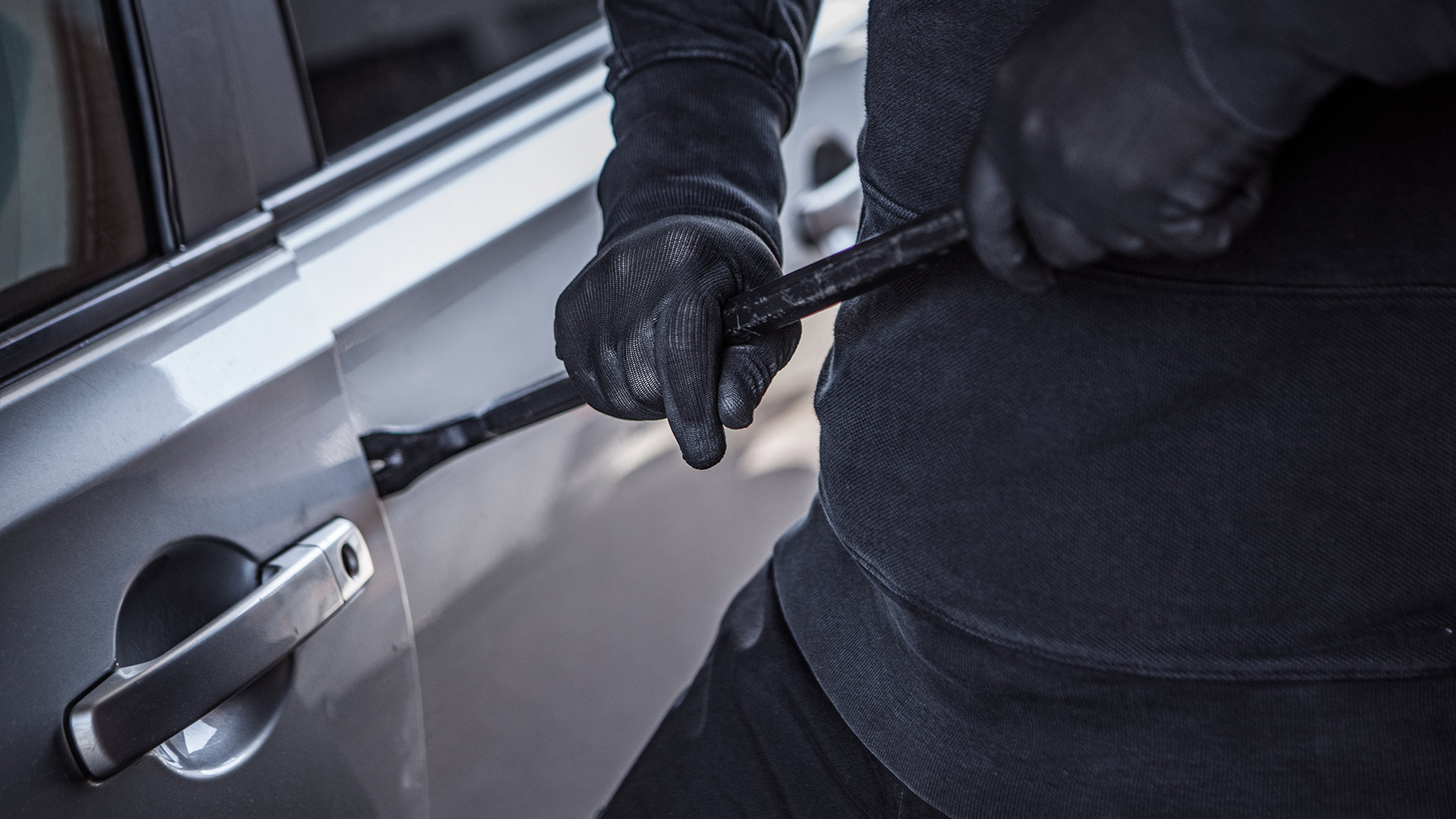
Concerning statistics released by the FBI point to a significant increase in carjackings and auto theft in the United States in 2022, leaving experts racking their brains for a solution.

According to the data, motor vehicle theft jumped by 10.9% from the previous year, resulting in nearly a million vehicles stolen in 2022, with fewer than 70,000 arrests made.

Notably, nearly 90% of carjackings involved the use of weapons, and an increasing number of offenders worked in groups, marking a 13% rise in arrests involving multiple suspects.

One of the factors contributing to this surge in carjackings, experts suggest, is the end of lockdown measures, which provided more opportunities for thieves to target car owners.

As lockdowns lifted, people returned to their routines, and the reemergence of normal life meant more opportunities for carjackers to strike.

Adam Gelb, president and CEO of the Council on Criminal Justice, explained the role of the pandemic on the cart theft issue.

“Behind every crime is a motive and the means and an opportunity to carry it out. COVID sparked changes in all three of those elements, especially opportunity. People stayed home. Stores were closed. It was much harder and riskier to steal stuff,” Gelb said.

The increase in carjackings is not uniform across the country; it appears to be a more pronounced problem in larger cities.

For instance, Washington, D.C., witnessed a sharp rise from 140 carjackings in 2018 to 485 in 2022, and a further 651 reported in 2023.

The increase is alarming, with the 2022 crime report compiled by the FBI showcasing a decrease in other violent crimes, such as homicide, aggravated assault and rape.

Firearms were the most common weapon used in violent crimes, comprising 80.3% of murders and manslaughters, with a troubling 11.8% increase in juvenile gun deaths.

According to University of Miami Criminology Professor Alex Piquero, former director of the Bureau of Justice Statistics, carjacking has been on the rise even while other crimes have been on a downtrend.

“Not all violent crimes went down — in fact, I’m still concerned about carjacking increases—including the increasing use of guns. At the same time motor vehicle theft continues its post-pandemic increase,” he said.

Indeed, car theft and carjacking incidents have skyrocketed across many states.

In Illinois, car thefts increased by 35% between 2021 and 2022, while in Washington state, there was a 31% rise.

However, one of the most concerning aspects of this increase in carjackings is the low clearance rate. Across multiple U.S. cities, a CBS News analysis revealed that nearly all car theft cases go unsolved, with only a small fraction leading to arrests.

This issue is particularly pronounced in Denver, where there were just seven arrests for every 100 car thefts reported.

Meanwhile, in major cities like New York and Chicago, car theft has more than doubled since 2017.

Philadelphia also continues to experience staggeringly high levels of auto theft, seeing a 20% rise in cases per year and 17,000 reports last year alone.

Experts believe that several factors contribute to the low clearance rates, with budget and staffing shortages in law enforcement agencies being a significant concern.

Furthermore, experts argue that the crime should be viewed as more severe than just a property crime, as stolen cars often serve as instruments for more serious crimes, such as shootings and robberies.

“This is no different than they need a gun to commit the shooting. They need the car to commit a crime. If they don’t have the car, they can’t go do that drive-by. This is not some property crime. This is an instrument for major crimes that are killing and shooting and hurting people,” Cook County Sheriff Tom Dart said.

Efforts are being made to combat the problem, including initiatives like the Cook County Sheriff’s tracker program, which allows vehicle owners to consent to law enforcement accessing tracking information in case of a theft.

However, the recovery of stolen vehicles alone may not address the larger issue of what transpires during the time a vehicle is stolen and when it’s recovered.

Another creative solution was put forward by New York City Mayor Eric Adams to distribute electronic tags to New Yorkers to track their stolen vehicles.

In response to the surge in stolen cars, some community members, like rideshare driver Matt Nalett, have taken it upon themselves to help recover stolen vehicles.

Through social media groups and vigilance, Nalett and others have been able to identify and recover thousands of stolen cars.

As experts and law enforcement agencies grapple with these challenges, there is a growing consensus that a multifaceted approach is needed to combat this concerning trend and ensure the safety of communities across the country.


Categories: Policy Tags: firearms, FBI, pandemic, COVID-19, violent crime, carjackings, juvenile crime, auto theft, stolen vehicles, nationwide

Primary Sidebar

Recent Articles

  • NLEOMF Fund announces March 2026 Officers of the Month
  • Markers of service and remembrance
  • Testing the waters — literally
  • Police pause license plate readers
  • Tragedy strikes Baker to Vegas
  • Frankpledge to forensics: A brief history of law enforcement
  • Pushback as a training signal
  • Let’s get moving!
  • Heroes of the World Trade Center
  • The Promise Gap

Footer

Our Mission
To serve as a trusted voice of the nation’s law enforcement community, providing informative, entertaining and inspiring content on interesting and engaging topics affecting peace officers today.

Contact us: info@apbweb.com | (800) 234-0056.

  • Facebook
  • Instagram
  • Twitter

Categories

  • Editor’s Picks
  • On the Job
  • Labor
  • Tech
  • Training
  • Policy
  • Health/Wellness
  • Community
  • Offbeat
  • We Remember
  • Jobs and Careers
  • Events

Editor’s Picks

Let’s get moving!

Let’s get moving!

April 27, 2026

Heroes of the World Trade Center

Heroes of the World Trade Center

April 24, 2026

The Promise Gap

The Promise Gap

April 22, 2026

Corruption, collusion and impunity

Corruption, collusion and impunity

April 21, 2026

Policies | Consent Preferences | Copyright © 2026 APB Media, LLC | Website design, development and maintenance by 911MEDIA

Open

Subscribe

Close

Receive the latest news and updates from American Police Beat directly to your inbox!

  • This field is for validation purposes and should be left unchanged.