• Skip to primary navigation
  • Skip to main content
  • Skip to primary sidebar
  • Skip to footer
  • Home
  • About
  • The Magazine
  • Events
  • Partners
  • Products
  • Contact
  • Jobs and Careers
  • Advertise
  • Facebook
  • Instagram
  • Twitter
  • Subscribe
American Police Beat

American Police Beat Magazine

Law Enforcement Publication

  • Home
  • Leadership
    • Understanding the boundaries of professional relationships with the...
      Why you should lead from 30,000 feet
      Public perception and trust
      When performance reviews are a waste of time
      Taking a page from Toyota’s playbook
  • Topics
    • Leadership
      • Understanding the boundaries of professional relationships with the...
        Why you should lead from 30,000 feet
        Public perception and trust
        When performance reviews are a waste of time
        Taking a page from Toyota’s playbook
    • Editor’s Picks
      • Liability challenges in contemporary policing
        When performance reviews are a waste of time
        Proactive wellness visits
        Taking a page from Toyota’s playbook
        Law enforcement’s missing weapon
    • On the Job
      • Villains and heroes in the Big Apple
        Right place, right time — again
        Some good news on crime
        Mom-to-be named Cop of the Year
        Fatherly instincts save boy from icy water
    • Labor
      • The Promise Gap
        Cut the cops, save a dollar?
        Labor release under fire
        Who’s watching the watchmen?
        Crime and punishment (or lack thereof) in Seattle
    • Tech
      • New Mexico license plate readers save lives, lead to “precise...
        A modern field guide to understanding research in policing
        Gear that moves with you
        A new breed of cop car
        The future of patrol is here
    • Training
      • The five minutes before the ambulance
        Navigating danger
        Critical thinking in police training
        Threshold neuroscience
        Integrated virtual reality training
    • Policy
      • Corruption, collusion and impunity
        E-bikes spark public safety concerns
        Try racing without wheels
        Law enforcement accreditation: Why it matters
        Liability challenges in contemporary policing
    • Health/Wellness
      • Addressing stress, vicarious trauma and burnout
        Nervous system regulation
        The nature of the job
        Promoting organizational wellness
        Telling cops to get more sleep isn’t working
    • Community
      • Improving autism awareness
        Shop with a Cop
        Community engagement: What is it moving forward?
        Contradictory crossroads
        Back-to-school season brings out police support nationwide
    • Offbeat
      • An unexpected burglar
        Police humor only a cop would understand
        Not eggzactly a perfect heist
        Pizza … with a side of alligator?
        Wisconsin man charged with impersonating Border Patrol agent twice in...
    • We Remember
      • Heroes of the World Trade Center
        Forty heroes: United Airlines Flight 93
        The Pentagon
        A nation propelled to war, lives changed forever
        A Christmas loss
    • HOT Mail
      • The War on Cops Continues Unabated
  • On the Job
    • Villains and heroes in the Big Apple
      Right place, right time — again
      Some good news on crime
      Mom-to-be named Cop of the Year
      Fatherly instincts save boy from icy water
  • Labor
    • The Promise Gap
      Cut the cops, save a dollar?
      Labor release under fire
      Who’s watching the watchmen?
      Crime and punishment (or lack thereof) in Seattle
  • Tech
    • New Mexico license plate readers save lives, lead to “precise...
      A modern field guide to understanding research in policing
      Gear that moves with you
      A new breed of cop car
      The future of patrol is here
  • Training
    • The five minutes before the ambulance
      Navigating danger
      Critical thinking in police training
      Threshold neuroscience
      Integrated virtual reality training
  • Policy
    • Corruption, collusion and impunity
      E-bikes spark public safety concerns
      Try racing without wheels
      Law enforcement accreditation: Why it matters
      Liability challenges in contemporary policing
  • Health/Wellness
    • Addressing stress, vicarious trauma and burnout
      Nervous system regulation
      The nature of the job
      Promoting organizational wellness
      Telling cops to get more sleep isn’t working
  • Community
    • Improving autism awareness
      Shop with a Cop
      Community engagement: What is it moving forward?
      Contradictory crossroads
      Back-to-school season brings out police support nationwide
  • Offbeat
    • An unexpected burglar
      Police humor only a cop would understand
      Not eggzactly a perfect heist
      Pizza … with a side of alligator?
      Wisconsin man charged with impersonating Border Patrol agent twice in...
  • We Remember
    • Heroes of the World Trade Center
      Forty heroes: United Airlines Flight 93
      The Pentagon
      A nation propelled to war, lives changed forever
      A Christmas loss
  • HOT Mail
    • The War on Cops Continues Unabated
  • About
  • The Magazine
  • Events
  • Partners
  • Products
  • Contact
  • Jobs and Careers
  • Advertise
  • Subscribe
Search

Policy

“It could be key to survival”: New legislation aims to combat domestic violence homicides through lethality assessments

APB Team Published December 28, 2023 @ 6:00 am PST

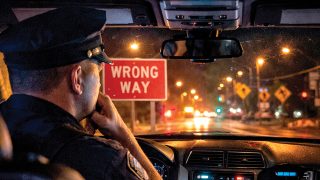
iStock.com/FluxFactory

A new legislative initiative is seeking to address the alarming rates of intimate partner violence and killings through mandatory lethality assessments during domestic violence calls.

In the wake of high-profile cases like that of Gabby Petito, who was killed by her fiancé in 2021, Utah took a decisive step by enacting a law requiring police to conduct “lethality assessments” at domestic violence scenes. Now more states are looking at taking similar measures.

The model lethality assessment practice, developed by the Maryland Network Against Domestic Violence, involves an 11-question survey designed to evaluate whether a person’s life is at immediate risk. The assessment not only informs the victim of their screening score, but also connects them with a local domestic violence service hotline, facilitating the development of an immediate safety plan that may include emergency shelter.

Alfreda Lyons, a domestic violence survivor and godmother of domestic violence victim Andreae Lloyd — who was killed by her boyfriend in 2021 — explained the potential impact of lethality assessments to Stateline: “There’s so many things I believe that you can garner from that assessment … it could be key to survival.”

According to the latest statistics from the U.S. Department of Justice, more than a third of the 4,970 female murder victims in 2021 were killed by an intimate partner, with women being five times more likely to be murdered by an intimate partner than men.

The Maryland Network Against Domestic Violence developed the Lethality Assessment Program in 2003, based on the Danger Assessment, a screening tool developed by Jacquelyn Campbell of Johns Hopkins School of Nursing in 1985. The questions aim to identify factors significantly increasing the risk of homicide, such as prior strangulation, the partner owning a gun or the victim attempting to separate from the relationship. The network works with state and local agencies across the country to train police and domestic violence service workers to use the assessments.

While some Utah law enforcement agencies already had lethality assessments in place, the recent state law has led to a substantial increase in shelter demand and referrals there. Florida State Senator Lauren Book has recently introduced a bill to mandate lethality assessments in her state as well.

The push to mandate assessments is relatively new, but many states already encourage their use, including Connecticut, Maryland, Oklahoma, Pennsylvania, Virginia and Wisconsin. In North Carolina, Attorney General Josh Stein has been actively promoting the statewide use of lethality assessments, responding to a 25% rise in domestic violence-related homicides in 2023 compared to 2022.

This trend continues on the back of 25% to 33% increases in domestic violence cases in 2020 that were associated with COVID-19 lockdowns, according to American Journal of Emergency Medicine reports.

Experts say that encouraging buy-in from law enforcement agency leaders to initiate policies supporting lethality assessments at the local level can be more effective than statewide mandates. Even when laws are enacted, implementation can be inconsistent. However, officials are hopeful that growing use of the assessments will have a positive effect.

“Ultimately, it’s going to save lives,” said Skye Sullivan, director of the Family Justice Center of Alamance County, Maryland. “These numbers have steadily been going up. The biggest issue you have in trying to prevent homicide is that a lot of agencies are very siloed. A lot of systems are underfunded, and they’re understaffed.”

Beyond preventing immediate harm, lethality assessments also aim to connect victims with critical services such as temporary housing, mental health care and culturally sensitive support groups.

The hope is that these assessments will not only save lives but also address the systemic issues contributing to domestic violence disparities, especially in marginalized communities.

As families of victims continue to grapple with the profound impact of domestic violence, the introduction and enforcement of legislation mandating lethality assessments stand as a crucial step toward preventing further tragedies and providing support to those at risk.


Categories: Policy Tags: hotline, victim, Law Enforcement, homicide, legislation, DOJ, life saving, Gabby Petito, domestic violence, lethality assessment

Primary Sidebar

Recent Articles

  • Heroes of the World Trade Center
  • The Promise Gap
  • Corruption, collusion and impunity
  • The five minutes before the ambulance
  • New Mexico license plate readers save lives, lead to “precise policing”
  • Addressing stress, vicarious trauma and burnout
  • Understanding the boundaries of professional relationships with the boss
  • E-bikes spark public safety concerns
  • Improving autism awareness
  • Cut the cops, save a dollar?

Footer

Our Mission
To serve as a trusted voice of the nation’s law enforcement community, providing informative, entertaining and inspiring content on interesting and engaging topics affecting peace officers today.

Contact us: info@apbweb.com | (800) 234-0056.

  • Facebook
  • Instagram
  • Twitter

Categories

  • Editor’s Picks
  • On the Job
  • Labor
  • Tech
  • Training
  • Policy
  • Health/Wellness
  • Community
  • Offbeat
  • We Remember
  • Jobs and Careers
  • Events

Editor’s Picks

Liability challenges in contemporary policing

Liability challenges in contemporary policing

February 27, 2026

When performance reviews are a waste of time

When performance reviews are a waste of time

February 26, 2026

Proactive wellness visits

Proactive wellness visits

February 25, 2026

Taking a page from Toyota’s playbook

Taking a page from Toyota’s playbook

February 23, 2026

Policies | Consent Preferences | Copyright © 2026 APB Media, LLC | Website design, development and maintenance by 911MEDIA

Open

Subscribe

Close

Receive the latest news and updates from American Police Beat directly to your inbox!

  • This field is for validation purposes and should be left unchanged.