• Skip to primary navigation
  • Skip to main content
  • Skip to primary sidebar
  • Skip to footer
  • Home
  • About
  • The Magazine
  • Events
  • Partners
  • Products
  • Contact
  • Jobs and Careers
  • Advertise
  • Facebook
  • Instagram
  • Twitter
  • Subscribe
American Police Beat

American Police Beat Magazine

Law Enforcement Publication

  • Home
  • Leadership
    • Understanding the boundaries of professional relationships with the...
      Why you should lead from 30,000 feet
      Public perception and trust
      When performance reviews are a waste of time
      Taking a page from Toyota’s playbook
  • Topics
    • Leadership
      • Understanding the boundaries of professional relationships with the...
        Why you should lead from 30,000 feet
        Public perception and trust
        When performance reviews are a waste of time
        Taking a page from Toyota’s playbook
    • Editor’s Picks
      • Liability challenges in contemporary policing
        When performance reviews are a waste of time
        Proactive wellness visits
        Taking a page from Toyota’s playbook
        Law enforcement’s missing weapon
    • On the Job
      • Villains and heroes in the Big Apple
        Right place, right time — again
        Some good news on crime
        Mom-to-be named Cop of the Year
        Fatherly instincts save boy from icy water
    • Labor
      • Cut the cops, save a dollar?
        Labor release under fire
        Who’s watching the watchmen?
        Crime and punishment (or lack thereof) in Seattle
        Labor leadership out in the field
    • Tech
      • New Mexico license plate readers save lives, lead to “precise...
        A modern field guide to understanding research in policing
        Gear that moves with you
        A new breed of cop car
        The future of patrol is here
    • Training
      • Navigating danger
        Critical thinking in police training
        Threshold neuroscience
        Integrated virtual reality training
        Hit the pause button
    • Policy
      • E-bikes spark public safety concerns
        Try racing without wheels
        Law enforcement accreditation: Why it matters
        Liability challenges in contemporary policing
        The war on drugs is evolving
    • Health/Wellness
      • Addressing stress, vicarious trauma and burnout
        Nervous system regulation
        The nature of the job
        Promoting organizational wellness
        Telling cops to get more sleep isn’t working
    • Community
      • Improving autism awareness
        Shop with a Cop
        Community engagement: What is it moving forward?
        Contradictory crossroads
        Back-to-school season brings out police support nationwide
    • Offbeat
      • An unexpected burglar
        Police humor only a cop would understand
        Not eggzactly a perfect heist
        Pizza … with a side of alligator?
        Wisconsin man charged with impersonating Border Patrol agent twice in...
    • We Remember
      • Forty heroes: United Airlines Flight 93
        The Pentagon
        A nation propelled to war, lives changed forever
        A Christmas loss
        York County ambush leaves three officers dead, others critically...
    • HOT Mail
      • The War on Cops Continues Unabated
  • On the Job
    • Villains and heroes in the Big Apple
      Right place, right time — again
      Some good news on crime
      Mom-to-be named Cop of the Year
      Fatherly instincts save boy from icy water
  • Labor
    • Cut the cops, save a dollar?
      Labor release under fire
      Who’s watching the watchmen?
      Crime and punishment (or lack thereof) in Seattle
      Labor leadership out in the field
  • Tech
    • New Mexico license plate readers save lives, lead to “precise...
      A modern field guide to understanding research in policing
      Gear that moves with you
      A new breed of cop car
      The future of patrol is here
  • Training
    • Navigating danger
      Critical thinking in police training
      Threshold neuroscience
      Integrated virtual reality training
      Hit the pause button
  • Policy
    • E-bikes spark public safety concerns
      Try racing without wheels
      Law enforcement accreditation: Why it matters
      Liability challenges in contemporary policing
      The war on drugs is evolving
  • Health/Wellness
    • Addressing stress, vicarious trauma and burnout
      Nervous system regulation
      The nature of the job
      Promoting organizational wellness
      Telling cops to get more sleep isn’t working
  • Community
    • Improving autism awareness
      Shop with a Cop
      Community engagement: What is it moving forward?
      Contradictory crossroads
      Back-to-school season brings out police support nationwide
  • Offbeat
    • An unexpected burglar
      Police humor only a cop would understand
      Not eggzactly a perfect heist
      Pizza … with a side of alligator?
      Wisconsin man charged with impersonating Border Patrol agent twice in...
  • We Remember
    • Forty heroes: United Airlines Flight 93
      The Pentagon
      A nation propelled to war, lives changed forever
      A Christmas loss
      York County ambush leaves three officers dead, others critically...
  • HOT Mail
    • The War on Cops Continues Unabated
  • About
  • The Magazine
  • Events
  • Partners
  • Products
  • Contact
  • Jobs and Careers
  • Advertise
  • Subscribe
Search

Tech

Rise of drug-smuggling drones: A new challenge for law enforcement worldwide

APB Team Published January 27, 2024 @ 3:00 pm PST

iStock.com/helivideo

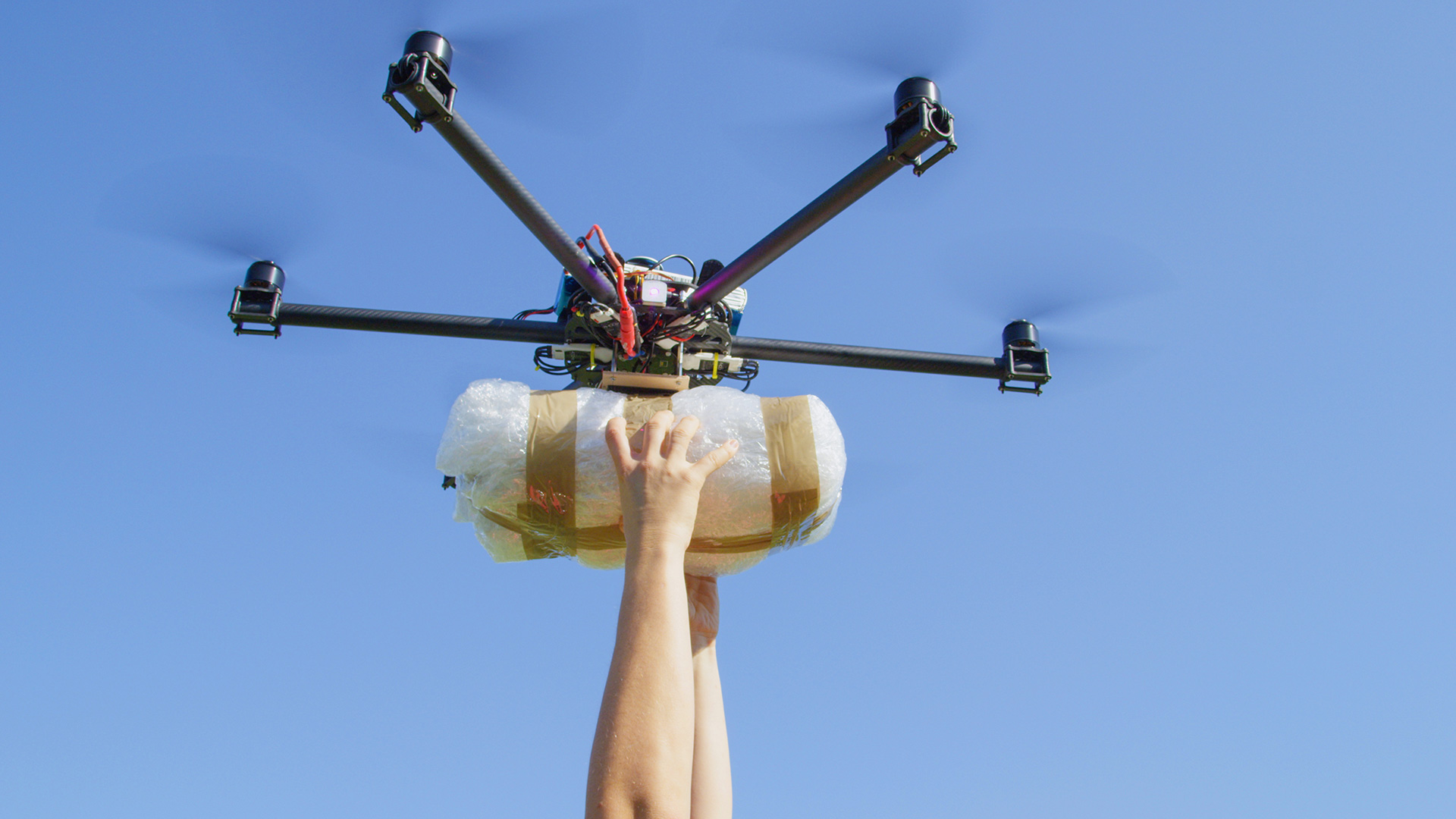
Drones, once synonymous with hobbyists and military operations, have found a new and illicit purpose: drug smuggling.

Law enforcement experts are warning about the increasing use of drones by criminal organizations worldwide to traffic drugs and evade police detection. Drug lords, cartels and smugglers have been turning to the technology to transport illegal substances across borders, effectively using them as drug mules.

In North America, Mexican cartels have reportedly deployed drones to carry cocaine, meth and heroin across the U.S. border, with the Drug Enforcement Administration (DEA) also raising concerns about the potential use of drones for delivering lethal synthetic opioids like fentanyl.

There have also been cases of firearm smuggling across North American borders, with a 2022 caseinvolving a drone transporting a gun from the U.S. to Canada.

In the Punjab region of India, border officials intercepted a record 107 drones transporting heroin sent by smuggling gangs from Pakistan.

Meanwhile, in the Middle East, the Jordanian air force shot down a drone carrying crystal meth from Syria, highlighting the increased use of drones by Syrian smugglers to navigate tightened security at the Jordanian border.

In Europe, drones are used to transport drugs by air and sea between the continent and Africa. Spanish police, for instance, recently seized a massive drone capable of carrying up to 150 kilograms of cargo, employed by a French smuggling gang to traffic drugs from Morocco to southern Spain.

In other instances, drones are used to scout for new smuggling routes to evade law enforcement.

Several factors have contributed to the rise of drones in drug smuggling:

  • Cost-effectiveness: Drones are cheaper than traditional smuggling methods, making them an attractive option for criminal enterprises.
  • Accessibility: Easily acquired and readily available, drones provide a convenient means for drug traffickers.
  • Dependability: Drones reduce the risk of betrayal, as they don’t snitch to authorities if intercepted, offering criminal organizations a more reliable option.
  • Low interference: Drones face less interference from law enforcement compared to traditional land or air delivery methods.
  • Border evasion: Drones can fly over barriers, walls and checkpoints, allowing for precise and undetected drops.
  • Risk reduction: Drug smugglers can operate at a safe distance from dropoff locations, minimizing physical presence and potential risks.

Drones are not limited to drug smuggling; they are also utilized to transport contraband items such as cellphones into prisons.

The exponential increase in drone-related illegal activities has led to the enforcement of no-fly zones around prisons globally.

On the other hand, legitimate businesses, including drugstores and pharmacies, are exploring the use of drones for delivering prescriptions.

As drone technology advances, both criminal enterprises and lawful operations are leveraging these unmanned aerial vehicles for diverse purposes.

Peter Warren Singer, an author and fellow at think tank New America, explained the development succinctly. “Drones have traditionally been used by governments and corporations for what are known as the ‘3 D’s’ jobs that are too dull, dirty, or dangerous for humans,” he said. “For criminals, it is the same, except add in another D: Dependable. A drone doesn’t steal the product and can’t be arrested or snitch if caught.”

As drones become more advanced and widespread, law enforcement faces new challenges in developing effective counter-drone strategies and technologies. The increasing use of drones in criminal activities necessitates constant adaptation and innovation to stay ahead of evolving threats.

In the words of Liam O’Shea, senior research fellow for organized crime and policing at RUSI: “Drones offer opportunities for smuggling in areas where previous routes were too risky, such as prisons and over-securitized borders.:

While currently of limited value to wholesale traffickers, improvements in technology may see drones play a more significant role in illicit activities.


Categories: Tech Tags: Law Enforcement, technology, DEA, cartel, drug trafficking, drug smuggling, fentanyl, drones, border security, drug mule

Primary Sidebar

Recent Articles

  • New Mexico license plate readers save lives, lead to “precise policing”
  • Addressing stress, vicarious trauma and burnout
  • Understanding the boundaries of professional relationships with the boss
  • E-bikes spark public safety concerns
  • Improving autism awareness
  • Cut the cops, save a dollar?
  • Villains and heroes in the Big Apple
  • NLEOMF announces February 2026 Officers of the Month
  • Fallen law enforcement officers from across the country to be honored during 38th Annual Candlelight Vigil on May 13 in Washington, D.C.
  • Nervous system regulation

Footer

Our Mission
To serve as a trusted voice of the nation’s law enforcement community, providing informative, entertaining and inspiring content on interesting and engaging topics affecting peace officers today.

Contact us: info@apbweb.com | (800) 234-0056.

  • Facebook
  • Instagram
  • Twitter

Categories

  • Editor’s Picks
  • On the Job
  • Labor
  • Tech
  • Training
  • Policy
  • Health/Wellness
  • Community
  • Offbeat
  • We Remember
  • Jobs and Careers
  • Events

Editor’s Picks

Liability challenges in contemporary policing

Liability challenges in contemporary policing

February 27, 2026

When performance reviews are a waste of time

When performance reviews are a waste of time

February 26, 2026

Proactive wellness visits

Proactive wellness visits

February 25, 2026

Taking a page from Toyota’s playbook

Taking a page from Toyota’s playbook

February 23, 2026

Policies | Consent Preferences | Copyright © 2026 APB Media, LLC | Website design, development and maintenance by 911MEDIA

Open

Subscribe

Close

Receive the latest news and updates from American Police Beat directly to your inbox!

  • This field is for validation purposes and should be left unchanged.