• Skip to primary navigation
  • Skip to main content
  • Skip to primary sidebar
  • Skip to footer
  • Home
  • About
  • The Magazine
  • Events
  • Partners
  • Products
  • Contact
  • Jobs and Careers
  • Advertise
  • Facebook
  • Instagram
  • Twitter
  • Subscribe
American Police Beat

American Police Beat Magazine

Law Enforcement Publication

  • Home
  • Leadership
    • Understanding the boundaries of professional relationships with the...
      Why you should lead from 30,000 feet
      Public perception and trust
      When performance reviews are a waste of time
      Taking a page from Toyota’s playbook
  • Topics
    • Leadership
      • Understanding the boundaries of professional relationships with the...
        Why you should lead from 30,000 feet
        Public perception and trust
        When performance reviews are a waste of time
        Taking a page from Toyota’s playbook
    • Editor’s Picks
      • Let’s get moving!
        Heroes of the World Trade Center
        The Promise Gap
        Corruption, collusion and impunity
        Liability challenges in contemporary policing
    • On the Job
      • Frankpledge to forensics: A brief history of law enforcement
        Villains and heroes in the Big Apple
        Right place, right time — again
        Some good news on crime
        Mom-to-be named Cop of the Year
    • Labor
      • The Promise Gap
        Cut the cops, save a dollar?
        Labor release under fire
        Who’s watching the watchmen?
        Crime and punishment (or lack thereof) in Seattle
    • Tech
      • New Mexico license plate readers save lives, lead to “precise...
        A modern field guide to understanding research in policing
        Gear that moves with you
        A new breed of cop car
        The future of patrol is here
    • Training
      • Pushback as a training signal
        Let’s get moving!
        The five minutes before the ambulance
        Navigating danger
        Critical thinking in police training
    • Policy
      • Corruption, collusion and impunity
        E-bikes spark public safety concerns
        Try racing without wheels
        Law enforcement accreditation: Why it matters
        Liability challenges in contemporary policing
    • Health/Wellness
      • Addressing stress, vicarious trauma and burnout
        Nervous system regulation
        The nature of the job
        Promoting organizational wellness
        Telling cops to get more sleep isn’t working
    • Community
      • Improving autism awareness
        Shop with a Cop
        Community engagement: What is it moving forward?
        Contradictory crossroads
        Back-to-school season brings out police support nationwide
    • Offbeat
      • An unexpected burglar
        Police humor only a cop would understand
        Not eggzactly a perfect heist
        Pizza … with a side of alligator?
        Wisconsin man charged with impersonating Border Patrol agent twice in...
    • We Remember
      • Heroes of the World Trade Center
        Forty heroes: United Airlines Flight 93
        The Pentagon
        A nation propelled to war, lives changed forever
        A Christmas loss
    • HOT Mail
      • The War on Cops Continues Unabated
  • On the Job
    • Frankpledge to forensics: A brief history of law enforcement
      Villains and heroes in the Big Apple
      Right place, right time — again
      Some good news on crime
      Mom-to-be named Cop of the Year
  • Labor
    • The Promise Gap
      Cut the cops, save a dollar?
      Labor release under fire
      Who’s watching the watchmen?
      Crime and punishment (or lack thereof) in Seattle
  • Tech
    • New Mexico license plate readers save lives, lead to “precise...
      A modern field guide to understanding research in policing
      Gear that moves with you
      A new breed of cop car
      The future of patrol is here
  • Training
    • Pushback as a training signal
      Let’s get moving!
      The five minutes before the ambulance
      Navigating danger
      Critical thinking in police training
  • Policy
    • Corruption, collusion and impunity
      E-bikes spark public safety concerns
      Try racing without wheels
      Law enforcement accreditation: Why it matters
      Liability challenges in contemporary policing
  • Health/Wellness
    • Addressing stress, vicarious trauma and burnout
      Nervous system regulation
      The nature of the job
      Promoting organizational wellness
      Telling cops to get more sleep isn’t working
  • Community
    • Improving autism awareness
      Shop with a Cop
      Community engagement: What is it moving forward?
      Contradictory crossroads
      Back-to-school season brings out police support nationwide
  • Offbeat
    • An unexpected burglar
      Police humor only a cop would understand
      Not eggzactly a perfect heist
      Pizza … with a side of alligator?
      Wisconsin man charged with impersonating Border Patrol agent twice in...
  • We Remember
    • Heroes of the World Trade Center
      Forty heroes: United Airlines Flight 93
      The Pentagon
      A nation propelled to war, lives changed forever
      A Christmas loss
  • HOT Mail
    • The War on Cops Continues Unabated
  • About
  • The Magazine
  • Events
  • Partners
  • Products
  • Contact
  • Jobs and Careers
  • Advertise
  • Subscribe
Search

Policy

Chicago school board votes to remove school resource officers from dozens of high schools

APB Team Published February 29, 2024 @ 12:00 pm PST

iStock.com/stevegeer

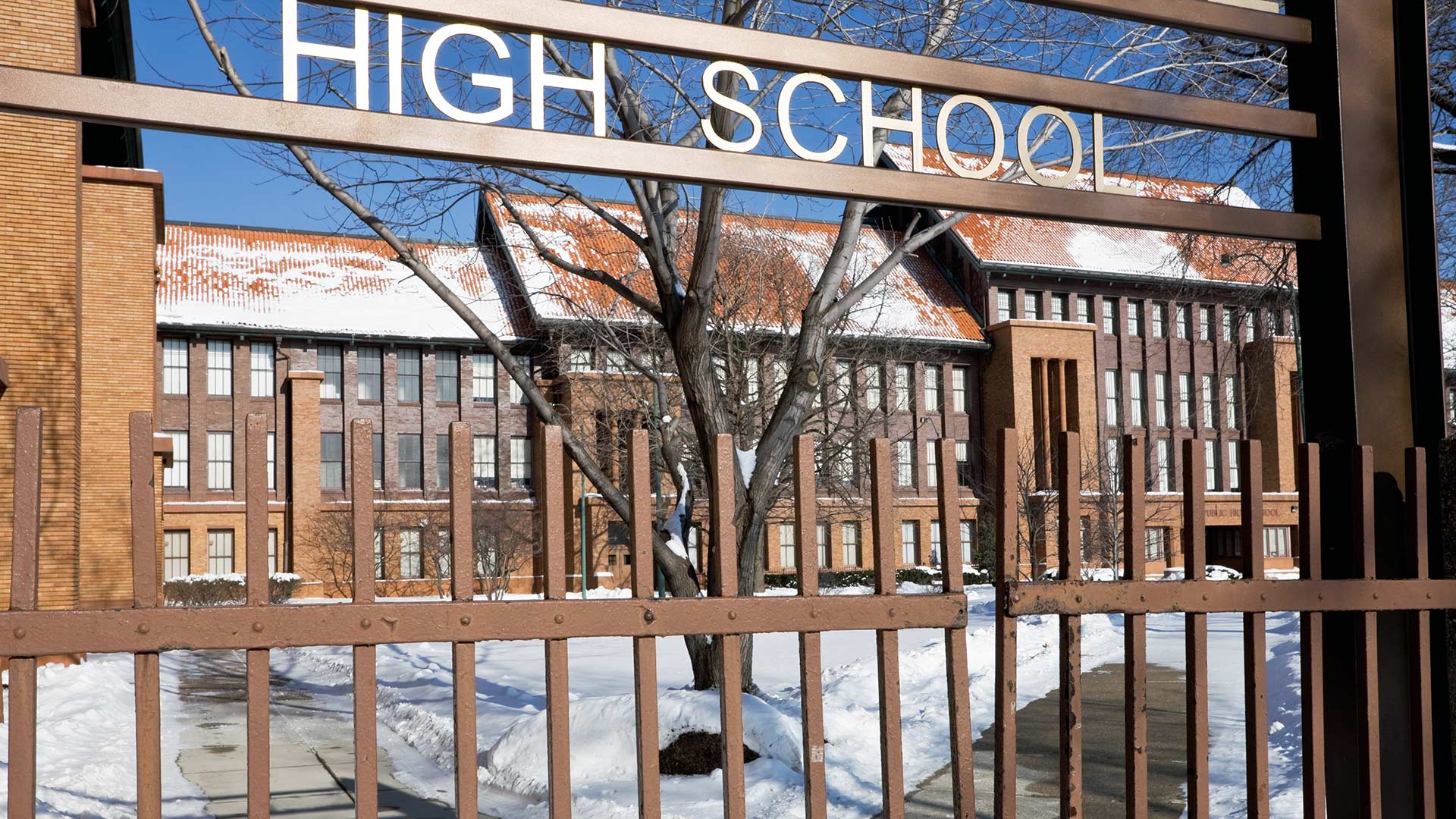
In a controversial decision, the Chicago Board of Education has voted to remove school resource officers (SROs) from dozens of high schools across the city by the beginning of the next school year.

The move comes amid a heated debate over the role of law enforcement in educational settings and aims to address concerns about the apparent disproportionate policing and discipline of Black students and students with disabilities.

The school board’s vote also follows its January decision — approved by Mayor Brandon Johnson — to end its contract with the Chicago Police Department.

The decision, outlined in the “Resolution to Create a Comprehensive Whole School Safety Policy,” marks a significant shift in the approach to school safety in Chicago.

Under this resolution, the 39 high schools currently employing school resource officers (SROs) will no longer be allowed to do so starting next school year.

“The policy must make explicit that the use of SROs within district schools will end by the start of the 2024–25 school year,” the board stated, adding that it “will continue its strong partnership with the mayor’s office and the Chicago Police Department, which have always, and will continue to, provide critical support for all our schools.”

Advocates for the removal of SROs argue that their presence contributes to the over-policing of marginalized students and perpetuates a culture of fear and mistrust within schools.

They have also called for a more holistic approach to school safety that focuses on addressing the root causes of violence, as well as implementing “restorative justice” and “healing-centered practices.”

“We know that the issue of school safety is the concern of all community members,” said a coalition of community organizations, including Voices of Youth in Chicago Education, Mikva Challenge, Community Organizing and Family Issues, The Ark of St. Sabina, and BUILD Inc. “How to make schools safer should be decided through an inclusive decision-making process aligned with the needs of the community, teachers, staff, and parents and centered on needs identified by students.”

However, opponents of the resolution argue that removing SROs jeopardizes the safety of students and staff, especially in the wake of recent shootings near Chicago schools.

They contend that SROs play a crucial role in maintaining a secure learning environment and preventing violence.

“Removing Chicago Police officers from public schools is a mistake with potentially tragic consequences,” warned Paul Vallas, former CEO of Chicago Public Schools. “It is driven by misinformation and ideology and naively ignores the escalating violence engulfing our youth.”

The debate over the presence of SROs in schools has been ongoing, intensified by the racial justice protests and riots of 2020.

While more than half of the city’s district-run high schools have already removed officers, the decision to eliminate them entirely has been met with mixed reactions.

“I believe the Chicago Board of Education should listen to each school’s Local School Council and the school voice when it comes to making decisions involving their kids’ safety and the safety of each school,” stated Mark Grishaber, principal at Chicago’s William Howard Taft High School.

“My students, parents and teachers overwhelmingly want to keep our SROs,” he added.

Meanwhile, Chicago Police Superintendent Larry Snelling said the CPD would continue its work to protect students, regardless if SROs are removed.

The resolution to remove SROs from Chicago schools aligns with similar efforts in other school districts across the country.

Chicago Public Schools seeking to remove school police have also received grants of $3.9 million to fund alternative safety programs.

Last year, school leaders in Denver voted to reinstate SROs amid deteriorating safety conditions, while districts in Phoenix, Alexandria, Montgomery County, Washington D.C., and Pomona have either rehired SROs or halted plans to phase them out.

As Chicago prepares to implement this sweeping change in school safety policy, the focus remains on creating an inclusive and supportive environment that prioritizes the well-being of all students.

“We are committed to developing a new policy that lays out a holistic approach to student safety and addresses root causes and contributing factors for disparities in student discipline,” stated the Chicago Board of Education. “Our priority is to help students heal from trauma, address situations through restorative justice, and re-engage kids who are growing uninterested in school.


Categories: Policy Tags: equity, school resource officers, school safety, Brandon Johnson, Board of Education, high schools, anti-law enforcement, activism, policy, Chicago Police Department

Primary Sidebar

Recent Articles

  • Frankpledge to forensics: A brief history of law enforcement
  • Pushback as a training signal
  • Let’s get moving!
  • Heroes of the World Trade Center
  • The Promise Gap
  • Corruption, collusion and impunity
  • The five minutes before the ambulance
  • New Mexico license plate readers save lives, lead to “precise policing”
  • Addressing stress, vicarious trauma and burnout
  • Understanding the boundaries of professional relationships with the boss

Footer

Our Mission
To serve as a trusted voice of the nation’s law enforcement community, providing informative, entertaining and inspiring content on interesting and engaging topics affecting peace officers today.

Contact us: info@apbweb.com | (800) 234-0056.

  • Facebook
  • Instagram
  • Twitter

Categories

  • Editor’s Picks
  • On the Job
  • Labor
  • Tech
  • Training
  • Policy
  • Health/Wellness
  • Community
  • Offbeat
  • We Remember
  • Jobs and Careers
  • Events

Editor’s Picks

Let’s get moving!

Let’s get moving!

April 27, 2026

Heroes of the World Trade Center

Heroes of the World Trade Center

April 24, 2026

The Promise Gap

The Promise Gap

April 22, 2026

Corruption, collusion and impunity

Corruption, collusion and impunity

April 21, 2026

Policies | Consent Preferences | Copyright © 2026 APB Media, LLC | Website design, development and maintenance by 911MEDIA

Open

Subscribe

Close

Receive the latest news and updates from American Police Beat directly to your inbox!

  • This field is for validation purposes and should be left unchanged.