• Skip to primary navigation
  • Skip to main content
  • Skip to primary sidebar
  • Skip to footer
  • Home
  • About
  • The Magazine
  • Events
  • Partners
  • Products
  • Contact
  • Jobs and Careers
  • Advertise
  • Facebook
  • Instagram
  • Twitter
  • Subscribe
American Police Beat

American Police Beat Magazine

Law Enforcement Publication

  • Home
  • Leadership
    • Understanding the boundaries of professional relationships with the...
      Why you should lead from 30,000 feet
      Public perception and trust
      When performance reviews are a waste of time
      Taking a page from Toyota’s playbook
  • Topics
    • Leadership
      • Understanding the boundaries of professional relationships with the...
        Why you should lead from 30,000 feet
        Public perception and trust
        When performance reviews are a waste of time
        Taking a page from Toyota’s playbook
    • Editor’s Picks
      • Let’s get moving!
        Heroes of the World Trade Center
        The Promise Gap
        Corruption, collusion and impunity
        Liability challenges in contemporary policing
    • On the Job
      • Frankpledge to forensics: A brief history of law enforcement
        Villains and heroes in the Big Apple
        Right place, right time — again
        Some good news on crime
        Mom-to-be named Cop of the Year
    • Labor
      • The Promise Gap
        Cut the cops, save a dollar?
        Labor release under fire
        Who’s watching the watchmen?
        Crime and punishment (or lack thereof) in Seattle
    • Tech
      • New Mexico license plate readers save lives, lead to “precise...
        A modern field guide to understanding research in policing
        Gear that moves with you
        A new breed of cop car
        The future of patrol is here
    • Training
      • Pushback as a training signal
        Let’s get moving!
        The five minutes before the ambulance
        Navigating danger
        Critical thinking in police training
    • Policy
      • Corruption, collusion and impunity
        E-bikes spark public safety concerns
        Try racing without wheels
        Law enforcement accreditation: Why it matters
        Liability challenges in contemporary policing
    • Health/Wellness
      • Addressing stress, vicarious trauma and burnout
        Nervous system regulation
        The nature of the job
        Promoting organizational wellness
        Telling cops to get more sleep isn’t working
    • Community
      • Improving autism awareness
        Shop with a Cop
        Community engagement: What is it moving forward?
        Contradictory crossroads
        Back-to-school season brings out police support nationwide
    • Offbeat
      • An unexpected burglar
        Police humor only a cop would understand
        Not eggzactly a perfect heist
        Pizza … with a side of alligator?
        Wisconsin man charged with impersonating Border Patrol agent twice in...
    • We Remember
      • Heroes of the World Trade Center
        Forty heroes: United Airlines Flight 93
        The Pentagon
        A nation propelled to war, lives changed forever
        A Christmas loss
    • HOT Mail
      • The War on Cops Continues Unabated
  • On the Job
    • Frankpledge to forensics: A brief history of law enforcement
      Villains and heroes in the Big Apple
      Right place, right time — again
      Some good news on crime
      Mom-to-be named Cop of the Year
  • Labor
    • The Promise Gap
      Cut the cops, save a dollar?
      Labor release under fire
      Who’s watching the watchmen?
      Crime and punishment (or lack thereof) in Seattle
  • Tech
    • New Mexico license plate readers save lives, lead to “precise...
      A modern field guide to understanding research in policing
      Gear that moves with you
      A new breed of cop car
      The future of patrol is here
  • Training
    • Pushback as a training signal
      Let’s get moving!
      The five minutes before the ambulance
      Navigating danger
      Critical thinking in police training
  • Policy
    • Corruption, collusion and impunity
      E-bikes spark public safety concerns
      Try racing without wheels
      Law enforcement accreditation: Why it matters
      Liability challenges in contemporary policing
  • Health/Wellness
    • Addressing stress, vicarious trauma and burnout
      Nervous system regulation
      The nature of the job
      Promoting organizational wellness
      Telling cops to get more sleep isn’t working
  • Community
    • Improving autism awareness
      Shop with a Cop
      Community engagement: What is it moving forward?
      Contradictory crossroads
      Back-to-school season brings out police support nationwide
  • Offbeat
    • An unexpected burglar
      Police humor only a cop would understand
      Not eggzactly a perfect heist
      Pizza … with a side of alligator?
      Wisconsin man charged with impersonating Border Patrol agent twice in...
  • We Remember
    • Heroes of the World Trade Center
      Forty heroes: United Airlines Flight 93
      The Pentagon
      A nation propelled to war, lives changed forever
      A Christmas loss
  • HOT Mail
    • The War on Cops Continues Unabated
  • About
  • The Magazine
  • Events
  • Partners
  • Products
  • Contact
  • Jobs and Careers
  • Advertise
  • Subscribe
Search

Policy

New York City mandates police collect racial data during investigative stops in How Many Stops Act

APB Team Published February 10, 2024 @ 12:00 pm PST

Dreamstime.com/Martin Brayley

In a recent landmark decision, the City Council of New York City has passed the How Many Stops Act, defying a veto from Mayor Eric Adams and objections from the law enforcement community.

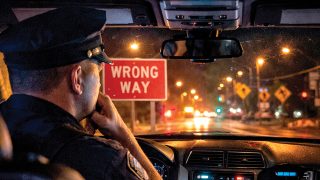
The act mandates that police officers track the race of individuals they stop for questioning during low-level investigative encounters.

This move, according to supporters, aims to address and potentially curb racial disparities in policing, setting a precedent that could influence police departments nationwide.

Council Speaker Adrienne Adams, the first Black person to lead the City Council, said the act will help shed light on the disproportionate impact of unconstitutional stops on Black and Latino New Yorkers.

“These stops can no longer happen in the shadows,” Speaker Adams said.

Under the new law, officers are required to document details of investigative stops, including the race, gender, age and ethnicity of the individuals stopped, as well as the circumstances that led to the stop and its outcome.

Previously, officers only had to log stops if they had probable cause for an arrest or reasonable suspicion of criminal activity, similar to the criteria used in the controversial “stop and frisk” policy.

Experts and advocates argue that collecting data on these lower-level stops will provide crucial insights into racial disparities in policing and could lead to meaningful reforms.

Lauren Bonds, executive director of the National Police Accountability Project, said that data was crucial to implementing policing reforms.

“Data is really the only way that you can even start a conversation about reforms in so many situations,” Bonds stated.

While many law enforcement agencies already collect data on certain types of stops, the new law aims to fill the gap by requiring documentation of investigative stops where officers ask individuals about known crimes or suspected criminal activities.

However, the act is not supported across the board, especially among the policing community.

Critics of the law, including Mayor Eric Adams, expressed concern about its potential impact on police work, citing increased paperwork for officers and the possibility of inaccuracies in data collection.

“Police officers are forced to fill out additional paperwork rather than focus on helping New Yorkers and strengthening community bonds,” the mayor said.

The mayor, whose veto of the act was overridden by the council, previously told council members that the move could impair public safety.

“If you talk to the victim of a crime or law enforcement professional, they will tell you: in public safety, seconds matter,” Adams said at City Hall.

Jillian Snider, a former NYPD officer who works as an adjunct lecturer at John Jay College, enumerated several drawbacks to the policy.

For one, Snider believes if officers are forced to document their conversations with the public, they may be less likely to engage in conversation in general, which could hamper investigations and community engagement.

In addition, Snider raised concerns about inaccurate data collection, noting that police across more than 50 towns and cities in the state marked a majority of men with Hispanic surnames as white on traffic tickets.

“I assume most people are not going to be forthcoming with that information, so you’re gonna have a lot of cops doing a lot of guessing on what people’s demographics and ethnicity are,” Snider said. “Or on the complete opposite end, you might just have cops not talking to people, period, unless they have reasonable suspicion to do so.”

The impact of the policy could be far-reaching, with Snider pointing out that it could signal changes to other departments across the country.

“In cities and localities that have council members that are of the ideological persuasion of those in the New York City Council, I do think that this could start a trend,” she said.

Regarding Adams’ and Snider’s concerns, advocates argued that the benefits of increased transparency and accountability outweigh these concerns.

The new law is set to go into effect immediately, with officers mandated to release the first data in the fall.


Categories: Policy Tags: policy, accountability, traffic stop, Eric Adams, transparency, How Many Stops Act, racial data, NYPD, City Council, New York City

Primary Sidebar

Recent Articles

  • Frankpledge to forensics: A brief history of law enforcement
  • Pushback as a training signal
  • Let’s get moving!
  • Heroes of the World Trade Center
  • The Promise Gap
  • Corruption, collusion and impunity
  • The five minutes before the ambulance
  • New Mexico license plate readers save lives, lead to “precise policing”
  • Addressing stress, vicarious trauma and burnout
  • Understanding the boundaries of professional relationships with the boss

Footer

Our Mission
To serve as a trusted voice of the nation’s law enforcement community, providing informative, entertaining and inspiring content on interesting and engaging topics affecting peace officers today.

Contact us: info@apbweb.com | (800) 234-0056.

  • Facebook
  • Instagram
  • Twitter

Categories

  • Editor’s Picks
  • On the Job
  • Labor
  • Tech
  • Training
  • Policy
  • Health/Wellness
  • Community
  • Offbeat
  • We Remember
  • Jobs and Careers
  • Events

Editor’s Picks

Let’s get moving!

Let’s get moving!

April 27, 2026

Heroes of the World Trade Center

Heroes of the World Trade Center

April 24, 2026

The Promise Gap

The Promise Gap

April 22, 2026

Corruption, collusion and impunity

Corruption, collusion and impunity

April 21, 2026

Policies | Consent Preferences | Copyright © 2026 APB Media, LLC | Website design, development and maintenance by 911MEDIA

Open

Subscribe

Close

Receive the latest news and updates from American Police Beat directly to your inbox!

  • This field is for validation purposes and should be left unchanged.