• Skip to primary navigation
  • Skip to main content
  • Skip to primary sidebar
  • Skip to footer
  • Home
  • About
  • The Magazine
  • Events
  • Partners
  • Products
  • Contact
  • Jobs and Careers
  • Advertise
  • Facebook
  • Instagram
  • Twitter
  • Subscribe
American Police Beat

American Police Beat Magazine

Law Enforcement Publication

  • Home
  • Leadership
    • Understanding the boundaries of professional relationships with the...
      Why you should lead from 30,000 feet
      Public perception and trust
      When performance reviews are a waste of time
      Taking a page from Toyota’s playbook
  • Topics
    • Leadership
      • Understanding the boundaries of professional relationships with the...
        Why you should lead from 30,000 feet
        Public perception and trust
        When performance reviews are a waste of time
        Taking a page from Toyota’s playbook
    • Editor’s Picks
      • Let’s get moving!
        Heroes of the World Trade Center
        The Promise Gap
        Corruption, collusion and impunity
        Liability challenges in contemporary policing
    • On the Job
      • Testing the waters — literally
        Frankpledge to forensics: A brief history of law enforcement
        Villains and heroes in the Big Apple
        Right place, right time — again
        Some good news on crime
    • Labor
      • The Promise Gap
        Cut the cops, save a dollar?
        Labor release under fire
        Who’s watching the watchmen?
        Crime and punishment (or lack thereof) in Seattle
    • Tech
      • New Mexico license plate readers save lives, lead to “precise...
        A modern field guide to understanding research in policing
        Gear that moves with you
        A new breed of cop car
        The future of patrol is here
    • Training
      • Pushback as a training signal
        Let’s get moving!
        The five minutes before the ambulance
        Navigating danger
        Critical thinking in police training
    • Policy
      • Police pause license plate readers
        Corruption, collusion and impunity
        E-bikes spark public safety concerns
        Try racing without wheels
        Law enforcement accreditation: Why it matters
    • Health/Wellness
      • Addressing stress, vicarious trauma and burnout
        Nervous system regulation
        The nature of the job
        Promoting organizational wellness
        Telling cops to get more sleep isn’t working
    • Community
      • Improving autism awareness
        Shop with a Cop
        Community engagement: What is it moving forward?
        Contradictory crossroads
        Back-to-school season brings out police support nationwide
    • Offbeat
      • An unexpected burglar
        Police humor only a cop would understand
        Not eggzactly a perfect heist
        Pizza … with a side of alligator?
        Wisconsin man charged with impersonating Border Patrol agent twice in...
    • We Remember
      • A Tribute to Fallen Heroes
        Markers of service and remembrance
        Tragedy strikes Baker to Vegas
        Heroes of the World Trade Center
        Forty heroes: United Airlines Flight 93
    • HOT Mail
      • The War on Cops Continues Unabated
  • On the Job
    • Testing the waters — literally
      Frankpledge to forensics: A brief history of law enforcement
      Villains and heroes in the Big Apple
      Right place, right time — again
      Some good news on crime
  • Labor
    • The Promise Gap
      Cut the cops, save a dollar?
      Labor release under fire
      Who’s watching the watchmen?
      Crime and punishment (or lack thereof) in Seattle
  • Tech
    • New Mexico license plate readers save lives, lead to “precise...
      A modern field guide to understanding research in policing
      Gear that moves with you
      A new breed of cop car
      The future of patrol is here
  • Training
    • Pushback as a training signal
      Let’s get moving!
      The five minutes before the ambulance
      Navigating danger
      Critical thinking in police training
  • Policy
    • Police pause license plate readers
      Corruption, collusion and impunity
      E-bikes spark public safety concerns
      Try racing without wheels
      Law enforcement accreditation: Why it matters
  • Health/Wellness
    • Addressing stress, vicarious trauma and burnout
      Nervous system regulation
      The nature of the job
      Promoting organizational wellness
      Telling cops to get more sleep isn’t working
  • Community
    • Improving autism awareness
      Shop with a Cop
      Community engagement: What is it moving forward?
      Contradictory crossroads
      Back-to-school season brings out police support nationwide
  • Offbeat
    • An unexpected burglar
      Police humor only a cop would understand
      Not eggzactly a perfect heist
      Pizza … with a side of alligator?
      Wisconsin man charged with impersonating Border Patrol agent twice in...
  • We Remember
    • A Tribute to Fallen Heroes
      Markers of service and remembrance
      Tragedy strikes Baker to Vegas
      Heroes of the World Trade Center
      Forty heroes: United Airlines Flight 93
  • HOT Mail
    • The War on Cops Continues Unabated
  • About
  • The Magazine
  • Events
  • Partners
  • Products
  • Contact
  • Jobs and Careers
  • Advertise
  • Subscribe
Search

Community

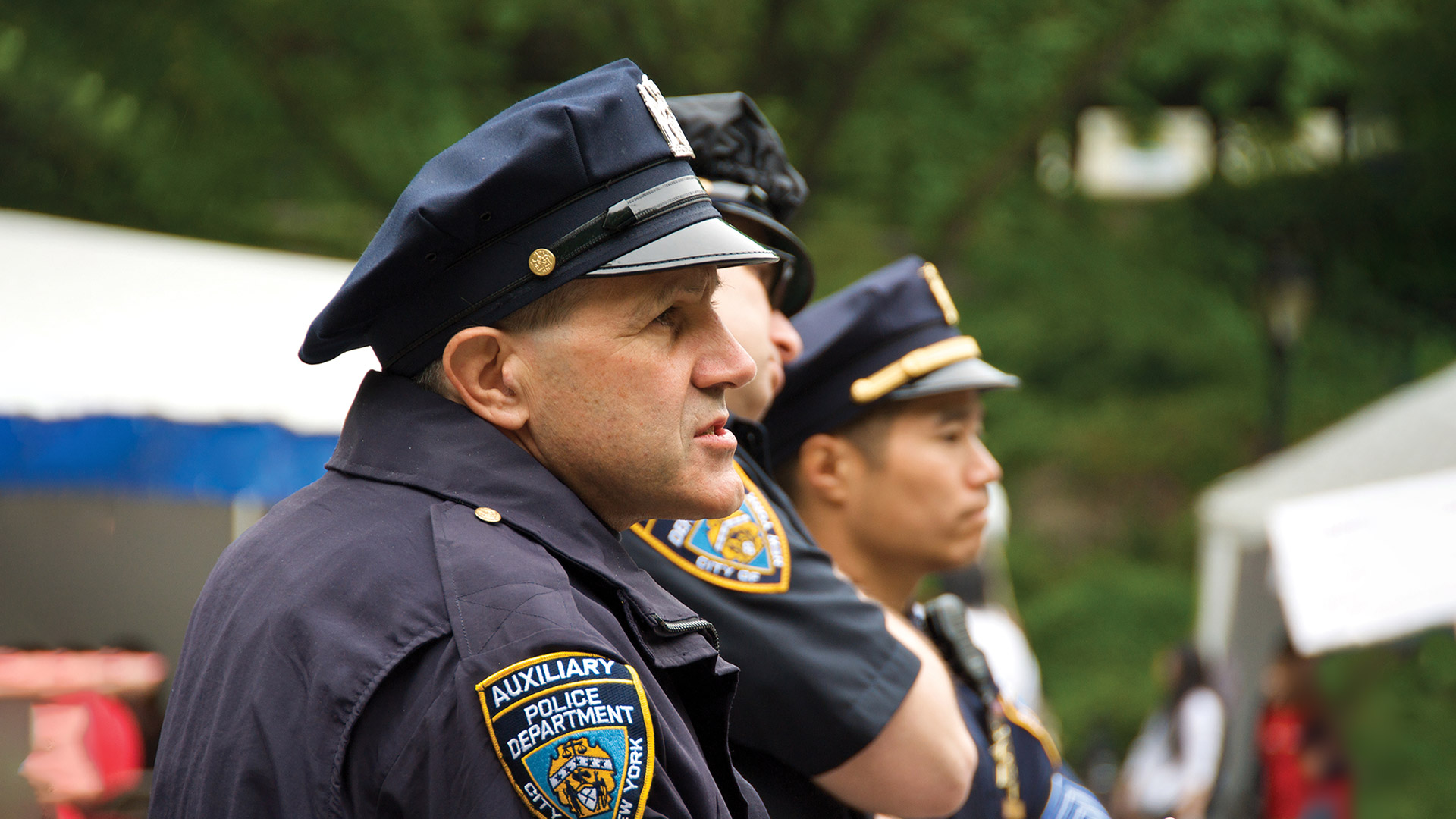
The challenges and opportunities of auxiliary enforcement

Dr. Megan Price Published February 22, 2024 @ 6:00 am PST

iStock.com/JayLazarin

Law enforcement officers are charged with a wide array of duties in order to protect the community, maintain order and safeguard the public’s rights. They put on a thousand hats. While this is valuable for the public, it can be wearing on officers and their departments, especially in times when resources are thin.

Auxiliary enforcement officers, including community service officers, code enforcement, civilian traffic enforcement, and, in Canada, bylaw enforcement, offer critical support to law enforcement and the municipalities they serve. While often overlooked, these officers relieve sworn members of time-consuming work related to minor infractions, quality-of-life issues and safety management that doesn’t involve violence or serious crime. They play a key role in helping communities function smoothly while freeing up law enforcement for more complex criminal responses. 

For this article, I interviewed Sabina Smith, who worked for nearly 10 years as a senior bylaw officer in Whistler, British Columbia (BC), about how the role of bylaw complements law enforcement, the challenges bylaw officers face and the tools that help them do their jobs of maintaining safety and order in the communities they serve.

How do bylaw officers support law enforcement?

I think it’s interesting because the scope of a bylaw officer is changing, especially in British Columbia. What a bylaw officer would normally be expected to do — enforce leash laws, drinking in parks, building use, property maintenance, parking — has really broadened as a result of police services being understaffed and overworked. Calls that address the underhoused population, disturbances, neighbor disputes and drug use are shifting to bylaw. By taking on these responsibilities, police are able to respond to the more serious calls that bylaw officers aren’t trained on and may require force.

What kind of challenges and opportunities would you say a bylaw officer faces in their job?

In terms of challenges, and speaking from a BC perspective, the profession and especially the training of bylaw officers, is not regulated, which can pose safety issues. Officers are not necessarily equipped to handle the evolving — and now more complex — calls they’re expected to take. And, of course, as in any compliance profession, there’s conflict that arises when an officer is trying to get someone to follow the rules, whether it’s getting someone to move along or put a leash on their dog. That brings up questions like: How are we training our officers to properly de-escalate? Are we communicating effectively with people in order to gain voluntary compliance, which is actually a mandate of the province of BC?

Can you say more about the mandate for voluntary compliance?

If you look at British Columbia, the province wants officers to gain compliance voluntarily. This means first requesting that whatever infraction be corrected without the need for a ticket, any use of force or having to call for police backup. So, in that regard verbal communication is so important for a bylaw officer.

So, the idea is that the province wants the public to follow the rules on their own and correct any violations voluntarily. And you’re suggesting that to do that, verbal communication skills are essential?

Yes, absolutely.

What kind of skills or tools have worked for you?

Employing strategic curiosity, hands down. Asking about and listening to whatever the issue is that they are having. For example, even if I were there to say, “You need to clean this clutter off your lawn,” I’d approach it by asking them to tell me about why they need the things on their lawn. No matter what the problem, the question on my mind is: What is this about? I like to engage with the public in that way to show them that I’m actually there to listen and to help and that I’m interested in what’s going on. It’s easy to go in with an enforcement mindset like, “This is what I’m here for, this is what you need to do and these are the repercussions if you don’t do it. But to get compliance and to ease the conflict that goes along with this kind of work, approaching a call with curiosity to find out what is actually beneath the problem leads to successful outcomes and, most often, the voluntary compliance that we want.

Is there anything you would want the public to know about bylaw officers?

The first thing is that being approached by bylaw — or any enforcement officer — is nothing personal. We’re all working for the community, and the goal is always safer, more pleasant living environments for everybody. And some people forget that the laws are created by the city government, which they elect. So if there’s something that a large group of people don’t agree with, there’s an opportunity to change that.

Do you have any stories that you’d want to tell readers about what it’s like to be a bylaw officer?

Every community is unique, which makes bylaw such an interesting profession. I was a bylaw officer in Whistler, British Columbia, which is in the northern Rocky Mountains and is much different than working in a city. But I’ll never forget the time I was called to respond to a grown black bear that was hit by a car on the highway. I was liaising with our conservation officers to try and get this bear, who was now dead, off the road and then figure out what we were going to do with it. We ended up enlisting a bunch of our public maintenance workers to help us carry the bear and put it in a cage for transport. That was a memorable experience and really highlights that you never know what the day will hold, but that you are always working for the public’s best interest.

Dr. Megan Price

Dr. Megan Price

Dr. Megan Price is the director of the Center for Applied Insight Conflict Resolution in Washington, D.C., and is founder and trainer of Insight Policing: Conflict Resolution for Law Enforcement (insightpolicing.com), which teaches officers the foundations of conflict decision-making and targeted, curiosity-based communication skills for controlling escalation and problem-solving effectively. Dr. Price is adjunct professor in Conflict Analysis and Resolution at George Mason University and associate faculty in the Conflict Management master’s program at Royal Roads University.

View articles by Dr. Megan Price

As seen in the February 2024 issue of American Police Beat magazine.
Don’t miss out on another issue today! Click below:


SUBSCRIBE TODAY!

Categories: Community

Primary Sidebar

Recent Articles

  • A Tribute to Fallen Heroes
  • NLEOMF Fund announces March 2026 Officers of the Month
  • Markers of service and remembrance
  • Testing the waters — literally
  • Police pause license plate readers
  • Tragedy strikes Baker to Vegas
  • Frankpledge to forensics: A brief history of law enforcement
  • Pushback as a training signal
  • Let’s get moving!
  • Heroes of the World Trade Center

Footer

Our Mission
To serve as a trusted voice of the nation’s law enforcement community, providing informative, entertaining and inspiring content on interesting and engaging topics affecting peace officers today.

Contact us: info@apbweb.com | (800) 234-0056.

  • Facebook
  • Instagram
  • Twitter

Categories

  • Editor’s Picks
  • On the Job
  • Labor
  • Tech
  • Training
  • Policy
  • Health/Wellness
  • Community
  • Offbeat
  • We Remember
  • Jobs and Careers
  • Events

Editor’s Picks

Let’s get moving!

Let’s get moving!

April 27, 2026

Heroes of the World Trade Center

Heroes of the World Trade Center

April 24, 2026

The Promise Gap

The Promise Gap

April 22, 2026

Corruption, collusion and impunity

Corruption, collusion and impunity

April 21, 2026

Policies | Consent Preferences | Copyright © 2026 APB Media, LLC | Website design, development and maintenance by 911MEDIA

Open

Subscribe

Close

Receive the latest news and updates from American Police Beat directly to your inbox!

  • This field is for validation purposes and should be left unchanged.