• Skip to primary navigation
  • Skip to main content
  • Skip to primary sidebar
  • Skip to footer
  • Home
  • About
  • The Magazine
  • Events
  • Partners
  • Products
  • Contact
  • Jobs and Careers
  • Advertise
  • Facebook
  • Instagram
  • Twitter
  • Subscribe
American Police Beat

American Police Beat Magazine

Law Enforcement Publication

  • Home
  • Leadership
    • Developing and enhancing assertiveness
      Clarifying your “true north”
      The job has changed — have you?
      Perpetual recognition of line-of-duty deaths
      Understanding the boundaries of professional relationships with the...
  • Topics
    • Leadership
      • Developing and enhancing assertiveness
        Clarifying your “true north”
        The job has changed — have you?
        Perpetual recognition of line-of-duty deaths
        Understanding the boundaries of professional relationships with the...
    • Editor’s Picks
      • Smile and let them swing
        The job has changed — have you?
        The days that follow
        Perpetual recognition of line-of-duty deaths
        Let’s get moving!
    • On the Job
      • Coffee shop intel
        Curbing teen takeovers
        2026 Top Cops
        High-rise rescue in Brooklyn
        Swift thinking
    • Labor
      • Why more staff won’t fix your operational slowdowns
        Drama in Georgia: Mayor fires entire police department for...
        Smile and let them swing
        The Promise Gap
        Cut the cops, save a dollar?
    • Tech
      • The virtual beat
        Training with an AI partner?
        NYC’s electric vehicle fleet for LE passes milestone
        New Mexico license plate readers save lives, lead to “precise...
        A modern field guide to understanding research in policing
    • Training
      • Rules or results?
        Enhance your preparedness
        Good enough never is
        Pushback as a training signal
        Let’s get moving!
    • Policy
      • Mexican cartels recruit like industry titans on both sides of the...
        Police and local government leaders join forces to build community...
        Police pause license plate readers
        Corruption, collusion and impunity
        E-bikes spark public safety concerns
    • Health/Wellness
      • Down to divorce
        The days that follow
        Addressing stress, vicarious trauma and burnout
        Nervous system regulation
        The nature of the job
    • Community
      • Working community connections
        Cops promote National Donate Life Month
        Police officer kicks up social media praise
        Donning denim in solidarity with victims and survivors of sexual...
        Improving autism awareness
    • Offbeat
      • “Teenage Mutant Ninja Deer” rescued
        An unexpected burglar
        Police humor only a cop would understand
        Not eggzactly a perfect heist
        Pizza … with a side of alligator?
    • We Remember
      • Unsung heroes: New York City correction officers
        National Police Week 2026
        Shooting of Chicago police officers prompts call for new regulations...
        The sacrifice continues
        A Tribute to Fallen Heroes
    • HOT Mail
      • The War on Cops Continues Unabated
  • On the Job
    • Coffee shop intel
      Curbing teen takeovers
      2026 Top Cops
      High-rise rescue in Brooklyn
      Swift thinking
  • Labor
    • Why more staff won’t fix your operational slowdowns
      Drama in Georgia: Mayor fires entire police department for...
      Smile and let them swing
      The Promise Gap
      Cut the cops, save a dollar?
  • Tech
    • The virtual beat
      Training with an AI partner?
      NYC’s electric vehicle fleet for LE passes milestone
      New Mexico license plate readers save lives, lead to “precise...
      A modern field guide to understanding research in policing
  • Training
    • Rules or results?
      Enhance your preparedness
      Good enough never is
      Pushback as a training signal
      Let’s get moving!
  • Policy
    • Mexican cartels recruit like industry titans on both sides of the...
      Police and local government leaders join forces to build community...
      Police pause license plate readers
      Corruption, collusion and impunity
      E-bikes spark public safety concerns
  • Health/Wellness
    • Down to divorce
      The days that follow
      Addressing stress, vicarious trauma and burnout
      Nervous system regulation
      The nature of the job
  • Community
    • Working community connections
      Cops promote National Donate Life Month
      Police officer kicks up social media praise
      Donning denim in solidarity with victims and survivors of sexual...
      Improving autism awareness
  • Offbeat
    • “Teenage Mutant Ninja Deer” rescued
      An unexpected burglar
      Police humor only a cop would understand
      Not eggzactly a perfect heist
      Pizza … with a side of alligator?
  • We Remember
    • Unsung heroes: New York City correction officers
      National Police Week 2026
      Shooting of Chicago police officers prompts call for new regulations...
      The sacrifice continues
      A Tribute to Fallen Heroes
  • HOT Mail
    • The War on Cops Continues Unabated
  • About
  • The Magazine
  • Events
  • Partners
  • Products
  • Contact
  • Jobs and Careers
  • Advertise
  • Subscribe
Search

On the Job

Traffic tactics

Dan Kickert and Lauren Sheehan Published December 22, 2021 @ 6:00 am PST

iStock.com/Nomadsoul1

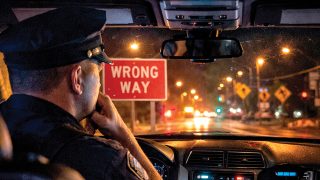
When conducting traffic stops, we all get complacent. They become a routine part of the job. We have all heard the saying, “routine is deadly,” but those words, like so many other words from the academy, are only a faint echo somewhere in the back of our minds. This is especially concerning when it comes to traffic stops. They are regularly listed as one of the deadliest call types for law enforcement each year. If we want to change that, we need to do better.

Depending on the agency, we are either on 8s, 10s or 12-hour shifts. What is the rush to flip our lights on and jump straight into this stop? We need to start thinking ahead and planning to ensure there are as many variables as possible in our favor. There are so many things we do not and cannot know before we make a stop. We cannot be sure who is in the vehicle. We cannot be sure of how many occupants are in the vehicle. We do not know if those occupants are armed. We cannot know if those occupants have just committed a crime that we are unaware of. All these unknowns put us in a position of distinct disadvantage. It is human nature to ensure that we are in the most advantageous position possible in anything we do. Survival is the most basic human instinct. It is the reason those hairs on the back of your neck stand up from time to time.  So, what can we do to turn those odds back in our favor?

There are so many things we do not and cannot know before we make a stop.

The very first thing we should be doing is running the registration on the vehicle. Let’s check and see if the registration is valid, who the registered owner is and where the vehicle is registered — make sure that the vehicle is not stolen or wanted. That is basic, but why not take it a few steps further? Run the registered owner and check their driver’s license status, check “in-house” to see what involvements the vehicle and registered owner have had with law enforcement in the area. The moment your patrol car pulls behind a vehicle, the occupants know who you are and what you are about. Why don’t we take the time to do a little homework and try and find out not only who owns this car but what they are about by finding out what this car has been stopped for in the past, who was in it and who they are by running their criminal history.

Once we have done some research on the driver or vehicle owner, we need to decide where this stop is going to take place. There are a multitude of different factors to consider when picking the location for a stop. Some of the common factors are the number of people present, if those people are known to law enforcement, traffic, lighting and weather. Ideally, you will want to choose a location that is well lit, out of the way of traffic and will limit the possibility of interference from people who are not associated with the stop.

Next, call out your stop a few blocks ahead of where you plan to stop the car. For example, if you give dispatch your location and vehicle description ahead of time, such as, “SouthCom, 426 Traffic, Lincoln Highway and Western Avenue on a silver Buick, Illinois registration ABC123,” this makes your stop a lot smoother and simpler. The fact is, you never know what is going to happen when you hit your lights. The vehicle could flee, shots could be fired, or the occupants could exit the vehicle and flee on foot or rush your patrol car. It is way easier to key up on the radio and yell, “shots fired,” “vehicle fleeing eastbound” or “get me units,” than it is to attempt to get all the information of the entire stop, location and what went to hell out all at the same time. We must remember, as cops, we are multitaskers. We can absolutely do more than one thing at a time, but we are also human. Let’s get the talking out of the way before it’s time to fight. 

Once you have made the stop, sit in your car for a minute and watch the occupants. If you have made enough traffic stops, you have a good idea of what “normal” behavior is. You may not be able to fully articulate it right away, but if something just seems off, call for a second unit. Sit back and watch a little longer, see if you can key in on what it is that just doesn’t seem right. When you are watching them, you are observing their behaviors, learning more about the occupant(s) of the vehicle and leveling the field just a little more.

When it’s time to approach the vehicle, approach on the passenger side. Most officers are still doing the driver’s-side approach. This will potentially catch the occupant(s) off-guard, keep you away from traffic and permit you to see more of the driver. If the windows are tinted, have the driver roll all the windows down before walking past. Now that you have a clear view of who is in the passenger compartment of the vehicle, use the pillars for cover. On a passenger vehicle, the “A-pillar” is the pillar that is on the front face of the front doors, nearest the windshield. The “B-pillar” is the pillar that is on the rear face of the front doors and front face of the rear doors, if applicable. The “C-pillar” is on the rear face of the back doors. Sports utility vehicles, station wagons and vans may have a “D-pillar,” which would be the pillar at the rear corners of the vehicle, nearest the cargo doors or tailgate. No part of your body should ever cross the B-pillar unless you are physically fighting with or extracting an occupant. If there are occupants (who are not small children) in the backseat of the vehicle, it is advisable not to cross the C-pillar. There is no reason people in the backseat cannot be the middleman and pass items like a driver’s license and proof of insurance between you and the driver. Staying back and using the pillars for cover not only offers you protection, but it also gives you the ability to see the occupants of the vehicle clearly while they have to strain to see you.  

The final and possibly most important thing you can do to conduct the safest possible traffic stop is by managing your backup. Anytime there is a second unit on your stop, whether it is your partner, an assisting officer who showed up or even a supervisor, there is no reason for them to leave the suspect vehicle when you do. When you walk back to your patrol car to run the identification the occupant(s) gave to you, they need to stay with the car and keep their eyes on the occupants. They are keeping everyone safe up there. When they are at your passenger window, they are not only failing to keep their eyes on the occupant(s), but they are also distracting you and placing you both in danger. 

We must keep our minds open to the possibility of violence at any given time. Too many officers are seeking to gain control over a situation for no other reason other than to exert control. The idea is to make sure the control you have gained actually serves a purpose. These tactics are designed to give you every possible advantage, place a potential threat at every possible disadvantage and control as many variables as possible. They are not a guaranteed recipe for success, but they will greatly increase your chances of going home at the end of your shift.

Dan Kickert and Lauren Sheehan

Dan Kickert and Lauren Sheehan

Dan Kickert is a police officer in the south suburbs of Chicago with 15 years of experience. He is currently assigned to patrol and training. He serves his agency as a field training officer, range master, tactics instructor and training coordinator. He was previously assigned to investigations, where he worked as a homicide investigator in a task force setting for seven years.

Lauren Sheehan spent four years with the Olympia Fields Police Department before going to work as a deputy sheriff in a collar county of Chicago. She has an M.S. in criminal social justice from Lewis University. She has served as a crisis intervention team officer, accident reconstructionist, juvenile specialist and firearms trainer, as well as volunteering to coordinate events such as the National Night Out Against Crime and Cop on Top fundraisers for the Special Olympics of Illinois.

View articles by Dan Kickert and Lauren Sheehan

As seen in the December 2021 issue of American Police Beat magazine.
Don’t miss out on another issue today! Click below:


SUBSCRIBE TODAY!

Categories: On the Job

Primary Sidebar

Recent Articles

  • Coffee shop intel
  • Developing and enhancing assertiveness
  • Mexican cartels recruit like industry titans on both sides of the border — and it’s working
  • Down to divorce
  • Unsung heroes: New York City correction officers
  • The virtual beat
  • Why more staff won’t fix your operational slowdowns
  • Training with an AI partner?
  • Curbing teen takeovers
  • 2026 Top Cops

Footer

Our Mission
To serve as a trusted voice of the nation’s law enforcement community, providing informative, entertaining and inspiring content on interesting and engaging topics affecting peace officers today.

Contact us: info@apbweb.com | (800) 234-0056.

  • Facebook
  • Instagram
  • Twitter

Categories

  • Editor’s Picks
  • On the Job
  • Labor
  • Tech
  • Training
  • Policy
  • Health/Wellness
  • Community
  • Offbeat
  • We Remember
  • Jobs and Careers
  • Events

Editor’s Picks

Smile and let them swing

Smile and let them swing

May 16, 2026

The job has changed — have you?

The job has changed — have you?

May 15, 2026

The days that follow

The days that follow

May 11, 2026

Perpetual recognition of line-of-duty deaths

Perpetual recognition of line-of-duty deaths

May 10, 2026

Policies | Consent Preferences | Copyright © 2026 APB Media, LLC | Website design, development and maintenance by 911MEDIA

Open

Subscribe

Close

Receive the latest news and updates from American Police Beat directly to your inbox!

  • This field is for validation purposes and should be left unchanged.