• Skip to primary navigation
  • Skip to main content
  • Skip to primary sidebar
  • Skip to footer
  • Home
  • About
  • The Magazine
  • Events
  • Partners
  • Products
  • Contact
  • Jobs and Careers
  • Advertise
  • Facebook
  • Instagram
  • Twitter
  • Subscribe
American Police Beat

American Police Beat Magazine

Law Enforcement Publication

  • Home
  • Leadership
    • Clarifying your “true north”
      The job has changed — have you?
      Perpetual recognition of line-of-duty deaths
      Understanding the boundaries of professional relationships with the...
      Why you should lead from 30,000 feet
  • Topics
    • Leadership
      • Clarifying your “true north”
        The job has changed — have you?
        Perpetual recognition of line-of-duty deaths
        Understanding the boundaries of professional relationships with the...
        Why you should lead from 30,000 feet
    • Editor’s Picks
      • Smile and let them swing
        The job has changed — have you?
        The days that follow
        Perpetual recognition of line-of-duty deaths
        Let’s get moving!
    • On the Job
      • K-9 officer turns children’s book author
        K-9 Day demonstrates scope of officers’ duties
        Testing the waters — literally
        Frankpledge to forensics: A brief history of law enforcement
        Villains and heroes in the Big Apple
    • Labor
      • Smile and let them swing
        The Promise Gap
        Cut the cops, save a dollar?
        Labor release under fire
        Who’s watching the watchmen?
    • Tech
      • NYC’s electric vehicle fleet for LE passes milestone
        New Mexico license plate readers save lives, lead to “precise...
        A modern field guide to understanding research in policing
        Gear that moves with you
        A new breed of cop car
    • Training
      • Pushback as a training signal
        Let’s get moving!
        The five minutes before the ambulance
        Navigating danger
        Critical thinking in police training
    • Policy
      • Police and local government leaders join forces to build community...
        Police pause license plate readers
        Corruption, collusion and impunity
        E-bikes spark public safety concerns
        Try racing without wheels
    • Health/Wellness
      • The days that follow
        Addressing stress, vicarious trauma and burnout
        Nervous system regulation
        The nature of the job
        Promoting organizational wellness
    • Community
      • Cops promote National Donate Life Month
        Police officer kicks up social media praise
        Donning denim in solidarity with victims and survivors of sexual...
        Improving autism awareness
        Shop with a Cop
    • Offbeat
      • “Teenage Mutant Ninja Deer” rescued
        An unexpected burglar
        Police humor only a cop would understand
        Not eggzactly a perfect heist
        Pizza … with a side of alligator?
    • We Remember
      • A Tribute to Fallen Heroes
        Markers of service and remembrance
        Tragedy strikes Baker to Vegas
        Heroes of the World Trade Center
        Forty heroes: United Airlines Flight 93
    • HOT Mail
      • The War on Cops Continues Unabated
  • On the Job
    • K-9 officer turns children’s book author
      K-9 Day demonstrates scope of officers’ duties
      Testing the waters — literally
      Frankpledge to forensics: A brief history of law enforcement
      Villains and heroes in the Big Apple
  • Labor
    • Smile and let them swing
      The Promise Gap
      Cut the cops, save a dollar?
      Labor release under fire
      Who’s watching the watchmen?
  • Tech
    • NYC’s electric vehicle fleet for LE passes milestone
      New Mexico license plate readers save lives, lead to “precise...
      A modern field guide to understanding research in policing
      Gear that moves with you
      A new breed of cop car
  • Training
    • Pushback as a training signal
      Let’s get moving!
      The five minutes before the ambulance
      Navigating danger
      Critical thinking in police training
  • Policy
    • Police and local government leaders join forces to build community...
      Police pause license plate readers
      Corruption, collusion and impunity
      E-bikes spark public safety concerns
      Try racing without wheels
  • Health/Wellness
    • The days that follow
      Addressing stress, vicarious trauma and burnout
      Nervous system regulation
      The nature of the job
      Promoting organizational wellness
  • Community
    • Cops promote National Donate Life Month
      Police officer kicks up social media praise
      Donning denim in solidarity with victims and survivors of sexual...
      Improving autism awareness
      Shop with a Cop
  • Offbeat
    • “Teenage Mutant Ninja Deer” rescued
      An unexpected burglar
      Police humor only a cop would understand
      Not eggzactly a perfect heist
      Pizza … with a side of alligator?
  • We Remember
    • A Tribute to Fallen Heroes
      Markers of service and remembrance
      Tragedy strikes Baker to Vegas
      Heroes of the World Trade Center
      Forty heroes: United Airlines Flight 93
  • HOT Mail
    • The War on Cops Continues Unabated
  • About
  • The Magazine
  • Events
  • Partners
  • Products
  • Contact
  • Jobs and Careers
  • Advertise
  • Subscribe
Search

Health/Wellness

Two reasons I don’t trust people: I know them and I don’t know them

Medina Baumgart, Psy.D., ABPP Published March 25, 2022 @ 6:00 am PDT

iStock.com/IPGGutenbergUKLtd

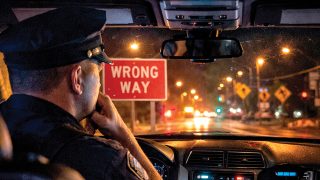
As cops, you are trained to approach people and situations with a general attitude of distrust until proven otherwise. This allows you to maintain the hypervigilance needed to help keep you safe on the job. Now consider the impact of approaching people and situations in this manner repeatedly … countless times … for years. You also experience the added impact of the nationwide increases in violent crime, assaults on officers, relaxed legal consequences for criminal behavior and the anti-police sentiment in some political, media and social media outlets. The cumulative impact of these events can reinforce the notion that people are bad and cannot be trusted. So does that mean you are cynical?

If left unchecked, a cynical attitude can negatively impact your overall well-being and work performance.

I’m not cynical, I’m skeptical

Although both cynics and skeptics can doubt the intentions of people, there are some key differences. A skeptical person is also open-minded and open to evidence to the contrary. A cynical person will almost always choose to doubt, disbelieve or discredit someone or something even when there is no logical reason to do so.

We aren’t born cynical. So how does someone become a cynical person? Below are some key factors that influence how cynicism develops. Think about how your own experiences, both on the job and in your personal life, might impact whether you adopt a cynical attitude and to what extent.

  • Worldviews and predictions about life. These come from situations and events that we see in person, on social media, news stories, etc.
  • Personal defense mechanism. This is when a person prevents themselves from being open to love, friendships, etc., because they cannot trust someone for fear of being hurt.
  • Adverse or traumatic life event(s). These experiences can cause a person to “close up” emotionally and relationally to protect oneself.
  • Poor stress management or burnout. This can impact how well our rational brain is working and whether our emotional brain hijacks how we respond.

If left unchecked, a cynical attitude can negatively impact your overall well-being and work performance, and destroy both personal and work relationships. The following are some tips to help you manage your own cynicism and improve your interactions with someone who is cynical.

Tips to manage your own cynicism

  • Recognize the issue. The first step is to recognize it is there. You can do this via your own observations (including difficulties maintaining healthy relationships) and feedback from others.
  • Make a choice to manage your cynicism. In order to effectively manage cynicism, you must make the choice to do something about it. It is helpful to start by thinking of how cynicism is impacting your relationships and quality of life — when is it functional and when is it problematic? Next, seek to understand any personal factors that might be maintaining your cynicism. Consider additional resources that might help you gain a better understanding, such as literature, peer support, a chaplain, a therapist or a trusted friend or family member.
  • Recognize each cynical thought. Be a curious observer and just notice the thought as it happens. Pay attention and take care to not feed into the negative emotion associated with that thought. Relaxation breathing and grounding techniques can be helpful to manage the intensity of any emotional discomfort you experience and prevent emotional brain hijacking.
  • Use logic to debate cynicism. Many destructive emotions and behaviors are due to illogical or distorted thoughts. Challenge your thinking or call upon a trusted peer or other supportive resource to listen and help you challenge and reframe these thought errors. Think of it as being a thought detective. What evidence do you have for and against your cynical thoughts?
  • Look at others for inspiration to be positive. Think about someone who tends to think more positively than you (e.g., a friend, family member, co-worker, fictional character) and try to deconstruct their positivity. In other words, take a situation that you respond to with a cynical attitude and imagine how this person would respond — how would their thoughts, mood and behavior differ from yours? 

If left unchecked, a cynical attitude can negatively impact your overall well-being and work performance.

A cynical person often uses negative thoughts and feelings to mask their sense of loss or disappointment.

  • Take a compassionate or curious stance. If you feel yourself becoming irritated, frustrated or annoyed, use your observation and listening skills to read between the lines. A cynical person often uses negative thoughts and feelings to mask their sense of loss or disappointment.
  • Listen beyond the emotion. What is the person really feeling? Use active listening and empathic responding. Listen to understand the person’s situation and what respect, control, recognition, security or value they lost. Help a person feel understood as a tool to defuse their negative feelings. Once that is done, you can determine if you can help the person get what they need or just acknowledge that you understand why they feel the way they do.
  • Don’t rehearse what you are going to say while the person is talking. When a cynical/negative person thinks you are not listening, they can spiral deeper into their feelings. They don’t need you to fix them. They need you to listen and understand.
  • Ask the person if they want to find a solution or just need to vent. You don’t need to agree with the person, but you do need to know what they need in the moment. Acknowledge their feelings (reflect what you observe and hear). Often, a cynical person walks through life believing no one cares or no one really understands them.
  • Establish healthy boundaries. You can offer the contact a safe place to vent or process their negative thoughts and feelings while offering support through active listening and empathic responding. This does not mean that you need to allow the cynical person to continue their negative cycle if they are unwilling to look for a solution or different way to deal with the problem. It is OK to tell the person, “I understand why you feel this way, but it doesn’t look like there is anything I can do to help the situation. I would be happy to talk with you some more when you are willing to take a step forward.”
Medina Baumgart, Psy.D., ABPP

Medina Baumgart, Psy.D., ABPP

Dr. Medina Baumgart is an embedded police psychologist with a large metropolitan law enforcement agency and a board-certified specialist in police and public safety psychology. She authored the book Surviving Retirement: Finding Purpose and Fulfillment Beyond the Badge and hosts the We Carry This podcast. Correspondence concerning this article can be sent to drbaumgart@att.net.

View articles by Medina Baumgart, Psy.D., ABPP

As seen in the March 2022 issue of American Police Beat magazine.
Don’t miss out on another issue today! Click below:


SUBSCRIBE TODAY!

Categories: Health/Wellness

Primary Sidebar

Recent Articles

  • “Teenage Mutant Ninja Deer” rescued
  • NLEOMF announces April 2026 Officers of the Month
  • K-9 officer turns children’s book author
  • Police and local government leaders join forces to build community trust
  • K-9 Day demonstrates scope of officers’ duties
  • Cops promote National Donate Life Month
  • NYC’s electric vehicle fleet for LE passes milestone
  • Police officer kicks up social media praise
  • Donning denim in solidarity with victims and survivors of sexual assault
  • Clarifying your “true north”

Footer

Our Mission
To serve as a trusted voice of the nation’s law enforcement community, providing informative, entertaining and inspiring content on interesting and engaging topics affecting peace officers today.

Contact us: info@apbweb.com | (800) 234-0056.

  • Facebook
  • Instagram
  • Twitter

Categories

  • Editor’s Picks
  • On the Job
  • Labor
  • Tech
  • Training
  • Policy
  • Health/Wellness
  • Community
  • Offbeat
  • We Remember
  • Jobs and Careers
  • Events

Editor’s Picks

Smile and let them swing

Smile and let them swing

May 16, 2026

The job has changed — have you?

The job has changed — have you?

May 15, 2026

The days that follow

The days that follow

May 11, 2026

Perpetual recognition of line-of-duty deaths

Perpetual recognition of line-of-duty deaths

May 10, 2026

Policies | Consent Preferences | Copyright © 2026 APB Media, LLC | Website design, development and maintenance by 911MEDIA

Open

Subscribe

Close

Receive the latest news and updates from American Police Beat directly to your inbox!

  • This field is for validation purposes and should be left unchanged.