• Skip to primary navigation
  • Skip to main content
  • Skip to primary sidebar
  • Skip to footer
  • Home
  • About
  • The Magazine
  • Events
  • Partners
  • Products
  • Contact
  • Jobs and Careers
  • Advertise
  • Facebook
  • Instagram
  • Twitter
  • Subscribe
American Police Beat

American Police Beat Magazine

Law Enforcement Publication

  • Home
  • Leadership
    • Developing and enhancing assertiveness
      Clarifying your “true north”
      The job has changed — have you?
      Perpetual recognition of line-of-duty deaths
      Understanding the boundaries of professional relationships with the...
  • Topics
    • Leadership
      • Developing and enhancing assertiveness
        Clarifying your “true north”
        The job has changed — have you?
        Perpetual recognition of line-of-duty deaths
        Understanding the boundaries of professional relationships with the...
    • Editor’s Picks
      • Smile and let them swing
        The job has changed — have you?
        The days that follow
        Perpetual recognition of line-of-duty deaths
        Let’s get moving!
    • On the Job
      • Coffee shop intel
        Curbing teen takeovers
        2026 Top Cops
        High-rise rescue in Brooklyn
        Swift thinking
    • Labor
      • Why more staff won’t fix your operational slowdowns
        Drama in Georgia: Mayor fires entire police department for...
        Smile and let them swing
        The Promise Gap
        Cut the cops, save a dollar?
    • Tech
      • The virtual beat
        Training with an AI partner?
        NYC’s electric vehicle fleet for LE passes milestone
        New Mexico license plate readers save lives, lead to “precise...
        A modern field guide to understanding research in policing
    • Training
      • Rules or results?
        Enhance your preparedness
        Good enough never is
        Pushback as a training signal
        Let’s get moving!
    • Policy
      • The impact of the Graham v. Connor decision
        Mexican cartels recruit like industry titans on both sides of the...
        Police and local government leaders join forces to build community...
        Police pause license plate readers
        Corruption, collusion and impunity
    • Health/Wellness
      • Down to divorce
        The days that follow
        Addressing stress, vicarious trauma and burnout
        Nervous system regulation
        The nature of the job
    • Community
      • Working community connections
        Cops promote National Donate Life Month
        Police officer kicks up social media praise
        Donning denim in solidarity with victims and survivors of sexual...
        Improving autism awareness
    • Offbeat
      • “Teenage Mutant Ninja Deer” rescued
        An unexpected burglar
        Police humor only a cop would understand
        Not eggzactly a perfect heist
        Pizza … with a side of alligator?
    • We Remember
      • Unsung heroes: New York City correction officers
        National Police Week 2026
        Shooting of Chicago police officers prompts call for new regulations...
        The sacrifice continues
        A Tribute to Fallen Heroes
    • HOT Mail
      • The War on Cops Continues Unabated
  • On the Job
    • Coffee shop intel
      Curbing teen takeovers
      2026 Top Cops
      High-rise rescue in Brooklyn
      Swift thinking
  • Labor
    • Why more staff won’t fix your operational slowdowns
      Drama in Georgia: Mayor fires entire police department for...
      Smile and let them swing
      The Promise Gap
      Cut the cops, save a dollar?
  • Tech
    • The virtual beat
      Training with an AI partner?
      NYC’s electric vehicle fleet for LE passes milestone
      New Mexico license plate readers save lives, lead to “precise...
      A modern field guide to understanding research in policing
  • Training
    • Rules or results?
      Enhance your preparedness
      Good enough never is
      Pushback as a training signal
      Let’s get moving!
  • Policy
    • The impact of the Graham v. Connor decision
      Mexican cartels recruit like industry titans on both sides of the...
      Police and local government leaders join forces to build community...
      Police pause license plate readers
      Corruption, collusion and impunity
  • Health/Wellness
    • Down to divorce
      The days that follow
      Addressing stress, vicarious trauma and burnout
      Nervous system regulation
      The nature of the job
  • Community
    • Working community connections
      Cops promote National Donate Life Month
      Police officer kicks up social media praise
      Donning denim in solidarity with victims and survivors of sexual...
      Improving autism awareness
  • Offbeat
    • “Teenage Mutant Ninja Deer” rescued
      An unexpected burglar
      Police humor only a cop would understand
      Not eggzactly a perfect heist
      Pizza … with a side of alligator?
  • We Remember
    • Unsung heroes: New York City correction officers
      National Police Week 2026
      Shooting of Chicago police officers prompts call for new regulations...
      The sacrifice continues
      A Tribute to Fallen Heroes
  • HOT Mail
    • The War on Cops Continues Unabated
  • About
  • The Magazine
  • Events
  • Partners
  • Products
  • Contact
  • Jobs and Careers
  • Advertise
  • Subscribe
Search

On the Job

Authority without arrest

The challenge and opportunity of college campus policing

Dr. Megan Price Published July 21, 2022 @ 6:00 am PDT

iStock.com/csfotoimages

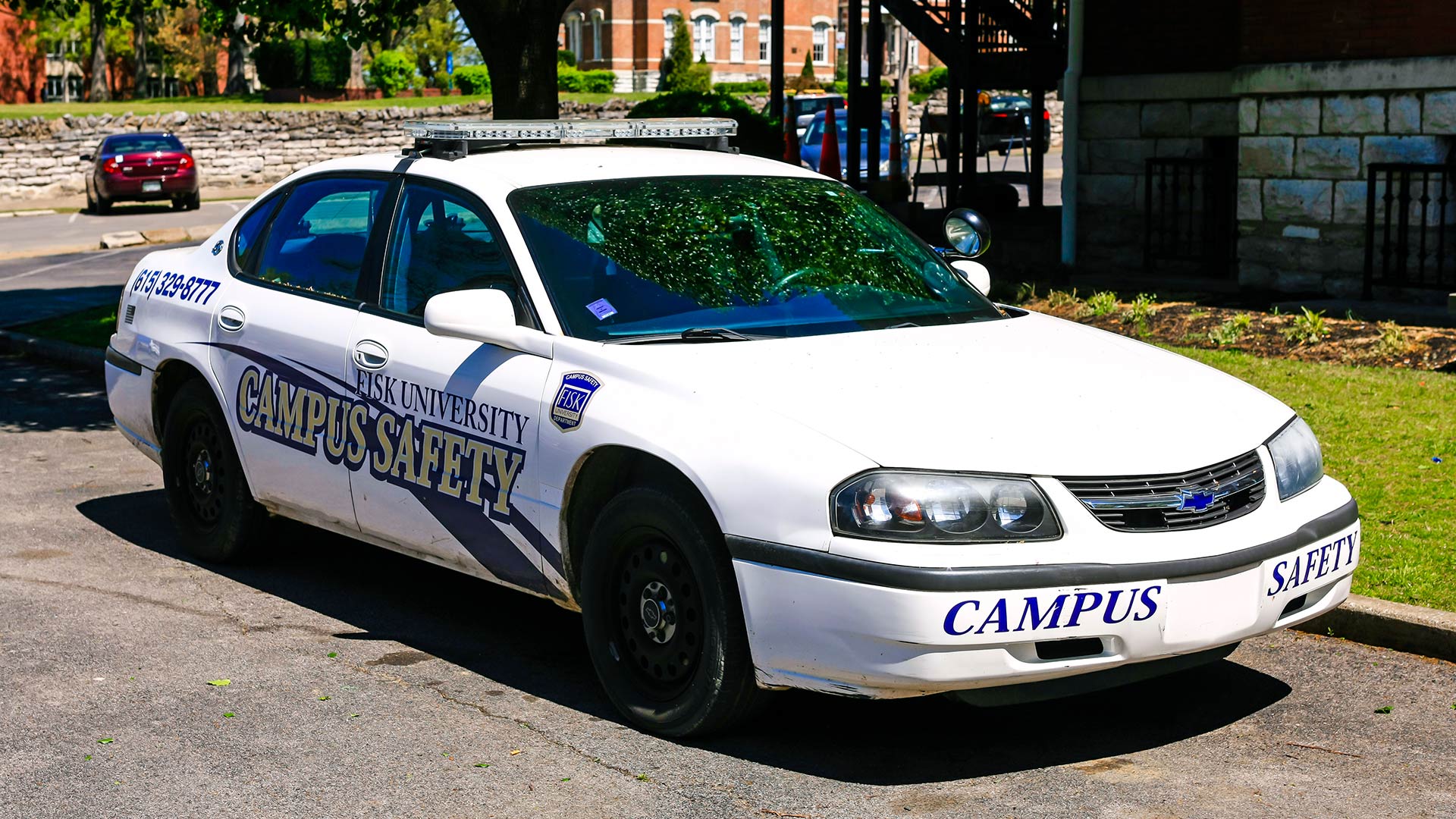
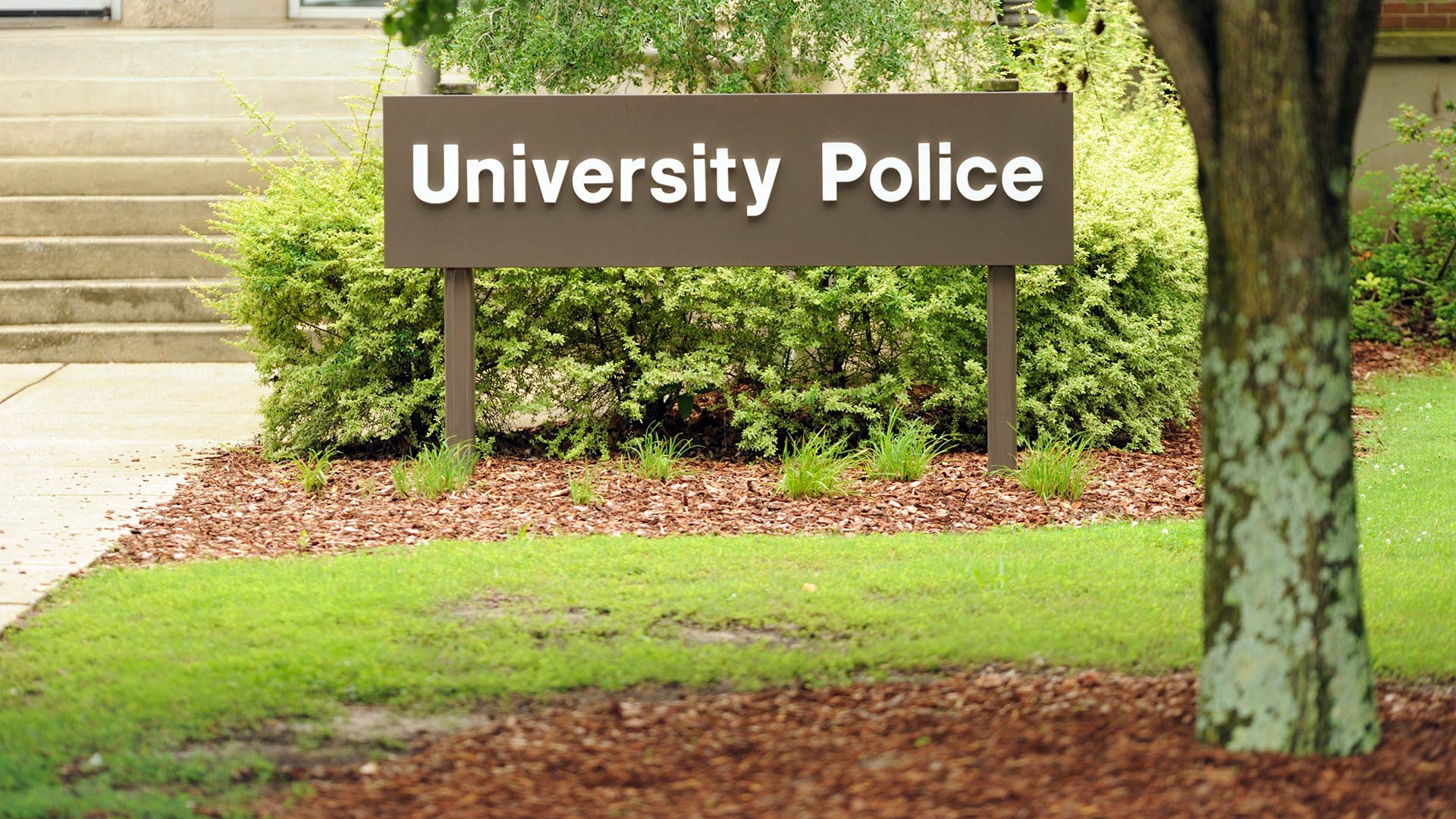
According to the latest Bureau of Justice Statistics (BJS) count from 2011–2012[1]https://bjs.ojp.gov/content/pub/pdf/cle1112.pdf, 68% of four-year colleges and universities with 2,500 students or more employ fully sworn campus police officers to maintain safety and order in their campus community. The trend continues to move in that direction, as more and more officers on campuses are given full policing powers; however, a substantial 32% of schools, and likely most small colleges and alternative programs, rely on non-sworn officers. Non-sworn officers have the same responsibility to keep students, faculty and visitors safe, but they do not have the power to arrest. This presents both challenges and opportunities.

For sworn officers, the power to arrest is one of their most potent tools. Not only does it give the officer the ability to restrict a person’s freedom when they are in violation of the law or out of control, but it is also meant to deter violating behavior in the future. When a member of the public understands that there is a grave consequence to not obeying the law or following a police directive, they often respond with deference. In fact, of the 28.9 million individuals who were stopped by the police in 2018[2]https://bjs.ojp.gov/content/pub/pdf/cbpp18st.pdf, just 12% were arrested.[3]https://ucr.fbi.gov/nibrs/2018/tables/pdfs/arrestees_adult_and_juvenile_age_category_by_arrest_offense_category_2018.pdf

The ability to arrest, to bring a person into custody and initiate the criminal justice process, confers extraordinary power. Without this power, non-sworn campus officers are left to find other ways to respond to and deter criminal behavior and violations of campus policy, and to take control when situations get tense. According to Alex Lucero, interim director of campus safety and security at Embry Riddle Aeronautical University in Prescott, Arizona, “The biggest difference between being a sworn agency and being non-sworn campus safety is that we have to use other tools in order to communicate with somebody. Our goal is to get the students to talk to us.” For him and his officers, communication and conflict resolution skills are what fortify their authority without the power of arrest. 

At Embry Riddle, campus safety officers develop their authority by 1) being present, 2) building relationships and 3) handling tough encounters that might otherwise lead to arrest, like aggressive, resistant and noncompliant behavior, with targeted curiosity rather than force, a strategy learned through training in Insight Policing: Conflict Resolution for Law Enforcement. 

Being present means constant foot patrols — not to crack down on violations, but to be a presence that the community is used to seeing on campus. Officers walk the residences and common spaces and check in on campus community members while doing their rounds. This presence helps officers build relationships when they are not actively enforcing. They’re available for informal chats and to offer their assistance — helping students into buildings, identifying parking spots, offering safe escort. When they are enforcing the rules and they run into conflict — when individuals are challenging the officer with aggression, resistance or noncompliance — the relationships they have provide an essential foundation for keeping things from escalating. When relationship isn’t enough, conflict resolution skills based on strategic communication and targeted curiosity help officers figure out why the individual is challenging the police interaction, which helps them calm the tension and discover critical information they can use to problem solve effectively.

“Our purpose as campus safety is to usher students into adulthood as supporters, not punishers. We realize that college students are in a fun and exciting, but also challenging, point in their lives. Our role is to help,” Lucero says. So when situations get tense, like at a recent party involving underage drinking, officers don’t use force to control the scene; they use curiosity. 
iStock.com/sshepard

A male student was aggressively refusing to let officers into the dorm room where they knew alcohol was being consumed. Sensing the potential for escalation, the officers recognized the student’s refusal as conflict behavior, and began to wonder and ask with genuine curiosity what was concerning the student — what did he think was going to happen if he let them in? 

The response was illuminating. The young man, consumed by worry and intent on defending, began to ease as he was asked about his concern. He disclosed that he was afraid that he’d be referred to the dean and kicked out of school and that his parents would never forgive him. The officers were able to use that information to let the student know that he wouldn’t be kicked out of school, and that the school doesn’t call parents for drinking violations. The student was aggressive and resistant because he had the wrong information and was imagining the worst. Revealing that allowed the officers to work with the student’s concern and help, which in turn made the student feel OK about helping the officers.

As Lucero says, “Our job is to get information and give students resources that can help get them through the problem they’re facing. If we can treat them like a person who cares about how they feel, they give us that information.” His officers didn’t need the power of arrest to get control, they needed the power of curiosity and communication.

We can begin to understand how this works when we consider some of the research on why people obey the law even when they’re faced with consequences for criminal acts. Tom Tyler and other scholars suggest that when people feel as though they have been treated fairly in a police encounter — when they have been given respect, have the ability to voice what matters to them and have a sense that the officer is both transparent and impartial in their decision-making — they consider the encounter legitimate. Trust is built in the process, and people are more likely to both comply with the officer and refrain from future violations.

When we consider that the objective of arrest is ultimately to sanction violating behavior and by doing so deter future violations for the benefit and safety of everyone, the question emerges as to whether arrest is the best tool for the job. In fact, many around the country are advocating for reducing the frequency of arrest in police encounters, given the considerable costs to those arrested as well as in public funds. When we consider the impact that using alternative methods to gain compliance and effect behavior change have — in particular, relationship-building, communication and curiosity — the possibility opens that the power to arrest is less important than it might seem, and should be reserved as a power of last resort.

Non-sworn campus police are finding that they don’t need arrest powers to perform effective enforcement and keep campuses safe and secure. Curiosity, communication and trust give them the authority and information they need to sanction bad behavior and deter violations through education and resources. With a national call to reduce arrests and improve relationships between police and the community, perhaps sworn officers could benefit from a peek into the campus policing playbook.

Dr. Megan Price

Dr. Megan Price

Dr. Megan Price is the director of the Center for Applied Insight Conflict Resolution in Washington, D.C., and is founder and trainer of Insight Policing: Conflict Resolution for Law Enforcement (insightpolicing.com), which teaches officers the foundations of conflict decision-making and targeted, curiosity-based communication skills for controlling escalation and problem-solving effectively. Dr. Price is adjunct professor in Conflict Analysis and Resolution at George Mason University and associate faculty in the Conflict Management master’s program at Royal Roads University.

View articles by Dr. Megan Price

As seen in the July 2022 issue of American Police Beat magazine.
Don’t miss out on another issue today! Click below:


SUBSCRIBE TODAY!

References[+]

References
1 https://bjs.ojp.gov/content/pub/pdf/cle1112.pdf
2 https://bjs.ojp.gov/content/pub/pdf/cbpp18st.pdf
3 https://ucr.fbi.gov/nibrs/2018/tables/pdfs/arrestees_adult_and_juvenile_age_category_by_arrest_offense_category_2018.pdf

Categories: On the Job

Primary Sidebar

Recent Articles

  • The impact of the Graham v. Connor decision
  • Coffee shop intel
  • Developing and enhancing assertiveness
  • Mexican cartels recruit like industry titans on both sides of the border — and it’s working
  • Down to divorce
  • Unsung heroes: New York City correction officers
  • The virtual beat
  • Why more staff won’t fix your operational slowdowns
  • Training with an AI partner?
  • Curbing teen takeovers

Footer

Our Mission
To serve as a trusted voice of the nation’s law enforcement community, providing informative, entertaining and inspiring content on interesting and engaging topics affecting peace officers today.

Contact us: info@apbweb.com | (800) 234-0056.

  • Facebook
  • Instagram
  • Twitter

Categories

  • Editor’s Picks
  • On the Job
  • Labor
  • Tech
  • Training
  • Policy
  • Health/Wellness
  • Community
  • Offbeat
  • We Remember
  • Jobs and Careers
  • Events

Editor’s Picks

Smile and let them swing

Smile and let them swing

May 16, 2026

The job has changed — have you?

The job has changed — have you?

May 15, 2026

The days that follow

The days that follow

May 11, 2026

Perpetual recognition of line-of-duty deaths

Perpetual recognition of line-of-duty deaths

May 10, 2026

Policies | Consent Preferences | Copyright © 2026 APB Media, LLC | Website design, development and maintenance by 911MEDIA

Open

Subscribe

Close

Receive the latest news and updates from American Police Beat directly to your inbox!

  • This field is for validation purposes and should be left unchanged.