
• Skip to primary navigation
  • Skip to main content
  • Skip to primary sidebar
  • Skip to footer
  • Home
  • About
  • The Magazine
  • Events
  • Partners
  • Products
  • Contact
  • Jobs and Careers
  • Advertise
  • Facebook
  • Instagram
  • Twitter
  • Subscribe
American Police Beat

American Police Beat Magazine

Law Enforcement Publication

  • Home
  • Leadership
    • The hidden costs of micromanagement
      Police leadership development
      Can they do it? Will they do it?
      A unique approach to salvaging a troubled employee
      The relentless pursuit of excellence
  • Topics
    • Leadership
      • The hidden costs of micromanagement
        Police leadership development
        Can they do it? Will they do it?
        A unique approach to salvaging a troubled employee
        The relentless pursuit of excellence
    • Editor’s Picks
      • No two days are ever the same
        Training dipshittery, Part 2
        Tactical medicine for cops
        Why good cops quit
        Smile and let them swing
    • On the Job
      • Frankpledge to forensics: A brief history of law enforcement
        The sixth sense in policing
        From warrior to peacekeeper
        Hats off to a new uniform look
        Overcoming climate and conditions to rescue child
    • Labor
      • The shift happens long before the resignation letter
        Facing the oral board
        Why good cops quit
        Succession planning
        Why more staff won’t fix your operational slowdowns
    • Tech
      • Accentuating safety for first responders
        Take Me Home program offers effective tool for police and families
        Get the most out of simulation training
        The virtual beat
        Training with an AI partner?
    • Training
      • More than just a red shirt and a Sharpie
        Train them to ask why
        Nobody is coming to do it for you
        Precision, adaptability and response: The need for LPVOs in equipping...
        Training dipshittery, Part 2
    • Policy
      • Out of chaos comes opportunity
        Massachusetts law establishes fund to care for retired K-9s
        Portlanders will not vote on diverting climate funds for police...
        Surviving internal affairs investigations
        Fighting human trafficking at the local level
    • Health/Wellness
      • Trauma exposure and preventing officer suicide
        Understanding why police officers think alcohol works
        Has the job quietly stolen your humanity?
        No two days are ever the same
        Changing the narrative
    • Community
      • National Night Out 2026
        Pittsburgh mounted patrol officer helps inner-city kids saddle up
        Wyoming girl on a mission to collect “hero patches”
        Texas sheriff’s office nominates 7-year-old for commendation
        Cops try to net DEA agents
    • Offbeat
      • A surprise sting operation
        Could cadaver otters help close cold cases?
        Police chief catches cat in the act
        “Teenage Mutant Ninja Deer” rescued
        An unexpected burglar
    • We Remember
      • Honoring the Fallen Heroes of 9-11
        Steel Across America
        The first officers on scene on September 11
        Protecting America with the USA PATRIOT Act
        Distant cousins connect to honor fallen family member 110 years after...
    • HOT Mail
      • The War on Cops Continues Unabated
  • On the Job
    • Frankpledge to forensics: A brief history of law enforcement
      The sixth sense in policing
      From warrior to peacekeeper
      Hats off to a new uniform look
      Overcoming climate and conditions to rescue child
  • Labor
    • The shift happens long before the resignation letter
      Facing the oral board
      Why good cops quit
      Succession planning
      Why more staff won’t fix your operational slowdowns
  • Tech
    • Accentuating safety for first responders
      Take Me Home program offers effective tool for police and families
      Get the most out of simulation training
      The virtual beat
      Training with an AI partner?
  • Training
    • More than just a red shirt and a Sharpie
      Train them to ask why
      Nobody is coming to do it for you
      Precision, adaptability and response: The need for LPVOs in equipping...
      Training dipshittery, Part 2
  • Policy
    • Out of chaos comes opportunity
      Massachusetts law establishes fund to care for retired K-9s
      Portlanders will not vote on diverting climate funds for police...
      Surviving internal affairs investigations
      Fighting human trafficking at the local level
  • Health/Wellness
    • Trauma exposure and preventing officer suicide
      Understanding why police officers think alcohol works
      Has the job quietly stolen your humanity?
      No two days are ever the same
      Changing the narrative
  • Community
    • National Night Out 2026
      Pittsburgh mounted patrol officer helps inner-city kids saddle up
      Wyoming girl on a mission to collect “hero patches”
      Texas sheriff’s office nominates 7-year-old for commendation
      Cops try to net DEA agents
  • Offbeat
    • A surprise sting operation
      Could cadaver otters help close cold cases?
      Police chief catches cat in the act
      “Teenage Mutant Ninja Deer” rescued
      An unexpected burglar
  • We Remember
    • Honoring the Fallen Heroes of 9-11
      Steel Across America
      The first officers on scene on September 11
      Protecting America with the USA PATRIOT Act
      Distant cousins connect to honor fallen family member 110 years after...
  • HOT Mail
    • The War on Cops Continues Unabated
  • About
  • The Magazine
  • Events
  • Partners
  • Products
  • Contact
  • Jobs and Careers
  • Advertise
  • Subscribe
Search

On the Job

The utilization of weapon-mounted lights

Dan Kickert and Lauren Sheehan Published July 24, 2022 @ 6:00 am PDT

iStock.com/MRBIG_PHOTOGRAPHY

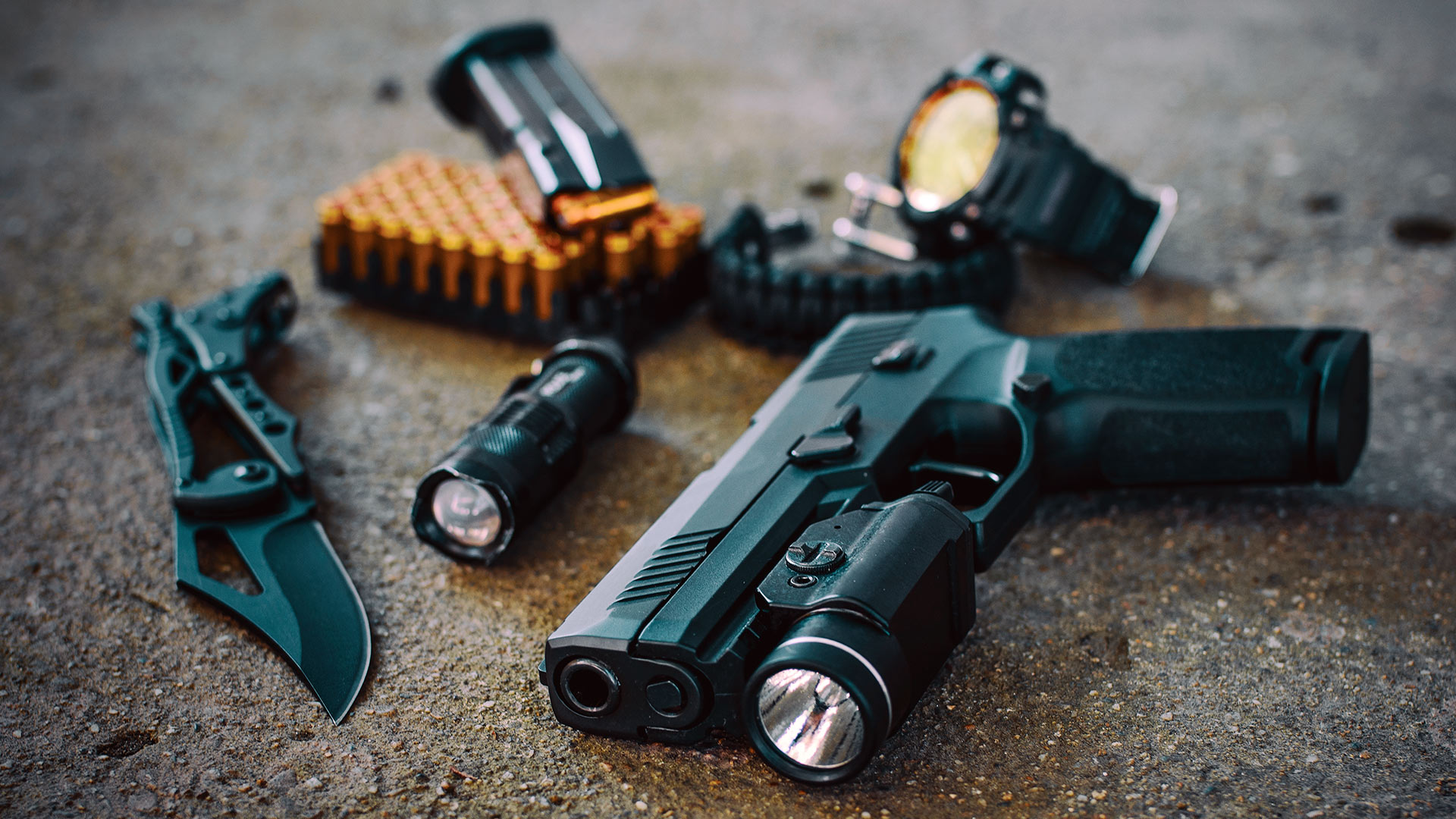
There was a time not long ago when it was almost unheard of to see a flashlight mounted on a police officer’s pistol. They were originally used by SWAT teams and other specialized units, but now it is common to see weapon-mounted lights, or WMLs, on duty guns across the country. In most agencies, it is hard to find an officer without a WML. There are many trainers who believe that there should be a WML on every defensive handgun, including Aaron Cowan of Sage Dynamics, who has stated that “weapon-mounted lights are mandatory.” 

WMLs have a role to fill in law enforcement; however, as cops, we need to know what role that is. Any cop who has been on the job for more than a few years has seen other cops using WMLs for administrative tasks more often than they would care to recall. Why is this? The answer is training. It is either a lack of training or a lack of good training. We should all look at what tasks we are using our WML versus our handheld light for and why. We should then begin to train ourselves and others accordingly.

Why risk the possibility of shining a light on a threat you intended to shoot or, even worse, shooting something you intended to shine a light on?

As a law enforcement community, if we are being honest with each other, we love redundancy. Most of us have a light in our patrol car, a light mounted to our long gun and at least one other light on our duty belt or vest. Why wouldn’t we have a light mounted on our handgun? Well, the answer is that if you have not been properly trained with a WML on your handgun, you have no business carrying it. Any cop who has been on the job for more than a few months has seen someone performing a search with a WML. We do not wish to discuss tactics here because that would be enough material for a whole other article; however, searches with WMLs are safe, provided they are done properly.

When searching a building, the same basic firearms safety rules apply:

  1. Never point your muzzle at something you do not mind killing — we do not mind killing a floor or a brick wall.
  2. Be sure of your backstop (see #1). You may not mind killing some bifold closet doors, but you will have a hard time sleeping if you kill a scared 8-year-old girl hiding behind the closet doors.
  3. Keep your finger off the trigger and away from the trigger until you have identified a threat and intend to fire — this means “bent C” indexing. Seriously, if your finger does not touch the trigger, the gun will not fire.
  4. This rule is typically, “Treat all firearms as if they are loaded.” For our purposes, this rule is to simply be sure your firearm is loaded. At the start of your shift and each time your firearm is out of your full physical control, point it in a safe direction, drop your mag, make sure it is full, then do a quick chamber check. It does not take much time. It doesn’t have much to do with operating a WML, but if we are going to talk about not shooting things we do not intend to, it is good to be sure we can address a threat if we need to.

These four universal firearms safety rules are typically adhered to quite well by the law enforcement community. However, some officers break these rules or come dangerously close to it when they do not need to. Muzzle awareness is sometimes a difficult concept for newer officers to grasp, and being sure of your backstop can take some understanding of ballistics and the ammunition you are carrying. These infractions of the rules are easily observed by other officers and trainers and are resolved with a minimal amount of training and some experience. The safety violation that troubles us the most is when officers fail to keep their finger away from the trigger.

The Streamlight TLR series of lights and the SureFire X series of pistol lights both come with switches on the tailcap. They are the most utilized handgun WMLs in law enforcement. Both lights can be activated from either side of the pistol. The Streamlight can be pushed up or down. The SureFire lights can be flipped up, down or pushed forward. Although the SureFire light has the added option of the activation by forward push, the up and down activation requires much more pressure. The SureFire X300 costs at least twice as much as the Streamlight TLR-1.

Now that we have discussed the firearms safety rules and the methods of activation for commonly used WMLs, we hope you can see where the issue comes in. Some officers activate their WML with their trigger finger. It is both comfortable and ergonomic. It is also often trained. There are multiple concerns when activating a light in this manner in a real-world scenario. The first issue is that you are crossing your trigger when going from an indexed “bent C” position on the side of the frame to the switch on your light. If you were to experience a startle response, it is more likely than not that your hand will close, causing you to subconsciously place your finger on the trigger and press it. A second and equally serious issue is that you are assigning more than one job to your trigger finger. The trigger finger is the trigger finger for a reason. This is arguably the most important job when it comes to operating a firearm. This finger needs to sit on the bench until it is game time. It is well documented that human beings lose dexterity and fine motor skills when experiencing extreme stress. This loss of dexterity results in trained movements. Why risk the possibility of shining a light on a threat you intended to shoot or, even worse, shooting something you intended to shine a light on?

There is simply a better way. The WML should be activated with your support-hand thumb. This permits you to operate your handgun in a safer manner by keeping your trigger finger indexed in the “bent C” position on the frame of your handgun. It also simplifies things in the event a threat needs to be addressed. Your trigger finger only has one job, and it knows exactly what it needs to do — a simple, smooth, steady press straight to the rear of the firearm. We know we stated that we did not want to get into tactics, but we can already envision people reading this and thinking that they have small hands and will have to break their grip, or what about when they are operating their pistol with one hand? It is just this simple: turn the light on and leave it on. There are plenty of tactical gurus out there who say cute things like “paint your path” and all sorts of other catchy phrases. We came in marked cars with lights and sirens. We are wearing uniforms. If our guns are drawn, there is a reason for it, and it is serious. There is likely either an alarm going off, a person or people calling 9-1-1, or any other reason. We are there. If the bad guy(s) or gal(s) are there, they already know we are there. We literally have thousands of things we need to concern ourselves with. Why would we add flipping a damn light on and off to the list? If you need your light, turn it on and leave it on. If you go into a well-lit room, cool, you now have extra light. If you go into a pitch-black room, also cool, your light is already on.

The final thought on WMLs and a personal pet peeve of ours is the utilization of WMLs in an administrative situation. We already talked about all the lights we typically have at our disposal. If you need to look at a map, need to find something on the floor of your patrol car or the lights go out in the locker room and you cannot see the combination lock on your locker, please use your administrative light. We carry administrative lights for administrative tasks. If there is no legal justification for removing your firearm from your holster, do not utilize it. It is really that simple. If you cannot articulate why you need to draw your weapon, do not. Yes, it has a light on it. Yes, you probably paid a lot of money for it and it is really cool. But do not use it as a flashlight. It is simply an extension of your firearm with the designated purpose of providing a free support hand while assisting to identify threats, hazards and non-threats in a foreign environment. If you are not in need of doing any of the above, use your administrative light.

Dan Kickert and Lauren Sheehan

Dan Kickert and Lauren Sheehan

Dan Kickert is a police officer in the south suburbs of Chicago with 15 years of experience. He is currently assigned to patrol and training. He serves his agency as a field training officer, range master, tactics instructor and training coordinator. He was previously assigned to investigations, where he worked as a homicide investigator in a task force setting for seven years.

Lauren Sheehan spent four years with the Olympia Fields Police Department before going to work as a deputy sheriff in a collar county of Chicago. She has an M.S. in criminal social justice from Lewis University. She has served as a crisis intervention team officer, accident reconstructionist, juvenile specialist and firearms trainer, as well as volunteering to coordinate events such as the National Night Out Against Crime and Cop on Top fundraisers for the Special Olympics of Illinois.

View articles by Dan Kickert and Lauren Sheehan

As seen in the July 2022 issue of American Police Beat magazine.
Don’t miss out on another issue today! Click below:


SUBSCRIBE TODAY!

Categories: On the Job

Primary Sidebar

Recent Articles

  • NLEOMF to hold Online Silent Auction during Police Weekend
  • Trauma exposure and preventing officer suicide
  • The hidden costs of micromanagement
  • Honoring the Fallen Heroes of 9-11
  • Serving every survivor, every sacrifice
  • Steel Across America
  • The first officers on scene on September 11
  • National Night Out 2026
  • Accentuating safety for first responders
  • A surprise sting operation

Footer

Our Mission
To serve as a trusted voice of the nation’s law enforcement community, providing informative, entertaining and inspiring content on interesting and engaging topics affecting peace officers today.

Contact us: info@apbweb.com | (800) 234-0056.

  • Facebook
  • Instagram
  • Twitter

Categories

  • Editor’s Picks
  • On the Job
  • Labor
  • Tech
  • Training
  • Policy
  • Health/Wellness
  • Community
  • Offbeat
  • We Remember
  • Jobs and Careers
  • Events

Editor’s Picks

No two days are ever the same

No two days are ever the same

July 24, 2026

Training dipshittery, Part 2

Training dipshittery, Part 2

July 23, 2026

Tactical medicine for cops

Tactical medicine for cops

July 18, 2026

Why good cops quit

Why good cops quit

July 14, 2026

Policies | Consent Preferences | Copyright © 2026 APB Media, LLC | Website design, development and maintenance by 911MEDIA

Open

Subscribe

Close

Receive the latest news and updates from American Police Beat directly to your inbox!

  • This field is for validation purposes and should be left unchanged.


