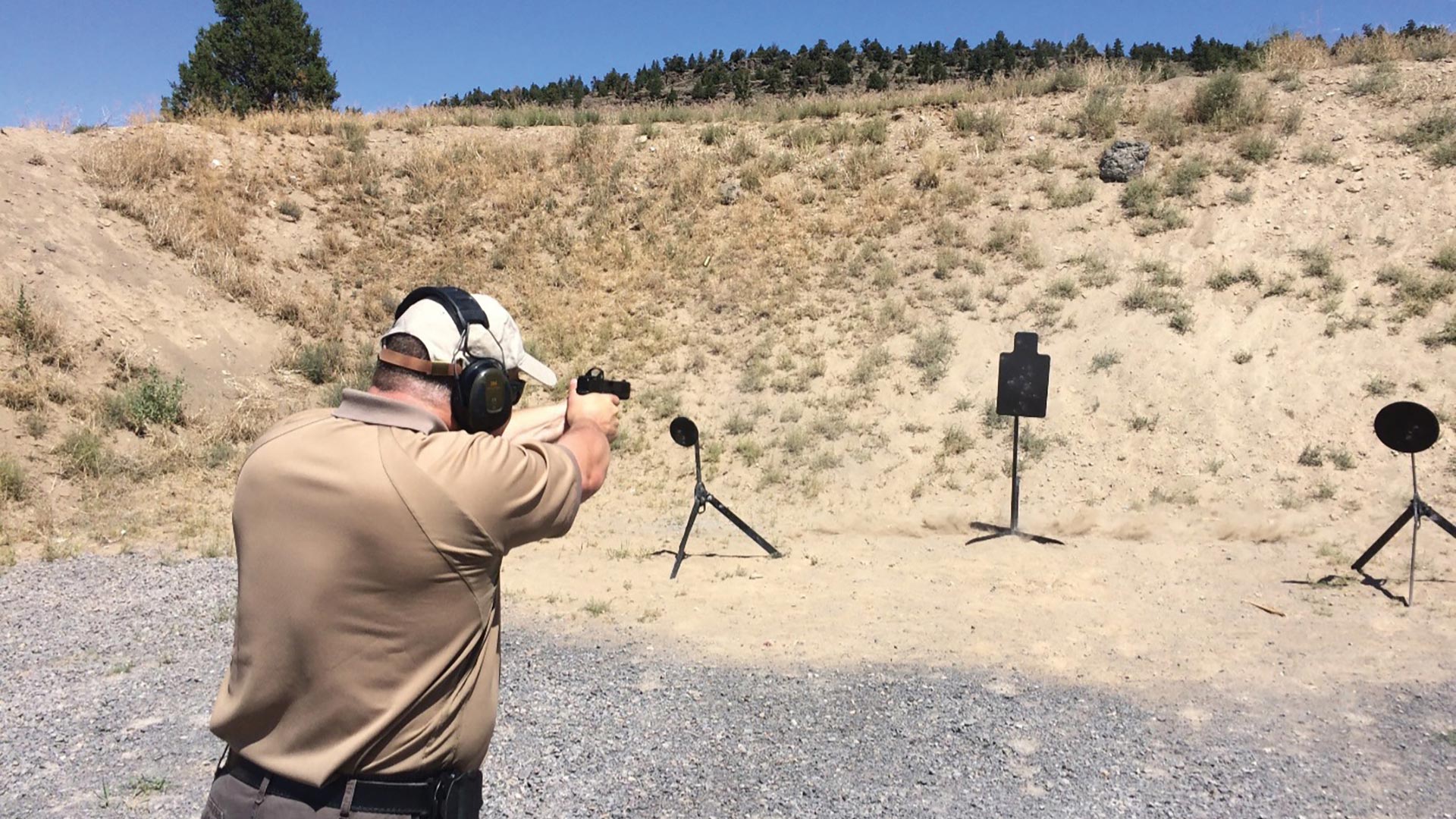
When it comes to firearms training, there’s nothing more satisfying than the sound of a successful hit on steel. Along with the sight of copper jacket splashing into the soft ground, it’s instant feedback of a job well done.
Unfortunately, many instructors have never been trained to safely use steel targets. Too often, we go to the range, set up a few steel targets, and start blasting. Occasionally, someone will get struck by a piece of jacketing coming back at them, but that’s normal, right? No, it’s not normal. It’s a sign that something is wrong with the equipment or range setup. Unpredictable bullet spatter can be dangerous for everyone on the range. But with a little bit of knowledge, we can set up steel targets safely and make our training more effective at the same time.
Effective training
Steel targets are a great training tool because, unlike paper and cardboard targets, they don’t need to be replaced frequently. There’s no need for staples, target backers, tape, spray adhesive or any of the other range supplies we typically need when using paper or cardboard targets, saving time and money that can be used for more training. You just need a little bit of spray paint to freshen them up, and you’re good to go.
Steel targets are a great way to develop the ability to balance speed and accuracy. Perhaps the best thing about using steel targets is they develop shooting skills at the subconscious level of awareness. The subconscious mind can learn to reflexively control the shooting process with instantaneous feedback. This is done by providing instant audible and visual feedback when the target rings, falls, retracts or drops, providing assurance of accuracy. This repetition and feedback compress combative marksmanship into reaction-time components, achieving a balance between speed and accuracy. Shooters gain confidence in their ability to engage targets quickly and accurately.
Selecting targets of different sizes trains shooters to understand when they can go faster and when they need to slow down. Changing the pace of shooting is a challenge for all shooters, especially when moving from larger targets to smaller targets, requiring precise shot placement. Mixing it up with some smaller targets in your drill design can force a slower, more precise pace. When you recognize the need to slow down to make good hits under time duress in training, it can help train your brain to recognize when you need to slow down under the stress and time duress of a lethal encounter.
Safer training
Everyone knows that eye and ear protection should always be worn during firearms training. Eye protection should wrap around and fit snugly near the face at the top, sides and bottom of the glasses to prevent debris from entering behind the glasses.
The bullet striking the steel plate creates spatter. The amount of spatter depends on several factors, including the angle of deflection, target hardness, bullet design, target placement and target condition. The angle of deflection is the area located under and around the target where fragmented bullets impact. The forward lean of the target face affects the angle of deflection. The more the target face angles forward, the greater the angle of deflection. A simple way to determine your spatter zone is to shoot your target with a paper or cardboard target on the ground. The bullet spatter will leave holes in the paper, showing you where the spatter zone is located.
Bullet design is also an important part of the bullet spatter equation. Frangible ammunition is the ideal choice for training with steel targets because it leaves little to no bullet spatter. The problem is frangible ammunition is expensive compared to jacketed training ammunition.
Aside from frangible ammunition, it’s best to use high-velocity, non-bonded ammunition to create a predictable spatter zone on impact. Using bonded duty ammunition is not a good idea.
Choosing steel targets
Quality steel targets are manufactured using appropriately hard steel. Steel that is too soft won’t be durable and will create an unsafe training environment by making the bullet spatter unpredictable. Most high-quality manufacturers use steel with a Brinell hardness rating of at least 500, so if you buy from a reputable manufacturer, you’ll get the good stuff. However, if you buy steel targets from Uncle Skippy’s garage, you are going to get lower quality steel.
Quality steel targets can take years of hard use on the range when properly maintained and used correctly. Don’t be the guy who takes the new steel target to the range and shoots it with a rifle only to discover the new steel looks like Swiss cheese. Instead, make sure you match your steel targets with their intended use.
If you’re going to use steel targets for handgun training only, I recommend buying 3/8” AR500 steel targets. These targets will provide sufficient strength, hardness, impact resistance and durability for years of hard use from all duty-caliber handguns.
However, if your plans include rifle training, I recommend buying 1/2” AR500 or 1/2” AR550 steel targets. These can take thousands of rounds and will handle the heavy workload. To avoid pitting the targets, make sure the bullet velocity at the target does not exceed 2,900 fps. I generally like to see bullet velocities down around 2,800 fps as an additional safety buffer. The problem with rifle-rated steel is that it’s more expensive and significantly heavier to move around.
Target placement
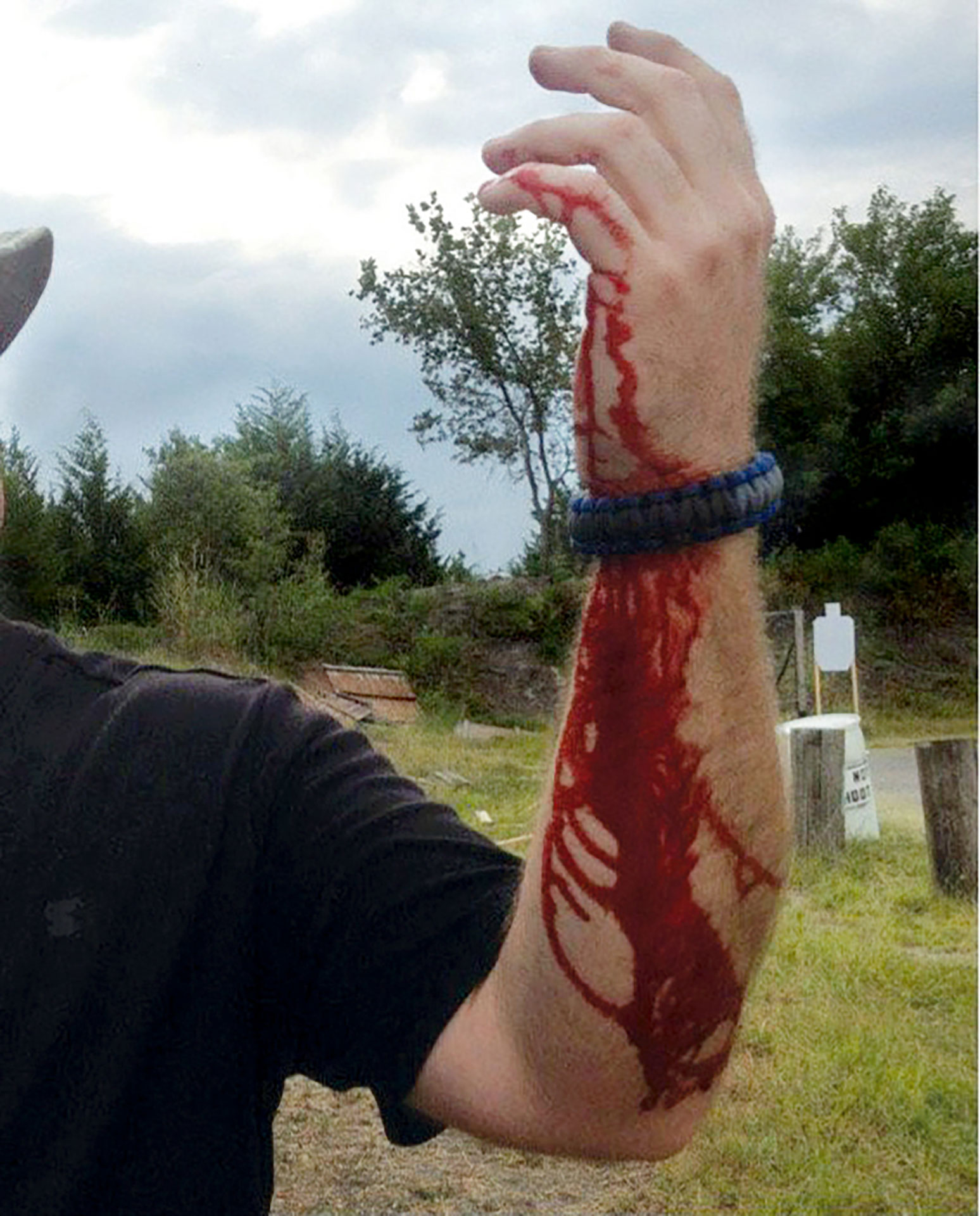
Target placement is key to safe and effective training. Check the spatter zone around the target for rocks or other debris that could send bullet fragments back toward the shooter. Placing steel targets on soft dirt or grass is important to keeping a predictable spatter zone. Gravel, asphalt, concrete or any other hard surfaces could lead to bullet spatter hitting the shooter or bystanders. Most of the time, bullet spatter is just annoying, but I know of several instances that resulted in a trip to the local hospital to have bullet fragments dug out of shooters and instructors because of improper target placement or surface preparation.
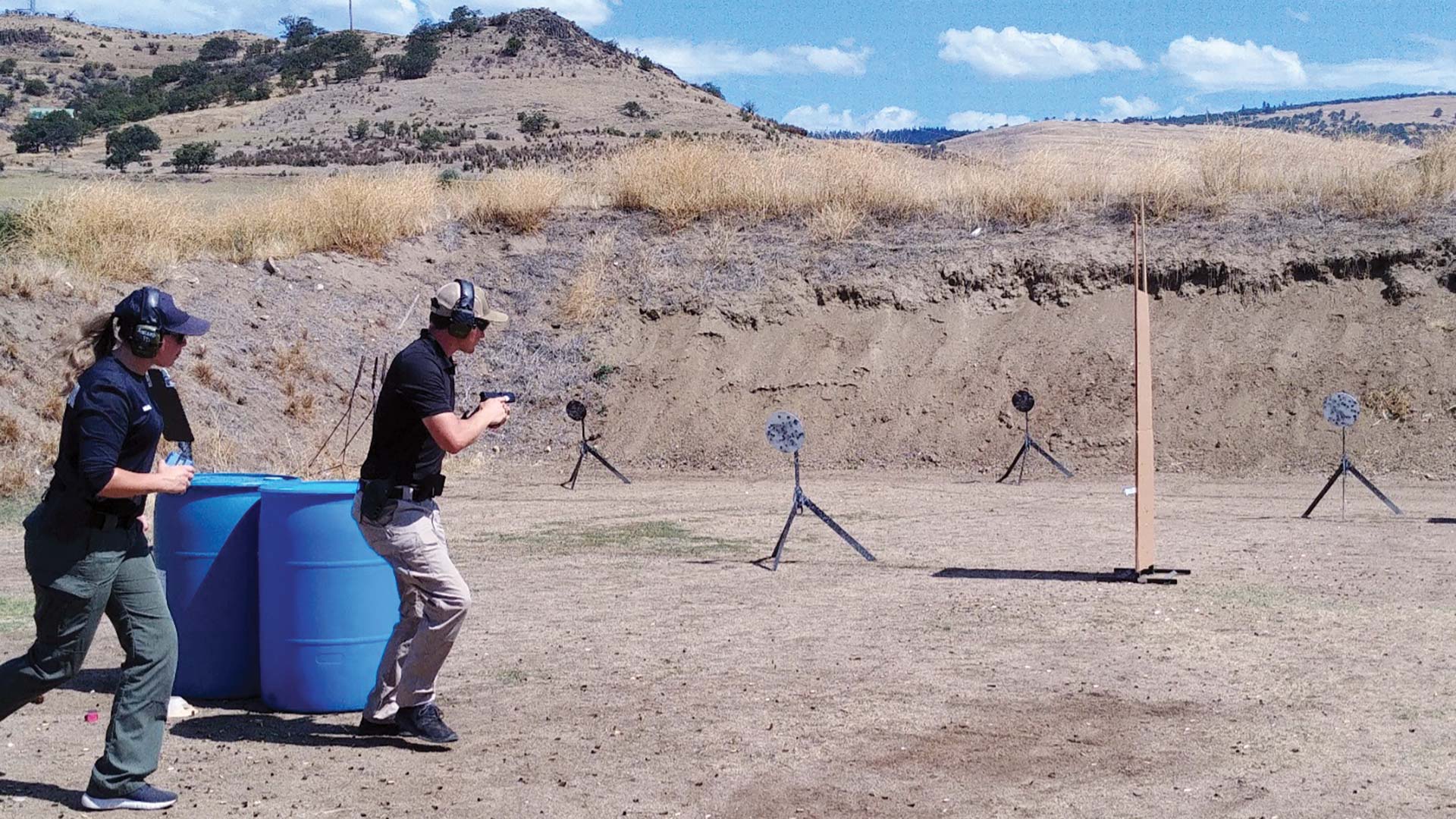
The location of other targets and target stands is another consideration. Bullet spatter can come off anything around the steel target, so we need to keep other targets and target stands outside this area. Additional steel targets should not be placed parallel to each other without a barrier between them. Spatter from one target could ricochet off another target, creating a hazardous training environment. Instead, targets should be staggered to keep them out of the spatter zone.
For handgun training, I recommend 10 yards as the minimum distance between the shooter and the target. This keeps the shooter outside the spatter zone and decreases the likelihood of safety problems. As for rifle training, unless frangible ammunition is used, I recommend keeping the targets at 100 yards. The last thing we want is for high-velocity bullet spatter to come back and seriously injure someone. If the target is manufactured with a high angle of deflection, those targets can be safely used at closer distances. Just follow the manufacturer’s advice and warnings.
Target maintenance
Quality steel targets are durable and, with proper care and maintenance, could last a long time. But they will eventually get worn out. Prior to training, inspect steel plates for cracking, pitting or other signs of damage. Steel targets that are pitted, cratered, dimpled or punctured could create a hazardous deformation of the bullet, making it impossible to predict the spatter zone. Steel targets that are smooth and flat provide a predictable spatter pattern.
Another critical aspect of steel target maintenance is keeping steel targets clean and free of corrosion once the training day is over. Some people coat a rag with oil and run it over the steel to prevent corrosion. This works well for steel that is frequently used and left outside. If the targets are going to be stored inside, no one wants to get covered in oil when moving them. The most common way to prevent corrosion is to use spray paint with a rust inhibitor. Taking a few minutes to spray your targets down at the end of each training day will protect your investment.
Steel targets are an effective way to train, develop combative speed and accuracy, and keep training fun and interesting. Shooters get audible and visual feedback from steel targets, which instantly confirms hits. Steel reduces downtime by eliminating the need to tape holes and post new paper targets, and they aren’t affected by rain, wind or other weather conditions. So, get to the range and make the steel targets ring.