• Skip to primary navigation
  • Skip to main content
  • Skip to primary sidebar
  • Skip to footer
  • Home
  • About
  • The Magazine
  • Events
  • Partners
  • Products
  • Contact
  • Jobs and Careers
  • Advertise
  • Facebook
  • Instagram
  • Twitter
  • Subscribe
American Police Beat

American Police Beat Magazine

Law Enforcement Publication

  • Home
  • Leadership
    • Understanding the boundaries of professional relationships with the...
      Why you should lead from 30,000 feet
      Public perception and trust
      When performance reviews are a waste of time
      Taking a page from Toyota’s playbook
  • Topics
    • Leadership
      • Understanding the boundaries of professional relationships with the...
        Why you should lead from 30,000 feet
        Public perception and trust
        When performance reviews are a waste of time
        Taking a page from Toyota’s playbook
    • Editor’s Picks
      • Liability challenges in contemporary policing
        When performance reviews are a waste of time
        Proactive wellness visits
        Taking a page from Toyota’s playbook
        Law enforcement’s missing weapon
    • On the Job
      • Villains and heroes in the Big Apple
        Right place, right time — again
        Some good news on crime
        Mom-to-be named Cop of the Year
        Fatherly instincts save boy from icy water
    • Labor
      • Cut the cops, save a dollar?
        Labor release under fire
        Who’s watching the watchmen?
        Crime and punishment (or lack thereof) in Seattle
        Labor leadership out in the field
    • Tech
      • New Mexico license plate readers save lives, lead to “precise...
        A modern field guide to understanding research in policing
        Gear that moves with you
        A new breed of cop car
        The future of patrol is here
    • Training
      • Navigating danger
        Critical thinking in police training
        Threshold neuroscience
        Integrated virtual reality training
        Hit the pause button
    • Policy
      • E-bikes spark public safety concerns
        Try racing without wheels
        Law enforcement accreditation: Why it matters
        Liability challenges in contemporary policing
        The war on drugs is evolving
    • Health/Wellness
      • Addressing stress, vicarious trauma and burnout
        Nervous system regulation
        The nature of the job
        Promoting organizational wellness
        Telling cops to get more sleep isn’t working
    • Community
      • Improving autism awareness
        Shop with a Cop
        Community engagement: What is it moving forward?
        Contradictory crossroads
        Back-to-school season brings out police support nationwide
    • Offbeat
      • An unexpected burglar
        Police humor only a cop would understand
        Not eggzactly a perfect heist
        Pizza … with a side of alligator?
        Wisconsin man charged with impersonating Border Patrol agent twice in...
    • We Remember
      • Forty heroes: United Airlines Flight 93
        The Pentagon
        A nation propelled to war, lives changed forever
        A Christmas loss
        York County ambush leaves three officers dead, others critically...
    • HOT Mail
      • The War on Cops Continues Unabated
  • On the Job
    • Villains and heroes in the Big Apple
      Right place, right time — again
      Some good news on crime
      Mom-to-be named Cop of the Year
      Fatherly instincts save boy from icy water
  • Labor
    • Cut the cops, save a dollar?
      Labor release under fire
      Who’s watching the watchmen?
      Crime and punishment (or lack thereof) in Seattle
      Labor leadership out in the field
  • Tech
    • New Mexico license plate readers save lives, lead to “precise...
      A modern field guide to understanding research in policing
      Gear that moves with you
      A new breed of cop car
      The future of patrol is here
  • Training
    • Navigating danger
      Critical thinking in police training
      Threshold neuroscience
      Integrated virtual reality training
      Hit the pause button
  • Policy
    • E-bikes spark public safety concerns
      Try racing without wheels
      Law enforcement accreditation: Why it matters
      Liability challenges in contemporary policing
      The war on drugs is evolving
  • Health/Wellness
    • Addressing stress, vicarious trauma and burnout
      Nervous system regulation
      The nature of the job
      Promoting organizational wellness
      Telling cops to get more sleep isn’t working
  • Community
    • Improving autism awareness
      Shop with a Cop
      Community engagement: What is it moving forward?
      Contradictory crossroads
      Back-to-school season brings out police support nationwide
  • Offbeat
    • An unexpected burglar
      Police humor only a cop would understand
      Not eggzactly a perfect heist
      Pizza … with a side of alligator?
      Wisconsin man charged with impersonating Border Patrol agent twice in...
  • We Remember
    • Forty heroes: United Airlines Flight 93
      The Pentagon
      A nation propelled to war, lives changed forever
      A Christmas loss
      York County ambush leaves three officers dead, others critically...
  • HOT Mail
    • The War on Cops Continues Unabated
  • About
  • The Magazine
  • Events
  • Partners
  • Products
  • Contact
  • Jobs and Careers
  • Advertise
  • Subscribe
Search

Policy

No more “Do you know why I pulled you over?”: California enacts new law restricting police traffic stops

APB Team Published February 11, 2024 @ 6:00 am PST

iStock.com/narvikk

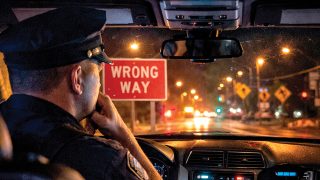
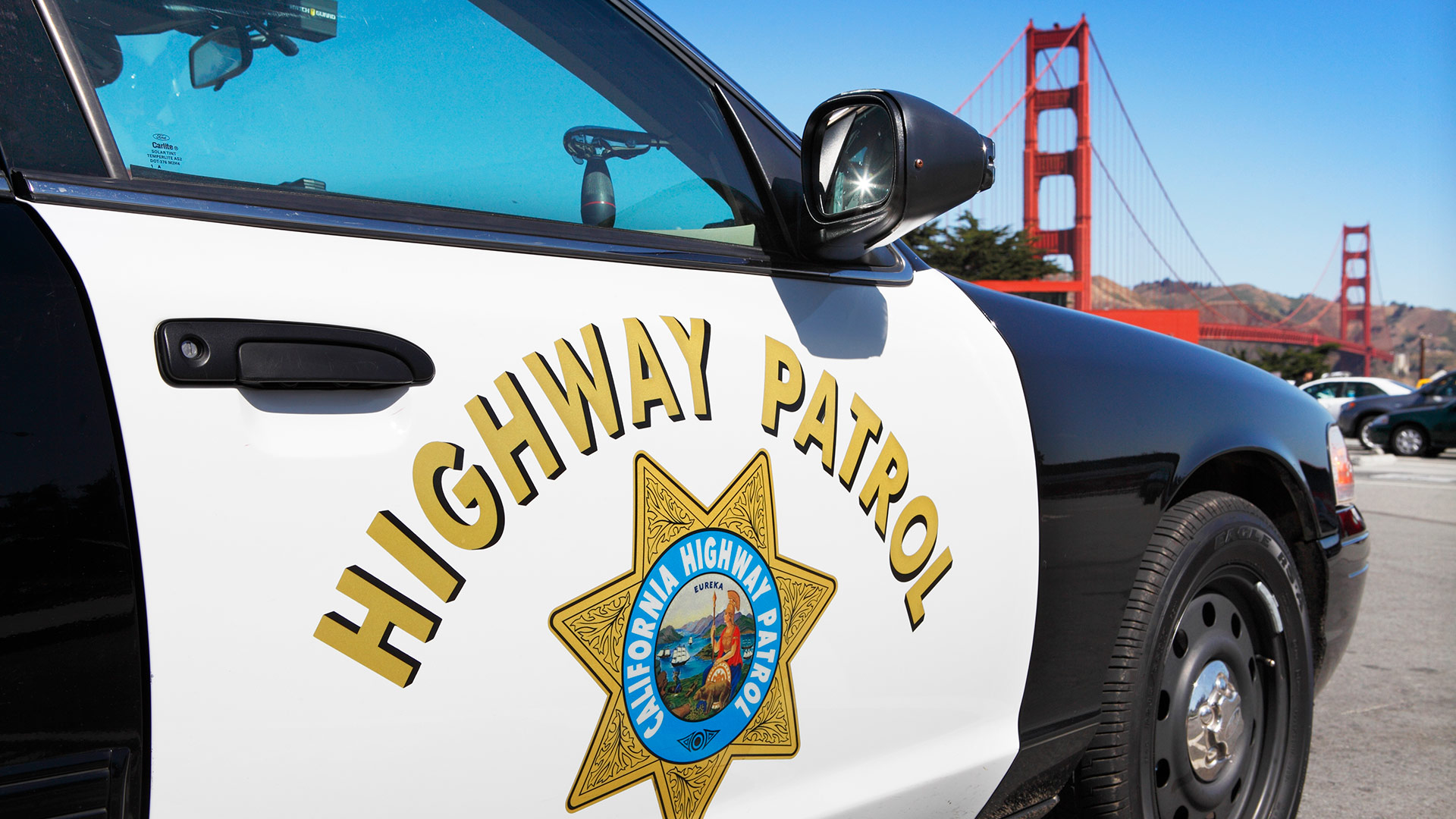
As of January 1, 2024, a new law in California is aiming to reshape police traffic stops over concerns related to racial profiling and transparency in law enforcement interactions.

Assembly Bill 2773, sponsored by Assemblymember Chris Holden (D-41), mandates that police officers must explicitly state the reason for a traffic stop before asking any questions, such as: “Do you know why I pulled you over?”
In addition, the law states that this reason must be documented in official reports.

The law, which also applies to pedestrian stops, is designed to curb what are known as “pretext stops,” where minor infractions are used as a pretext to conduct more extensive searches.

The legislation is a response to data indicating apparent disparities in police stops between Black and white motorists.
Research by the San Francisco Bay Area Planning and Urban Research Association (SPUR), for example, claims to have revealed that Black motorists in California are disproportionately targeted by police stops.

According to a report by the Racial and Identity Profiling Advisory, despite comprising only 5% of the state’s population, Black individuals accounted for nearly 13% of traffic stops.

The impetus behind AB 2773 stems from a desire to promote equity and accountability in law enforcement interactions.
Assemblymember Holden stressed the importance of transparency in the service of protecting public safety.
“My goal with this bill was to promote equity and accountability in communities across California,” stated Holden.

Advocacy groups such as Oakland Privacy also lauded the new law for addressing a systemic issue that they claim has led to tragic outcomes in the past.

According to advocates, the law aims to establish clear communication during stops to prevent misunderstandings and alleviate fears among motorists, particularly those from communities with strained relationships with law enforcement.

Shanāe Buffington, president of the California Association of Black Lawyers (CABL), hopes the law will provide clarity to motorists during stops.

For instance, Buffington noted that prior to the law’s enactment, drivers often found themselves in situations where they were pulled over without understanding the reason behind the stop, leading to heightened anxiety, especially among individuals with previous encounters with law enforcement.

Buffington also advised motorists on how to engage in conversations with the police under the new law in order to avoid self-incrimination.

“Don’t consent to the search and seizure. Let the police officer go and get a warrant. Because, at that point, there has to be probable cause. By then, another set of eyes will be on your case — who will determine if there is enough cause to search your vehicle,” Buffington told KQED.

Buffington also advised motorists to request clarification from officers and, if necessary, seek legal counsel before consenting to any searches of their vehicle.

However, concerns have been raised regarding exceptions to the law. One such exception allows officers to withhold the reason for a stop if they reasonably believe it is necessary to protect life or property from imminent threat.
Critics argue that this discretion could potentially perpetuate biases and contribute to racial profiling.

Despite the criticism, police argued that such exceptions are necessary to maintain their own safety during certain encounters.

While AB 2773 represents a significant step towards reforming police practices, efforts to address broader issues of police accountability and community oversight continue.

CABL is sponsoring AB 797, which aims to establish independent civilian commissions to investigate police use-of-force cases.
Additionally, SB 50, proposed by Senator Steven Bradford, seeks to outlaw pretext stops altogether, signaling ongoing efforts to reform policing practices in California.

A similar police reform measure regulating police interactions during encounters with the public, such as traffic stops, is also underway in New York.

The measure similarly aims to target racial profiling by police, forcing officers to track the race of individuals they engage with.


Categories: Policy Tags: racial profiling, law, transparency, Police Reform, California, traffic stops

Primary Sidebar

Recent Articles

  • New Mexico license plate readers save lives, lead to “precise policing”
  • Addressing stress, vicarious trauma and burnout
  • Understanding the boundaries of professional relationships with the boss
  • E-bikes spark public safety concerns
  • Improving autism awareness
  • Cut the cops, save a dollar?
  • Villains and heroes in the Big Apple
  • NLEOMF announces February 2026 Officers of the Month
  • Fallen law enforcement officers from across the country to be honored during 38th Annual Candlelight Vigil on May 13 in Washington, D.C.
  • Nervous system regulation

Footer

Our Mission
To serve as a trusted voice of the nation’s law enforcement community, providing informative, entertaining and inspiring content on interesting and engaging topics affecting peace officers today.

Contact us: info@apbweb.com | (800) 234-0056.

  • Facebook
  • Instagram
  • Twitter

Categories

  • Editor’s Picks
  • On the Job
  • Labor
  • Tech
  • Training
  • Policy
  • Health/Wellness
  • Community
  • Offbeat
  • We Remember
  • Jobs and Careers
  • Events

Editor’s Picks

Liability challenges in contemporary policing

Liability challenges in contemporary policing

February 27, 2026

When performance reviews are a waste of time

When performance reviews are a waste of time

February 26, 2026

Proactive wellness visits

Proactive wellness visits

February 25, 2026

Taking a page from Toyota’s playbook

Taking a page from Toyota’s playbook

February 23, 2026

Policies | Consent Preferences | Copyright © 2026 APB Media, LLC | Website design, development and maintenance by 911MEDIA

Open

Subscribe

Close

Receive the latest news and updates from American Police Beat directly to your inbox!

  • This field is for validation purposes and should be left unchanged.