• Skip to primary navigation
  • Skip to main content
  • Skip to primary sidebar
  • Skip to footer
  • Home
  • About
  • The Magazine
  • Events
  • Partners
  • Products
  • Contact
  • Jobs and Careers
  • Advertise
  • Facebook
  • Instagram
  • Twitter
  • Subscribe
American Police Beat

American Police Beat Magazine

Law Enforcement Publication

  • Home
  • Leadership
    • Developing and enhancing assertiveness
      Clarifying your “true north”
      The job has changed — have you?
      Perpetual recognition of line-of-duty deaths
      Understanding the boundaries of professional relationships with the...
  • Topics
    • Leadership
      • Developing and enhancing assertiveness
        Clarifying your “true north”
        The job has changed — have you?
        Perpetual recognition of line-of-duty deaths
        Understanding the boundaries of professional relationships with the...
    • Editor’s Picks
      • Smile and let them swing
        The job has changed — have you?
        The days that follow
        Perpetual recognition of line-of-duty deaths
        Let’s get moving!
    • On the Job
      • Coffee shop intel
        Curbing teen takeovers
        2026 Top Cops
        High-rise rescue in Brooklyn
        Swift thinking
    • Labor
      • Why more staff won’t fix your operational slowdowns
        Drama in Georgia: Mayor fires entire police department for...
        Smile and let them swing
        The Promise Gap
        Cut the cops, save a dollar?
    • Tech
      • The virtual beat
        Training with an AI partner?
        NYC’s electric vehicle fleet for LE passes milestone
        New Mexico license plate readers save lives, lead to “precise...
        A modern field guide to understanding research in policing
    • Training
      • Rules or results?
        Enhance your preparedness
        Good enough never is
        Pushback as a training signal
        Let’s get moving!
    • Policy
      • The impact of the Graham v. Connor decision
        Mexican cartels recruit like industry titans on both sides of the...
        Police and local government leaders join forces to build community...
        Police pause license plate readers
        Corruption, collusion and impunity
    • Health/Wellness
      • Down to divorce
        The days that follow
        Addressing stress, vicarious trauma and burnout
        Nervous system regulation
        The nature of the job
    • Community
      • Working community connections
        Cops promote National Donate Life Month
        Police officer kicks up social media praise
        Donning denim in solidarity with victims and survivors of sexual...
        Improving autism awareness
    • Offbeat
      • “Teenage Mutant Ninja Deer” rescued
        An unexpected burglar
        Police humor only a cop would understand
        Not eggzactly a perfect heist
        Pizza … with a side of alligator?
    • We Remember
      • Unsung heroes: New York City correction officers
        National Police Week 2026
        Shooting of Chicago police officers prompts call for new regulations...
        The sacrifice continues
        A Tribute to Fallen Heroes
    • HOT Mail
      • The War on Cops Continues Unabated
  • On the Job
    • Coffee shop intel
      Curbing teen takeovers
      2026 Top Cops
      High-rise rescue in Brooklyn
      Swift thinking
  • Labor
    • Why more staff won’t fix your operational slowdowns
      Drama in Georgia: Mayor fires entire police department for...
      Smile and let them swing
      The Promise Gap
      Cut the cops, save a dollar?
  • Tech
    • The virtual beat
      Training with an AI partner?
      NYC’s electric vehicle fleet for LE passes milestone
      New Mexico license plate readers save lives, lead to “precise...
      A modern field guide to understanding research in policing
  • Training
    • Rules or results?
      Enhance your preparedness
      Good enough never is
      Pushback as a training signal
      Let’s get moving!
  • Policy
    • The impact of the Graham v. Connor decision
      Mexican cartels recruit like industry titans on both sides of the...
      Police and local government leaders join forces to build community...
      Police pause license plate readers
      Corruption, collusion and impunity
  • Health/Wellness
    • Down to divorce
      The days that follow
      Addressing stress, vicarious trauma and burnout
      Nervous system regulation
      The nature of the job
  • Community
    • Working community connections
      Cops promote National Donate Life Month
      Police officer kicks up social media praise
      Donning denim in solidarity with victims and survivors of sexual...
      Improving autism awareness
  • Offbeat
    • “Teenage Mutant Ninja Deer” rescued
      An unexpected burglar
      Police humor only a cop would understand
      Not eggzactly a perfect heist
      Pizza … with a side of alligator?
  • We Remember
    • Unsung heroes: New York City correction officers
      National Police Week 2026
      Shooting of Chicago police officers prompts call for new regulations...
      The sacrifice continues
      A Tribute to Fallen Heroes
  • HOT Mail
    • The War on Cops Continues Unabated
  • About
  • The Magazine
  • Events
  • Partners
  • Products
  • Contact
  • Jobs and Careers
  • Advertise
  • Subscribe
Search

Health/Wellness

Tired of being tired?

Police sleep issues and solutions

Dr. Matthew Loeslie Published March 26, 2025 @ 6:00 am PDT

iStock.com/Motortion

The sacrifice of sleep

The policing profession demands significant sacrifice. One of the most common things officers sacrifice is a regular working schedule. The nature of law enforcement requires officers to be available 24/7, disrupting their natural sleep patterns and circadian rhythms. As a result, officers often sacrifice their health and may even reduce their lifespan if they don’t get adequate sleep. Lynne Peeples, in her book The Inner Clock, highlights the increased risks associated with shift work, including diabetes, hypertension, obesity, metabolic syndrome, hormonal imbalances and potential long-term cellular damage.

We can’t cheat our minds and bodies out of the rest they need and have good long-term results.

The impact of sleep deprivation

In fact, academic researchers can’t do many sleep studies that limit participants’ sleep. Why? Because they know it’s dangerous for the participants, and ethics boards won’t allow it. Let that sink in. Even a small reduction in sleep can cause serious problems. Skimping on sleep — even a little — impairs our mental performance. It leads to fatigue, inability to focus and slow reaction times. That’s how crucial sleep is to our functioning.

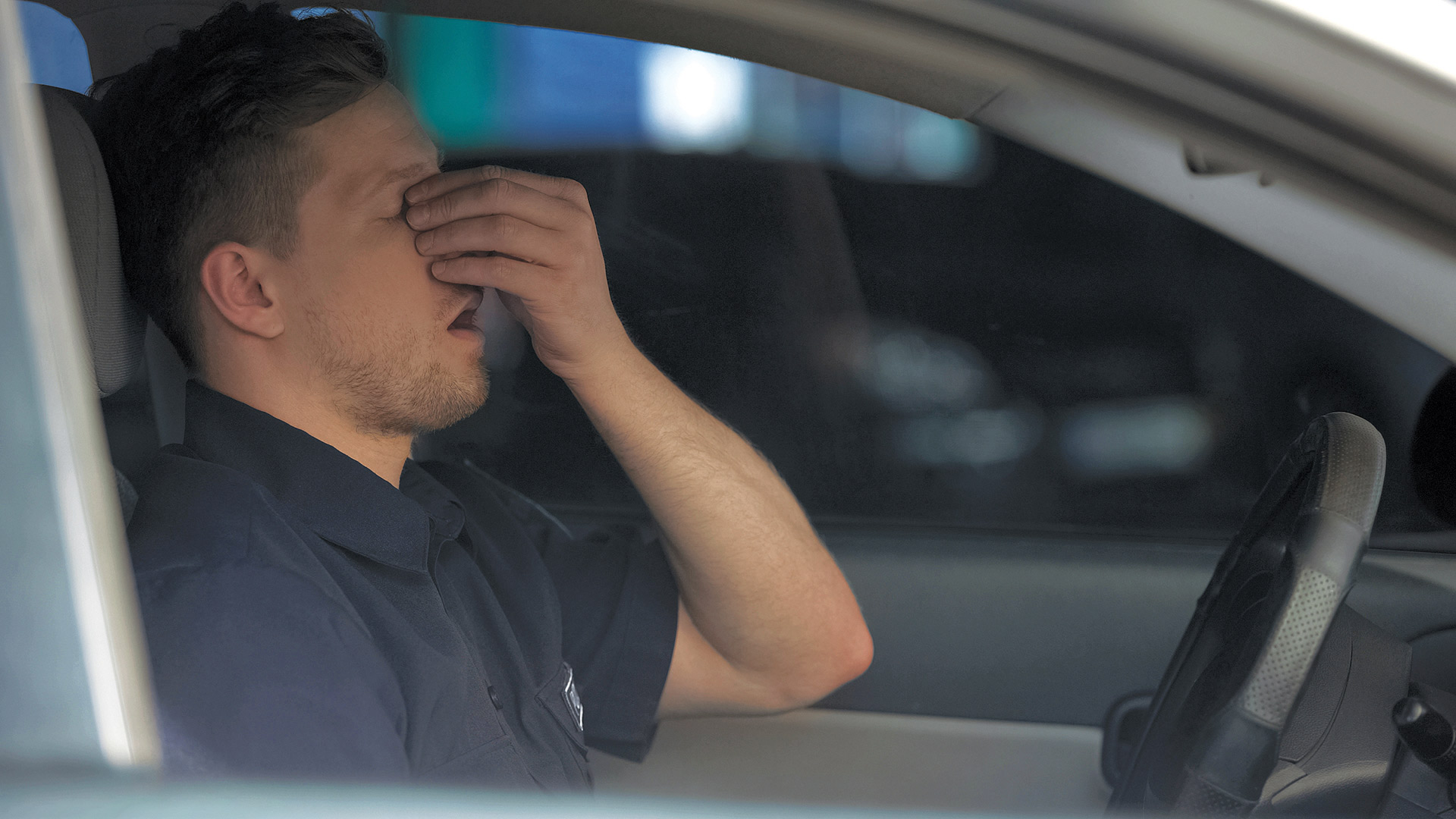
Consider this: operating on just six hours of sleep a night can reduce your functioning to the level of someone who is legally intoxicated. How often have you been patrolling the streets while fighting to stay awake? Depending on the amount of sleep you have, you might pose more of a danger than the impaired drivers you’re trying to remove from the road. Remember, the primary goal of policing is public safety. Being awake for 24 hours straight equates to approximately a .10 blood alcohol level. Would you report for duty with a .10 blood alcohol level? Then why show up “tired drunk”? Sometimes falling asleep is outside our
control, but we as officers need to prioritize sleep.

Expert insights

Dr. Glenn Landry, a sleep expert with over 25 years of experience in circadian rhythms and sleep health, hosts a podcast called Surviving Shift Work and offers an online training program (neosperformance.com) for first responders. He emphasizes the need for tailored sleep interventions to improve officer health and performance. Dr. Landry recently appeared on the Trainer’s Bullpen podcast, pointing out that first responders are exposed to more traumatic incidents in one week than the average person is exposed to in their entire lives. Unfortunately, the lack of sleep compounds this issue, as sleep deprivation impairs an officer’s ability to properly process trauma, exacerbating the negative effects of stress injuries.

Dr. Matthew Walker, a sleep researcher and author of Why We Sleep, notes that after just one night of only four hours of sleep, there’s a remarkable decrease in immune function. This is one reason why insufficient sleep is a predictor of cancer. Dr. Walker also highlights the impact of sleep on cardiovascular health, noting that during Daylight Saving Time changes, there’s a 24% increase in heart attacks when we lose an hour of sleep in spring, and a 21% decrease when we gain an hour in fall. This demonstrates how vulnerable our bodies are to even the smallest changes in sleep duration.

A Carnegie Mellon study found that people who slept less than seven hours a night were nearly three times more likely to catch a cold compared to those who get at least eight. Most people need seven to nine hours of sleep per night to function well.

So, what are some potential action steps we can take to help us sleep better when working rotating shifts? 

Exercise/physical activity

Exercise is really important for officer health. In addition, exercise can help reduce the negative effects of sleep loss. You should never say, “I am not going to exercise because I didn’t sleep well.” In reality, it should be the opposite. Exercise does help offset the effects of poor sleep. However, don’t make a habit of using exercise to compensate for chronic sleep loss. You still need sleep. It’s important to avoid working out within three to four hours of going to sleep, as this can interfere with your ability to fall asleep.

Consistent sleep schedule

One of the best ways to improve sleep is to be as consistent as possible, even with rotating shifts. Do your best to keep your sleep/wake times steady, even on days off. It’s not always easy, but try to stick to a routine. This helps your body clock and makes it easier to fall asleep and wake up, even when your schedule is all over the place. Consistency is key.

Pay off sleep debt

When you’ve accumulated sleep debt due to shift work or long hours, it’s crucial to pay it off when you can. On your days off, aim to sleep seven to nine hours a night. If possible, incorporate a 30-minute nap during the day (but not within six hours of bedtime) to help increase your sleep quantity. Remember, catching up on sleep is essential for your overall health and job performance.

Create a sleep-friendly environment

Your bedroom environment plays a significant role in sleep quality. Make sure your room is as dark as possible — use blackout curtains and cover any lights on electronics. Keep the room cool, well-ventilated and as quiet as possible. If needed, use white noise or earplugs to block out disruptive sounds. It also helps to make your bedroom an electronics-free zone. Remove TVs and computers, and keep your phone out of reach to avoid the temptation of late-night scrolling. 

Develop a wind-down routine

Establishing a consistent pre-sleep routine can signal to your body that it’s time to wind down. Start this process 30 to 60 minutes before your intended sleep time. Dim the lights in your home and try to stay away from screen time. 

Manage stimulants and alcohol

Be mindful of your caffeine intake, avoiding stimulants six to eight hours before your sleep time. While alcohol might seem like it helps you fall asleep, it actually disrupts sleep quality. If you do drink, limit it to one drink and don’t drink it close to bedtime.

Summary

In sum, our work depends on our ability to examine facts, to think and to have insight. Understanding sleep’s impact is vital for improving law enforcement performance. The evidence for the importance of sleep is clear. Sleep deprivation leads to moodiness, irrational behavior and poor health outcomes. We can’t cheat our minds and bodies out of the rest they need and have good long-term results. Sleep is essential, and we should do everything we can to prioritize getting enough quality sleep. By exercising, maintaining a consistent sleep schedule and creating a sleep-friendly environment, we can improve our sleep quality despite the challenges of shift work. When we prioritize sleep, our future selves will thank us. 


References

Carnegie Mellon University. “Not sleeping?” cmu.edu/homepage/health/2009/winter/not-sleeping.shtml.

FoundMyFitness Clips. “Don’t get much sleep? Here’s the #1 thing you should do” . November 15, 2023. youtu.be/hdfIxvmCeag.

Neos Performance. neosperformance.com.

Peeples, Lynne. The Inner Clock. Bloomsbury, 2024.

Trainer’s Bullpen. EP44, “Elite Sleep: A Lifeline for First Responders” with Dr. Glenn Landry . January 30, 2025. youtu.be/WcPME0apckY.

Walker, Matthew. Why We Sleep. Penguin Random House, 2018.

Dr. Matthew Loeslie

Dr. Matthew Loeslie

Dr. Matthew Loeslie is an associate professor at Minnesota State University, Mankato. He has held leadership roles such as academic dean, criminal justice program director and lecturer. In addition to his academic experience, Dr. Loeslie has also served as a police officer and trainer. He holds a Doctor of Criminal Justice from Pennsylvania Western University, California, and a Master of Arts in Criminal Justice Leadership from Concordia University–St. Paul. He can be reached at linkedin.com/in/matthewloeslie.

View articles by Dr. Matthew Loeslie

As seen in the March 2025 issue of American Police Beat magazine.
Don’t miss out on another issue today! Click below:


SUBSCRIBE TODAY!

Categories: Health/Wellness

Primary Sidebar

Recent Articles

  • The impact of the Graham v. Connor decision
  • Coffee shop intel
  • Developing and enhancing assertiveness
  • Mexican cartels recruit like industry titans on both sides of the border — and it’s working
  • Down to divorce
  • Unsung heroes: New York City correction officers
  • The virtual beat
  • Why more staff won’t fix your operational slowdowns
  • Training with an AI partner?
  • Curbing teen takeovers

Footer

Our Mission
To serve as a trusted voice of the nation’s law enforcement community, providing informative, entertaining and inspiring content on interesting and engaging topics affecting peace officers today.

Contact us: info@apbweb.com | (800) 234-0056.

  • Facebook
  • Instagram
  • Twitter

Categories

  • Editor’s Picks
  • On the Job
  • Labor
  • Tech
  • Training
  • Policy
  • Health/Wellness
  • Community
  • Offbeat
  • We Remember
  • Jobs and Careers
  • Events

Editor’s Picks

Smile and let them swing

Smile and let them swing

May 16, 2026

The job has changed — have you?

The job has changed — have you?

May 15, 2026

The days that follow

The days that follow

May 11, 2026

Perpetual recognition of line-of-duty deaths

Perpetual recognition of line-of-duty deaths

May 10, 2026

Policies | Consent Preferences | Copyright © 2026 APB Media, LLC | Website design, development and maintenance by 911MEDIA

Open

Subscribe

Close

Receive the latest news and updates from American Police Beat directly to your inbox!

  • This field is for validation purposes and should be left unchanged.