• Skip to primary navigation
  • Skip to main content
  • Skip to primary sidebar
  • Skip to footer
  • Home
  • About
  • The Magazine
  • Events
  • Partners
  • Products
  • Contact
  • Jobs and Careers
  • Advertise
  • Facebook
  • Instagram
  • Twitter
  • Subscribe
American Police Beat

American Police Beat Magazine

Law Enforcement Publication

  • Home
  • Leadership
    • Clarifying your “true north”
      The job has changed — have you?
      Perpetual recognition of line-of-duty deaths
      Understanding the boundaries of professional relationships with the...
      Why you should lead from 30,000 feet
  • Topics
    • Leadership
      • Clarifying your “true north”
        The job has changed — have you?
        Perpetual recognition of line-of-duty deaths
        Understanding the boundaries of professional relationships with the...
        Why you should lead from 30,000 feet
    • Editor’s Picks
      • Let’s get moving!
        Heroes of the World Trade Center
        The Promise Gap
        Corruption, collusion and impunity
        Liability challenges in contemporary policing
    • On the Job
      • K-9 Day demonstrates scope of officers’ duties
        Testing the waters — literally
        Frankpledge to forensics: A brief history of law enforcement
        Villains and heroes in the Big Apple
        Right place, right time — again
    • Labor
      • Smile and let them swing
        The Promise Gap
        Cut the cops, save a dollar?
        Labor release under fire
        Who’s watching the watchmen?
    • Tech
      • NYC’s electric vehicle fleet for LE passes milestone
        New Mexico license plate readers save lives, lead to “precise...
        A modern field guide to understanding research in policing
        Gear that moves with you
        A new breed of cop car
    • Training
      • Pushback as a training signal
        Let’s get moving!
        The five minutes before the ambulance
        Navigating danger
        Critical thinking in police training
    • Policy
      • Police pause license plate readers
        Corruption, collusion and impunity
        E-bikes spark public safety concerns
        Try racing without wheels
        Law enforcement accreditation: Why it matters
    • Health/Wellness
      • The days that follow
        Addressing stress, vicarious trauma and burnout
        Nervous system regulation
        The nature of the job
        Promoting organizational wellness
    • Community
      • Cops promote National Donate Life Month
        Police officer kicks up social media praise
        Donning denim in solidarity with victims and survivors of sexual...
        Improving autism awareness
        Shop with a Cop
    • Offbeat
      • An unexpected burglar
        Police humor only a cop would understand
        Not eggzactly a perfect heist
        Pizza … with a side of alligator?
        Wisconsin man charged with impersonating Border Patrol agent twice in...
    • We Remember
      • A Tribute to Fallen Heroes
        Markers of service and remembrance
        Tragedy strikes Baker to Vegas
        Heroes of the World Trade Center
        Forty heroes: United Airlines Flight 93
    • HOT Mail
      • The War on Cops Continues Unabated
  • On the Job
    • K-9 Day demonstrates scope of officers’ duties
      Testing the waters — literally
      Frankpledge to forensics: A brief history of law enforcement
      Villains and heroes in the Big Apple
      Right place, right time — again
  • Labor
    • Smile and let them swing
      The Promise Gap
      Cut the cops, save a dollar?
      Labor release under fire
      Who’s watching the watchmen?
  • Tech
    • NYC’s electric vehicle fleet for LE passes milestone
      New Mexico license plate readers save lives, lead to “precise...
      A modern field guide to understanding research in policing
      Gear that moves with you
      A new breed of cop car
  • Training
    • Pushback as a training signal
      Let’s get moving!
      The five minutes before the ambulance
      Navigating danger
      Critical thinking in police training
  • Policy
    • Police pause license plate readers
      Corruption, collusion and impunity
      E-bikes spark public safety concerns
      Try racing without wheels
      Law enforcement accreditation: Why it matters
  • Health/Wellness
    • The days that follow
      Addressing stress, vicarious trauma and burnout
      Nervous system regulation
      The nature of the job
      Promoting organizational wellness
  • Community
    • Cops promote National Donate Life Month
      Police officer kicks up social media praise
      Donning denim in solidarity with victims and survivors of sexual...
      Improving autism awareness
      Shop with a Cop
  • Offbeat
    • An unexpected burglar
      Police humor only a cop would understand
      Not eggzactly a perfect heist
      Pizza … with a side of alligator?
      Wisconsin man charged with impersonating Border Patrol agent twice in...
  • We Remember
    • A Tribute to Fallen Heroes
      Markers of service and remembrance
      Tragedy strikes Baker to Vegas
      Heroes of the World Trade Center
      Forty heroes: United Airlines Flight 93
  • HOT Mail
    • The War on Cops Continues Unabated
  • About
  • The Magazine
  • Events
  • Partners
  • Products
  • Contact
  • Jobs and Careers
  • Advertise
  • Subscribe
Search

Training

Navigating cultural and language barriers

Indiana University Police Academy introduces Deaf culture and ASL training

APB Team Published August 26, 2025 @ 6:00 am PDT

Part-time officer Brennan Cox uses signs to communicate with IU faculty during IU Police Academy’s training. (Chris Meyer/Indiana University)

In June, recruits with the Indiana University Police Department (IUPD) Academy made history when they stepped into the classroom to take part in the department’s first-ever training on Deaf culture awareness and American Sign Language (ASL).

The nearly three-hour course is taught by deaf Indiana University faculty members who, through ASL and interpreters, delve into various aspects of Deaf culture and share personal stories about their interactions with law enforcement. They discuss how they’ve communicated with officers during traffic stops using hand gestures, teach recruits basic signs like “police” and “emergency” and describe common challenges officers may face while on duty when encountering someone who is deaf or hard of hearing. Above all, they emphasize that patience is key to preventing dangerous encounters with members of the Deaf community during crisis situations.

The training is the brainchild of Brennan Cox, a second-year IU law student who became a part-time IUPD officer while pursuing his undergraduate degree. His interest in studying ASL and Deaf culture was sparked by a desire to learn a language that would be beneficial in a law enforcement career. “I have not met or personally known any law enforcement officers who know ASL,” he tells American Police Beat. “Learning ASL would provide me with the opportunity to serve my community, especially the typically overlooked Deaf community.”

When Cox was a recruit in the 50th IU Police Academy in 2023, he had already completed one year of ASL during his undergraduate studies. This led him to research and ask law enforcement personnel and ASL professors about how officers interact with the Deaf community. “I found a significant gap in law enforcement’s service to the Deaf community, due to a lack of understanding of Deaf culture and ASL,” he explains. “Additionally, I have watched footage from other law enforcement agencies across the country involving excessive force with members of the Deaf community due to a lack in cultural and linguistic understanding.”
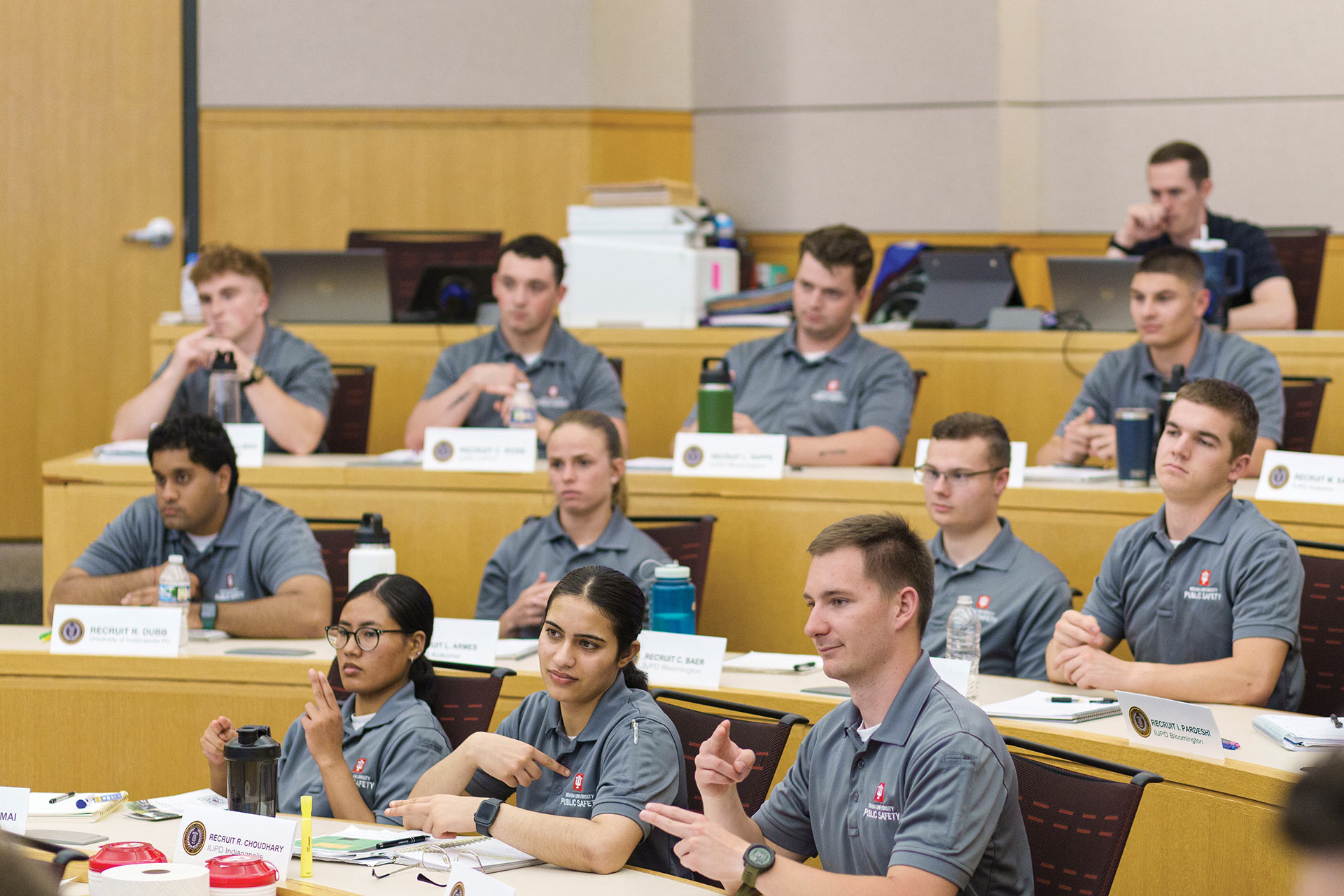
IU Police Academy recruits learning signs (Chris Meyer/Indiana University)

Cox then asked the director of his academy if he could create a short lesson for his class on cultural awareness of the Deaf community in a law enforcement context. That initial lesson evolved into him returning for the 51st IUPA class, where he brought in ASL IU faculty members to share their own experiences and provide feedback as members of the Deaf community.

This year marked the first time the lesson was officially implemented into the academy curriculum, with Cox following the faculty discussions with a presentation on tactical considerations, IUPD policy and additional awareness topics.

Cox shares that the training, combined with his knowledge of ASL, has been useful on the job, citing multiple instances where he has communicated with ASL faculty at IU sporting events and responded to calls involving deaf individuals.

“When utilizing the skills from this training and my own previous ASL learning, I have found that it has created a shock for the deaf individual that a law enforcement officer knows ASL and desires to serve them as they would any other individual,” he shares. “I think it has also created a sense of relief and comfort that a law enforcement officer is able to communicate more effectively and has the patience and desire to assist the deaf individual to the best of their ability. It is also a rewarding experience for me personally to see a deaf individual ‘light up’ when I utilize the skills from the training and the ASL I have previously learned.”

Overall, Cox hopes the training broadens law enforcement’s worldview, encouraging officers to become more aware of cultural differences and language barriers so they can create safer interactions for both themselves and deaf individuals, recognize and address language barriers more effectively and better serve deaf members of the community.

“I anticipate this training will impact the law enforcement profession on a larger scale by spreading awareness that this training is necessary for all law enforcement agencies and challenge the law enforcement profession to recognize that there are many other specific communities that could be better served by law enforcement,” Cox says. “As a profession, law enforcement should always be seeking ways to best serve all members of our communities to the fullest extent possible.”
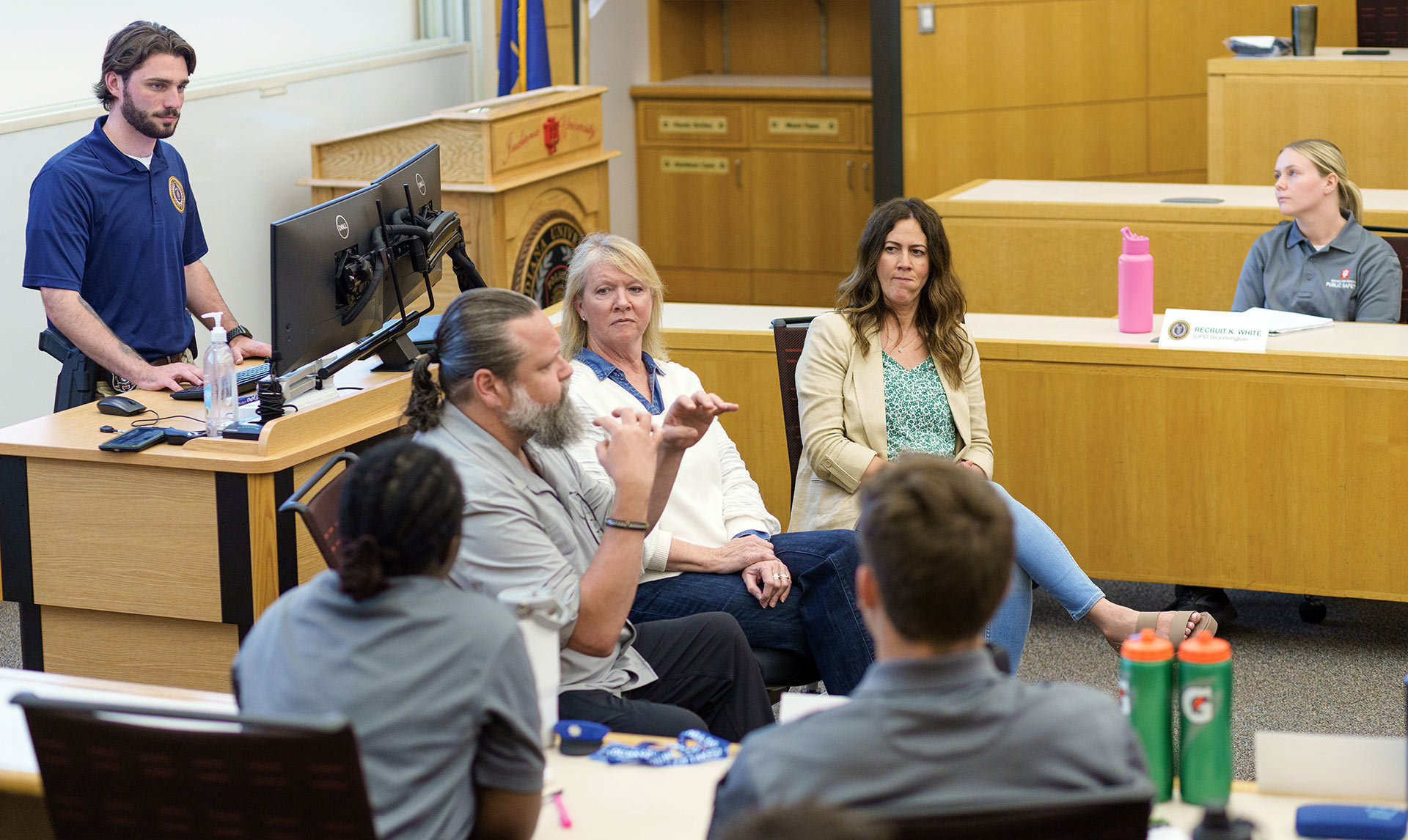
IU faculty using signs during the training (Chris Meyer/Indiana University)

As seen in the August 2025 issue of American Police Beat magazine.
Don’t miss out on another issue today! Click below:


SUBSCRIBE TODAY!

Categories: Training

Primary Sidebar

Recent Articles

  • K-9 Day demonstrates scope of officers’ duties
  • Cops promote National Donate Life Month
  • NYC’s electric vehicle fleet for LE passes milestone
  • Police officer kicks up social media praise
  • Donning denim in solidarity with victims and survivors of sexual assault
  • Clarifying your “true north”
  • Smile and let them swing
  • The job has changed — have you?
  • New National Law Enforcement Museum exhibit revisits D.C. snipers case
  • A hero’s legacy through a mother’s love

Footer

Our Mission
To serve as a trusted voice of the nation’s law enforcement community, providing informative, entertaining and inspiring content on interesting and engaging topics affecting peace officers today.

Contact us: info@apbweb.com | (800) 234-0056.

  • Facebook
  • Instagram
  • Twitter

Categories

  • Editor’s Picks
  • On the Job
  • Labor
  • Tech
  • Training
  • Policy
  • Health/Wellness
  • Community
  • Offbeat
  • We Remember
  • Jobs and Careers
  • Events

Editor’s Picks

Let’s get moving!

Let’s get moving!

April 27, 2026

Heroes of the World Trade Center

Heroes of the World Trade Center

April 24, 2026

The Promise Gap

The Promise Gap

April 22, 2026

Corruption, collusion and impunity

Corruption, collusion and impunity

April 21, 2026

Policies | Consent Preferences | Copyright © 2026 APB Media, LLC | Website design, development and maintenance by 911MEDIA

Open

Subscribe

Close

Receive the latest news and updates from American Police Beat directly to your inbox!

  • This field is for validation purposes and should be left unchanged.