In an era of complex social dynamics, evolving threats and heightened public scrutiny, law enforcement professionals are expected to be more than enforcers of the law — they are community problem-solvers, guardians, legal interpreters, trauma-informed responders and ethical decision-makers. Yet, despite the broadening scope of modern policing, too many police officers still see training as a static, agency-delivered requirement rather than a personal investment. The question is not whether police training needs to evolve, but whether law enforcement professionals are ready to embrace lifelong learning and commit to becoming subject-matter experts in the core competencies of modern policing.
Let us explore the current state of police training, highlight systemic challenges and advocate for a cultural shift that empowers officers to take control of their professional development.
Do not just attend a course — master it, apply it and teach it to others.
The current state of police training
Police training in the U.S. has historically been reactive, agency-directed and sometimes narrowly focused on tactical or legal updates. While training academies meet state minimum standards, the gap between initial academy preparation and the breadth of real-world policing continues to grow.
According to a 2022 report from the Bureau of Justice Statistics (BJS), the average basic academy provides approximately 840 hours of instruction, with an emphasis on firearms, defensive tactics and legal procedures. Comparatively, little time is dedicated to mental health response, community engagement, cultural competence or advanced communication strategies. Post-academy, most agencies provide mandated in-service training — often dictated by liability concerns rather than proactive growth or strategic development.
What is missing is a structured, ongoing learning environment that encourages and rewards intellectual curiosity and subject-matter specialization. Modern law enforcement cannot afford to rely solely on what officers learned five, 10 or 20 years ago. Our profession requires continual evolution.
Topical challenges driving training needs
Law enforcement today faces a multiplicity of challenges, many of which require far more than “basic” skills.
Behavioral health and crisis response: The intersection of law enforcement and mental health is one of the most critical issues in public safety today. Officers frequently respond to individuals in crisis, yet many feel ill-prepared to de-escalate or connect people to resources, if resources even exist in some rural areas.
Technology and cybercrime: From digital forensics to cryptocurrency fraud, police now need technical acumen that was unimaginable a generation ago. Mere financial crimes can be a patrol officer’s or detective’s worst nightmare to investigate.
Community trust and procedural justice: Rebuilding and maintaining public trust requires officers to be well-versed in procedural justice, cultural competency and communication skills. As we see in metropolitan cities where the police are now being sandwiched between federal immigration efforts and disgruntled community members, outreach and guardianship are as critical as tactical training.
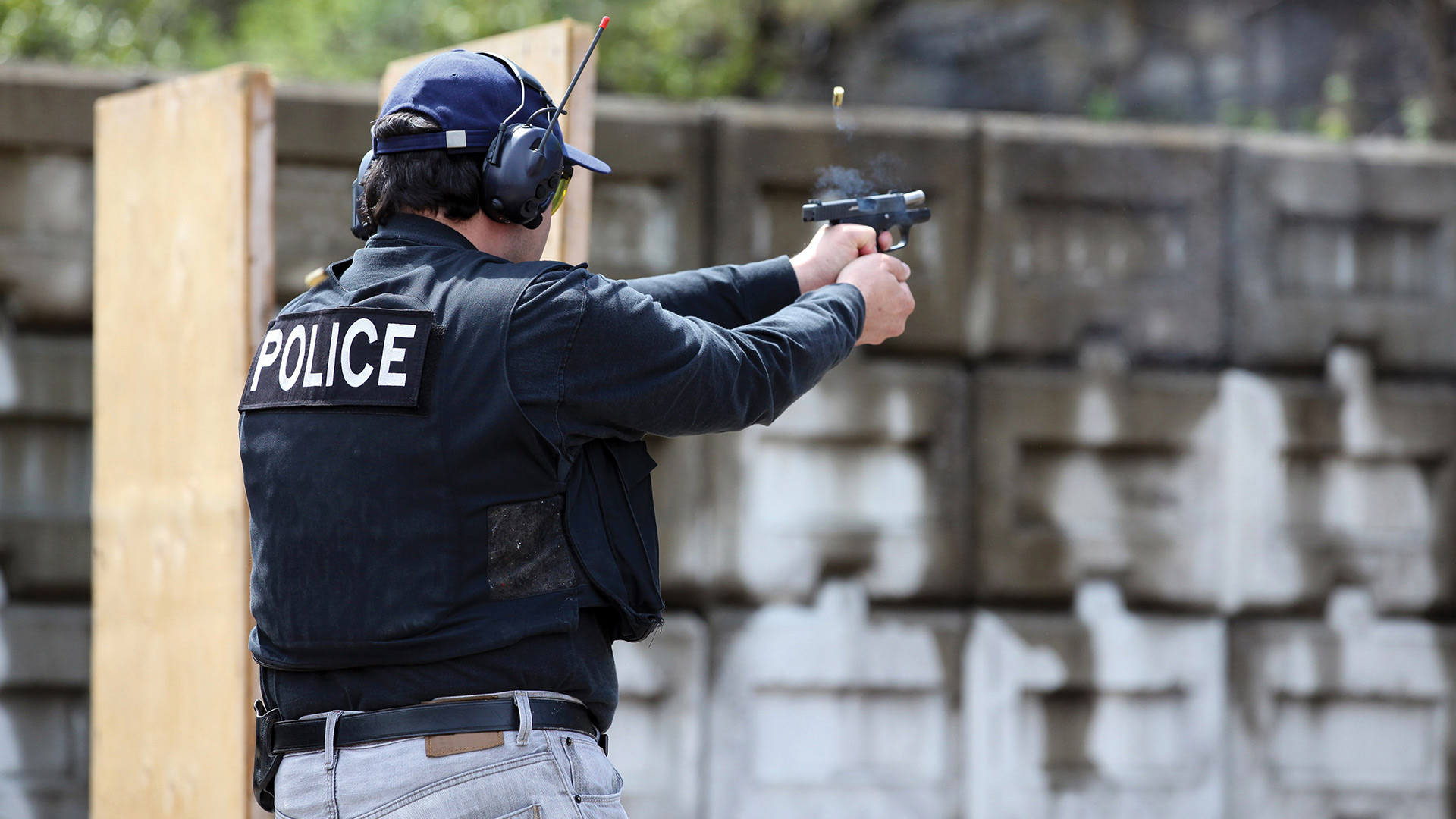
Use-of-force scrutiny: In an environment where every use-of-force incident can become viral within minutes, officers must be both tactically proficient and legally informed. Whether through simulator technology, simunitions or force-on-force training, the old days of simply heading out to the range to punch holes in paper are long gone.
Legal updates and constitutional literacy: Case law evolves rapidly. Officers must understand evolving interpretations of the Fourth, Fifth and Sixth Amendments to avoid civil liability and ensure constitutional policing. Agency policy and procedures must be updated rapidly with services such as Lexipol.
Officer wellness and resilience: Burnout, suicide, PTSD and depression plague the profession. Training in self-care, peer support and psychological resilience is no longer optional; it is essential.
The breadth and depth of these topics suggest that law enforcement officers must evolve beyond generalists. Every department should cultivate internal subject-matter experts — officers with deep knowledge in crisis intervention, digital investigations, community engagement and officer wellness. Creating a cadre of instructor-competent officers enhances mentorship, retention and effectiveness regardless of agency size.
Breaking the dependence on agency-directed training
One of the greatest myths in policing is that professional growth is the department’s responsibility. While agencies should provide quality training, the most successful officers take ownership of their development. Some states require an annual minimum number of training hours; for many, that number is 40 hours a year. But is it quality time spent, or just doing the minimum to pencil-whip the required hours with the least amount of meaningful training?
Police departments must actively encourage self-initiated learning. Officers should be recognized, rewarded (pay incentives for specialists, field training officers, instructors, master peace officer designations) and promoted based on expertise, not just tenure or rank. For this to happen, a cultural shift must occur. Supervisors and training instructors should champion a philosophy of expertise over exposure. In other words, do not just attend a course — master it, apply it and teach it to others. Not all training has to be structured classroom presentations; roll call training opportunities are grossly underutilized.
Learning opportunities are more accessible than ever. Organizations like the FBI-LEEDA, Police Executive Research Forum (PERF), International Association of Chiefs of Police (IACP), Police One (online), the Daigle Law Group (also an online training service) and the National Tactical Officers Association (NTOA) offer robust, research-based training — much of it online and low-cost.
Moreover, academic partnerships with community colleges and universities provide officers with formal education in criminal justice, ethics, public administration and leadership, which strengthens not only their individual performance but also the profession’s credibility. Given the availability of online classes that lead to degrees, there is little excuse not to enroll.
Why officers must become subject-matter experts
In a profession where the margin for error is razor-thin, the generalist approach is increasingly insufficient. Officers are called upon to navigate volatile situations, legal nuance and complex interpersonal conflict. Subject-matter expertise is not just an aspiration; it is a necessity.
Imagine a shift where every small to midsized agency had a certified de-escalation instructor, a trauma-informed policing liaison, a digital crime investigator, a wellness coach and a procedural justice instructor, along with the traditional firearms/use-of-force, defensive tactics, Taser and OC instructors — each trained beyond the minimum and empowered to lead.
Whoa, that sounds expensive! Only if you do not dig deep enough to locate cost-effective resources. Not every class requires airfare and hotels.
Conclusion
Law enforcement must stop viewing training as an annual obligation and start treating it as a daily commitment. In the 21st century, being a police officer means being a student, a teacher and a practitioner — often all at once.
Departments can and should lead this charge, but the most enduring change will come when individual officers embrace the philosophy that excellence is an individual choice. The most respected professionals in any field — doctors, pilots, lawyers — continually sharpen their skills. Policing should be no different. It is time to own our expertise.

Robert Spinks
As seen in the August 2025 issue of American Police Beat magazine.
Don’t miss out on another issue today! Click below: